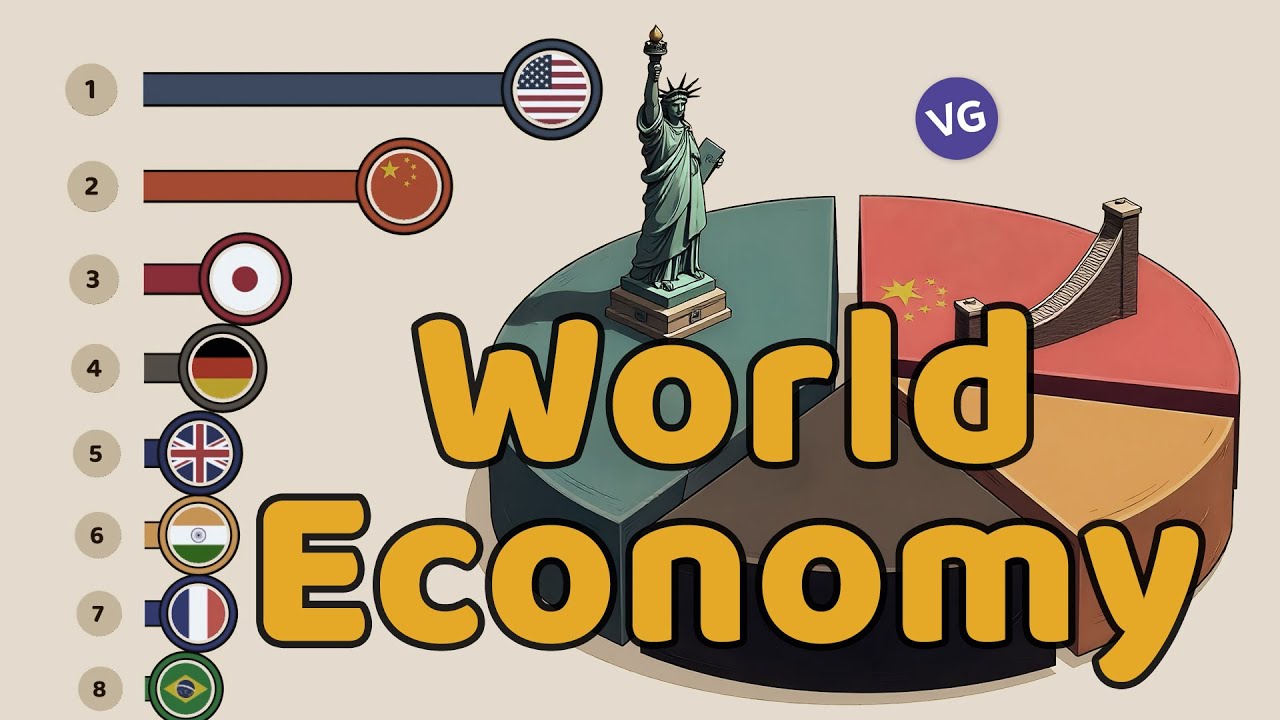
World Largest Economies in 2025: Rankings, Insights, and Economic Powerhouses
The global economy is a dynamic landscape, shaped by the economic prowess of nations driving innovation, trade, and growth. As of April 2025, the United States holds the title of the world’s largest economy, boasting a GDP of $30.507 trillion, according to the International Monetary Fund’s (IMF) World Economic Outlook. However, the race for economic dominance is intensifying, with China projected to challenge the U.S. in the coming years. This article explores the top 10 largest economies in 2025, delving into their GDP, economic strengths, and global influence, while providing actionable insights into what drives these economic giants.
Understanding Global Economic Rankings
The world’s largest economies are ranked based on their Gross Domestic Product (GDP), a critical measure of economic activity. GDP reflects the total monetary value of goods and services produced within a country’s borders over a specific period, typically a year. The IMF’s April 2025 World Economic Outlook provides the latest data, converting national currencies to U.S. dollars using market exchange rates for accurate comparisons.
These rankings highlight not only a country’s economic size but also its influence on global markets, trade policies, and geopolitical dynamics. From technological innovation in the U.S. to manufacturing dominance in China, each nation’s economy contributes uniquely to the global ecosystem.
What Is GDP and Why Does It Matter?
Defining GDP
Gross Domestic Product (GDP) measures the economic health of a nation by calculating the total value of all goods and services produced domestically. It serves as a universal benchmark for comparing economic performance across countries.
How Is GDP Calculated?
GDP is computed using the following formula:
GDP = Consumption + Investment + Government Spending + Net Exports (Exports – Imports)
- Consumption: Spending by households on goods and services, such as food, healthcare, and entertainment.
- Investment: Business expenditures on capital goods, like machinery, and residential construction.
- Government Spending: Public sector investments in infrastructure, education, and defense.
- Net Exports: The value of exports minus imports, reflecting a country’s trade balance.
This formula captures the breadth of economic activity, offering insights into growth trends, living standards, and policy effectiveness.
Why GDP Matters
GDP influences everything from investment decisions to international trade agreements. High GDP often correlates with strong infrastructure, technological advancement, and global influence. However, GDP per capita—total GDP divided by population—provides a clearer picture of individual prosperity within a nation.
Top 10 Largest Economies in 2025
Below is a detailed look at the world’s 10 largest economies in 2025, ranked by GDP, with insights into their economic drivers, challenges, and global impact.
1. United States: The Global Economic Leader
- GDP: $30.507 trillion
- GDP per Capita: $89,105
- Key Drivers: Technology, finance, consumer spending
- Global Rank: 1
The United States remains the world’s largest economy, a position it has held since the early 20th century. Its economic dominance stems from a diverse and innovative economy, fueled by tech giants like Apple, Microsoft, and Google, alongside robust financial markets and consumer spending. The U.S. benefits from a highly skilled workforce, cutting-edge research, and a culture of entrepreneurship.
Despite its strengths, challenges like rising national debt and income inequality loom large. The U.S.’s ability to maintain its lead depends on sustaining innovation and navigating geopolitical tensions, particularly with China.
2. China: The Rising Economic Titan
- GDP: $19.231 trillion
- GDP per Capita: $13,657
- Key Drivers: Manufacturing, exports, infrastructure
- Global Rank: 2
China, the world’s second-largest economy, is closing the gap with the U.S. Its rapid growth over the past few decades, driven by manufacturing, exports, and massive infrastructure investments, has transformed it into a global powerhouse. China leads in industries like electronics, automotive production, and renewable energy.
However, China faces hurdles, including an aging population, environmental concerns, and trade tensions. Analysts predict China could surpass the U.S. as the largest economy by the early 2030s, making its trajectory a focal point for global markets.
3. Germany: Europe’s Economic Engine
- GDP: $4.744 trillion
- GDP per Capita: $55,911
- Key Drivers: Manufacturing, automotive, exports
- Global Rank: 3
Germany, Europe’s largest economy, thrives on its manufacturing prowess and export-driven model. Renowned for brands like Volkswagen, BMW, and Siemens, Germany excels in precision engineering and high-quality goods. Its strong industrial base and skilled workforce make it a global leader in automotive and machinery production.
Challenges include an aging workforce and reliance on energy imports. Germany’s commitment to sustainability and digital transformation will shape its economic future.
4. India: The Emerging Economic Powerhouse
- GDP: $4.187 trillion
- GDP per Capita: $2,934
- Key Drivers: Technology, services, population growth
- Global Rank: 4
India overtakes Japan in 2025 to claim the fourth spot, driven by its burgeoning tech sector, youthful population, and expanding digital economy. With companies like Tata, Infosys, and Reliance leading the charge, India is a hub for IT services, pharmaceuticals, and renewable energy.
Despite its growth, India grapples with infrastructure deficits and income disparity. Continued reforms and investments in education and technology could propel India higher in global rankings.
5. Japan: The Innovation Hub
- GDP: $4.186 trillion
- GDP per Capita: $33,955
- Key Drivers: Technology, automotive, robotics
- Global Rank: 5
Japan, now the fifth-largest economy, is a global leader in technology and innovation. Companies like Toyota, Sony, and Panasonic drive its reputation for quality and precision. Japan’s advancements in robotics, AI, and clean energy position it as a forward-thinking economy.
An aging population and low birth rates pose long-term challenges. Japan’s focus on automation and immigration reforms aims to sustain its economic vitality.
6. United Kingdom: A Financial Powerhouse
- GDP: $3.839 trillion
- GDP per Capita: $54,949
- Key Drivers: Finance, services, trade
- Global Rank: 6
The United Kingdom maintains its status as a global financial hub, with London’s banking and insurance sectors leading the charge. The U.K.’s economy benefits from strong service industries, including education, healthcare, and creative sectors like film and music.
Post-Brexit trade adjustments and labor shortages present challenges. The U.K.’s ability to forge new trade agreements and invest in green technologies will determine its economic trajectory.
7. France: A Blend of Tradition and Innovation
- GDP: $3.211 trillion
- GDP per Capita: $46,792
- Key Drivers: Tourism, luxury goods, aerospace
- Global Rank: 7
France combines cultural heritage with modern industries, excelling in tourism, luxury goods (e.g., LVMH), and aerospace (e.g., Airbus). Its agricultural sector and renewable energy initiatives further bolster its economy.
High taxes and labor market rigidities remain concerns. France’s investments in startups and green energy aim to enhance its global competitiveness.
8. Italy: A Cultural and Industrial Hub
- GDP: $2.422 trillion
- GDP per Capita: $41,091
- Key Drivers: Fashion, tourism, manufacturing
- Global Rank: 8
Italy’s economy thrives on its rich cultural heritage and industrial expertise. Known for luxury brands like Gucci and Ferrari, Italy also excels in machinery and food production. Tourism, driven by landmarks like Rome and Venice, is a major economic contributor.
Italy faces challenges like high public debt and regional disparities. Investments in digital infrastructure and sustainable tourism could strengthen its economy.
9. Canada: Resource-Rich and Resilient
- GDP: $2.225 trillion
- GDP per Capita: $53,558
- Key Drivers: Natural resources, services, trade
- Global Rank: 9
Canada, despite its relatively small population, is a resource-rich economy with significant oil, gas, and mineral reserves. Its strong service sector, including finance and education, complements its natural resource wealth. Canada’s trade ties with the U.S. and commitment to sustainability enhance its global standing.
Climate change and reliance on commodity prices are key challenges. Canada’s focus on clean energy and tech innovation supports long-term growth.
10. Brazil: Latin America’s Economic Leader
- GDP: $2.125 trillion
- GDP per Capita: $10,234
- Key Drivers: Agriculture, mining, manufacturing
- Global Rank: 10
Brazil, Latin America’s largest economy, leverages its vast natural resources, including soybeans, iron ore, and beef. Its manufacturing and service sectors, particularly in São Paulo, contribute significantly to GDP. Brazil’s renewable energy initiatives, like hydropower, position it as a green economy leader.
Political instability and inequality hinder growth. Reforms in governance and infrastructure could elevate Brazil’s global economic role.
Key Trends Shaping the Global Economy
The U.S.-China Rivalry
The competition between the U.S. and China defines global economic dynamics. While the U.S. leads in innovation and financial markets, China’s manufacturing dominance and strategic investments in AI and renewable energy make it a formidable contender. Trade policies, technology transfers, and geopolitical strategies will shape this rivalry’s outcome.
Emerging Markets on the Rise
India and Brazil represent the growing influence of emerging markets. India’s digital transformation and Brazil’s resource wealth highlight their potential to climb the economic ladder. These nations’ ability to address structural challenges will determine their long-term success.
Sustainability and Technology
Sustainability and technology are reshaping economies. From Germany’s green manufacturing to Canada’s clean energy initiatives, nations are prioritizing eco-friendly growth. Meanwhile, advancements in AI, automation, and digital services are driving productivity across all top economies.
The Global Economic Outlook
The top 10 economies in 2025 collectively account for a significant portion of global GDP, shaping international trade, investment, and policy. As of April 2025, 18 countries boast trillion-dollar economies, reflecting the growing complexity and interconnectedness of global markets.
While the U.S. maintains its lead, China’s rapid ascent and the rise of emerging markets like India signal a shifting economic landscape. Factors like technological innovation, sustainable development, and geopolitical stability will determine which nations dominate in the future.
Conclusion: Navigating the Future of Global Economies
The world’s largest economies in 2025 showcase a blend of established giants and rising stars. The United States continues to lead with its innovation-driven economy, while China’s manufacturing might and India’s digital growth signal a dynamic future. Understanding these economies’ strengths, challenges, and trends offers valuable insights for businesses, investors, and policymakers.
As the global economy evolves, staying informed about GDP rankings, economic drivers, and emerging trends is crucial. Whether you’re exploring investment opportunities or analyzing global trade, the top 10 economies of 2025 provide a roadmap to navigating the world’s economic landscape.