
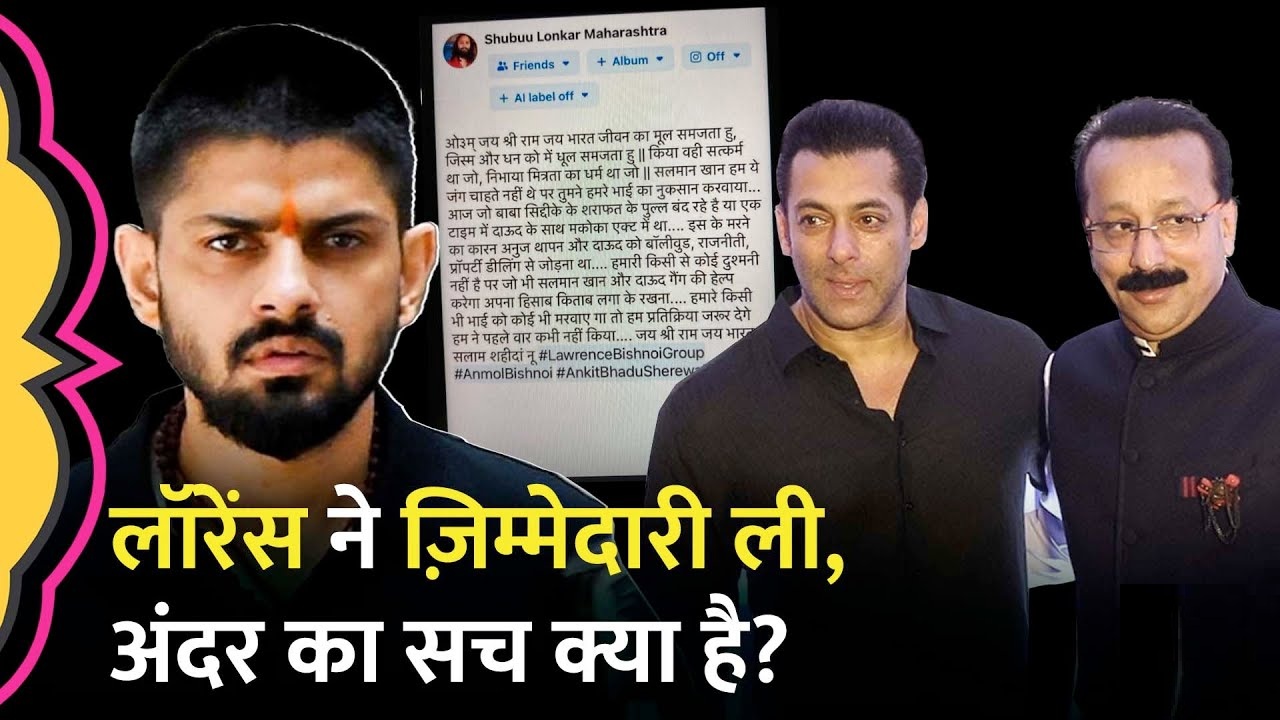
The recent assassination of former minister and political leader Baba Siddique has rocked Mumbai, bringing back echoes of the violent underworld clashes of the 1990s. As authorities work to unravel the truth, several questions arise: Who orchestrated this audacious murder? Was there an underlying motive linked to his political and business connections, or was it connected to the infamous gangster Lawrence Bishnoi? In this article, we explore the circumstances surrounding Baba Siddique’s death and the potential motives behind it.
A Chilling Return to the 90s: The Gangland Style Murder of Baba Siddique
Bollywood may be busy remixing 90s songs, but Mumbai seems to be revisiting the dark era of gang wars. On a quiet Saturday night, Baba Siddique, a prominent Muslim leader and political influencer, was assassinated in a brutal style reminiscent of the notorious gangland killings of the 1990s. Siddique’s murder took place without hesitation, fear of the law, or repercussions. The shooters, Karnail Singh and Dharamraj Kashyap, were quickly apprehended, but the mastermind behind the killing remains elusive.
Lawrence Bishnoi vs. Salman Khan: A Convenient Distraction?
The case took a sensational turn when Lawrence Bishnoi, a notorious gangster, was linked to the murder. Bishnoi, who has been in jail for over a decade, runs an international crime syndicate from behind bars, raising questions about how such activities continue unchecked. Bishnoi’s supposed grudge against Bollywood actor Salman Khan, stemming from the blackbuck poaching incident of 1998, has become a talking point. Some believe this angle is a distraction from the real motive behind Siddique’s assassination. But is there more to this story than meets the eye?
Political Connections and Real Estate Deals: The Possible Motive
Baba Siddique wasn’t just a political figure; he had deep ties with Bollywood and the business world, particularly the real estate sector in Mumbai’s prime locations. Siddique was known for brokering deals, resolving disputes, and helping builders navigate bureaucratic hurdles. However, as is often the case, such dealings can lead to disagreements, and Siddique’s involvement in various land deals had raised suspicions.
In 2018, the Enforcement Directorate seized assets worth ₹500 crores linked to Siddique, accusing him of benefiting from a slum rehabilitation scam. Many now wonder if this assassination was connected to his business dealings, with some suggesting that Siddique’s death was financially motivated, rather than a result of Lawrence Bishnoi’s vendetta against Salman Khan.
The Return of the Underworld? Organized Crime in Mumbai
Siddique’s death has raised alarm bells about the resurgence of organized crime in Mumbai. Once a hotbed of gang violence, Mumbai saw a decline in underworld activities after the government’s crackdown in the 90s, following the infamous 1993 serial bomb blasts. However, with Siddique’s murder, there are fears that the underworld could be making a comeback, with gangs like Bishnoi’s vying to fill the power vacuum left by the demise of older gangs like Dawood Ibrahim’s D-Company.
Lawrence Bishnoi’s gang is believed to be expanding its influence across North India, using social media to recruit unemployed youth and luring them with promises of wealth and even opportunities abroad. The National Investigation Agency (NIA) has expressed concerns about Bishnoi’s gang becoming as powerful as D-Company, especially if law enforcement fails to curb his activities.
Why Was Baba Siddique Targeted?
Siddique’s long-standing connections with Bollywood figures, such as Salman Khan and Shah Rukh Khan, have led to speculation that his relationship with these stars may have played a role in his murder. However, the more plausible explanation lies in his political and business dealings. Siddique was a three-time MLA and former Maharashtra Minister of State for Food and Civil Supplies. His influence in Mumbai’s political and business circles made him a powerful figure, but also a target for those seeking to challenge or replace him.
The shooters, reportedly hired for just ₹50,000 each, had been tracking Siddique’s movements for over a month before executing the plan. While the police have arrested several individuals involved in the crime, including a Pune-based man named Pravin Lonkar who allegedly hired the shooters, the real mastermind remains at large.
Is Lawrence Bishnoi’s Involvement a Smokescreen?
While Lawrence Bishnoi has taken responsibility for the murder, many believe that his involvement might be a convenient cover-up for the real culprits. Bishnoi has been in jail for a decade, yet continues to orchestrate his crime syndicate using VoIP (Voice over Internet Protocol) technology. Despite being a high-risk prisoner, he remains a significant threat, raising questions about the government’s inability to contain him.
Bishnoi’s gang has carried out several high-profile attacks, including threats to Salman Khan’s life and the murder of Punjabi singer Sidhu Moose Wala. His gang’s reach extends across various states in India, and even abroad, making it one of the most dangerous organized crime networks in the country today.
What Lies Ahead for Mumbai? The Government’s Role in Tackling Organized Crime
The killing of Baba Siddique has highlighted the growing threat of organized crime in India, particularly in Mumbai. It also raises uncomfortable questions about the government’s ability to keep dangerous criminals like Lawrence Bishnoi in check. If Bishnoi can continue running his syndicate from jail, who is responsible for allowing this to happen?
The resurgence of gang violence in Mumbai is a serious concern. With the underworld seemingly regaining its foothold in the city, there is a real risk that the progress made in curbing organized crime over the past few decades could be undone. The government must take decisive action to prevent another gang war from taking root in Mumbai, before it’s too late.
The chilling video call between two notorious criminals, Lawrence Bishnoi and a Pakistani gangster, exposed a growing terror syndicate that has captured global attention. This video, although months old, brings to light the dangerous expansion of Bishnoi’s criminal network beyond India’s borders. As authorities unravel the mystery behind this syndicate, the rise of Lawrence Bishnoi mirrors the criminal empire-building seen in figures like Dawood Ibrahim in the 90s.
Lawrence Bishnoi: From Small-Time Criminal to International Syndicate Leader
In the viral video, Lawrence Bishnoi, a notorious gangster currently imprisoned, is seen extending Eid greetings to a Pakistani crime lord. This simple video call symbolizes the growing influence of Bishnoi’s terror syndicate, which now spans multiple countries. Once confined to local crimes in India, Bishnoi’s criminal network now boasts an international reach, with significant ties to notorious figures abroad.
The Unveiling of Bishnoi’s Global Crime Network
The National Investigation Agency (NIA) recently filed a charge sheet against Lawrence Bishnoi and his gang, which has been involved in several high-profile criminal activities. The NIA’s investigation revealed that Bishnoi’s syndicate operates similarly to how Dawood Ibrahim’s gang grew in the 1990s. Like Dawood, who started with small-time crimes before turning his network into a powerful mafia, Bishnoi has followed the same path, transforming from a local thug into a criminal mastermind whose influence now extends beyond India.
The Role of Goldy Brar: Bishnoi’s Right-Hand Man
Much of Bishnoi’s criminal network is orchestrated by his close associate, Satwinder Singh, alias Goldy Brar. Goldy, who resides in Canada, is on the most-wanted list of both Canadian police and Indian agencies. He plays a significant role in managing the operations of Bishnoi’s gang, which includes over 700 shooters, many of whom are from Punjab. This criminal empire uses social media and other platforms to recruit young men into the gang, often luring them with promises of being relocated to countries like Canada.
The Expansion of Bishnoi’s Empire: From India to Six Nations
Lawrence Bishnoi’s influence now stretches across 11 Indian states and six other countries, including the United States, Azerbaijan, Portugal, UAE, Russia, and Pakistan. This cross-border expansion shows how deeply rooted Bishnoi’s criminal network has become, a worrying trend for law enforcement agencies both in India and abroad.
How the Bishnoi Gang Recruits Young Men
Bishnoi’s syndicate employs various strategies to recruit young men into their ranks. According to the NIA, one of the most common tactics is offering to help these youths move to their preferred country, such as Canada. This false promise of a better life becomes a gateway into the underworld, turning young men into pawns for Bishnoi’s international criminal operations.
In addition to luring young men with false promises, Bishnoi’s gang has reportedly been collaborating with Khalistani terrorists, such as Harvinder Singh Rinda, who use the gang’s shooters for targeted killings and criminal activities in Punjab. These connections add another layer of complexity to the gang’s operations, making them a significant threat to national security.
Major Crimes Tied to Lawrence Bishnoi: From Extortion to Murder
Lawrence Bishnoi’s criminal history is extensive. He has been implicated in over 50 cases of extortion, murder, attempted murder, robbery, and more. However, his most infamous crime is his involvement in the murder of Punjabi singer Sidhu Moosewala in 2022. Investigations revealed that Goldy Brar, under Bishnoi’s command, orchestrated Moosewala’s assassination, shocking the nation and bringing even more attention to Bishnoi’s deadly syndicate.
The Early Life of Lawrence Bishnoi: How It All Began
Lawrence Bishnoi hails from Fazilka, Punjab. His father, a former police constable, and his mother, a housewife, raised him in a relatively modest household. He completed his education in Fazilka before moving to Chandigarh, where he enrolled in DAV College. It was during his college years that Bishnoi took his first steps into the world of crime. He formed the Student Organization of Punjab University (SOPU) and ran for student body elections but lost. This defeat marked a turning point in Bishnoi’s life. In 2011, he obtained a pistol and fired at the winning team of the Uday Group, leading to his first police case.
The Beginning of Bishnoi’s Gangster Career
Following his first brush with the law, Bishnoi began collaborating with notorious gangster Jaggu Bhagwanpuria, who became his mentor. Under Jaggu’s guidance, Bishnoi quickly learned the ropes of the criminal underworld. Over time, he established his own gang, which grew to become one of the most feared criminal organizations in northern India.
The Spread of Terror: Bishnoi’s Control Extends to North India
Over the years, Lawrence Bishnoi’s gang has expanded its control over several Indian states, including Punjab, Haryana, Uttar Pradesh, Maharashtra, Rajasthan, Delhi, and Jharkhand. His gang has become notorious for its ruthless methods, including extortion, kidnappings, and assassinations. Despite being imprisoned, Bishnoi continues to run his criminal empire from behind bars, with reports suggesting that his gang has even managed to target individuals within the highly secure Tihar Jail in Delhi.
The Connection to Bollywood and Baba Siddique’s Murder
Bishnoi’s gang has also been linked to high-profile extortion attempts against Bollywood superstar Salman Khan. Additionally, recent reports suggest that the gang was involved in the murder of NCP leader Baba Siddique, who was killed in a tragic incident that shocked the political and entertainment circles alike.
The Reaction to Baba Siddique’s Murder: Calls for Stronger Law Enforcement
The murder of Baba Siddique has raised serious questions about the state of law and order in Mumbai, often considered the financial capital of India. The incident has led to the arrest of two suspects, one from Uttar Pradesh and the other from Haryana, while a third suspect remains on the run. Mumbai Police are actively searching for the fugitive, and authorities have vowed to leave no stone unturned in their investigation.
Political leaders have condemned the murder, calling it a severe breach of security, especially in a city like Mumbai. Maharashtra’s government has faced criticism for its failure to prevent such incidents, with many questioning how a prominent leader like Siddique, a three-term MLA, was not adequately protected.
Conclusion: The Murder of Baba Siddique – A Symbol of a Larger Problem
Baba Siddique’s murder is more than just a high-profile assassination; it is a symbol of the larger problem of organized crime in Mumbai and across India. Whether his death was the result of a personal vendetta or linked to his business dealings, one thing is clear: the underworld is still very much alive and kicking. It is up to the government and law enforcement to address the root causes of this problem and prevent further violence from taking over the streets of Mumbai.