The telecom industry in India has been at the forefront of economic discussions, especially with the ongoing financial challenges faced by companies like Vodafone Idea (VI). In recent developments, the central government is reportedly considering significant measures to relieve telecom companies from their mounting Adjusted Gross Revenue (AGR) dues. This article delves into the potential relief package, market trends, and Vodafone Idea’s strategies to regain its foothold in the competitive telecom sector.
Overview of Vodafone Idea’s Current Situation
Vodafone Idea has been grappling with financial instability due to heavy debt and declining customer base. The management has introduced several measures to revive the business, but the challenges remain significant.
On Friday, VI’s stock closed at ₹9.12, marking an intraday rise of 2.13%, despite the broader market witnessing a decline of 450 points. Over the past few months, the stock has shown volatility. For instance, after dropping to ₹7.74 in January, it rebounded to ₹9.25, recording a sharp recovery driven by speculation about the government’s potential relief measures.
Potential Government Relief for the Telecom Sector
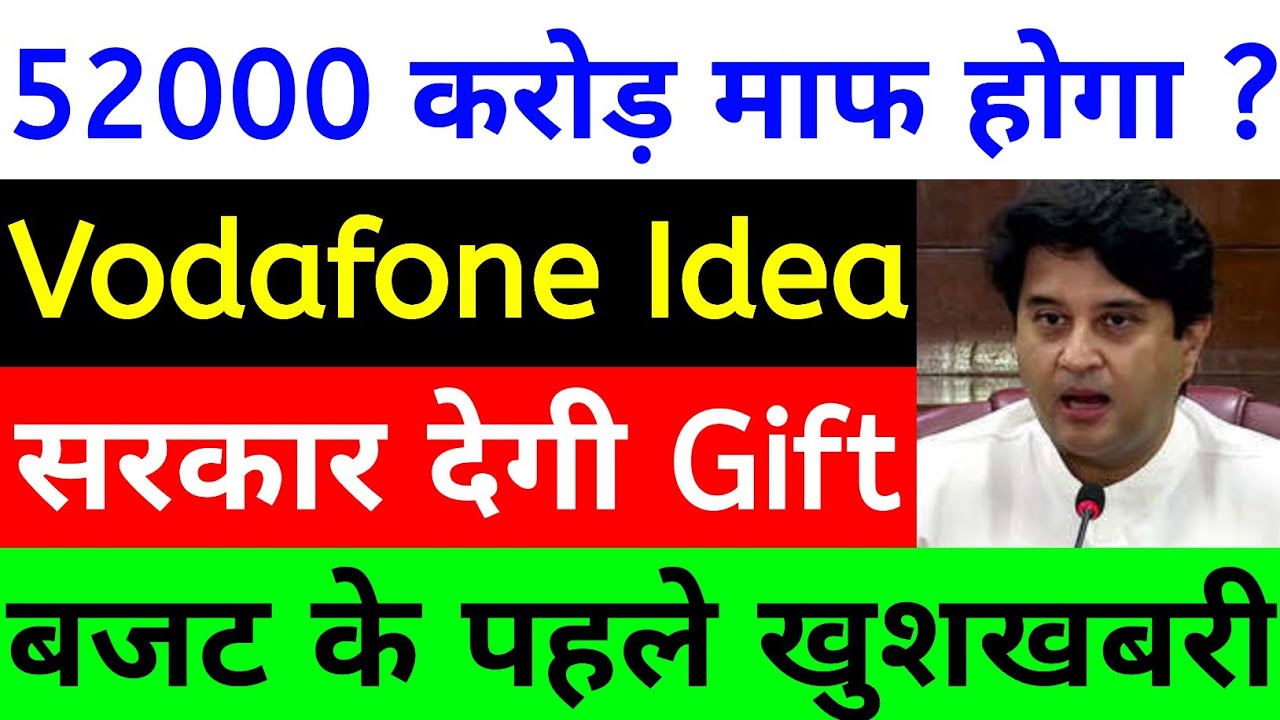
The central government is reportedly deliberating on waiving 100% penalties and 50% of the interest on AGR dues for telecom companies. If implemented, this decision could provide the industry with a much-needed breather:
- Vodafone Idea: A reduction of ₹52,000 crore in AGR dues.
- Bharti Airtel: Relief of approximately ₹38,000 crore.
- Tata Teleservices: A benefit of around ₹14,000 crore.
This move is expected to be one of the most significant relief measures for the telecom sector since September 2021. Speculation suggests that the announcement might be part of the Union Budget 2025, slated for February 1.
Impact on Vodafone Idea
If the relief package materializes, it could serve as a lifeline for Vodafone Idea, which has been struggling to sustain its operations due to massive debt and dwindling resources. The company’s total dues form a significant portion of the sector’s overall liabilities, making this decision pivotal for its survival.
Key Challenges:
- High debt burden.
- Declining subscriber base.
- Competition from rivals such as Reliance Jio and Bharti Airtel.
Recent Developments:
- The government recently eliminated the requirement for bank guarantees against spectrum dues, offering temporary relief to Vodafone Idea.
- The company has been actively introducing innovative prepaid plans to attract and retain customers.
Stock Performance and Market Trends
Despite recent gains, market analysts remain cautious about VI’s stock. Factors such as limited customer growth and high operational costs continue to exert pressure. However, the introduction of relief measures might improve investor sentiment in the medium term.
Key Stock Movements:
- Over four consecutive days in January, VI’s stock surged by nearly 19.50%.
- Analysts at Centrum Broking highlighted that the company lost 4 million subscribers in the last quarter, despite a 5% increase in average revenue per user (ARPU), which now stands at ₹64.
Subscriber Retention Strategies
To compete with industry leaders like Reliance Jio and Airtel, Vodafone Idea has introduced several customer-centric plans:
- ₹699 Prepaid Plan: Offers 28 days of unlimited calls, 2.5 GB daily data, and a complimentary Disney+ Hotstar Mobile subscription for 9 months.
- Weekend Data Rollover: Enables customers to carry forward unused data to the weekend.
- Data Delight Benefits: Provides additional data allowances for heavy users.
These strategies aim to improve customer satisfaction and attract new users, but the effectiveness of such plans will largely depend on the company’s ability to deliver seamless network services.
Mutual Fund Investments and Institutional Holdings
Mutual funds have shown a cautious approach toward Vodafone Idea. Data as of December 31 indicates a consistent reduction in holdings:
- Kotak Equity Arbitrage Fund: Reduced its holdings to 6.34%.
- ICICI Prudential Equity Arbitrage Fund: Decreased its stake to 4.37%.
- Other major funds, including Tata Arbitrage and Aditya Birla SL Arbitrage, have also cut their exposure.
This trend underscores the lack of confidence among institutional investors in the company’s turnaround prospects.
The Road Ahead for Vodafone Idea
Vodafone Idea’s revival largely hinges on the following factors:
- Government Support: Timely implementation of relief measures is crucial for alleviating the company’s financial burden.
- Customer Acquisition: Aggressive marketing and innovative plans will be essential to regain lost subscribers.
- 5G Rollout: Investments in infrastructure and spectrum to compete with peers in the 5G space.
The telecom giant’s efforts to stabilize its operations and improve market presence will be closely monitored by both investors and industry stakeholders.
Conclusion
Vodafone Idea’s journey toward recovery is fraught with challenges, but the potential government relief package offers a ray of hope. While short-term gains in stock performance and customer-centric strategies are encouraging, sustained growth will require structural changes and substantial financial backing.
As the industry awaits the Union Budget 2025, all eyes are on the government’s decision, which could redefine the future of India’s telecom landscape.