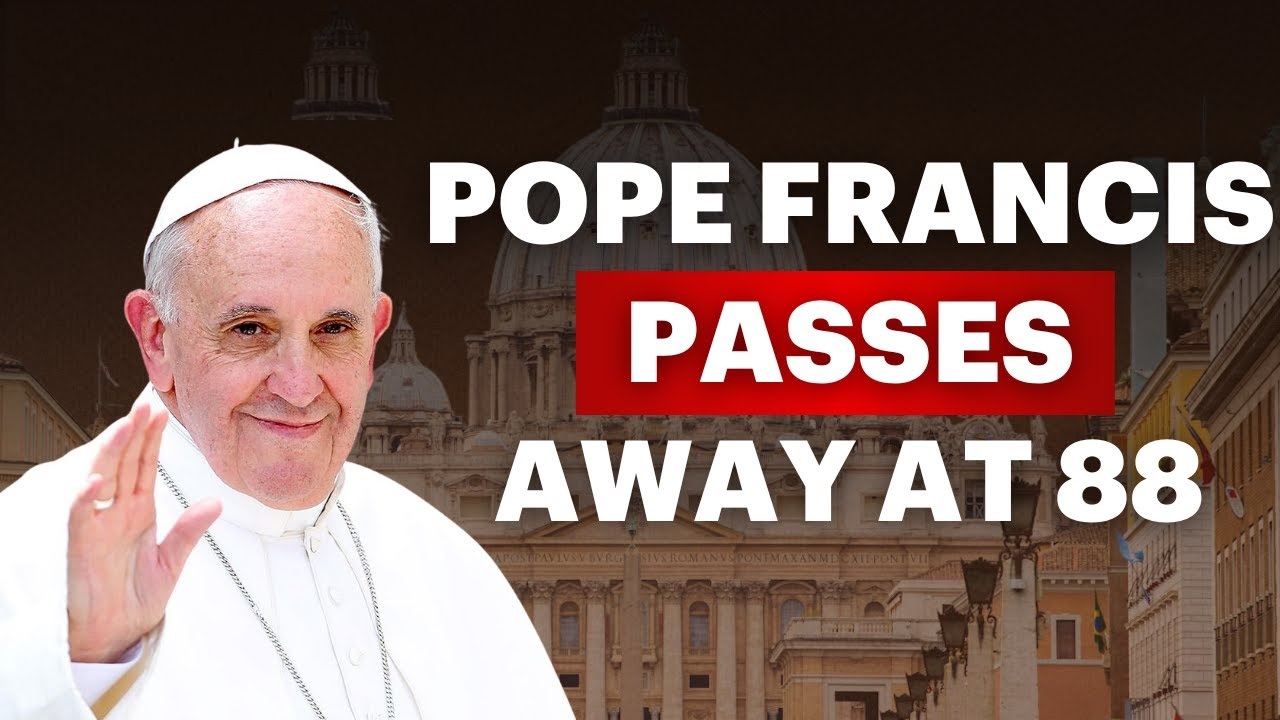
The world mourns the loss of Pope Francis, the first Latin American pontiff, who passed away at 88, just one day after celebrating Easter with thousands in Vatican City. His death, announced by the Vatican on Monday, marks the end of a transformative 12-year papacy defined by humility, compassion, and bold reforms. This article explores Pope Francis’ life, his groundbreaking contributions to the Catholic Church, and the enduring legacy he leaves behind.
A Historic Papacy: Who Was Pope Francis?
Born Jorge Mario Bergoglio on December 17, 1936, in Buenos Aires, Argentina, Pope Francis rose from humble beginnings to become one of the most influential religious leaders in modern history. Elected as the 266th pope in 2013, he made history as the first Jesuit and the first Latin American to lead the Roman Catholic Church. His papacy followed the unexpected resignation of Pope Benedict XVI, thrusting Bergoglio into a role that would redefine the Vatican’s global influence.
Francis’ early life shaped his commitment to serving the marginalized. As a young man, he worked as a chemical technician and nightclub bouncer before entering the priesthood. His experiences in Argentina’s working-class neighborhoods instilled a deep empathy for the poor, which became a cornerstone of his papacy.
Cardinal Kevin Farrell, the Vatican camerlengo, announced Francis’ passing in a somber video statement on Vatican TV: “Dear brothers and sisters, it is with profound sadness that I share the news of the death of our Holy Father, Francis, who returned to the Father at 7:35 this morning.” Farrell, now tasked with overseeing the Church’s affairs until a new pope is elected, described Francis’ life as one “dedicated to the service of the Lord and His Church.”
Pope Francis’ Death: A Global Loss
Pope Francis passed away at 1:35 a.m. EST on Monday, April 21, 2025, just one day after leading Easter celebrations in St. Peter’s Square. The Vatican confirmed his death through an official statement, noting that the pontiff had been battling various health challenges throughout his papacy. Despite these ailments, Francis remained a visible and active leader, engaging with global audiences until his final days.
The timing of his passing, so close to Easter, holds profound significance for Catholics worldwide. Easter, the holiest day in the Christian calendar, celebrates the resurrection of Jesus Christ, symbolizing hope and renewal. Francis’ participation in the Easter Mass, attended by thousands, underscored his unwavering commitment to his flock, even in frail health.
News of his death reverberated across social media platforms, with world leaders, religious figures, and everyday Catholics expressing their grief. The Vatican has not yet announced funeral arrangements, but preparations for the conclave to elect a new pope are underway, with Cardinal Farrell overseeing the transition.
A Papacy of Compassion and Humility
Pope Francis’ leadership stood out for its simplicity and focus on the marginalized. Unlike his predecessors, he shunned lavish papal residences, opting to live in a modest Vatican guesthouse. He often spoke of a “poor Church for the poor,” emphasizing the need to prioritize the disadvantaged over institutional wealth.
His approachable demeanor earned him the nickname “The People’s Pope.” Whether washing the feet of prisoners or embracing refugees, Francis embodied the Gospel’s call to love one’s neighbor. His actions resonated beyond the Catholic Church, inspiring people of all faiths to reflect on compassion and social justice.
Francis also broke barriers by addressing topics often avoided by the Vatican. He advocated for interfaith dialogue, meeting with leaders of Islam, Judaism, and other religions to promote peace. His willingness to engage with controversial issues, such as poverty and migration, cemented his reputation as a pope for the modern era.
Reforming the Vatican: A Legacy of Transparency
One of Pope Francis’ most significant achievements was his push for reform within the Vatican. Upon taking office, he inherited a Church grappling with financial scandals and allegations of clerical abuse. Determined to restore trust, Francis implemented sweeping changes to improve accountability and transparency.
Financial Reforms
The Vatican’s finances had long been shrouded in secrecy, with reports of mismanagement tarnishing the Church’s reputation. Francis established the Secretariat for the Economy, a body tasked with overseeing budgets and ensuring financial accountability. He also mandated external audits, a historic move that brought the Vatican’s financial practices in line with international standards.
These reforms faced resistance from within the Vatican, but Francis remained steadfast. His efforts to curb corruption and promote ethical stewardship strengthened the Church’s credibility and set a precedent for future pontiffs.
Addressing Clerical Abuse
The global clergy abuse crisis was one of the most pressing challenges of Francis’ papacy. Survivors and advocates criticized the Church’s handling of abuse cases, prompting Francis to take decisive action. He established new protocols for reporting abuse, removed bishops who failed to protect victims, and met personally with survivors to hear their stories.
In 2019, Francis convened a historic summit on child protection, bringing together bishops from around the world to address the crisis. While some critics argued that more needed to be done, his willingness to confront the issue head-on marked a turning point in the Church’s response to abuse.
A Voice for the Planet: Laudato Si’ and Environmental Advocacy
Pope Francis’ encyclical Laudato Si’ (2015) was a landmark document that positioned the Catholic Church as a global leader in environmental advocacy. In it, he called for urgent action to combat climate change, warning that humanity’s exploitation of the planet was harming both the Earth and its most vulnerable inhabitants.
Laudato Si’ resonated far beyond Catholic circles, earning praise from scientists, policymakers, and environmentalists. Francis framed environmental stewardship as a moral imperative, urging individuals and governments to adopt sustainable practices. His message inspired grassroots movements and influenced global climate discussions, including the Paris Agreement.
Francis also used his platform to highlight the intersection of environmental and social justice. He argued that the poor, who contribute least to climate change, suffer its worst consequences. By linking ecological concerns with poverty, he brought a fresh perspective to the global conversation on sustainability.
Pope Francis’ Global Impact
Francis’ papacy transcended the walls of the Vatican, touching lives across continents. His international travels took him to places rarely visited by popes, including conflict zones and marginalized communities. From the slums of Nairobi to the war-torn regions of South Sudan, Francis brought a message of hope and solidarity.
Advocacy for Migrants and Refugees
The global migration crisis was a defining issue of Francis’ papacy. He consistently called for compassion toward migrants and refugees, urging governments to welcome those fleeing violence and poverty. His 2016 visit to the Greek island of Lesbos, a hotspot for migrant arrivals, drew global attention to the plight of displaced people.
Francis’ advocacy extended to policy discussions, where he challenged world leaders to prioritize human dignity over border security. His words sparked debate but also inspired countless individuals to volunteer and support refugee initiatives.
Interfaith Dialogue and Peacebuilding
In an era of religious polarization, Francis championed interfaith dialogue as a path to peace. His 2019 visit to the United Arab Emirates, where he signed a joint declaration with a leading Muslim imam, was a historic step toward Christian-Muslim reconciliation. He also reached out to Jewish and Buddhist communities, fostering mutual respect and understanding.
Francis’ commitment to peace extended to diplomacy. He played a key role in mediating tensions between the United States and Cuba, facilitating a thaw in relations in 2014. His quiet diplomacy underscored the Vatican’s enduring influence on the global stage.
Challenges and Controversies
No papacy is without challenges, and Francis’ tenure was no exception. His progressive stance on issues like climate change and migration drew criticism from conservative factions within the Church. Some traditionalists argued that his emphasis on social justice diluted Catholic doctrine, while others questioned his approach to divisive topics like divorce and homosexuality.
Francis’ famous remark, “Who am I to judge?” in response to a question about gay Catholics, signaled a more inclusive tone but also sparked debate. While he upheld traditional Church teachings, his calls for mercy and dialogue challenged long-held assumptions and alienated some hardline Catholics.
Health struggles also marked Francis’ later years. He underwent surgeries and battled respiratory issues, yet he continued to fulfill his duties with remarkable resilience. His determination to lead despite physical limitations inspired many but also raised concerns about the toll of the papacy.
The Road Ahead: The Conclave and Beyond
With Pope Francis’ passing, the Catholic Church enters a period of transition. The conclave, a gathering of cardinals to elect the next pope, will convene in the coming weeks. Cardinal Kevin Farrell, as camerlengo, will guide the Church through this process, ensuring continuity until a new pontiff is chosen.
The next pope will inherit a Church shaped by Francis’ vision of compassion, reform, and global engagement. The challenges of a rapidly changing world—climate change, migration, and secularism—will demand a leader capable of building on Francis’ legacy while addressing new realities.
Speculation about the next pope is already underway, with names from Africa, Asia, and Latin America circulating. Francis’ appointment of diverse cardinals from underrepresented regions has increased the likelihood of a non-European pontiff, continuing his push for a more inclusive Church.
Pope Francis’ Enduring Legacy
Pope Francis’ death marks the end of an era, but his legacy will endure for generations. He redefined the papacy as a platform for humility, compassion, and action, challenging the world to prioritize the poor, protect the planet, and embrace dialogue. His reforms, from financial transparency to addressing clerical abuse, strengthened the Church’s moral authority, while his global advocacy amplified the voices of the marginalized.
As Catholics and non-Catholics alike reflect on his life, one thing is clear: Pope Francis was more than a religious leader. He was a beacon of hope in a divided world, reminding us that love, justice, and humility can transform lives.
The Vatican’s announcement of his passing concluded with a simple yet powerful statement: “His entire life was dedicated to the service of the Lord and His Church.” For Pope Francis, that service was a lifelong mission—one that will continue to inspire long after his departure.