The global financial landscape is shifting rapidly, with economic turbulence in the US, evolving policies in India, and emerging investment opportunities capturing attention. From the looming US debt crisis to India’s robust economic growth and transformative railway reforms, this article delves into critical market updates, offering actionable insights for investors and traders. With a focus on the upcoming Reserve Bank of India (RBI) meeting, US economic challenges, and promising sectors like gold mining and railways, we explore how these developments shape investment strategies. This comprehensive guide, crafted with SEO precision, aims to equip you with the knowledge to navigate today’s volatile markets.
Understanding the US Economic Crisis: A Debt Spiral Threatens Stability
The Alarming Rise of US National Debt
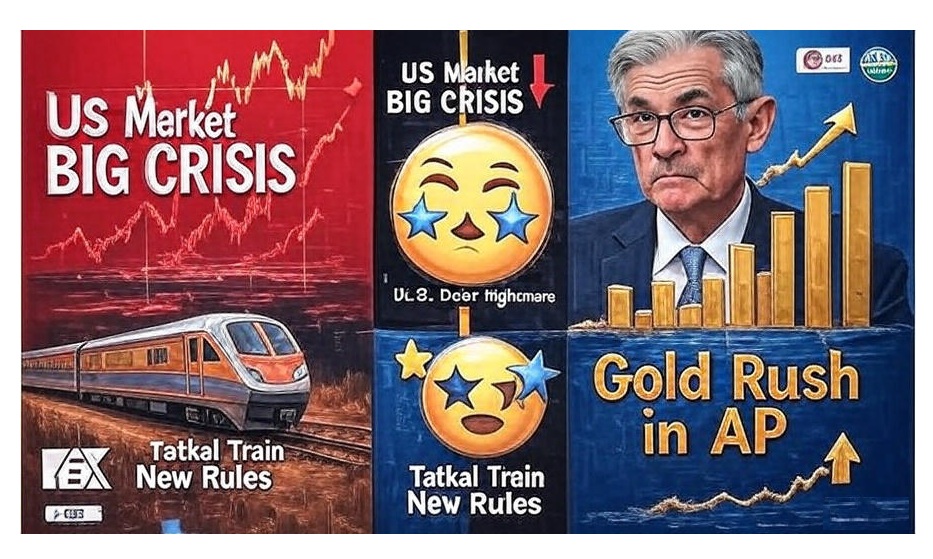
The US economy, the world’s largest, faces a growing threat from its escalating national debt, currently standing at approximately $36.9 trillion. This figure, often cited as $36 trillion on financial platforms, reflects a persistent gap between government revenue and spending. Each year, the US government spends significantly more than it earns, resulting in a ballooning fiscal deficit. For instance, if annual revenue is $40,000 but spending reaches $50,000, the $10,000 shortfall is covered through borrowing. Over time, this debt accumulates, with interest payments alone consuming a substantial portion of revenue—potentially 30-40% in the coming years.
This trajectory poses a severe risk to economic stability. Prominent figures like Elon Musk, Ray Dalio, and Jamie Dimon have issued stark warnings about a potential “debt spiral.” Musk, in particular, has criticized recent legislative proposals, such as a new bill introduced by President Trump, which he argues could exacerbate the deficit by reducing tax revenue while increasing spending. Such policies could push the US closer to a financial crisis, impacting global markets.
Weak Economic Indicators Signal Trouble
Recent US economic data underscores these concerns. The ADP jobs report for May 2025 revealed only 37,000 jobs added, far below the expected 100,000, signaling a weakening labor market. Similarly, the ISM Services Index reported disappointing figures, further indicating economic slowdown. These weak indicators have driven bond yields down from 4.4-4.5% to around 4.3%, as markets anticipate Federal Reserve rate cuts to stimulate growth. However, President Trump has publicly pressured the Fed, calling its chairman “too late” to act, with a key meeting scheduled for June 18, 2025, expected to influence market directions.
Geopolitical Tensions Amplify Uncertainty
Adding to economic woes, geopolitical tensions, particularly between Russia and Ukraine, are creating additional market disturbances. Russian President Vladimir Putin’s strong statements against Ukraine, coupled with Trump’s announcement of travel bans on 12 countries (including Afghanistan, Iran, and Libya) and partial restrictions on seven others, signal heightened global instability. These developments could further disrupt investor confidence, particularly in US markets.
India’s Economic Resilience: A Bright Spot Amid Global Uncertainty
Strong Macroeconomic Fundamentals
In contrast to the US, India’s economy demonstrates remarkable resilience. The Sensex closed at 81,442, gaining 444 points, while the Nifty rose 131 points to 24,751. The Bank Nifty also performed strongly, climbing 84 points to 55,761. India’s robust GDP growth and stable macroeconomic indicators position it as a beacon of opportunity for investors. The upcoming RBI meeting on June 6, 2025, at 10 AM is anticipated to reinforce these positive trends, with analysts expecting discussions on India’s growth trajectory and monetary policy.
RBI’s Rate Decision: What to Expect
The RBI’s monetary policy meeting is a focal point for traders and investors. Market expectations are set for a 25-basis-point rate cut, which is largely priced in. However, a surprise 50-basis-point cut, as speculated by some analysts like SBI Research, could act as a significant positive catalyst for Indian markets. Traders should prepare for volatility between 10 AM and 11 AM, as stop-loss hunting and fluctuations in the India VIX are likely during this period.
Long-Term Market Outlook: Sensex to 300,000 by 2035
Veteran investor Ramdev Agarwal has made a bold prediction, forecasting the Sensex to reach 300,000 by 2035. Starting from its current level of 81,000, this implies a fourfold increase, driven by a projected 15% compound annual growth rate (CAGR). Agarwal’s logic is rooted in historical performance, noting that the Sensex has grown 800 times since its inception, achieving a 16% CAGR. While market corrections of 20-30% are expected along the way, long-term investors are advised to remain steadfast, avoiding panic during short-term volatility.
Investment Opportunities in India: Sectors to Watch
Gold Mining: Deccan Gold Mines Shines Bright
For the first time in eight years, India’s gold mining sector is gaining traction. Deccan Gold Mines, based in Andhra Pradesh, has secured permissions from both central and state governments to operate the Jonnagiri Gold Mine. The company aims to extract 400 tons of gold, with an initial target of producing 750 kg annually. Despite a history of limited business activity and negative returns on equity (ROE) and capital (ROC), recent management statements have driven a 10% surge in the company’s stock price, currently trading at approximately ₹163. While institutional holding remains minimal, growing investor confidence could bolster its prospects. Investors should monitor revenue performance closely before committing.
Railway Reforms: Enhancing Accessibility and Efficiency
India’s railway sector is undergoing significant transformation, with new rules aimed at improving passenger experience and curbing booking malpractices. One major issue has been the manipulation of tatkal ticket bookings, where seats vanish quickly, often landing passengers on waiting lists. To address this, the Indian Railways plans to introduce Aadhaar-based OTP authentication for ticket bookings, ensuring genuine users have better access. Additionally, efforts to enhance food quality, station cleanliness, and the availability of general and sleeper coaches aim to resolve long-standing issues. These reforms could boost railway-related stocks, such as RailTel, which recently secured a ₹274.40 crore order from the Maharashtra Motor Vehicles Department.
Corporate Developments Driving Market Momentum
Several Indian companies are making waves with strategic moves and strong financial performance:
- Dalmia Bharat: The company has reduced its stake in IX from 15% to approximately 13% through recent sales, signaling a strategic reallocation of resources. This follows a pattern of divestment since 2021, with block deals becoming common in bullish markets as promoters and private equity players book profits.
- Bajaj Finserv: A ₹4,500 crore block deal is underway, with Bajaj Holdings selling 2-3% of its stake at a discount, reflecting strong market liquidity.
- Garden Reach Shipbuilders: The company signed memoranda of understanding (MOUs) with Norway’s Katsan Reheder and Dubai’s Aeris Marine, alongside a global engine manufacturer, to strengthen its shipbuilding capabilities.
- Dixon Technologies: Partnering with HKC for semiconductor and display manufacturing, Dixon is poised to benefit from India’s growing electronics sector, targeting smartphones, TVs, and automotive displays.
- Welspun Living and Welspun Corp: Welspun Living surged after Jefferies initiated coverage with a 40% upside target, citing its leadership in home textiles and benefits from India’s free trade agreements. Welspun Corp secured a ₹450 crore export order for anti-corrosion pipes, reinforcing its position in the offshore sector.
- Angel One: The brokerage reported a 34% year-on-year increase in client base, with a 3.2% month-on-month rise in daily orders and a 12% improvement in SIP registrations, reflecting strong market share growth.
- IDFC First Bank: The Competition Commission of India approved a 9.99% stake acquisition, pending RBI approval, signaling potential capital infusion.
- Apollo Micro Systems: The company raised ₹308 crore through a preferential equity issue, with funds earmarked for R&D and defense sector expansion.
- NTPC Green: Secured a 1,000 MW solar project agreement with Uttar Pradesh Power Corporation at ₹2.56 per kWh, ensuring long-term revenue visibility.
- KEC International: Received ₹221 crore in new orders across transmission, oil, and gas pipelines, strengthening its diversified portfolio.
- Hindustan Zinc: As a unique player in silver alongside zinc and lead, the company benefits from strong margins in the silver segment, making it an attractive option for investors bullish on precious metals.
Strategies for Navigating Market Volatility
Short-Term Trading: Brace for Volatility
With the RBI meeting on June 6 and the Federal Reserve’s decision on June 18, markets are poised for short-term volatility. Traders should focus on key support levels for the Nifty, which remains in a consolidation phase. The recent Nifty expiry showcased significant volatility, with a 4% drop in the India VIX leading to reduced option premiums. Mid- and small-cap stocks, however, are showing directional momentum, approaching critical resistance zones. A breakout could push these indices to all-time highs, while resistance may lead to further consolidation.
Long-Term Investing: Stay Disciplined
For long-term investors, market corrections are opportunities to build wealth. Agarwal’s advice to avoid panic during downturns is critical. Instead of exiting during volatility, consider systematic investments in mutual funds or ETFs, which offer diversified exposure and mitigate stock-specific risks. Beginners should prioritize these instruments over individual stocks to avoid emotional decision-making.
Sectoral Focus: Diversify Across Growth Areas
The railway, gold mining, and technology sectors present compelling opportunities. Companies like RailTel, Deccan Gold Mines, and Dixon Technologies are well-positioned to capitalize on India’s growth story. Additionally, firms with strong fundamentals, such as Welspun Living and Hindustan Zinc, offer exposure to global demand trends in textiles and precious metals, respectively.
Global Market Context: Europe and Asia Hold Steady
While the US grapples with economic challenges, European and Asian markets have shown resilience. The European Central Bank (ECB) is expected to cut interest rates, stabilizing bond yields and supporting market sentiment. Asian markets, including India, continue to perform well, driven by strong domestic fundamentals and investor confidence. However, global investors must remain vigilant, as US debt concerns and geopolitical tensions could trigger broader market reactions if unresolved.
Conclusion: Seizing Opportunities in a Dynamic Market
The global financial landscape is at a crossroads, with the US facing a debt crisis and India emerging as a stable investment destination. The upcoming RBI and Federal Reserve meetings will be pivotal in shaping market directions, with potential rate cuts offering short-term catalysts. For investors, India’s robust growth, coupled with reforms in sectors like railways and opportunities in gold mining and technology, presents a compelling case for strategic investments. By staying disciplined, diversifying across sectors, and leveraging tools like mutual funds and ETFs, investors can navigate volatility and capitalize on long-term growth.
Call to Action: Stay informed with real-time market updates and actionable insights. Subscribe to our newsletter for expert analysis and follow us on social media for daily tips to enhance your investment journey.