
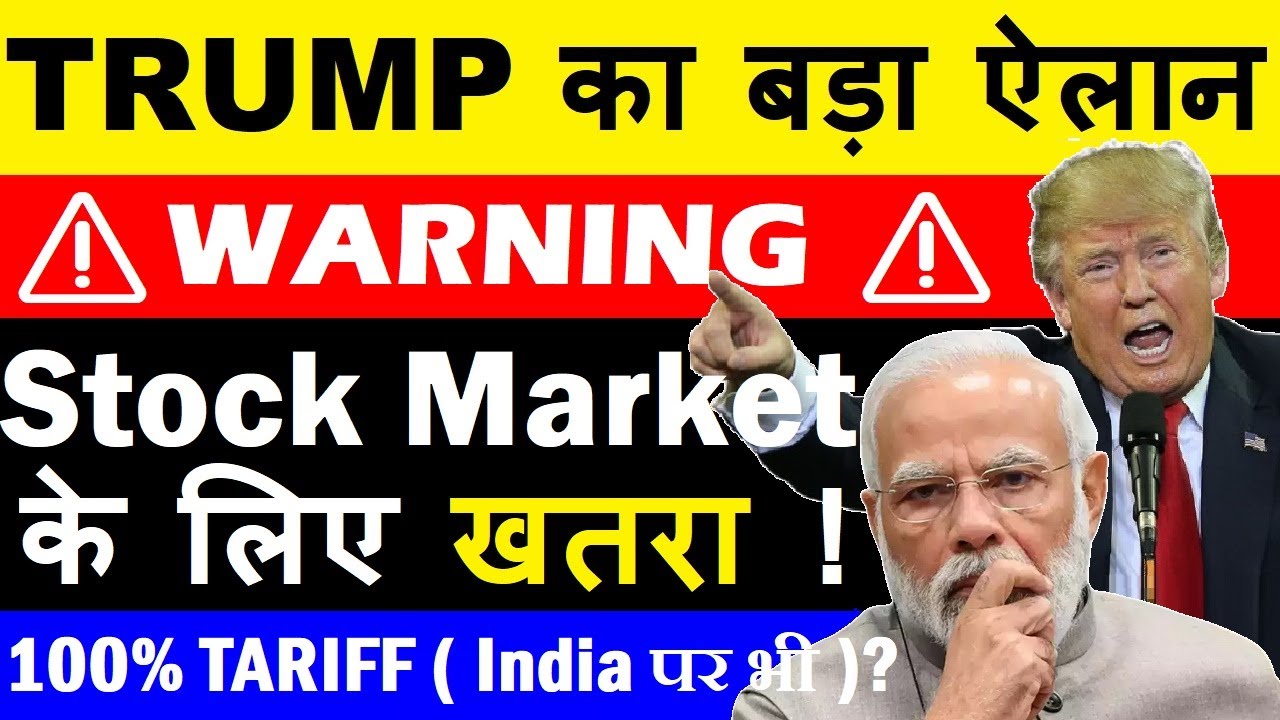
Introduction: Trump’s Tariff Threat and Market Implications
The global economic landscape is once again on edge as former U.S. President Donald Trump hints at imposing steep tariffs on key trading partners, including Canada, Mexico, and China. The speculation has intensified as Trump’s recent statements indicate a potential 100% tariff on BRICS nations, including India. If implemented, this move could create ripple effects across global markets, significantly impacting stock markets, inflation, and trade policies.
Geopolitical Uncertainty and Economic Repercussions
Recent reports suggest that the Biden administration and economic experts are closely monitoring these developments. Trump’s rhetoric on tariffs has historically affected market stability, causing investors to react cautiously.
- Stock Market Volatility: The uncertainty surrounding trade policies could lead to sharp fluctuations in stock markets, particularly in emerging economies like India and China.
- Impact on Inflation: Higher tariffs could escalate consumer prices, affecting essential commodities like gas, groceries, and automobiles.
- Effects on the Automobile Industry: Since Canada and Mexico are major suppliers of auto parts to the U.S., any tariff hike could disrupt supply chains, leading to higher vehicle prices and production slowdowns.
Trump’s Focus on Tariffs: A Repeated Strategy
Trump’s emphasis on tariffs is not new. During his previous tenure, he aggressively imposed trade barriers on China, leading to a prolonged trade war. His latest statements suggest a similar approach, but with an even more extensive range of countries, including BRICS nations.
- Canada and Mexico: Reports suggest Trump may reintroduce tariffs on these nations, further straining North American trade relations.
- China: Speculation around a 25% tariff on Chinese goods has already started affecting investor sentiment.
- BRICS Nations: The biggest shocker, however, is Trump’s potential 100% tariff threat on BRICS nations, including India. This move could severely disrupt trade agreements and economic collaborations.
Impact on India: Will It Lead to a Trade Shift?
India enjoys a strong trade surplus with the U.S., particularly in the IT, pharmaceuticals, and manufacturing sectors. If Trump implements steep tariffs on Indian exports, the following consequences are expected:
- IT and Services Industry Hit: The Indian IT sector, which heavily relies on U.S. contracts and outsourcing, may face revenue losses.
- Export Challenges: Indian manufacturers, particularly in textiles, automobiles, and engineering, could struggle with reduced competitiveness in the U.S. market.
- GDP Concerns: India’s economic growth could be impacted due to trade restrictions, affecting foreign exchange reserves and employment rates.
The BRICS Perspective: Will India Exit BRICS?
Trump’s 100% tariff warning is a direct response to BRICS nations exploring de-dollarization strategies. While China and Russia have already reduced their dependency on the U.S. dollar, India’s stance remains strategic.
- Russia and China’s Position: Russia, already under heavy sanctions, may not be significantly impacted. However, China’s extensive trade relations with the U.S. could see turbulence.
- India’s Dilemma: If Trump enforces extreme tariffs, some reports suggest India might consider exiting BRICS to maintain favorable U.S. trade relations.
- Shashi Tharoor’s Statement: Indian politician Shashi Tharoor dismissed Trump’s threats, claiming they are largely speculative and lack immediate feasibility.
Upcoming Modi-Trump Meeting: A Crucial Discussion
One of the most anticipated diplomatic events is the scheduled meeting between Indian Prime Minister Narendra Modi and Donald Trump. Experts predict that the following topics will be discussed:
- Trade Negotiations: India is expected to seek clarity on Trump’s tariff policies and negotiate exemptions.
- De-Dollarization Concerns: Trump will likely demand written commitments from BRICS nations, ensuring they will not actively promote de-dollarization.
- Strategic Partnerships: Modi may emphasize India’s crucial role in global supply chains and technology sectors, positioning India as an indispensable trade ally.
Final Thoughts: What Lies Ahead?
As geopolitical tensions rise, businesses and investors must prepare for potential tariff hikes, market fluctuations, and shifts in global trade dynamics. While Trump’s threats may not materialize immediately, they signal a changing economic landscape that could redefine international trade relations.
With global stock markets, inflation rates, and trade policies at stake, the world watches closely to see whether Trump’s aggressive tariff stance will become a reality. Will India remain in BRICS, or will economic pressure force a policy shift? The coming months will provide crucial insights into the future of U.S.-India trade relations and global economic stability.