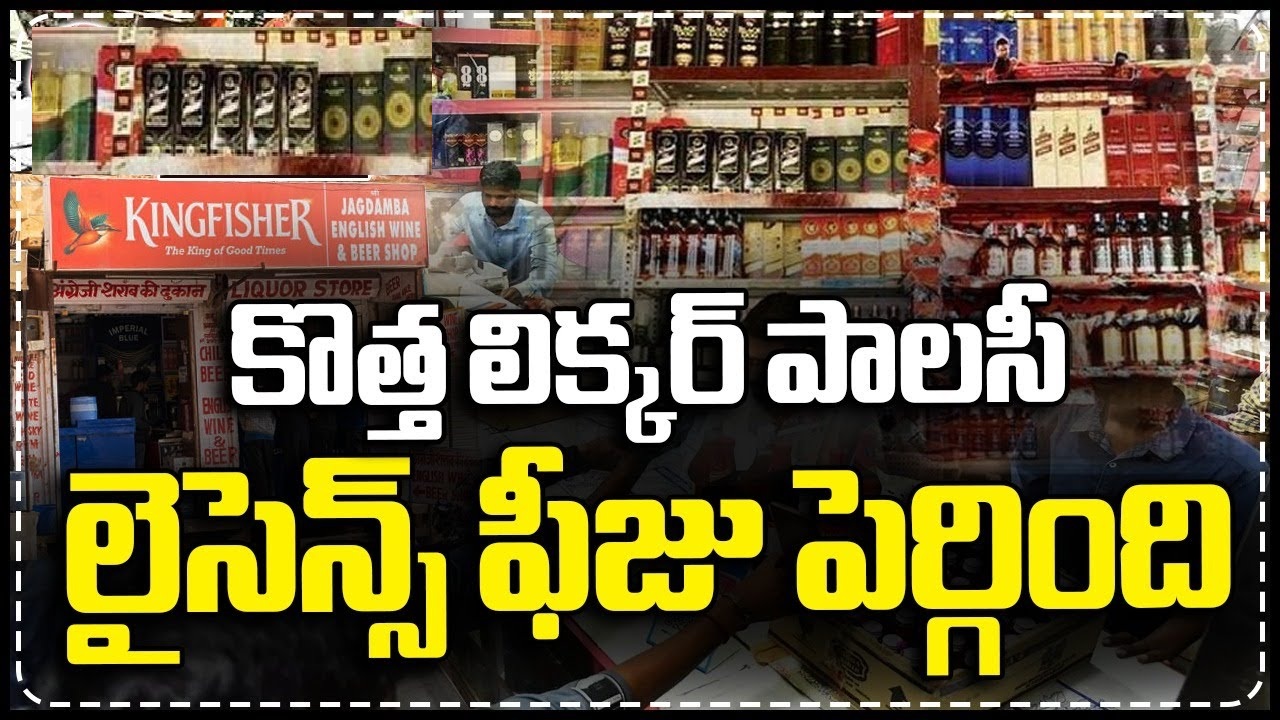
Telangana’s government has rolled out an ambitious new excise policy that promises to reshape the liquor retail landscape across the state. Effective from December 1, 2025, to November 30, 2027, this two-year framework introduces population-based license fees, increased application costs, and targeted reservations for social empowerment. As Hyderabad and other urban centers gear up for implementation, business owners and investors eye opportunities in this lucrative sector. This comprehensive guide dives into the details, implications, and future prospects of the Telangana liquor policy, helping you understand how it impacts entrepreneurs, consumers, and the state’s economy.
Understanding the New Telangana Liquor Excise Policy Framework
The Telangana government actively signals its commitment to regulated alcohol sales by issuing orders for the 2025-2027 excise policy. This move comes as the current policy nears its end, prompting the excise department to initiate application processes soon. Officials anticipate starting applications in October 2025 to ensure a smooth transition by December.
At its core, the policy maintains 2,620 wine shops statewide, with Hyderabad hosting 690 of them. The government bases license allocations on population density, ensuring equitable distribution. For areas with up to 5,000 residents, a single wine shop operates, reflecting the policy’s focus on controlled access. This structured approach not only curbs over-saturation but also boosts revenue through tiered fees.
Entrepreneurs must pay a non-refundable application fee of ₹3 lakh per shop, up from ₹2 lakh in the previous cycle. This hike aims to filter serious applicants while generating substantial upfront revenue for the state. In the 2023-2025 policy, applications exceeded 32,000, yielding ₹2,460 crore. Projections for this round suggest revenues could climb to ₹3,500 crore, underscoring the policy’s fiscal importance.
Population-Driven License Fees: How Telangana Structures Liquor Shop Costs
Telangana innovates by linking liquor shop license fees directly to local population sizes, promoting fairness and revenue optimization. This graduated system encourages businesses in both rural and urban settings while accounting for demand variations.
For regions with populations under 5,000, operators pay ₹50 lakh annually as license fees. As population grows to between 5,000 and 50,000, the fee rises to ₹55 lakh. Areas with 50,000 to 100,000 residents see a ₹60 lakh charge, while those between 100,000 and 500,000 pay ₹65 lakh. Larger zones with 500,000 to 2 million people face ₹85 lakh fees, and mega-cities like Hyderabad, boasting over 2 million, command ₹1.1 crore per year.
This population-based model actively adapts to demographic realities. For instance, Hyderabad’s high fees reflect its dense urban fabric and higher sales potential. Rural districts, conversely, benefit from lower costs, making liquor retail viable for smaller entrepreneurs. The government collects these fees annually over the two-year policy term, separate from the initial application charges.
Compared to past policies, this represents an evolution. In 2015, application fees started at ₹50,000, doubling to ₹1 lakh under the previous administration, and reaching ₹2 lakh by 2019. The current ₹3 lakh threshold deters casual applicants, potentially reducing competition but raising barriers for newcomers.
Application Process and Lucky Draw System for Telangana Liquor Licenses
Prospective owners kick off the process by submitting applications, likely opening in October 2025. Applicants provide proof of residence, Aadhaar details, and the ₹3 lakh fee via demand draft. The excise department handles verification, ensuring compliance with state regulations.
Once applications close, a lucky draw determines allotments. For each district or city, officials tally submissions against available shops—such as Hyderabad’s 690—and conduct transparent draws. Winners receive A4-sized shop allocations, after which they pay the population-specific license fee.
This lottery system levels the playing field, preventing monopolies and encouraging diverse participation. However, the non-refundable application fee adds risk; unsuccessful bidders forfeit their investment, which flows directly into government coffers. In previous cycles, groups pooled resources for multiple applications, a strategy that may intensify now with higher fees.
Border regions like Khammam and Kodad attract out-of-state applicants, particularly from Andhra Pradesh, where similar policies have concluded. Anyone from any state can apply with proper documentation, broadening the applicant pool and potentially inflating revenues.
Comprehensive Step-by-Step Application Process
Step 1: Initial Preparation and Eligibility Assessment
Before beginning the application process, prospective applicants must ensure they meet the basic eligibility criteria. The licensing system is open to individual applicants, partnership firms, and companies. Each applicant may submit multiple applications for different A4 liquor shops, but each application requires a separate application fee payment.
Key Eligibility Requirements:
- Indian citizenship or valid residency status
- No pending criminal cases related to excise violations
- Compliance with local municipal and fire safety regulations
- Adequate financial capacity to meet licensing fees and operational requirements
Step 2: Document Collection and Verification
The application process requires comprehensive documentation to establish identity, financial capacity, and legal compliance:
Personal Documents:
- Latest passport-size photographs
- PAN Card (mandatory for all applicants)
- Aadhaar Card for identity verification
- Voter ID or Driving License as additional proof
- Latest electricity bill, bank statement, or telephone bill (not older than 2 months)
Property Documents:
- Sale deed or title documents for owned property
- Rent agreement or No Objection Certificate (NOC) for rented property
- Electricity connection proof for the proposed premises
- Municipal clearance certificates
Business-Specific Documents (for firms/companies):
- Certificate of Incorporation
- Memorandum of Association (MOA) and Articles of Association (AOA)
- Partnership deed (for partnership firms)
- Latest Income Tax Returns (ITR)
- Digital Signature Certificate (DSC) for all directors
- Director Identification Number (DIN) for company directors
Step 3: Online Application Submission
The Telangana Excise Department has streamlined the application process through its official online portal at excise.telangana.gov.in. Applicants must:
- Register on the portal using valid mobile number and email ID
- Complete the application form with accurate business and personal details
- Upload all required documents in prescribed formats
- Pay the application fee of ₹3 lakh through online banking or approved payment methods
- Generate application receipt for future reference and tracking
Step 4: Application Scrutiny and Verification
After submission, the Excise Department conducts a thorough scrutiny process:
- Document verification by designated officials
- Premises inspection to ensure compliance with licensing norms
- Background verification of applicants
- Financial capacity assessment based on submitted documents
Applications not meeting the prescribed criteria are rejected at this stage, emphasizing the importance of complete and accurate submissions.
Step 5: Draw of Lots System
Telangana employs a transparent lottery system for license allocation to ensure fairness and prevent corruption:
Draw Process:
- Conducted by District Collectors in their respective jurisdictions
- Held in the presence of applicants or their authorized representatives
- All eligible applications participate in the random selection
- Results are announced immediately following the draw
Recent Example: In June 2025, the department received 3,668 applications for just 28 bar locations, with the draw conducted on June 13, demonstrating the intense competition in the sector.
Step 6: Payment and License Formalization
Successful applicants must complete payment formalities on the day of the draw:
- First installment payment of Retail Shop Excise Tax (RSET)
- Security deposit in the form of bank guarantee (25% of annual RSET)
- Special Retail Excise Tax of ₹5 lakh per annum
The new policy allows payment in six installments rather than four, with payments due every two months, providing better cash flow management for licensees.
Documentation Requirements and Compliance Standards
Mandatory Clearances and Certifications
Beyond basic documentation, liquor shop licenses require various clearances:
Municipal and Statutory Clearances:
- Municipal corporation/council clearance
- Fire safety clearance certificate
- Pollution control board clearance (where applicable)
- Building plan approval and occupancy certificate
Location Compliance:
Premises must maintain minimum distances from:
- Educational institutions: 100 meters minimum
- Places of worship: 100 meters minimum
- Hospitals and healthcare facilities: 100 meters minimum
- Highways: 50 meters minimum
Technical Infrastructure Requirements
Modern licensing mandates include technological integration:
Mandatory Systems Installation:
- Three CCTV cameras with central control room connectivity
- Automated transaction recording systems
- Digital inventory management capabilities
- Real-time sales reporting mechanisms
These technological requirements ensure transparency, prevent illegal activities, and enable efficient revenue monitoring by the Excise Department.
Social Reservations in Telangana’s Liquor Shop Allotments: Empowering Communities
The policy champions social equity by reserving quotas for marginalized groups, fostering economic inclusion. Goud community members secure 15% of shops, Scheduled Castes (SC) get 10%, and Scheduled Tribes (ST) receive 5%. This initiative targets unemployment and empowers underrepresented castes to enter the liquor business.
Reservations trace back to prior governments, continuing a tradition of social welfare through commerce. Beneficiaries often include young entrepreneurs or those seeking new livelihoods, aligning with broader state schemes for empowerment. By integrating these groups, Telangana not only diversifies ownership but also ensures policy benefits trickle down to grassroots levels.
Critics argue that while reservations promote inclusion, they might complicate the draw process. Nonetheless, the government views this as essential for balanced growth, especially in a sector generating 34-35 thousand crore annually in excise revenue—funding welfare programs statewide.
Operational Timings and Regulations for Liquor Shops in Telangana
Shops operate under strict timings to maintain public order. In Greater Hyderabad Municipal Corporation (GHMC) limits, outlets open from 10 AM to 11 PM. Outside GHMC, timings shorten to 10 AM to 10 PM, accommodating rural lifestyles and reducing late-night disturbances.
These rules emphasize responsible retailing, with no sales beyond designated hours. The policy also prohibits shops in sensitive areas, such as near schools or religious sites, reinforcing community safeguards. Enforcement falls to the excise department, which monitors compliance through inspections and penalties.
Economic Impact: How Excise Revenue Powers Telangana’s Development
Excise duties form a cornerstone of Telangana’s budget, with liquor sales contributing massively to state coffers. The 2025-2027 policy builds on this, projecting higher inflows from elevated fees and applications. Beyond wine shops, the state hosts around 1,200 bar-cum-restaurants, each paying up to ₹40 lakh in licenses annually—escalating to ₹1.1 crore in Hyderabad.
This revenue stream finances infrastructure, education, and health initiatives. For example, the previous policy’s ₹2,460 crore from applications alone highlights the sector’s potency. With inflation and rising costs, the fee increases ensure sustained funding, allowing the government to expand welfare without heavy taxation elsewhere.
Businesses benefit too; higher fees correlate with protected markets, potentially boosting profits in high-demand areas. However, some stakeholders voice concerns over the ₹3 lakh application barrier, labeling it burdensome for small groups. Youth or joint ventures previously thrived by sharing costs, but now face steeper entry points.
Historical Evolution of Telangana’s Excise Policies
Telangana’s excise journey began post-state formation in 2014, inheriting Andhra Pradesh’s framework before crafting its own. The 2015 policy set modest ₹50,000 application fees, prioritizing accessibility. Under Chief Minister K. Chandrashekar Rao’s tenure, fees doubled in 2017 and again in 2019, reflecting fiscal ambitions.
The 2023-2025 cycle introduced the ₹2 lakh threshold, generating record applications amid economic recovery. Now, the Congress-led government under Revanth Reddy refines this with population tiers and social quotas, addressing criticisms of uneven distribution.
Comparisons with neighboring states reveal Telangana’s competitive edge. Andhra Pradesh’s recent policy emphasized government-run shops, contrasting Telangana’s private allotments. Karnataka focuses on premium brands, while Tamil Nadu imposes strict controls. Telangana strikes a balance, blending revenue goals with social objectives.
Future Innovations: Fruit-Based Liquors and Micro-Breweries in Telangana
Exciting developments loom beyond traditional wines. The government plans policies for fruit-derived liquors, like vodkas from local produce, to tap cosmopolitan markets in Hyderabad. Micro-breweries producing draft beers—with a short 36-hour shelf life—could soon debut in major cities, offering fresh, low-cost options.
Tetra-packaged small servings, akin to juice pouches, may enter the fray, enhancing portability and affordability. Officials have already approved 604 new liquor varieties from various states, enriching consumer choices. These innovations aim to modernize the sector, attracting tourists and boosting sales in urban hubs.
Hyderabad, as a tech-savvy metropolis, stands to gain most. With its diverse population, demand for craft and fruit-based drinks surges, potentially elevating Telangana’s excise revenue further. The excise department issues No Objection Certificates (NOCs) swiftly, signaling readiness for rollout.
Challenges and Criticisms of the New Excise Policy
Despite positives, hurdles persist. Higher application fees deter small investors, possibly consolidating power among wealthier players. Some business veterans decry the ₹3 lakh as “troublesome,” arguing it stifles competition.
Public health advocates worry about increased access, urging stricter anti-addiction measures. The policy’s reliance on lotteries introduces uncertainty, frustrating applicants who invest without guarantees.
Enforcement remains key; past policies faced smuggling and counterfeit issues. The government counters by empowering excise officials with advanced tracking, but sustained vigilance is crucial.
Opportunities for Entrepreneurs in Telangana’s Liquor Market
Aspiring owners find ample prospects. The policy’s stability over two years allows long-term planning, with high-margin potential in populous areas. Reservations open doors for SC/ST/Goud communities, while out-of-state applicants diversify the ecosystem.
To succeed, applicants should prepare documentation early, scout locations, and consider partnerships. Monitoring excise updates via official portals ensures timely action. With revenues funding state growth, participants contribute to broader economic vitality.
Consumer Perspectives: What the Policy Means for Telangana Residents
Shoppers enjoy consistent access, with timings suiting urban and rural needs. New varieties promise variety, from premium imports to local fruits-based options. However, fee hikes might trickle into prices, though competition could stabilize them.
The policy promotes responsible consumption, with shops adhering to age limits and no-sales zones. Consumers in Hyderabad benefit from extended hours, enhancing nightlife without excess.
Comparative Analysis: Telangana vs. Other Indian States’ Excise Policies
Telangana’s model stands out for its population calibration. Maharashtra emphasizes auctions for high-value licenses, generating billions but favoring big players. Gujarat’s prohibition contrasts sharply, while Kerala’s state monopoly limits private involvement.
Nationally, excise contributes 10-20% of state revenues, with Telangana aligning closely. The policy’s social reservations echo affirmative actions in education and jobs, setting a progressive tone.
Implementation Timeline and Next Steps for Stakeholders
The excise department convenes soon to finalize application dates, draws, and allocations. By October 2025, forms should launch online or via designated centers. Draws follow in November, with shops operational by December 1.
Stakeholders monitor government orders for tweaks. Businesses prepare finances, while communities leverage reservations. The policy’s success hinges on transparent execution, building trust.
Sustainability and Ethical Considerations in Telangana’s Liquor Sector
The push for fruit-based liquors supports local agriculture, creating jobs in farming and processing. Micro-breweries emphasize eco-friendly production, reducing waste. Ethically, reservations uplift marginalized groups, but the sector must address addiction through awareness campaigns.
Telangana balances profit with responsibility, funding rehab programs from revenues. This holistic approach positions the state as a model for regulated alcohol policies.
Expert Insights and Predictions for 2025-2027
Industry experts predict robust application numbers, driven by economic optimism. Revenues might exceed ₹3,500 crore, bolstering budgets. Innovations like draft beers could add 10-15% to sales in cities.
Challenges include inflation impacting fees, but opportunities abound for adaptive entrepreneurs. The policy evolves Telangana’s excise landscape, blending tradition with modernity.
In conclusion, Telangana’s 2025-2027 excise policy actively transforms liquor retailing through population-based fees, social inclusions, and innovative expansions. As the state harnesses this sector for growth, entrepreneurs and consumers alike navigate a dynamic market. Stay informed via official channels to capitalize on these changes.