
Introduction: A Major Shift in the Auto Sector
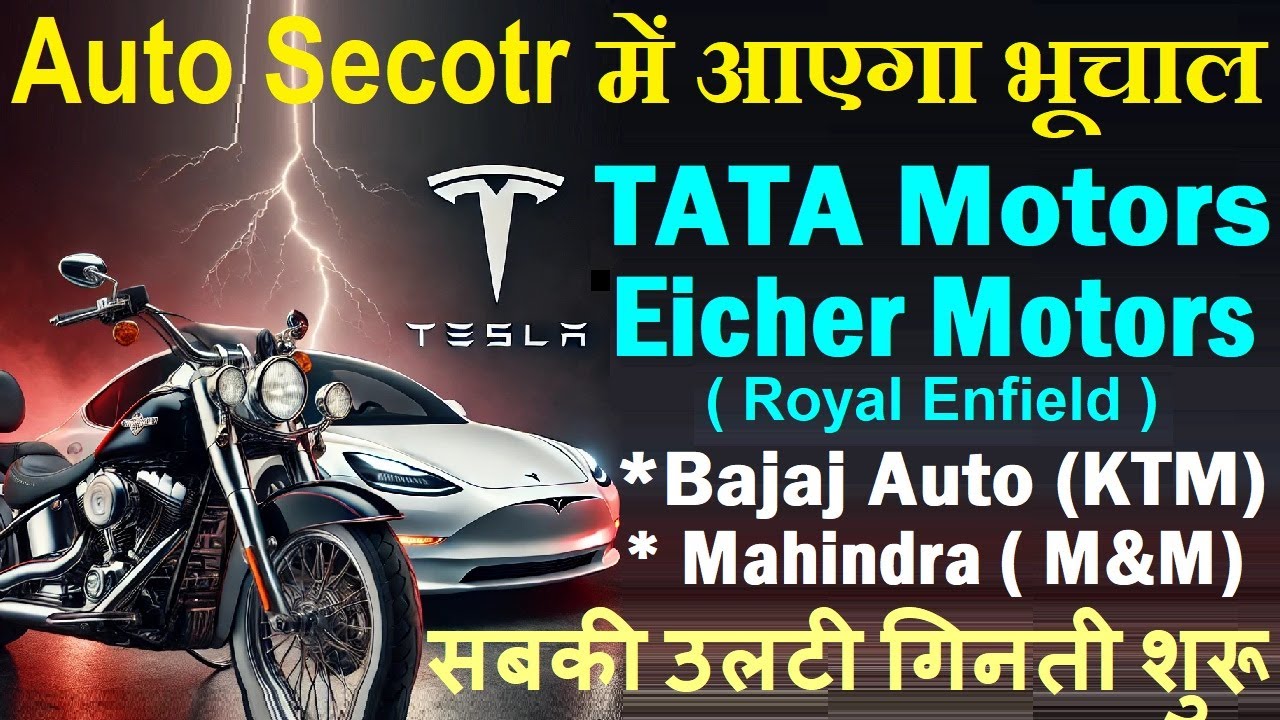
The Indian automobile industry is on the brink of a major transformation, with global giants like Tesla and Harley-Davidson eyeing aggressive market expansion. Domestic players such as Tata Motors, Eicher Motors, Bajaj Auto, and Mahindra are now facing new challenges due to changing government policies and international trade agreements. The recent reduction in import duties on luxury vehicles and high-end motorcycles is set to reshape the competitive landscape.
Impact of Government Policies on the Auto Industry
Government regulations and tariff adjustments play a crucial role in shaping the automobile sector. Recently, India reduced import duties on premium motorcycles, a move that directly benefits brands like Harley-Davidson. Similarly, Tesla’s potential entry into the Indian market has been bolstered by the government’s willingness to offer tax relaxations on electric vehicles (EVs).
Lower Import Duties on Motorcycles
The Indian government has cut import duties on high-performance motorcycles, benefiting brands like Harley-Davidson and BMW. Earlier, a 50% import duty applied to motorcycles above 800cc, but now it has been slashed to 40%. For smaller bikes, the duty has been reduced from 25% to 20%. This move aims to make international brands more affordable and attract global manufacturers to invest in India.
Tax Cuts for Electric Vehicles
Tesla, under Elon Musk’s leadership, has long sought to enter the Indian market. The government’s reduction of import duties on EVs costing above ₹35 lakh from 125% to 70% has sparked interest. However, an agriculture cess has been introduced, offsetting some of the benefits. Despite this, Tesla’s presence in India could significantly disrupt the domestic EV market, dominated by Tata Motors and Mahindra Electric.
Tesla’s Impact on the Indian Automobile Market
Tesla’s entry into India could redefine the EV sector. Reports suggest that Tesla is planning to launch a model priced around ₹20 lakh, making it accessible to a larger audience. If this happens, it could significantly challenge existing players like Tata Motors, which currently leads the EV space with models like the Nexon EV and Tigor EV.
Competition for Indian EV Makers
Tesla’s cutting-edge battery technology and autonomous driving features give it a competitive edge over Indian automakers. Local companies like Mahindra and Tata Motors have invested heavily in EV technology, but Tesla’s global expertise in battery efficiency and vehicle range could pose a serious challenge.
Disruption in Pricing and Market Dynamics
If Tesla launches a budget-friendly model, Indian consumers may opt for advanced technology and superior battery performance over locally manufactured EVs. This shift could pressure Indian automakers to innovate and bring competitive pricing to sustain their market share.
Harley-Davidson’s Comeback and Royal Enfield’s Challenge
Harley-Davidson is set to make a grand comeback in India, leveraging reduced import duties. The brand, known for its high-end cruisers, faced difficulties due to high taxes, leading to an exit in 2020. However, with lower import duties, Harley-Davidson plans to reintroduce its models at competitive pricing, targeting the premium motorcycle segment.
Royal Enfield vs. Harley-Davidson: A Fierce Rivalry
Royal Enfield, a subsidiary of Eicher Motors, dominates the mid-range cruiser segment in India. However, Harley-Davidson is expected to challenge Royal Enfield’s supremacy by introducing affordable models tailored for the Indian market. If Harley-Davidson launches budget-friendly bikes, Royal Enfield could face stiff competition, leading to price adjustments and enhanced features in its upcoming models.
How Indian Automakers Can Compete
To counter the foreign invasion, Indian manufacturers need to focus on innovation, affordability, and infrastructure development.
Strengthening Local Manufacturing
One way for Indian companies to stay ahead is by ramping up local production. Tata Motors and Mahindra have already started working on next-generation EVs with better battery performance and lower costs. Increasing domestic production can reduce dependency on imports, allowing competitive pricing.
Government Support and Incentives
The Indian government has been promoting local EV production through incentives like the FAME (Faster Adoption and Manufacturing of Electric Vehicles) scheme. Such initiatives encourage domestic manufacturers to develop world-class EVs at affordable prices.
Expanding Charging Infrastructure
For EV adoption to grow, India needs a robust charging network. Tesla’s entry could push Indian companies to invest in widespread charging stations, making EVs more practical for consumers.
Conclusion: A New Era for the Indian Auto Market
The entry of Tesla and Harley-Davidson marks a turning point in India’s automobile industry. While foreign players bring innovation and competition, domestic manufacturers must adapt quickly to maintain their dominance. Whether through improved technology, competitive pricing, or government support, the Indian auto sector must evolve to thrive in this new era. The coming years will determine whether Tesla and Harley-Davidson disrupt the industry or if Indian automakers rise to the challenge.