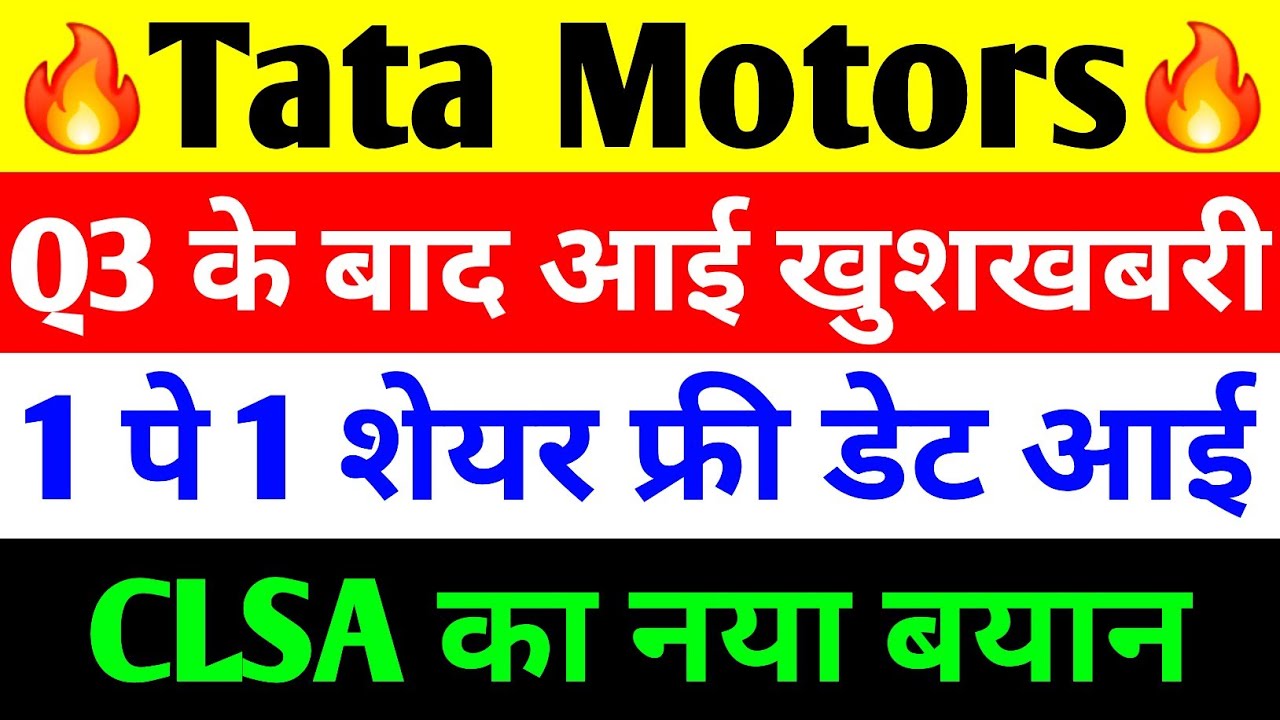
Introduction to Tata Motors’ Current Scenario
Tata Motors, one of India’s leading automobile manufacturers, has been the center of attention in the stock market due to its recent financial results and upcoming corporate developments. The company’s financial performance, plans for a demerger, and its position in the market have garnered mixed reactions from investors. Let’s dive deeper into the latest updates on Tata Motors’ shares, market trends, and expert opinions to understand what the future holds for the company and its stakeholders.
Tata Motors Financial Results: Revenue Growth Amid Profit Decline
The recently announced financial results of Tata Motors for Q3 FY2024 have shown a mixed bag of performance indicators.
- Revenue Growth:
Tata Motors recorded a revenue of ₹15,365 crores in December 2024, a significant year-on-year increase from ₹11,176 crores in December 2023. Quarter-on-quarter, revenue grew from ₹10,316 crores in September 2024, showcasing consistent business growth. - Profit Decline:
Despite the impressive revenue growth, net profit declined. The company posted a profit of ₹5,578 crores in December 2024 compared to ₹7,145 crores in December 2023. However, on a quarter-on-quarter basis, profits surged from ₹3,450 crores in Q2 FY2024, indicating an upward trend in operational efficiency.
The market’s reaction to these results has been cautious. While the revenue growth signals strong fundamentals, the profit miss compared to market expectations (estimated at ₹6,791 crores) led to a temporary decline in Tata Motors’ stock price.
Stock Performance and Market Trends
Tata Motors’ stock witnessed substantial volatility following the announcement of its financial results.
- Initial Decline:
The stock experienced a sharp drop below ₹700 due to the profit miss. This decline was also influenced by certain brokerage firms downgrading the stock’s rating, citing near-term challenges. - Recovery and Positive Sentiment:
The stock rebounded, closing around ₹704 with a 1.05% intraday gain. Market experts predict that the current correction phase may pave the way for a strong upward trend in the long run, backed by Tata Motors’ solid fundamentals and growth prospects.
Demerger Announcement: A Strategic Move for Growth
One of the most significant developments at Tata Motors is its planned demerger, which aims to separate its Passenger Vehicle (PV) and Commercial Vehicle (CV) businesses. This strategic move is expected to unlock shareholder value and enhance operational efficiency.
- What the Demerger Entails:
Shareholders will receive one additional share in the newly formed entity for every share they currently own in Tata Motors. This effectively means that shareholders will hold shares in both the PV and CV divisions after the demerger. - Timeline for Completion:
The demerger process is set to be completed by October 2025, pending approvals from regulatory authorities like SEBI and NCLT. According to Tata Motors CFO P.B. Balaji, the process is progressing smoothly, and shareholder meetings will be scheduled soon to finalize the plan.
Impact on Key Stakeholders
The stock market fluctuations and demerger plans have significantly impacted various stakeholders, particularly major investors like Rekha Jhunjhunwala.
- Rekha Jhunjhunwala’s Holdings:
As one of the largest individual investors in Tata Motors, holding approximately 4.77 crore shares (1.3% stake), Rekha Jhunjhunwala faced a paper loss of ₹325 crores during the stock’s recent dip. However, the recovery in the stock price has partially offset these losses, highlighting the resilience of Tata Motors in the market.
Expert Opinions on Tata Motors’ Future
Market analysts and brokerage firms have shared their views on Tata Motors’ growth potential:
- Positive Outlook from CLSA:
Global brokerage firm CLSA remains bullish on Tata Motors, citing its strong fundamentals and robust growth story. The firm predicts significant upside potential over the next 12 months. - Mixed Sentiments Among Investors:
While some brokerage houses have downgraded their ratings due to near-term concerns, others see the current stock price as an attractive buying opportunity for long-term investors.
The Role of Budget 2025 in Shaping Tata Motors’ Future
The upcoming Union Budget 2025 is expected to play a crucial role in influencing the performance of the automobile sector, including Tata Motors.
- Industry Expectations:
The auto industry has urged the government to introduce measures that boost demand and address supply chain constraints. Initiatives like tax relief, infrastructure investments, and incentives for electric vehicles (EVs) could significantly benefit companies like Tata Motors. - Tata Motors’ Perspective:
CFO P.B. Balaji expressed optimism about the budget, stating that measures to stimulate demand and enhance liquidity could drive growth in the domestic market.
Key Growth Drivers for Tata Motors
Several factors are likely to support Tata Motors’ growth in the coming years:
- Expanding EV Portfolio:
Tata Motors is a leader in India’s EV market and continues to innovate with new launches and technology upgrades. - Global Market Expansion:
The company’s international business, including its Jaguar Land Rover (JLR) division, remains a critical driver of revenue. - Operational Efficiency:
The ongoing demerger and focus on core businesses are expected to streamline operations and enhance profitability. - Government Support:
Policies aimed at promoting the adoption of EVs and supporting the auto industry could act as a significant tailwind for Tata Motors.
Conclusion: Is Tata Motors a Good Investment?
Tata Motors’ recent financial results and strategic initiatives highlight its potential as a long-term investment. While short-term volatility may pose challenges, the company’s strong fundamentals, growth-focused strategies, and market leadership position make it an attractive option for investors.
However, as with any investment, due diligence is essential. Consult with a financial advisor and stay updated on market trends before making investment decisions.