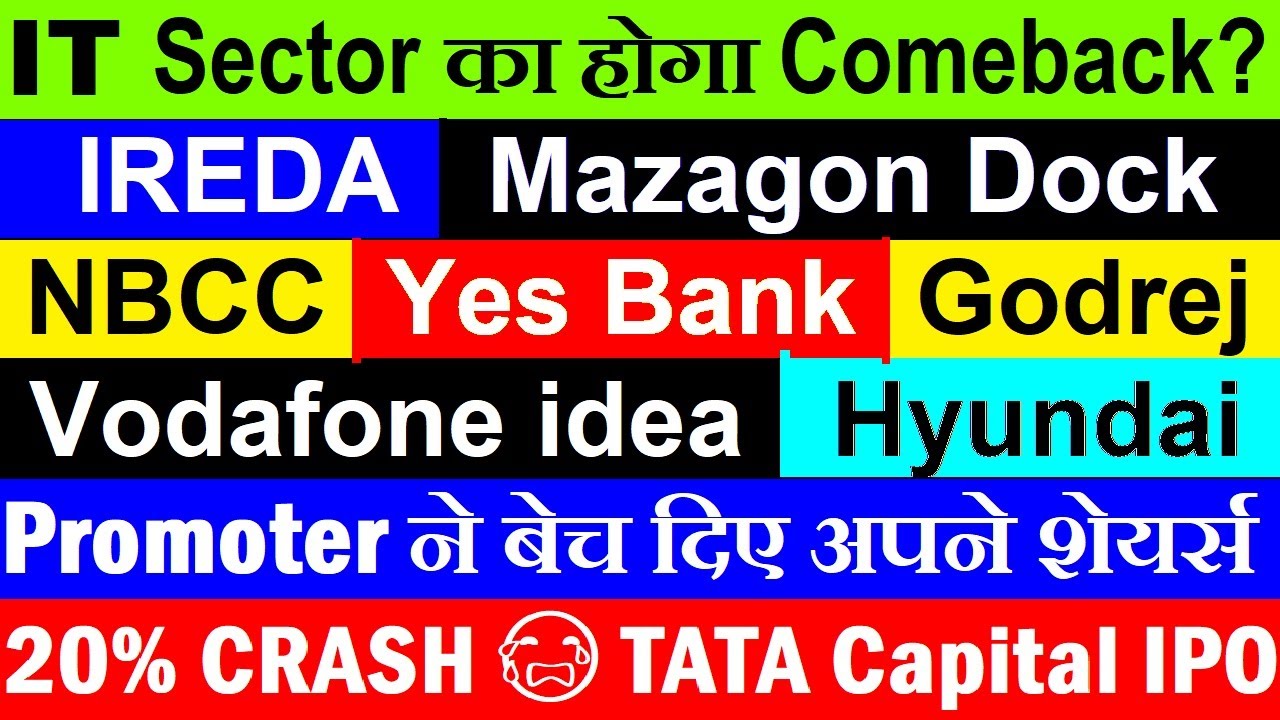
The Indian stock market is a dynamic arena where volatility often presents both opportunities and challenges. Recent market movements, driven by global and domestic developments, have sparked significant interest among investors. From anticipated rate cuts by the U.S. Federal Reserve to GST reforms in India, the market has reacted with a mix of optimism and caution. This article dives deep into the recent 20% crash in TATA Capital’s unlisted shares, the performance of key stocks like IREDA, NBCC, Hyundai, Vodafone Idea, Mazagon Dock, Yes Bank, and the IT sector’s remarkable surge. With a focus on delivering actionable insights, this analysis will help investors navigate the complexities of the current market landscape.
Market Overview: A Day of Modest Gains Amid Volatility
The Indian stock market opened with a gap-up, aligning with expectations of a positive start. The Nifty 50 briefly touched the 25,000 level but faced resistance and closed with a modest gain of approximately 100 points. This performance was bolstered by two significant developments: hints of a U.S. Federal Reserve rate cut from Jerome Powell’s Jackson Hole speech and the rescheduling of India’s GST Council meeting to September, earlier than the anticipated Diwali timeline. These catalysts set the stage for selective sectoral gains, with IT and auto sectors leading the charge.
Key Drivers of Market Sentiment
Several factors shaped the market’s trajectory. The anticipation of a U.S. rate cut fueled optimism, particularly for IT stocks, given their heavy reliance on U.S. and European clients. Meanwhile, the GST Council’s early meeting sparked hope for rate rationalization, especially in the auto sector, which has been grappling with subdued demand due to expectations of cheaper vehicles post-reform. Additionally, consumer durables, particularly air conditioners, showed resilience, reflecting selective positivity in the market.
IT Sector: The Star Performer
The Nifty IT index surged by 2%, emerging as the day’s top performer. As the second-highest weighted sector in the Nifty 50, its rally significantly influenced the broader market. The primary catalyst was the expectation of a 25-basis-point rate cut by the U.S. Federal Reserve in September. Lower interest rates in the U.S. are likely to encourage capital expenditure (CapEx) by American and European clients, directly benefiting Indian IT companies.
Why IT Stocks Are Thriving
Indian IT firms, such as TCS, Infosys, and Wipro, derive a significant portion of their revenue from the U.S. and Europe. A rate cut would reduce borrowing costs for their clients, potentially leading to increased IT spending on projects and services. This expectation drove investor confidence, resulting in a robust performance across the sector. However, a word of caution: if the Federal Reserve’s September 16-17 meeting fails to deliver the anticipated rate cut, IT stocks could face a sharp correction, potentially dragging the broader market down.
Risks to Monitor in the IT Sector
Investors should closely watch the Federal Reserve’s upcoming meeting. A decision contrary to market expectations could trigger volatility. The IT sector’s reliance on global economic cues makes it vulnerable to external shocks, and any disappointment could lead to profit booking. Despite the current optimism, maintaining a balanced portfolio with exposure to other sectors can mitigate risks.
Auto Sector: A Glimmer of Hope
The auto sector displayed modest improvement, driven by optimism surrounding the GST Council’s upcoming meeting. Investors anticipate that GST rate cuts could make vehicles more affordable, boosting demand. However, this expectation has led to a temporary slowdown in sales, as consumers delay purchases in anticipation of lower prices.
Impact of GST Reforms on Auto Stocks
The auto sector has faced challenges due to high GST rates, which have deterred buyers. The prospect of rate rationalization has created a wait-and-see approach among consumers, impacting short-term sales. However, companies like Maruti Suzuki and Hero MotoCorp showed resilience, with their stocks reflecting cautious optimism. The sector’s recovery hinges on the outcome of the GST Council’s decisions, making it a critical area to monitor.
Consumer Durables: Air Conditioners Lead the Way
Consumer durables, particularly the air conditioner segment, exhibited strong performance. Companies like Voltas and Blue Star benefited from seasonal demand and positive market sentiment. The expectation of GST reforms also contributed to the sector’s appeal, as lower rates could enhance affordability and drive sales.
Opportunities in Consumer Durables
The consumer durables sector remains a promising investment avenue, especially for companies with strong brand equity and diversified product portfolios. Investors should focus on firms with robust distribution networks and a track record of innovation, as these are likely to capitalize on the anticipated demand surge post-GST reforms.
Godrej Properties: A Real Estate Powerhouse
Godrej Properties delivered an outstanding performance, driven by the successful launch of its second project in Hyderabad. The company sold 683 homes, generating over ₹1,000 crore in revenue, underscoring the robust demand in tier-1 and tier-2 cities. The real estate sector, particularly in developing urban areas, continues to thrive, fueled by rising disposable incomes and urbanization.
Why Godrej Properties Stands Out
Godrej Properties’ focus on premium residential projects and strategic land acquisitions has positioned it as a leader in the real estate market. The Hyderabad project’s success highlights the company’s ability to tap into high-growth markets. Investors looking for long-term growth should consider real estate stocks with strong fundamentals and a presence in high-demand regions.
Hyundai India: Riding High on Positive Ratings
Hyundai India’s stock surged following a favorable rating from CRISIL, a leading credit rating agency. The upgrade reflects confidence in Hyundai’s operational efficiency, market share, and financial stability. As one of India’s top automakers, Hyundai continues to benefit from its diverse product portfolio and strong brand loyalty.
Factors Driving Hyundai’s Growth
Hyundai’s focus on innovation, including electric vehicles (EVs) and hybrid models, has strengthened its market position. The positive CRISIL rating has further bolstered investor confidence, making Hyundai a compelling choice for those seeking exposure to the auto sector. However, investors should remain mindful of potential supply chain disruptions and rising input costs.
NBCC: Capitalizing on Infrastructure Growth
NBCC, a government-owned company, witnessed a positive market response following news of its involvement in a ₹3,700 crore transformation development project in RICO. The project underscores NBCC’s pivotal role in India’s infrastructure growth, particularly in urban development and real estate.
NBCC’s Strategic Advantage
As a public-sector undertaking, NBCC benefits from government backing and a steady pipeline of projects. The RICO project enhances its order book, signaling strong revenue visibility. Investors interested in infrastructure stocks should consider NBCC for its stable cash flows and long-term growth potential.
Yes Bank: A Boost from RBI Approval
Yes Bank’s stock experienced a gap-up opening after the Reserve Bank of India (RBI) granted permission to SMBC to acquire a stake in the bank. This development boosted investor sentiment, although profit booking later moderated gains. The RBI’s approval signals confidence in Yes Bank’s turnaround strategy, making it an attractive option for risk-tolerant investors.
Yes Bank’s Road to Recovery
Yes Bank has faced challenges in recent years, but strategic partnerships and regulatory support are paving the way for recovery. The SMBC deal enhances the bank’s capital base, potentially improving its lending capacity. However, investors should monitor asset quality and regulatory developments closely.
Vodafone Idea: A High-Risk, High-Reward Bet
Vodafone Idea continues to trade on hope, driven by expectations of relief on Adjusted Gross Revenue (AGR) dues. The stock has been volatile, with sharp rallies followed by steep declines when expectations falter. The company has warned that without significant financial relief by March 31, 2026, its operations could face existential risks due to its massive debt burden.
Navigating Vodafone Idea’s Uncertainty
Vodafone Idea’s future hinges on government support and successful fund-raising efforts. While the potential for AGR relief offers upside, the company’s high debt levels and competitive pressures in the telecom sector pose significant risks. Investors should approach Vodafone Idea with caution, ensuring it forms only a small portion of a diversified portfolio.
Mazagon Dock Shipbuilders: Sailing Toward Growth
Mazagon Dock Shipbuilders (MDL) gained attention following the government’s approval of a ₹70,000 crore contract for six advanced submarines for the Indian Navy. This Indo-German collaboration strengthens MDL’s order book and positions it as a key player in India’s defense sector.
Why Mazagon Dock Is a Long-Term Winner
The defense sector is a priority for the Indian government, and MDL’s expertise in shipbuilding and submarine manufacturing makes it a beneficiary of this focus. The submarine contract enhances MDL’s revenue visibility and underscores its strategic importance. Investors seeking exposure to defense stocks should consider MDL for its growth potential and government backing.
TATA Capital IPO: A 20% Crash in Unlisted Shares
TATA Capital’s unlisted shares plummeted by 20%, raising concerns among investors eagerly awaiting its initial public offering (IPO). Experts predict another potential 20% drop, citing valuation concerns and market dynamics. Despite the crash, the IPO is expected to be one of the largest in recent years, attracting significant retail and institutional interest.
What’s Behind the TATA Capital Crash?
The decline in TATA Capital’s unlisted shares reflects profit booking and uncertainty about the IPO’s pricing and timing. While the TATA brand carries significant goodwill, investors are cautious about overvaluation risks. The IPO’s size and the company’s strong fundamentals make it a stock to watch, but investors should wait for clarity on pricing and market conditions before committing.
IREDA: Ambitious Targets and Renewable Energy Focus
The Indian Renewable Energy Development Agency (IREDA) signed a Memorandum of Understanding (MoU) with the Ministry of New and Renewable Energy (MNRE), targeting ₹8,200 crore in revenue for FY26. This represents a significant jump from FY25’s revenue of ₹6,754 crore, reflecting a 20%+ growth ambition. IREDA’s focus on renewable energy aligns with India’s green energy goals, making it a compelling investment option.
IREDA’s Growth Potential
IREDA’s aggressive revenue target underscores its role in financing renewable energy projects. The MoU with MNRE enhances its credibility and visibility, attracting investor interest. However, achieving the ₹8,200 crore target will depend on project execution and government support. Investors should monitor IREDA’s quarterly performance to assess its ability to meet these ambitious goals.
Apollo Hospitals: Promoter Stake Sale and Institutional Interest
Apollo Hospitals made headlines after promoter Sunita Reddy sold a 1.3% stake worth ₹1,489 crore through block deals. Notably, institutional investors like T. Rowe Price and Morgan Stanley emerged as buyers, signaling confidence in the company’s long-term prospects. The transaction highlights the strong institutional interest in India’s healthcare sector.
Why Institutional Investors Are Bullish on Apollo Hospitals
Apollo Hospitals’ leadership in the healthcare sector, coupled with its expansion plans and focus on medical tourism, makes it an attractive investment. The promoter stake sale to reputable institutions like T. Rowe Price and Morgan Stanley suggests that the stock is undervalued at current levels. Investors should consider Apollo Hospitals for its defensive qualities and growth potential in a resilient sector.
Investment Strategies for the Current Market
Navigating the current market requires a balanced approach, blending optimism with caution. Here are key strategies to consider:
Diversify Across Sectors
While IT and auto stocks are performing well, diversifying across sectors like real estate, defense, and healthcare can reduce risk. Companies like Godrej Properties, Mazagon Dock, and Apollo Hospitals offer stability and growth potential.
Monitor Global and Domestic Cues
The Federal Reserve’s rate cut decision and India’s GST reforms will significantly impact market sentiment. Stay informed about these developments to make timely investment decisions.
Focus on Fundamentals
Stocks like Hyundai, NBCC, and IREDA benefit from strong fundamentals and government support. Prioritize companies with robust order books, diversified revenue streams, and credible management.
Exercise Caution with High-Risk Stocks
Vodafone Idea and TATA Capital’s unlisted shares carry significant risks. Limit exposure to such stocks and ensure they form a small portion of your portfolio.
Conclusion: Opportunities Amid Uncertainty
The Indian stock market’s recent volatility, exemplified by the 20% crash in TATA Capital’s unlisted shares, underscores the importance of staying informed and strategic. While IT stocks, driven by global rate cut expectations, and auto stocks, buoyed by GST reform hopes, are leading the rally, other sectors like real estate, defense, and healthcare offer compelling opportunities. Stocks like Godrej Properties, Hyundai, NBCC, Mazagon Dock, Yes Bank, IREDA, and Apollo Hospitals are well-positioned for growth, provided investors approach them with due diligence. As the market navigates global and domestic developments, a balanced portfolio and a focus on fundamentals will be key to capitalizing on emerging opportunities.