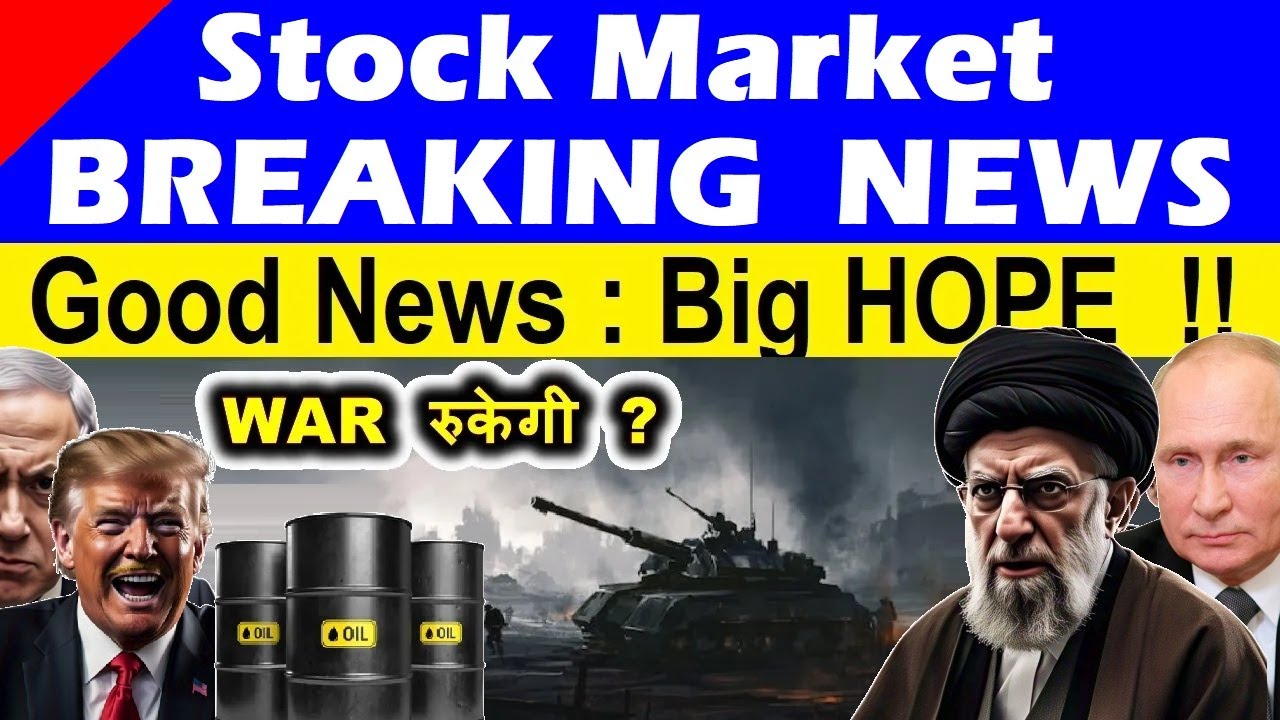
The stock market is a dynamic ecosystem influenced by global events, economic indicators, and geopolitical tensions. Recent developments, particularly the ongoing Israel-Iran conflict and its potential impact on crude oil prices, have kept investors on edge. This article delves into the latest stock market trends, the role of crude oil in shaping market sentiment, and the broader implications of the Israel-Iran situation. By exploring key indicators, global market patterns, and expert insights, we aim to provide a comprehensive guide to navigating these uncertain times.
Understanding Recent Stock Market Movements
The stock market has experienced significant volatility, driven by a combination of domestic and international factors. On a recent trading day, major indices like the Sensex and Nifty 50 opened with a gap-down, reflecting investor caution amid global uncertainties. The Sensex plummeted by approximately 500 points, while the Nifty 50 saw a decline of about 150 points, or 0.5%. Despite the initial sharp drop, markets showed signs of recovery later in the session, highlighting the resilience of certain sectors.
Why Did the Market Open Lower?
A gap-down opening occurs when a market opens significantly lower than its previous close, often due to overnight developments or pre-market sentiment. In this case, several factors contributed to the bearish start:
- Geopolitical Tensions: The escalating conflict between Israel and Iran has raised concerns about potential disruptions in oil supply chains, particularly through the Strait of Hormuz.
- Global Market Cues: Asian markets, including Japan’s Nikkei, also opened lower, setting a cautious tone for Indian indices. Japan’s market mirrored India’s pattern, with a gap-down opening followed by a gradual recovery.
- Gift Nifty Signals: The Gift Nifty, an indicator of Nifty 50’s opening, traded below 25,000, signaling a bearish start. This pre-market indicator provided early clues about investor sentiment.
Sectoral Performance and Recovery Trends
While the broader market faced pressure, certain sectors showed resilience. The IT sector, however, faced significant headwinds due to disappointing earnings from global peers like Accenture, impacting stocks like TCS and Infosys. Despite this, the market’s recovery in the second half of the session was driven by:
- European Market Stability: European indices like the DAX and FTSE opened lower but recovered, reducing pressure on Indian markets.
- Domestic Buying: Institutional investors capitalized on lower valuations, supporting a partial rebound in key stocks.
The Israel-Iran Conflict: A Key Driver of Market Uncertainty
Geopolitical events have always played a critical role in shaping market sentiment, and the Israel-Iran conflict is no exception. Recent developments have raised questions about whether the situation will escalate into a full-scale war or de-escalate through diplomatic efforts.
Latest Developments in the Israel-Iran Tensions
Over the past 24 hours, no significant military escalations have occurred, offering a glimmer of hope for de-escalation. Key points include:
- U.S. Involvement: The United States conducted a targeted strike on Iranian nuclear facilities, prompting Iran to threaten retaliation. However, no major counterattacks have materialized, suggesting a cautious approach from both sides.
- Iran’s Strategic Position: Iran’s parliament approved a proposal to close the Strait of Hormuz, a critical oil supply route. However, the final decision rests with the Supreme National Security Council (SNSC), which has yet to act. This uncertainty keeps markets on edge.
- Diplomatic Signals: Former U.S. President Donald Trump’s comments about pursuing peace talks have sparked speculation about a potential pause in hostilities.
Russia’s Role in the Conflict
While Iran appears diplomatically isolated, Russia emerges as a key player. Russia’s support for Iran could prolong tensions, as it aligns with Moscow’s strategic interests:
- Countering U.S. Influence: Russia’s ongoing conflict with Ukraine, backed by U.S. support, has strained its resources. By supporting Iran, Russia aims to divert U.S. attention and resources to the Middle East.
- Oil Market Dynamics: A disruption in the Strait of Hormuz would benefit Russia by driving up global oil prices, strengthening its oil export revenues. This could also deepen ties with oil-dependent nations like India and China.
Investors must monitor Russia’s actions closely, as any direct or indirect support for Iran could escalate tensions and impact markets further.
Crude Oil Prices: The Pulse of Global Markets
Crude oil prices are a critical barometer of geopolitical stability and economic health. Recent trends in crude oil markets reflect the uncertainty surrounding the Israel-Iran conflict.
Current Crude Oil Price Trends
Crude oil prices have remained elevated, trading above $77 per barrel. Despite fears of supply disruptions, prices have not spiked dramatically, indicating a wait-and-watch approach among traders. Key observations include:
- Stable but High Levels: Crude oil prices have shown nominal increases, avoiding the sharp jumps seen during previous escalations, such as when Israel targeted Iran’s nuclear sites, causing an 8% surge.
- Strait of Hormuz Concerns: The Strait of Hormuz, through which 20% of global oil supply passes, remains a focal point. Any closure would lead to significant price spikes, impacting economies worldwide.
Impact of Crude Oil on Indian Markets
India, a major oil importer, is particularly sensitive to crude oil price fluctuations. Higher oil prices could:
- Increase Inflation: Rising fuel costs would drive up transportation and production expenses, fueling inflation.
- Widen Trade Deficit: Increased oil import costs could strain India’s trade balance, weakening the rupee.
- Pressure Stock Markets: Sectors like aviation, logistics, and manufacturing, which rely heavily on fuel, could face margin pressures, dragging down indices.
Conversely, a de-escalation in tensions could stabilize oil prices, providing relief to Indian markets and boosting investor confidence.
Global Market Patterns: A Comparative Analysis
To understand India’s market movements, it’s essential to examine global trends. Major markets worldwide exhibited similar patterns, reflecting shared concerns about geopolitical risks.
Asian Markets: Japan’s Nikkei as a Case Study
Japan’s Nikkei index opened with a gap-down, mirroring India’s Sensex and Nifty. However, like Indian markets, it recovered partially, driven by:
- Domestic Buying: Japanese investors capitalized on lower valuations, supporting a rebound.
- Yen Stability: A stable yen provided a cushion against external shocks.
U.S. and European Markets: Mixed Signals
U.S. futures, including the NASDAQ, followed a similar trajectory—opening lower but recovering later. European indices like the DAX, FTSE, and Euro Stoxx 50 also showed resilience, with recoveries driven by:
- Positive Economic Data: Stronger-than-expected economic indicators in Europe bolstered investor confidence.
- Central Bank Support: Expectations of continued monetary support from the European Central Bank eased market fears.
These global patterns suggest that while geopolitical risks dominate sentiment, underlying economic fundamentals remain supportive.
What’s Next for Investors?
With markets grappling with uncertainty, investors need a strategic approach to navigate these turbulent times. Here are key considerations and actionable insights:
Monitor Key Indicators
- Crude Oil Prices: A sharp rise in crude oil prices could signal escalating tensions, while a decline might indicate de-escalation.
- Russia’s Actions: Any overt support for Iran from Russia could prolong the conflict, impacting markets negatively.
- U.S. Policy Shifts: Statements from U.S. policymakers, particularly regarding sanctions or military actions, will influence market sentiment.
Sectoral Opportunities
Despite volatility, certain sectors offer opportunities:
- Energy Stocks: Companies in the oil and gas sector could benefit from elevated crude prices.
- Defensive Stocks: Sectors like pharmaceuticals and consumer goods tend to perform well during uncertainty.
- Gold and Precious Metals: As safe-haven assets, gold and silver could see increased demand amid geopolitical risks.
Risk Management Strategies
- Diversify Portfolios: Spread investments across sectors and asset classes to mitigate risks.
- Set Stop-Loss Orders: Protect against sudden market drops by setting predefined exit points.
- Stay Informed: Regularly monitor news updates and economic indicators to make informed decisions.
The Road Ahead: Will the Conflict End Soon?
The Israel-Iran conflict’s trajectory remains uncertain, with several scenarios possible:
- De-escalation: Diplomatic efforts, potentially led by the U.S. or other mediators, could lead to a pause in hostilities, stabilizing markets.
- Prolonged Standoff: A lack of major escalations but continued verbal sparring could keep markets volatile.
- Escalation: If Iran retaliates or Russia intensifies its support, the conflict could escalate, triggering significant market corrections.
The next 24–48 hours will be critical in determining the conflict’s direction. Investors should remain vigilant, focusing on crude oil prices and geopolitical developments.
Conclusion: Navigating Uncertainty with Confidence
The stock market’s recent volatility underscores the interconnectedness of global events and financial markets. The Israel-Iran conflict, coupled with crude oil price fluctuations and Russia’s strategic maneuvers, has created a challenging environment for investors. However, by staying informed, monitoring key indicators, and adopting prudent risk management strategies, investors can navigate these uncertainties with confidence.
As markets continue to react to geopolitical developments, opportunities will emerge for those who remain proactive. Whether it’s capitalizing on energy stocks, hedging with safe-haven assets, or diversifying portfolios, a strategic approach will be key to thriving in this dynamic landscape. Stay tuned for updates, and let data-driven decisions guide your investment journey.