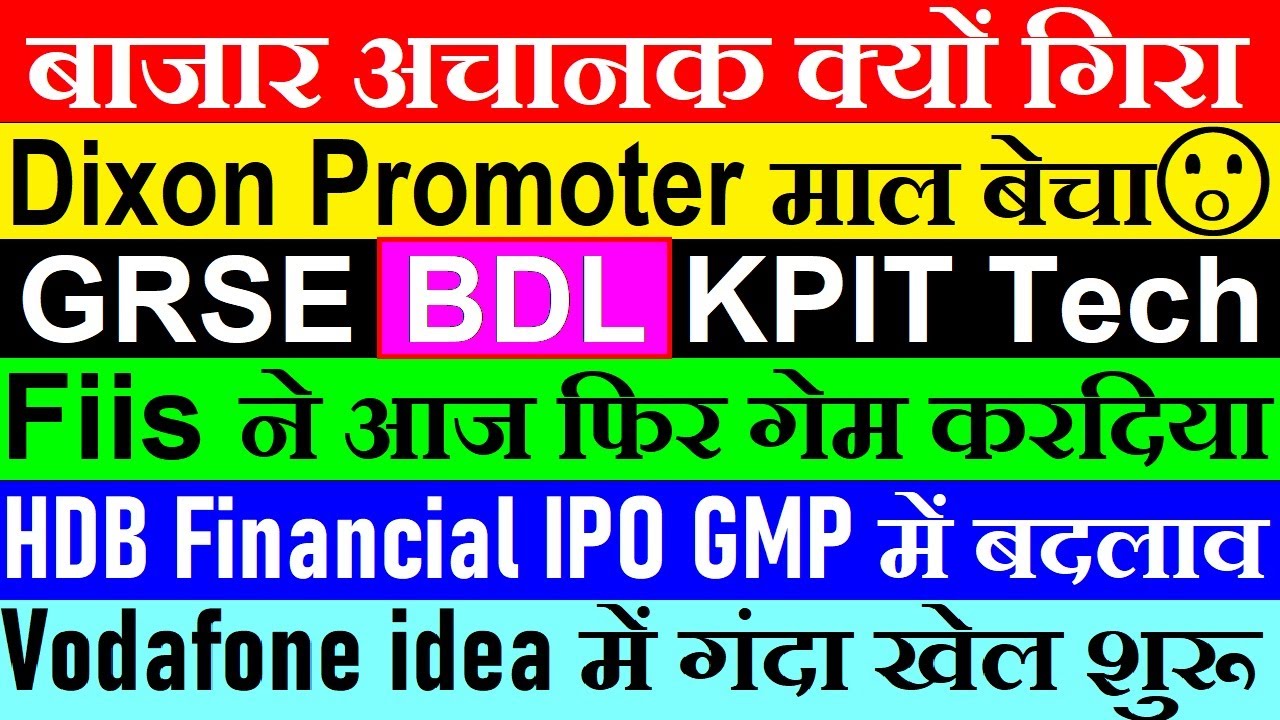
The stock market is a rollercoaster, and sudden crashes can leave investors scrambling for answers. On June 24, 2025, the Indian stock market experienced a sharp decline, driven by a mix of global geopolitical tensions, company-specific updates, and market sentiment shifts. This article dives into the reasons behind the market’s volatility, analyzing key players like Vodafone Idea, KPIT Technologies, Dixon Technologies, GRSE, BDL, FII/DII activity, and the much-anticipated HDB Financial IPO. We’ll uncover the catalysts, trends, and what investors should watch for next next— all while providing actionable insights to help you stay ahead in this dynamic financial landscape.
Understanding the Stock Market Crash: Key Factors at Play
Stock market crashes don’t happen in a vacuum. They’re often the result of a perfect storm of macroeconomic, geopolitical, and company-specific developments. Let’s break down the primary drivers behind the recent market downturn.
1. Geopolitical Tensions: Israel-Iran Conflict and Ceasefire Violations
Geopolitical unrest is a notorious market disruptor. The recent escalation in the Israel-Iran conflict, despite an announced ceasefire by U.S. President-elect Donald Trump, triggered significant volatility. Reports surfaced during market hours that Iran launched missiles at Israel, breaching the ceasefire agreement. Israel retaliated with threats of a strong counterattack, further escalating tensions.
This news sparked panic-selling, as investors feared prolonged conflict could disrupt global markets and oil supplies, impacting crude prices. The Indian market, sensitive to global cues, saw a steep decline, with the Nifty Sensex Sensex dropping over 300 points from its intraday high of 25,351.70 to below 25,000 momentarily. While both nations later downplayed the attacks, the damage was done, and profit-booking intensified.
What Investors Should Watch:
- Monitor updates on ceasefire negotiations and potential de-escalation.
- Track crude oil prices, as fluctuations can impact India’s import-heavy economy.
- Stay alert for statements from global leaders, especially Trump, as they influence market sentiment.
2. FII Selling Pressure: A Persistent Drag
Foreign Institutional Investors (FIIs) play a pivotal role in Indian markets. On June 24, 2025, FIIs sold stocks worth approximately ₹2,973 crore, continuing their net selling trend. Despite a strong market rally earlier in the day, FIIs offloaded holdings, signaling caution amid global uncertainties.
In contrast, Domestic Institutional Investors (DIIs) remained steadfast buyers, absorbing the selling pressure. However, the heavy FII outflows capped the market’s upside potential, contributing to the second-half crash.
Key Takeaways for Investors:
- FII selling often reflects global risk-off sentiment. Watch global indices like the S&P 500 for cues.
- DII buying provides a cushion, but sustained FII outflows could pressure mid- and small-cap stocks.
- Analyze FII/DII data daily to gauge market direction.
Stock-Specific Insights: What Moved the Needle?
While macro factors set the stage, individual stocks like Vodafone Idea, KPIT Tech, Dixon Technologies, GRSE, and BDL saw significant movements due to company-specific developments. Let’s dive into each.
Vodafone Idea: A Temporary Surge Amid Debt Relief Rumors
Vodafone Idea’s stock surged by up to 6% during the trading session, fueled by unverified reports that the government might offer relief on its ₹84,000 crore debt. Sources suggested that Telecom Minister Jyotiraditya Scindia emphasized the need for a competitive telecom sector, hinting at support to prevent a Jio-Airtel duopoly.
However, the rally fizzled out after Vodafone Idea issued a clarification, stating it had received no official communication from the government. The stock’s volatility underscores its precarious position, with a looming debt repayment deadline of March 31, 2026.
Why Vodafone Idea Remains Risky:
- The company’s massive debt burden (over ₹2 lakh crore) and ongoing losses make it a “sinking ship.”
- Short-term relief may trigger rallies, but long-term survival hinges on government support or a capital infusion.
- Emotional investors and traders often get trapped in such news-driven spikes.
Investment Strategy:
- Avoid long-term bets unless clear debt restructuring plans emerge.
- Traders can capitalize on intraday volatility but must set strict stop-losses.
- Monitor government telecom policies and competitor moves (Jio, Airtel).
KPIT Tech: A Mid-Quarter Warning Sparks Sell-Off
KPIT Technologies, a leading IT services provider for the automotive sector, slumped by 6-7% after issuing a cautious mid-quarter business update. The management highlighted uncertainties due to:
- Rising geopolitical tensions impacting global demand.
- Ambiguity around tariff scenarios, creating planning challenges.
The company warned of slower deal closures, signaling potential revenue headwinds. While this doesn’t indicate a complete business shutdown, the negative outlook triggered profit-booking.
What’s Next for KPIT Tech:
- Clarity on global tariffs and geopolitical stability could stabilize the stock.
- Long-term prospects remain strong, given KPIT’s niche in automotive tech.
- Investors should await the next quarterly results for clearer guidance.
Investment Tips:
- Long-term investors can accumulate on dips if they believe in the EV and autonomous vehicle megatrend.
- Short-term traders should avoid bottom-fishing until volatility subsides.
- Track global auto industry trends, as KPIT’s fortunes are tied to them.
Dixon Technologies: Promoter Stake Sale Raises Eyebrows
Dixon Technologies, a key player in electronics manufacturing, saw its stock slide after promoters sold a 2.77% stake worth ₹2,221 crore via a block deal. While such sales are typically executed through institutional investors, they often signal promoter confidence (or lack thereof).
The sale sparked concerns among retail investors, who questioned whether insiders were cashing out at peak valuations. However, Dixon’s fundamentals remain robust, driven by India’s “Make in India” push and growing demand for consumer electronics.
Key Considerations:
- Promoter sales don’t always indicate trouble; they may reflect personal financial needs or portfolio rebalancing.
- Dixon’s growth trajectory in smartphones, TVs, and appliances remains intact.
- Monitor institutional buying post-block deals for signs of confidence.
Investment Approach:
- Long-term investors should focus on Dixon’s order book and government PLI scheme benefits.
- Short-term volatility may offer entry points for patient investors.
- Watch for updates on new product launches and client contracts.
Defense Stocks: GRSE and BDL Hit by Profit-Booking
Defense stocks like Garden Reach Shipbuilders & Engineers (GRSE) and Bharat Dynamics Limited (BDL) fell 8% and 6.6%, respectively, as geopolitical tensions eased slightly. Earlier market gains in defense stocks were driven by sentiment around the Israel-Iran conflict, which boosted expectations of higher defense spending.
However, news of a potential ceasefire led to swift profit-booking, as traders locked in gains. The defense sector remains a long-term bet, given India’s focus on self-reliance in defense manufacturing.
What to Expect:
- Short-term volatility will persist if geopolitical tensions flare up or subside.
- Government orders and export deals will drive long-term growth for GRSE and BDL.
- Sentiment-driven rallies require cautious trading.
Investment Strategy:
- Long-term investors should hold quality defense stocks with strong order pipelines.
- Traders can use technical levels to time entries and exits during volatile phases.
- Stay updated on India’s defense budget and global arms demand.
HDB Financial IPO: A Hot Opportunity?
The HDB Financial Services IPO is generating buzz, with its grey market premium (GMP) hovering around 9-10%. The IPO, set to open soon, has attracted significant interest from retail and institutional investors. However, confusion persists around shareholding quotas, employee allocations, and allotment processes.
Key IPO Highlights:
- HDB Financial, a subsidiary of HDFC Bank, is a leading NBFC with a strong loan book and profitability.
- The GMP suggests moderate listing gains, but market conditions will influence post-listing performance.
- Retail investors are keen on the IPO, given HDFC’s brand reputation.
Investor FAQs:
- Can you apply twice (retail and shareholder quota)? Allotment rules are unclear, but typically, multiple applications under different categories are allowed if eligibility criteria are met.
- How is the allotment process? It’s likely on a proportionate basis, depending on oversubscription.
- Should you invest? HDB Financial’s fundamentals are solid, but evaluate market sentiment and subscription data before applying.
Action Plan:
- Await clarity on allotment rules via official announcements or broker updates.
- Analyze subscription trends on Day 1 to gauge demand.
- Consider long-term holding if you believe in India’s NBFC growth story.
Market Outlook: What’s Next for Investors?
The sudden market crash on June 24, 2025, highlights the fragility of sentiment-driven rallies. While geopolitical tensions and FII selling were key triggers, company-specific developments added fuel to the fire. Here’s how investors can navigate the current environment:
Short-Term Strategies
- Stay Cautious: Avoid chasing momentum stocks like Vodafone Idea without clear catalysts.
- Use Technicals: Identify support and resistance levels for trading opportunities.
- Monitor News Flow: Geopolitical updates and FII/DII activity will drive near-term sentiment.
Long-Term Opportunities
- Focus on Fundamentals: Stocks like Dixon, KPIT, GRSE, and BDL have strong growth stories despite short-term hiccups.
- Diversify: Balance exposure across sectors to mitigate sector-specific risks.
- IPOs as Growth Bets: Evaluate HDB Financial’s IPO for potential listing gains and long-term value.
Key Risks to Watch
- Geopolitical Escalation: A prolonged Israel-Iran conflict could spike oil prices, hurting India’s economy.
- Tariff Uncertainty: Global trade policies, especially U.S. tariffs, could impact IT and manufacturing stocks.
- FII Outflows: Continued selling pressure may cap market upside.
Conclusion: Stay Informed, Stay Ahead
The stock market’s sudden crash on June 24, 2025, was a stark reminder of its unpredictability. From Vodafone Idea’s debt-driven volatility to KPIT Tech’s cautious outlook, Dixon’s promoter sale, and defense stocks’ profit-booking, multiple factors converged to create a perfect storm. Add to that the HDB Financial IPO excitement and persistent FII selling, and it’s clear why investors need to stay sharp.
To outmaneuver the market, arm yourself with knowledge. Track geopolitical developments, analyze company updates, and align your portfolio with long-term trends. Whether you’re a trader riding short-term waves or an investor building wealth, the key is to act decisively but not impulsively. Stay tuned for more insights, and let’s navigate this market together!