
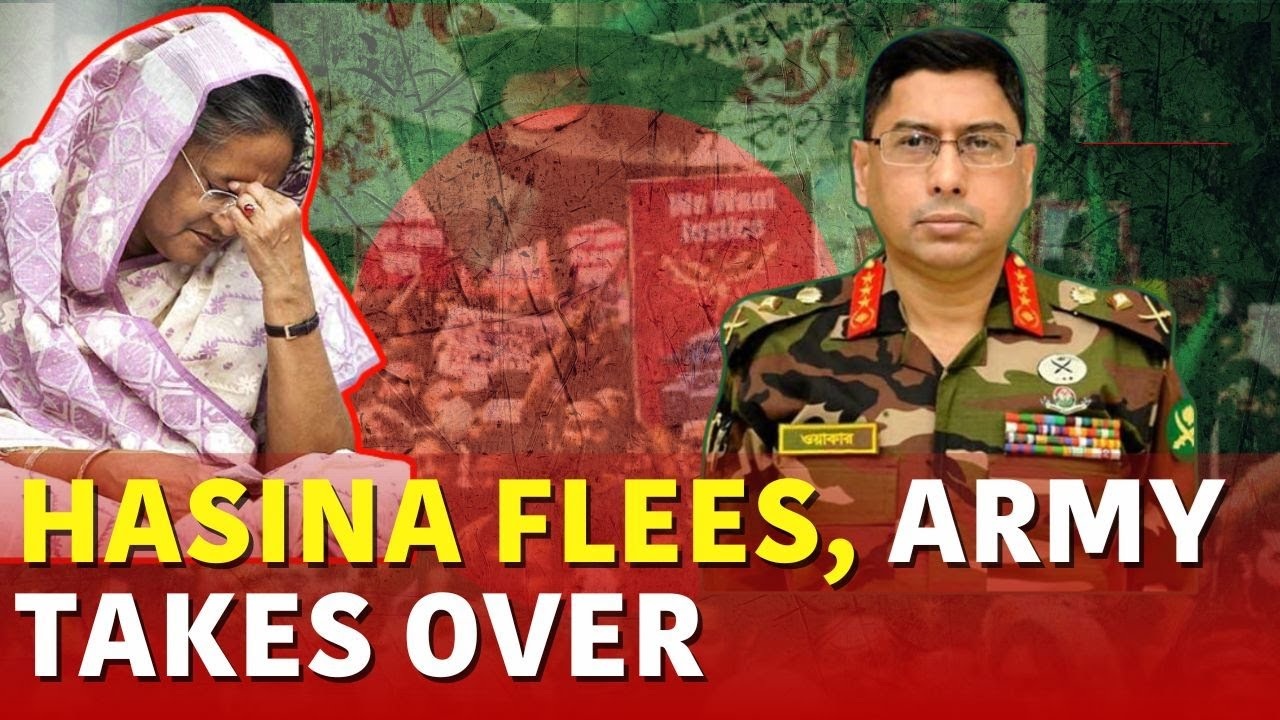
Bangladesh is experiencing a significant political upheaval as Prime Minister Sheikh Hasina has resigned and fled the country amid escalating protests. The situation, which has developed rapidly, has seen violent clashes, extensive damage to government property, and a death toll rising into the hundreds. This article delves into the details of the crisis, the factors leading to the unrest, and the potential implications for Bangladesh’s future.
The Immediate Crisis
On Monday, Army Chief Waker-Uz-Zaman confirmed that Prime Minister Sheikh Hasina, aged 76, had submitted her resignation and left the country. Reports indicate that she, along with her sister, Sheikh Rehana, departed from Dhaka on a military helicopter, heading towards Agartala in Tripura, India. The resignation follows mass protests and a violent storming of Hasina’s official residence by protesters, who were seen ransacking the building and looting food supplies.
Protesters Storm the Palace
The protest movement, initially sparked by grievances over a controversial job quota system, has escalated significantly. The quota system reserved 30% of government jobs for relatives of veterans from Bangladesh’s War of Independence in 1971, a policy seen as unfair by many, especially the youth. What began as a student protest has morphed into a broader anti-government movement, demanding Hasina’s resignation and an end to perceived systemic injustices.
Violence and Casualties
The intensity of the protests has been marked by severe violence. Over the past month, nearly 300 people have died as authorities cracked down on demonstrators. On the Sunday preceding Hasina’s resignation, at least 98 people were killed in clashes between police and protesters in Dhaka. The protesters, demanding justice for those killed in previous demonstrations, have shown no signs of backing down, leading to a highly volatile situation in the capital and other major cities.
Government Response and Army Intervention
The government initially ordered a complete internet shutdown in an attempt to control the spread of the protests. However, this measure proved ineffective as the unrest continued to grow. In a dramatic turn, the Army Chief addressed the nation, taking full responsibility for the situation and announcing the formation of an interim government. Although it remains unclear whether General Waker-Uz-Zaman will lead this caretaker government, his statements indicate a significant shift in power dynamics within the country.
Historical Context of the Quota System
The controversial quota system at the heart of the protests has long been a point of contention. Reinstated by the High Court in June, the system was initially abolished by Hasina’s government in 2018, only to be reinstated later by judicial intervention. The Supreme Court’s decision to dismiss the lower court order and direct that 93% of government jobs be open to merit-based candidates temporarily appeased the protesters. However, demands for a public apology from Hasina, the restoration of internet connections, and the release of arrested protesters reignited the movement.
Economic Factors and Unemployment
Underlying the immediate causes of the protests is a broader economic malaise. Bangladesh, once hailed for its rapid economic growth driven by the booming garments sector, has seen its economy stagnate. High youth unemployment, with nearly 32 million young people out of work or education, has exacerbated frustrations. Inflation, hovering around 10% per annum, and shrinking dollar reserves have further strained the economic landscape, making public sector jobs highly coveted and intensifying resentment towards the quota system.
Political Implications and Future Prospects
The resignation of Sheikh Hasina, who has been in power since 2009, marks a significant turning point in Bangladesh’s political landscape. Her departure under such tumultuous circumstances raises questions about the stability of the interim government and the potential for further unrest. The Army’s involvement in forming the caretaker government could lead to a period of military influence over civilian affairs, a development that may have far-reaching consequences for Bangladesh’s democracy.
International Reactions and Security Concerns
India has responded to the crisis by issuing a high alert along its border with Bangladesh. The Border Security Force (BSF) has increased vigilance, and senior officials have arrived in Kolkata to assess and bolster security measures. The international community is closely monitoring the situation, with concerns about regional stability and the potential for a refugee crisis if the unrest continues.
Conclusion
The resignation of Prime Minister Sheikh Hasina amidst massive protests marks a critical juncture for Bangladesh. The nation’s future now hinges on the establishment of a stable interim government capable of addressing the root causes of the unrest and guiding the country towards recovery. As the situation unfolds, the people of Bangladesh and the international community will be watching closely, hoping for a peaceful resolution and a return to stability.