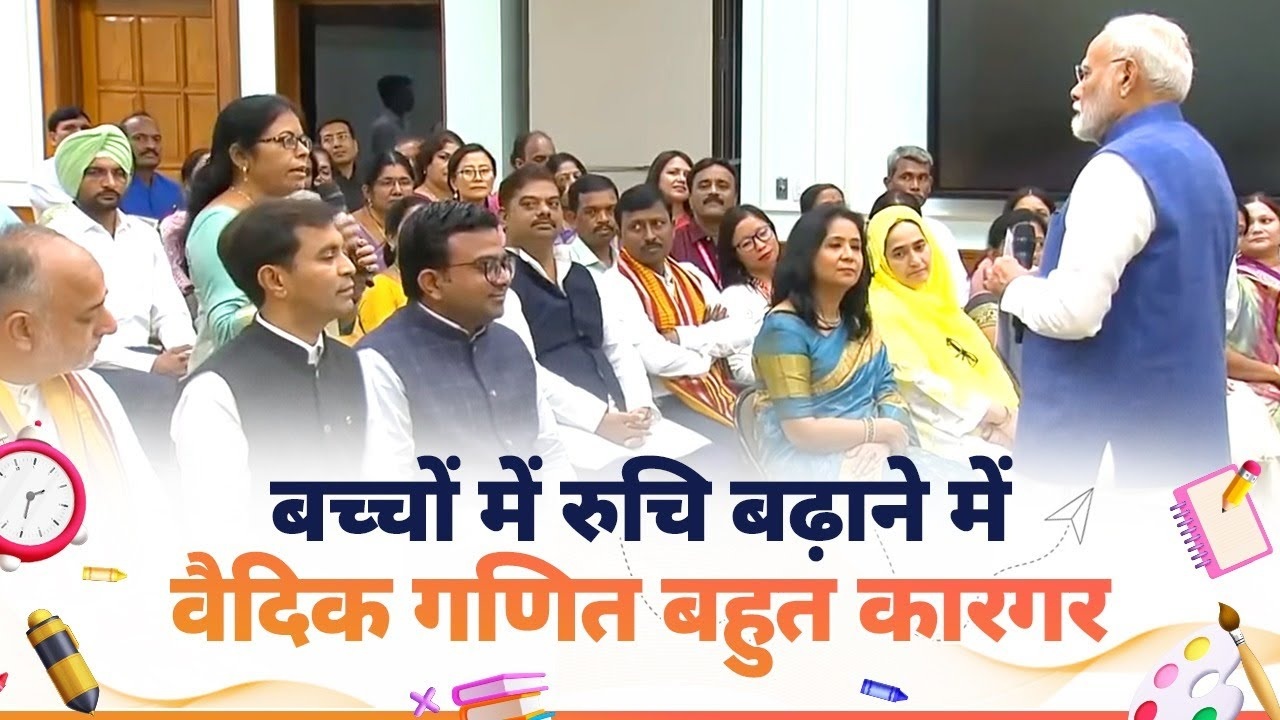
Prime Minister Narendra Modi emphasized the need to recognize and reward educators who employ innovative teaching techniques, as he addressed the recipients of the National Teachers’ Awards. In his speech, Modi alluded to the inefficiencies of previous governments without directly mentioning them, focusing instead on future improvements. He highlighted that the recognition of outstanding teachers is crucial to building a “Viksit Bharat” (developed India) by nurturing young minds.
During his interaction with the award-winning teachers, Modi offered insightful suggestions on how educators can contribute to the progress of the country. This interaction, which occurred on Friday, was shared via video on Saturday. Modi’s remarks emphasized the importance of embracing modern education methods while maintaining a connection with India’s rich culture.
Acknowledging Innovators in Education: A Step Toward a Bright Future
In a clear shift from past policies, Prime Minister Modi reiterated that the government is actively working to recognize teachers who practice innovative teaching strategies. His administration seeks to honor those educators who break the mold and contribute meaningfully to the future of India’s educational landscape.
These efforts come at a critical time, as India is moving toward a more integrated and forward-thinking education system. By recognizing these teachers, the government aims to set a benchmark for educational standards that encourage creativity and critical thinking among students.
Modi’s encouragement to educators to prepare students for a “Viksit Bharat” underscores the role of teachers in shaping the nation’s future. By embracing innovative methods, teachers can foster an environment that nurtures curiosity and lifelong learning.
Promoting Educational Tourism: A Creative Approach to Learning
One of Modi’s creative ideas was for teachers to encourage students to explore the top 100 tourist destinations in India. By incorporating these destinations into their educational curriculum, students can develop a deeper understanding of the country’s geography, history, and culture. This hands-on learning experience could also inspire students to appreciate their heritage while fostering a sense of national pride.
Educational tours could serve as a tool to bridge the gap between traditional textbook learning and real-world knowledge. By engaging students with the country’s landmarks, teachers can help them gain valuable insights into India’s diverse culture and history.
Teachers as Agents of Change: Supporting the National Education Policy
The teachers who received the National Teachers’ Awards were selected through a rigorous process, according to Modi. These educators exemplify the ideals of the National Education Policy (NEP), which emphasizes practical, innovative teaching methods and the holistic development of students.
The NEP represents a significant shift in India’s approach to education, focusing on flexibility, multidisciplinary learning, and fostering creativity. Teachers who adapt to these new policies will play a critical role in the success of NEP’s vision.
Modi stressed that there are many other teachers across India who are doing exceptional work. He encouraged award-winning educators to connect with each other on social media platforms, enabling them to share best practices, adapt new methods, and collaborate on their teaching approaches.
The Importance of Education in the Mother Tongue: Preserving Culture
A crucial point in Modi’s address was the importance of promoting education in local languages. The NEP has placed special emphasis on this, recognizing that learning in one’s mother tongue strengthens cognitive abilities and fosters a deeper connection to one’s cultural roots.
By teaching students in their native language, educators can help preserve India’s linguistic diversity while making learning more accessible. Modi urged teachers to incorporate local folklore into their lessons, teaching students various stories in multiple languages. This, he argued, would not only broaden students’ linguistic skills but also expose them to India’s vibrant and diverse cultural heritage.
Award-Winning Teachers: Role Models for Future Generations
The National Teachers’ Awards recognize the contributions of 82 outstanding teachers from across the country. This year, the awards were presented to 50 teachers from the Department of School Education & Literacy, 16 from the Department of Higher Education, and 16 from the Ministry of Skill Development and Entrepreneurship.
These educators are role models, whose innovative teaching methods have significantly impacted their students and communities. Their recognition serves as an inspiration for other educators to strive for excellence and to experiment with new, creative approaches to teaching.
Connecting Teachers and Communities: Encouraging Collaborative Learning
Modi highlighted the importance of collaboration and communication among educators. He urged award-winning teachers to stay connected with each other and share their best practices through social media. By doing so, educators from various regions can learn from one another and implement new strategies in their classrooms.
This collaborative approach not only improves the quality of education but also fosters a sense of unity and purpose within the teaching community. Teachers who share their successes and challenges can inspire others to adopt innovative practices, benefiting students across the country.
Supporting Students’ Extracurricular Interests: Encouraging Sports and the Arts
In addition to academic learning, Modi emphasized the importance of exposing students to extracurricular activities such as sports and the arts. He suggested that teachers take their students to nearby universities to watch sporting events, which could ignite their passion for sports and inspire them to pursue their dreams.
This holistic approach to education, which goes beyond traditional classroom learning, encourages students to develop diverse interests and skills. By engaging in activities outside the classroom, students can learn valuable life lessons such as teamwork, discipline, and perseverance.
A Call to Preserve India’s Educational Legacy
Modi’s vision for India’s education system extends beyond academic achievements. His call for a renewed focus on innovative teaching methods, cultural preservation, and holistic development aligns with the broader goals of the NEP. By recognizing and rewarding outstanding teachers, Modi’s government is setting the foundation for a more vibrant and dynamic education system.
As India moves forward, the role of educators will remain crucial in shaping the minds and futures of the nation’s youth. By embracing innovation, collaboration, and a commitment to cultural heritage, teachers can help build a brighter and more prosperous future for the country.
Conclusion
Prime Minister Narendra Modi’s efforts to recognize and support innovative educators signify a bold step toward transforming India’s education system. By emphasizing creativity, collaboration, and cultural preservation, Modi aims to create an environment where both teachers and students can thrive. The NEP, with its focus on holistic development and multilingual learning, is a key part of this vision. The recognition of exceptional teachers is just the beginning of a larger movement to improve educational outcomes and prepare young minds for the challenges of the future.