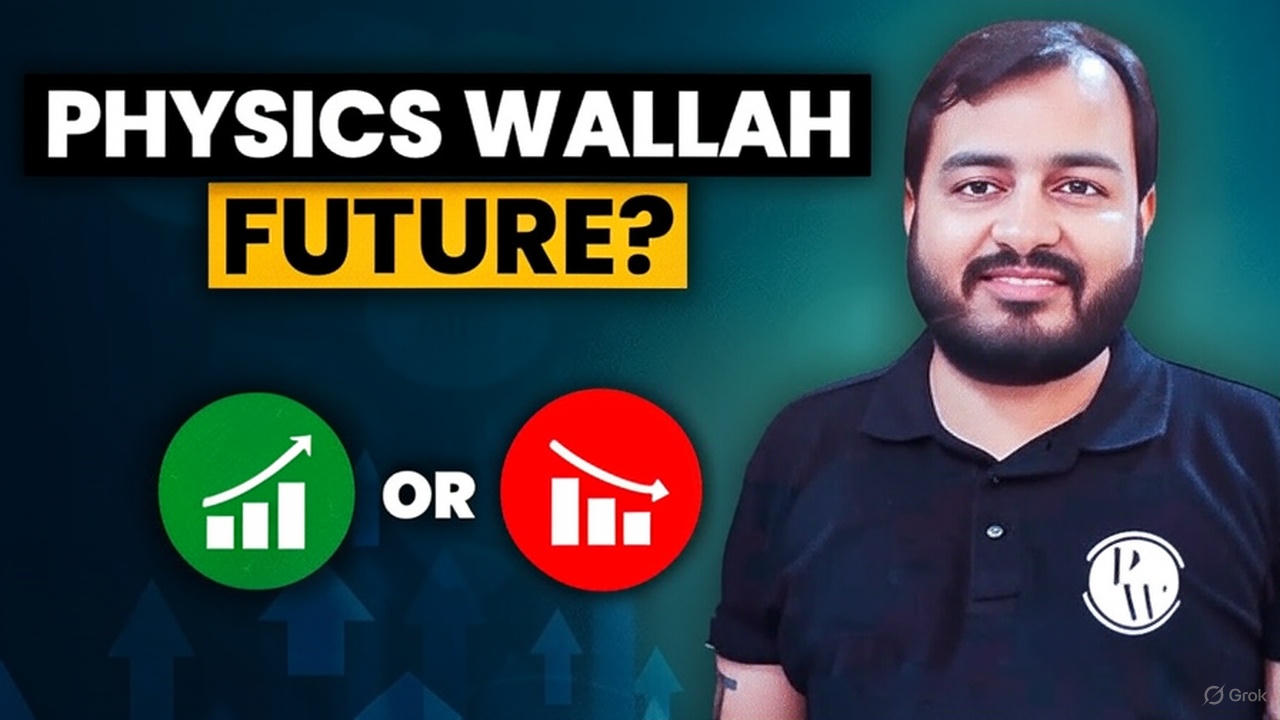
India’s EdTech sector has seen meteoric growth, with startups like Physics Wallah capturing the imagination of millions of students. Founded by Alakh Pandey, Physics Wallah emerged as a beacon of affordable, quality education, leveraging YouTube and a mobile app to democratize learning. However, recent financial reports reveal a staggering ₹1,131 crore loss in FY24, raising questions about the company’s sustainability. This article dives deep into Physics Wallah’s journey, analyzing its rise, challenges, and potential path forward in the competitive EdTech landscape.
The Genesis of Physics Wallah: A Vision for Affordable Education
Alakh Pandey’s Humble Beginnings
Born on October 2, 1991, in Prayagraj, Alakh Pandey grew up in a lower-middle-class family. Financial constraints shaped his early life, forcing him to drop out of school in the 11th grade. Despite dreams of becoming an actor, Pandey turned to teaching at a local coaching center in Allahabad, earning ₹5,000 monthly. His knack for simplifying complex physics concepts with engaging teaching methods set him apart, laying the foundation for Physics Wallah.
The YouTube Revolution
In 2014, Pandey launched the Physics Wallah YouTube channel with minimal resources—just a whiteboard and a passion for teaching. His ability to break down intricate IIT JEE and NEET physics topics resonated with students. By 2020, the channel had become the top IIT JEE preparation resource on YouTube, amassing millions of subscribers. Unlike competitors like Byju’s and Vedantu, Physics Wallah’s organic growth relied on content quality rather than flashy marketing.
The Launch of the Physics Wallah App
In 2019, Pandey partnered with Prateek Maheshwari, an IIT BHU graduate with experience in app development. Their collaboration birthed the Physics Wallah app, launched in June 2020 amid the COVID-19 pandemic. The timing was perfect, as physical coaching centers shuttered, driving students to online platforms. The app’s announcement on YouTube led to over 200,000 downloads in a single day, crashing the platform due to overwhelming demand. Today, the app boasts over 10 million downloads, and the main YouTube channel has 13 million subscribers.
The EdTech Boom: Physics Wallah’s Meteoric Rise
Affordable Courses Disrupt the Market
Physics Wallah’s success stemmed from its affordability. While competitors like Byju’s charged ₹100,000 for a one-year NEET course, and Vedantu charged ₹60,000–₹68,000, Physics Wallah offered similar courses for as low as ₹999. Subsequent courses averaged ₹3,500, making quality education accessible to students in Tier 2 and Tier 3 cities. This pricing strategy, coupled with Pandey’s emotional connection with students, drove massive enrollment.
Organic Marketing and Brand Loyalty
Unlike Byju’s, which spent ₹414 crore on marketing in FY22, Physics Wallah relied on organic promotion through Pandey’s YouTube videos. This approach saved significant costs while fostering trust among students. In FY21, the company generated ₹68 crore in revenue, followed by a remarkable ₹98 crore profit in FY22, all without external funding. This financial independence attracted investors, but Pandey initially resisted, prioritizing sustainable growth.
The Unicorn Milestone
In June 2022, Physics Wallah accepted its first funding round, raising $100 million in Series A, propelling its valuation to $1.1 billion. This milestone made it India’s 101st unicorn, a testament to its rapid growth. However, this influx of capital marked the beginning of a turbulent phase, as investor pressures led to strategic shifts that would challenge the company’s core vision.
The Downward Spiral: Financial Losses and Strategic Missteps
Rapid Expansion and Acquisitions
Post-funding, Physics Wallah embarked on an aggressive expansion strategy. In August 2022, it acquired FreeCo, a doubt-solving platform. Within months, it purchased PrepOnline, Altis Vortex, iNeuron (a data science course provider), and UAE Knowledge Platform, which operated 10 NEET and JEE preparation centers in the UAE. By June 2023, the company had acquired Jylan Learning, totaling over six acquisitions in a year. While acquisitions are standard for growth, this rapid pace strained resources and diluted focus.
The Offline Center Gamble
Physics Wallah’s shift to offline coaching centers in major cities like Prayagraj, Delhi, and Jaipur marked a departure from its online-only model. These centers charged ₹50,000–₹60,000 per student, significantly higher than the ₹3,500 average for online courses. While this increased per-student revenue, it confused students who valued the brand’s affordability. The high operational costs of offline centers, including staff maintenance and infrastructure, further eroded profits.
Financial Performance: From Profit to Peril
Physics Wallah’s financial trajectory tells a stark story:
- FY21: ₹68 crore revenue, modest profit.
- FY22: ₹98 crore profit, driven by organic growth.
- FY23: ₹84 crore loss, attributed to rapid expansion.
- FY24: ₹1,131 crore loss, a shocking escalation.
Despite revenue growth to ₹1,940 crore in FY24, driven by increased enrollments and offline centers, the company’s expenses outpaced income. Employee benefit expenses alone reached ₹1,159 crore, highlighting the financial strain of expansion.
The Byju’s Parallel
Physics Wallah’s trajectory mirrors Byju’s, which faced massive losses after rapid expansion and acquisitions like WhiteHat Jr. Byju’s borrowed $1 billion against acquired assets, a move that backfired. Physics Wallah’s aggressive acquisitions and offline push, driven by investor pressure, echo these mistakes, raising concerns about its long-term viability.
Internal Challenges: Loss of Talent and Vision
The Exodus of Key Teachers
In a significant blow, four prominent teachers—Tarun Kumar, Manish Dubey, Sarvesh Dixit, and Aditya Anand—resigned abruptly. In a live class, they cited a disconnect between Physics Wallah’s original vision and its current direction. These educators were instrumental in the company’s growth, and their departure signaled internal discord, likely fueled by investor-driven decisions prioritizing profit over educational quality.
Investor Influence and Loss of Control
The influx of external funding diluted Pandey’s control. Investors pushed for rapid growth to boost valuation, aiming for a $5 billion IPO by 2025. However, this focus on valuation over sustainability alienated students and staff, undermining the trust that fueled Physics Wallah’s early success.
The Road Ahead: Can Physics Wallah Recover?
Refocusing on Core Values
To regain its footing, Physics Wallah must return to its roots: affordable, high-quality education. Simplifying operations by scaling back on acquisitions and focusing on online courses could reduce costs. Pandey’s personal brand and teaching prowess remain the company’s greatest assets—leveraging these through YouTube and the app can rebuild trust.
Sustainable Expansion Strategies
Unlike Byju’s, which expanded unsustainably, Physics Wallah can adopt a model like D-Mart, which grows incrementally using profits from existing operations. Limiting offline centers to key locations and optimizing operational efficiency can balance revenue and expenses.
Retaining Talent and Building Trust
Addressing internal dissatisfaction is crucial. Competitive salaries and incentives for teachers, without overextending benefits, can prevent further resignations. Transparent communication with students about pricing and course offerings will maintain the emotional connection that drove early success.
The IPO Dilemma
Physics Wallah’s planned IPO aims to raise its valuation to $5 billion. However, an IPO focused on investor gains rather than student benefits risks further alienating its user base. A successful IPO requires a clear strategy to demonstrate profitability and long-term value, not just market hype.
Lessons from the EdTech Industry
Avoiding Byju’s Pitfalls
Byju’s collapse offers a cautionary tale. Its reliance on external funding, aggressive marketing, and unsustainable acquisitions led to financial ruin. Physics Wallah must prioritize profitability over valuation, ensuring every expansion decision aligns with its mission to serve students.
The Power of Organic Growth
Physics Wallah’s early success came from organic growth, driven by Pandey’s authenticity and affordable pricing. Reverting to this model, with targeted investments in technology and course quality, can restore financial health.
Balancing Innovation and Stability
Innovation, such as AI-driven learning tools or international expansion, is vital but must be gradual. Partnerships with reputable institutions or selective acquisitions in high-demand areas like coding or AI could diversify revenue without overextending resources.
Conclusion: A Crossroads for Physics Wallah
Physics Wallah stands at a critical juncture. Its journey from a YouTube channel to a $3.7 billion unicorn showcases its potential to transform education. However, the ₹1,131 crore loss in FY24, coupled with internal challenges and investor pressures, threatens its legacy. By refocusing on affordability, sustainable growth, and talent retention, Physics Wallah can reclaim its position as India’s leading EdTech platform. The path forward requires bold decisions to prioritize students over short-term gains, ensuring the company remains a trusted name for millions.
Call to Action
What changes should Alakh Pandey implement to steer Physics Wallah back to profitability? Share your suggestions in the comments below. If you found this analysis insightful, like and share this article, and subscribe for more updates on India’s EdTech landscape.