
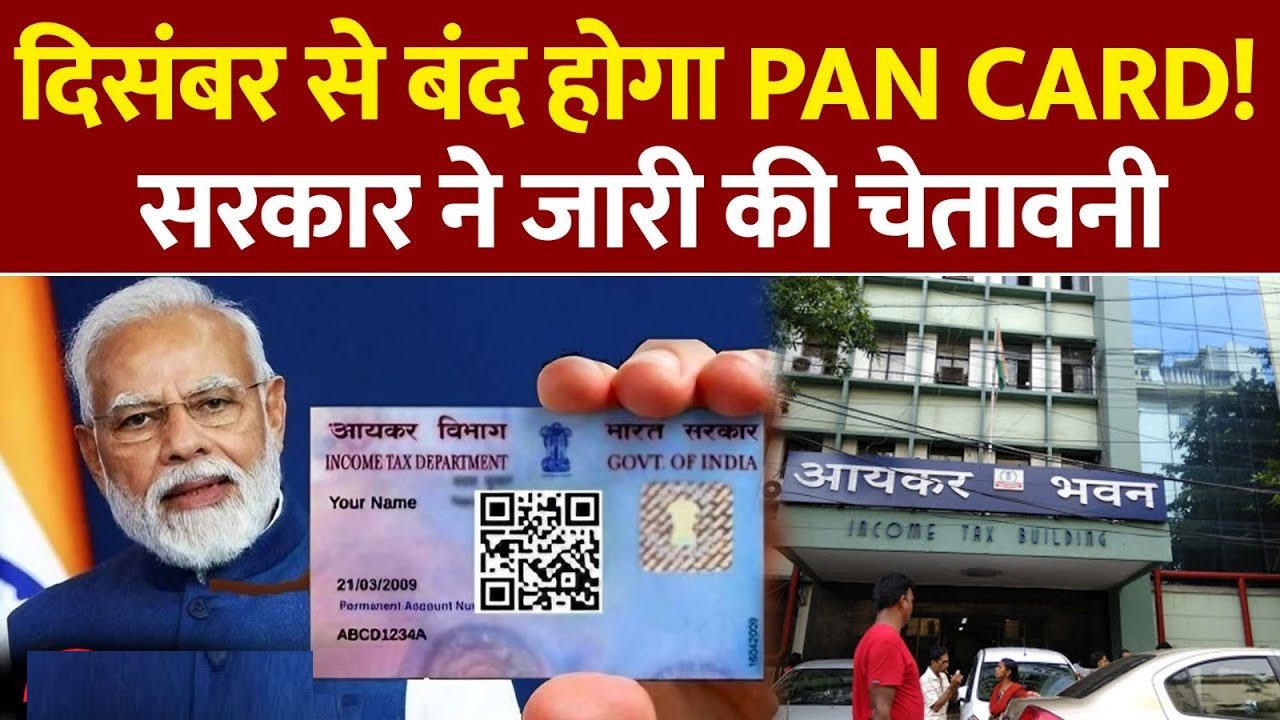
If you hold a Permanent Account Number (PAN) card issued before October 1, 2024, mark your calendar: December 31, 2025, looms as a critical deadline. The Income Tax Department mandates linking your PAN with Aadhaar to keep your PAN active and functional. Fail to act, and from January 1, 2026, your PAN could turn inoperative, halting everything from income tax returns to stock market trades.
This comprehensive guide dives deep into the PAN-Aadhaar linking process, unpacking the why, how, and what-ifs. Whether you’re a salaried professional juggling ITR deadlines or an investor eyeing mutual funds, linking now safeguards your financial ecosystem. We’ll explore consequences, exemptions, step-by-step instructions, troubleshooting tips, and more. By the end, you’ll feel empowered to act swiftly and confidently.
Understanding the PAN-Aadhaar Linking Mandate: Why It Matters in 2025
The Indian government’s push for PAN-Aadhaar integration stems from a broader digital transformation agenda. Launched under the Finance Act, 2021, this requirement aims to curb tax evasion, eliminate duplicate PANs, and streamline identity verification. The Unique Identification Authority of India (UIDAI) oversees Aadhaar, while the Income Tax Department manages PAN—linking them creates a unified, fraud-resistant system.
As of November 2025, over 60 crore PAN holders have already complied, but millions lag behind. The latest notification from the Ministry of Finance reinforces that PANs allotted before October 1, 2024, must link by year-end. This isn’t a suggestion; it’s a legal imperative backed by Section 139AA of the Income Tax Act. Non-compliance doesn’t erase your PAN—it renders it dormant, freezing access to essential services.
Think of it this way: Your PAN is your financial passport. Without Aadhaar linkage, that passport expires at the border, stranding you mid-journey. Businesses, freelancers, and retirees alike rely on an active PAN for TDS credits, refunds, and KYC updates. Delaying could disrupt your year-end tax planning or even block salary credits tied to employer compliances.
Consequences of Missing the PAN Aadhaar Link Deadline: What Happens After December 31, 2025?
Imagine filing your ITR on July 31, 2026, only to hit a wall: “PAN Inoperative.” This nightmare becomes reality for non-linkers starting January 1, 2026. The repercussions cascade across your financial life, creating hurdles that demand immediate fixes.
First, tax filing grinds to a halt. You can’t submit your Income Tax Return (ITR) electronically or on paper if your PAN status shows as inoperative. The e-filing portal rejects submissions outright, citing verification failures. Worse, processing delays mean no tax refunds—your hard-earned overpayments sit idle, accruing no interest.
TDS and TCS credits vanish from view. Form 26AS, your annual tax statement, won’t reflect deductions from salaries, interest, or dividends. This mismatch triggers notices from the Income Tax Department, potentially leading to penalties under Section 234H for late or non-filing. Freelancers and gig workers face amplified pain: Without an active PAN, invoice payments stall, as payers withhold TDS at higher rates.
Investments take a direct hit. Buying or selling shares on NSE or BSE? Brokers demand a valid PAN for transactions above ₹50,000. An inoperative one blocks demat account updates, mutual fund SIPs, or even PPF contributions. Existing holdings remain safe—you won’t lose money already invested—but growth halts. KYC refreshes for banks, insurance, or fintech apps fail, isolating you from digital banking perks like UPI limits or loan approvals.
For businesses, the stakes soar. Companies can’t claim input tax credits under GST if supplier PANs are inoperative, inflating costs. NRIs returning home for remittances or property deals encounter visa-like barriers at financial institutions.
Penalties add insult to injury. While no direct fine exists for non-linking post-deadline, the ripple effects include a ₹1,000 fee to reactivate (more on that later) plus interest on delayed refunds and audit risks. In extreme cases, prolonged inaction could flag you for scrutiny under the Black Money Act.
Real-world stories abound: A Mumbai investor missed the 2023 voluntary deadline, only to scramble in 2024 when his ₹5 lakh refund froze. “It was chaos,” he shares. “Brokers wouldn’t touch my trades, and my CA billed extra for compliance chases.” Don’t let this be you—proactive linking preserves peace of mind.
Who Must Link PAN with Aadhaar? Exemptions and Special Cases Explained
Not everyone rushes to the linking portal. The government carves out exemptions to ease burdens on vulnerable groups, ensuring inclusivity in this digital drive.
Prime beneficiaries of waivers include Non-Resident Indians (NRIs). If you reside abroad and hold a PAN for overseas income reporting, skip the link—your foreign address suffices for verification. Similarly, senior citizens over 80 years qualify for relief. These elders, often tech-averse, avoid the process if they file ITRs through representatives.
Residents of Assam, Meghalaya, and Jammu & Kashmir (J&K) also dodge the mandate, thanks to regional sensitivities around Aadhaar enrollment. Post the 2019 abrogation of Article 370, J&K’s integration progresses, but linking remains optional here for now.
What about minors or those without Aadhaar? Parents link a child’s PAN to their own Aadhaar until majority. Aadhaar-less individuals apply via UIDAI first—it’s free and quick at enrollment centers.
Double-check your status: Visit the Income Tax e-filing portal and enter your PAN to see if linking is required. If “Pending” flashes, act fast. For NRIs, upload passport details instead under the “Alternative Documents” tab.
These exemptions reflect thoughtful policy-making, balancing security with accessibility. Yet, for the 90% of PAN holders unaffected, linking is non-negotiable.
Step-by-Step Guide: How to Link PAN with Aadhaar Online in Minutes
Linking PAN with Aadhaar is simpler than renewing a driver’s license—no queues, no paperwork. The entire process unfolds on the Income Tax Department’s portal, taking under five minutes for most. Here’s your foolproof roadmap.
Step 1: Gear Up with Essentials
Before diving in, gather your PAN number (10-digit alphanumeric code on your card), Aadhaar number (12 digits), and a registered mobile number. Ensure the mobile links to your Aadhaar for OTP delivery—UIDAI mandates this for security. If not, update it at an Aadhaar center pronto.
Step 2: Navigate to the Official Portal
Fire up your browser and head to www.incometax.gov.in. This is the sanctum sanctorum—avoid third-party sites promising “instant links” to dodge scams. On the homepage, spot the “Quick Links” section. Click “Link Aadhaar” under the Services tab. A dedicated page loads, emblazoned with the tricolor for authenticity.
Step 3: Enter Your Details Securely
The form is minimalist: Input your PAN in the first field, Aadhaar in the second, and your name as it appears on both documents (matching is crucial—typos trigger rejections). Captcha verification follows; solve the puzzle to prove you’re human.
Step 4: Verify with OTP Magic
Submit, and an OTP zips to your Aadhaar-linked mobile. Enter it within 10 minutes. Behind the scenes, UIDAI cross-checks demographics against PAN records. Success? A confirmation screen pops: “Aadhaar linked successfully to PAN.” You’ll receive an email and SMS acknowledgment, timestamped for records.
Step 5: Check Status and Celebrate
Curious if it stuck? Return to “Quick Links” > “Link Aadhaar Status.” Enter PAN and captcha—green light means go. If red-flagged, retry or contact support.
Pro tip: Use incognito mode for privacy, and enable two-factor authentication on your email. For bulk linkers (like HR pros), the portal supports CSV uploads.
Offline PAN Aadhaar Linking: When Digital Isn’t Your Jam
Not everyone embraces screens. If online glitches or connectivity woes plague you, offline options abound, blending tradition with tech.
Visit a PAN Service Center
Locate a TIN-Facilitation Center (TIN-FC) or Common Service Center (CSC) via the NSDL website (www.tin-nsdl.com). These hubs, numbering over 1 lakh nationwide, staff trained agents. Carry originals: PAN card, Aadhaar, and photo ID. Fill Form 49A (for linking requests), pay ₹107 (service fee), and submit. Processing takes 15-30 days; track via acknowledgment number.
Aadhaar Enrollment Centers as Backup
UIDAI centers double as linking points. Enroll or update Aadhaar first if needed, then request PAN linkage on-site. Ideal for rural folks—over 1.3 lakh centers span villages.
Postal Linking for Remote Access
India Post’s 1.5 lakh branches offer doorstep service. Download the linking form from their site, affix documents, and dispatch. Fees: ₹50-100, with delivery in 20 days.
Offline shines for seniors or low-literacy users, ensuring no one falls through cracks. Agents guide you, reducing errors by 40% per department stats.
Common PAN Aadhaar Linking Errors and Quick Fixes
Even seamless processes snag. Here’s how to sidestep pitfalls.
Name Mismatch: Aadhaar reads “Raj Kumar Singh,” PAN “Rajkumar Singh”? Update Aadhaar via UIDAI’s self-service to align. Takes 15 days.
OTP Woes: No signal? Switch to email verification if opted in, or visit a center for manual auth.
Inoperative PAN Already? Pay ₹1,000 via challan on the portal, then relink. It’s a one-time sting for pre-2024 defaulters.
Captcha Conundrums: Refresh for clearer images; voice options aid visually impaired.
Server Overloads: Peak hours (evenings) crash sites—link at dawn. If stuck, email grievances@income.nic.in with screenshots.
These tweaks turn frustrations into triumphs, keeping your compliance streak alive.
Benefits of Linking PAN with Aadhaar: Beyond Compliance
Linking isn’t drudgery—it’s a gateway to efficiency. Pre-filled ITR forms auto-populate from Aadhaar data, slashing filing time by 50%. Refunds process in 7-15 days, not months.
Fraud shields strengthen: Biometric ties deter identity theft, vital as cybercrimes surge 30% yearly. Investors enjoy frictionless KYC—once linked, banks and SEBI entities recognize you instantly.
For the economy, it weeds out ghosts: Over 10 crore duplicate PANs vanished post-2021, boosting revenue by ₹20,000 crore. You contribute to this cleaner system while reaping personal perks like higher UPI limits and faster loans.
Long-term, it paves for faceless assessments—AI-driven audits minus human bias, promising fairer tax plays.
PAN Aadhaar Linking and ITR Filing: Seamless Tax Season Strategies for 2026
As 2026 beckons, linked PANs unlock smoother ITR journeys. AY 2026-27 filers with active status breeze through pre-filled forms, capturing salaries from Form 16 and deductions from 80C proofs.
Unlinked? Manual entries galore, plus rejection risks. Plan ahead: Link by November 2025 to test integrations. Use AIS (Annual Information Statement) for holistic views—linked users see real-time updates.
Freelancers, note: Schedule D income reports sync automatically, easing GSTR reconciliations. Retirees claim senior exemptions effortlessly.
Tax pros predict 90% digital filings by 2027—linking positions you at the forefront.
Investment Safeguards: How PAN Aadhaar Link Protects Your Portfolio
Stock markets thrive on speed; inoperative PANs kill it. SEBI mandates linkage for demat operations—unlinked traders face trade halts, per 2024 circulars.
Mutual funds? AMFI blocks SIPs over ₹50,000 annually. Gold ETFs, REITs—all freeze. Reactivation demands broker interventions, delaying gains.
Case in point: A Delhi trader lost ₹2 lakh in opportunity costs during a 2024 delink scare. Linked portfolios, conversely, enable algo trading and portfolio trackers without hitches.
Diversify wisely: Link now to access NPS Tier II or international funds seamlessly.
NRIs and Senior Citizens: Tailored Advice for PAN Aadhaar Exemptions
NRIs, breathe easy—your OCI/PIO status substitutes Aadhaar. File via the NRI portal with passport KYC; linking is voluntary for FEMA compliances.
Seniors 80+: Power of attorney holders manage links, or opt for Form 15H exemptions. Meghalaya’s tribal councils offer community centers for group sessions.
These accommodations honor life’s stages, ensuring equity.
Future-Proofing Finances: Upcoming Changes Post-PAN Aadhaar Deadline
Post-2025, expect Vivad se Vishwas 2.0—linking waives penalties for past dues. Faceless appeals accelerate resolutions.
Aadhaar evolves too: Virtual IDs enhance privacy, letting you link without exposing full numbers.
Stay tuned: Budget 2026 may introduce Aadhaar-PAN for EPF withdrawals, expanding the net.
Frequently Asked Questions: PAN Aadhaar Linking Demystified
Can I link PAN with Aadhaar after December 31, 2025?
Yes, but your PAN turns inoperative until you pay ₹1,000 and relink. Act before the deadline to avoid disruptions.
Is PAN Aadhaar linking free?
Absolutely—online is gratis. Offline incurs nominal fees for services.
What if my Aadhaar isn’t updated?
Update demographics first via mAadhaar app or centers. Linking fails otherwise.
Does linking affect privacy?
No—data stays siloed. UIDAI and ITD use it solely for verification, per DPDP Act 2023.
How long does linking take to reflect?
Instant for most; up to 30 days in rare cases. Check status weekly.
Can I unlink PAN from Aadhaar later?
No reversals—it’s permanent for compliance.
Conclusion: Link Your PAN with Aadhaar Today—Secure Tomorrow’s Wealth
The clock ticks toward December 31, 2025, but empowerment lies in action. Linking your PAN with Aadhaar isn’t a chore; it’s your shield against financial freezes and a step toward a digitized, equitable India. We’ve covered the stakes, steps, and silver linings—now, log in, link up, and liberate your finances.
For more tax tips, subscribe to our newsletter or follow us on socials. Remember: Compliance today breeds prosperity tomorrow. What’s your next move? Share in the comments—let’s build a compliant community together.