
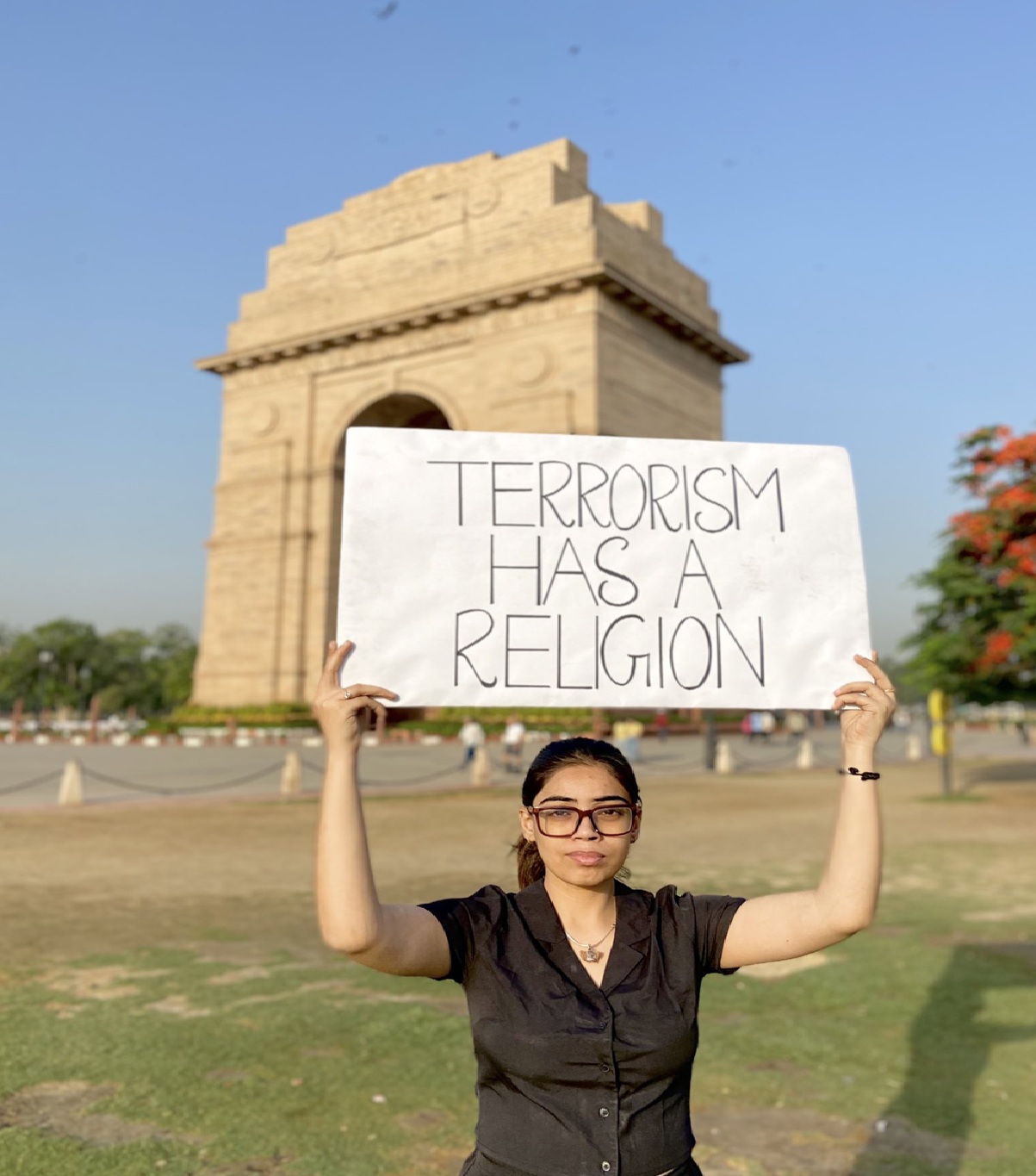
On a serene day in the Baisaran Valley, a popular tourist destination in Pahalgam, Jammu and Kashmir, a horrific terrorist attack shattered the tranquility. The assault, which targeted civilians based on their religious identities, claimed the lives of 26 men, including 24 Hindus, one Muslim, and one Christian. Among the victims were tourists from across India and Nepal, as well as personnel from the Indian Air Force, Navy, and Intelligence Bureau. The brutality of the attack, coupled with its targeted nature, has sent shockwaves across the nation, raising critical questions about India’s ability to protect its citizens.
The Tragic Details of the Attack
The attackers, suspected to be four to six terrorists, struck with chilling precision. Eyewitness accounts paint a grim picture: terrorists approached victims, demanded they recite Islamic verses, and shot those who could not comply. Among the victims was 26-year-old Indian Navy Lieutenant Vinay Narwal, who was on his honeymoon just six days after his wedding. Another victim, Neeraj Udhwani, a 32-year-old from Jaipur working in the UAE, was vacationing with his wife after attending a wedding in Shimla. The lone Muslim victim, Syed Adil Hussain Shah, was a local mule handler who played a vital role in the region’s tourism economy.
The high-altitude location of Baisaran Valley complicated rescue efforts. Helicopters airlifted the injured, while local mule handlers heroically transported victims to safety. Twelve tourists were admitted to Pahalgam Hospital, where doctors reported their conditions as stable. The Indian Army arrived approximately 20 minutes after the attack to secure the area and assist with evacuations.
The Perpetrators: The Resistance Front and Lashkar-e-Taiba
The Resistance Front (TRF), a shadow group affiliated with the Pakistan-based terrorist organization Lashkar-e-Taiba, claimed responsibility for the attack. TRF, declared a terrorist organization by India’s Ministry of Home Affairs under the Unlawful Activities (Prevention) Act (UAPA) in 2022, has a history of targeting civilians and security forces in Jammu and Kashmir. Intelligence reports suggest that Lashkar-e-Taiba’s top commander, Saifullah Kasuri, may have been a key conspirator in the attack.
According to the initial probe, the attackers included three Pakistani nationals and two Kashmiri youths, Adil Guri from Anantnag and Ahsan from Pulwama, who allegedly infiltrated India after training in Pakistan. The Jammu and Kashmir police have released sketches of the Pakistani suspects, and investigations are ongoing to apprehend those responsible.
A Pattern of Intelligence Failures?
The Pahalgam attack has drawn comparisons to the 2019 Pulwama attack, which killed 40 Central Reserve Police Force (CRPF) personnel. Disturbingly, reports indicate that intelligence agencies had prior inputs about terrorist movements in the region. A Times of India report revealed that in early April, authorities received information about terrorists scouting hotels in Pahalgam, suggesting the attack was premeditated. Despite these warnings, the attack proceeded, raising serious questions about the effectiveness of India’s intelligence and security apparatus.
The Pulwama attack similarly exposed gaps in intelligence utilization. Between January and February 2019, 11 intelligence inputs warned of a potential “Qisas” (revenge) attack by Jaish-e-Muhammad, with specific details about the mastermind, Mudasir Ahmad Khan. Yet, over 2,500 CRPF soldiers were sent in a single convoy without airlift, a decision criticized by the former Inspector General of CRPF as “technically wrong.” The recurrence of such lapses in Pahalgam underscores the need for a robust overhaul of India’s counterterrorism strategy.
Lessons from Pulwama: Why History Repeats
The Pulwama attack revealed systemic issues in intelligence dissemination and operational response. Intelligence inputs from January 2019 identified Mudasir Ahmad Khan’s plans for a “Fidayeen” attack and pinpointed his location with four foreign mercenaries. A “Top Secret” input on February 12 warned of possible improvised explosive device (IED) blasts on security force routes. Despite these red flags, preventive measures fell short, resulting in one of India’s deadliest terror attacks.
The Pahalgam attack mirrors this pattern. The presence of prior intelligence about terrorist reconnaissance in the area suggests that actionable steps were either not taken or inadequately executed. This raises a critical question: How can India strengthen its intelligence-to-action pipeline to prevent such tragedies?
The Human Cost: Stories of Loss and Resilience
The Pahalgam attack left behind a trail of grief and shattered lives. Vinay Narwal’s sister recounted how her brother lay alive for 1.5 hours after being shot, with no immediate rescue available. Had the Army or police been present, she believes he could have been saved. Asavari, an HR professional from Pune, shared a harrowing account of her father being shot after failing to recite Islamic verses, with local mule handlers stepping in to evacuate her family when security forces were absent.
These stories highlight the human toll of terrorism and the bravery of ordinary citizens in the face of crisis. Mule handlers, despite their own loss in Syed Adil Hussain Shah, carried the injured to safety, demonstrating the spirit of solidarity that defines India’s diverse society.
India’s Security Challenges: A Deeper Look
The Pahalgam attack is not an isolated incident but part of a series of terrorist attacks that have plagued India, particularly in Jammu and Kashmir. Since 2016, the region has witnessed multiple high-profile attacks, including:
- Nagrota Army Base Attack (November 2016): Seven soldiers killed.
- Amarnath Yatra Attack (July 2017): Eight pilgrims killed.
- Sunjuwan Military Station Attack (February 2018): Six soldiers and one civilian killed.
- Pulwama Attack (February 2019): 40 CRPF personnel killed.
- Reasi Attack (2024): Nine pilgrims killed.
- Pahalgam Attack (2025): 26 civilians killed.
These incidents expose systemic vulnerabilities in India’s security framework, including:
1. Intelligence Utilization
The failure to act on specific intelligence inputs points to a disconnect between intelligence agencies and operational units. Streamlining communication and ensuring rapid response mechanisms are critical to preventing future attacks.
2. Troop Shortages
A 2022 report by The Telegraph highlighted a shortage of over 100,000 personnel in the Indian Army, with 8,400 officer vacancies and 92,400 soldier vacancies. The absence of recruitment during the COVID-19 pandemic exacerbated this deficit. Alarmingly, plans to reduce troop strength by 200,000 over three years to cut salary and pension costs could further weaken India’s defense capabilities.
3. Overworked Security Forces
The Indian Army and police forces are stretched thin, with soldiers frequently redeployed across regions. State police forces, responsible for maintaining law and order, are similarly understaffed and overworked, compromising their ability to respond effectively to crises.
4. Border Security
The infiltration of Pakistani terrorists into India underscores the challenge of securing porous borders. The Border Security Force (BSF), under the central government’s control, must enhance surveillance and coordination with local authorities to curb cross-border terrorism.
The Role of Media and Political Accountability
The Pahalgam attack has exposed a troubling trend in India’s media landscape: the reluctance to hold the government accountable. Unlike the pre-2014 era, when media outlets and films like A Wednesday openly questioned government failures, today’s pro-government media often deflects blame. For instance, journalist Arnab Goswami controversially blamed the Supreme Court’s deliberations on Article 370 for the attack, ignoring the government’s role in ensuring security.
In contrast, public sentiment, as voiced by children and ordinary citizens, demands answers. A child’s poignant question—“There’s an army base nearby, but they didn’t know anything?”—captures the frustration over apparent lapses. The media’s failure to amplify such voices undermines democratic accountability.
Political Response: Promises vs. Action
Home Minister Amit Shah vowed that the perpetrators of the Pahalgam attack would face justice. While this commitment is welcome, it must be accompanied by concrete measures to prevent future attacks. The government’s track record raises doubts about its ability to deliver. Prime Minister Narendra Modi’s 2016 claim that demonetization had “broken the back of terrorism” has been contradicted by the persistence of attacks in Jammu and Kashmir.
Historically, political accountability was more visible. After the 26/11 Mumbai attacks, Home Minister Shivraj Patil and Maharashtra Chief Minister Vilasrao Deshmukh resigned in response to public outrage. Today, such resignations are rare, reflecting a shift away from accountability in India’s political culture.
The Socio-Political Fallout: Division vs. Unity
The Pahalgam attack has been exploited by certain political actors to stoke religious divisions. The BJP’s Chhattisgarh unit posted a controversial image with the caption, “They asked for the religion, not the caste,” implying a Hindu-Muslim divide. Such rhetoric aligns with the terrorists’ agenda of sowing discord and weakening India’s social fabric.
In contrast, Jammu and Kashmir’s Chief Minister Omar Abdullah condemned the attackers as “inhuman” and called for unity. Kashmiris observed a shutdown in mourning, and candlelight marches honored the victims. Muslim organizations, including Jamat-Ulama-e-Hind and the All India Imam Organisation, denounced the attack, with 550,000 mosques delivering anti-terror messages during Friday prayers. International Muslim-majority nations like the UAE, Saudi Arabia, Bangladesh, and Qatar also condemned the violence.
The Danger of Polarization
The BJP’s narrative of “Hindus in danger” and accusations of a “Gazwa-e-Hind” conspiracy risk alienating India’s Muslim population and fueling communal tensions. Similarly, fringe Muslim elements celebrating violence on social media exacerbate divisions. Both extremes play into the hands of terrorists, who thrive on religious hatred and societal fragmentation.
India’s strength lies in its diversity. The slogan “Long Live Indian Unity” encapsulates the need to reject divisive propaganda and foster solidarity across religious, caste, and regional lines. Patriots, regardless of their background, must unite to defeat the terrorist ideology that seeks to fracture the nation.
A Call for Systemic Reform
To address the root causes of terrorism and prevent future attacks, India must undertake comprehensive reforms:
1. Strengthen Intelligence Operations
- Centralized Coordination: Establish a unified platform for intelligence sharing among agencies like the Intelligence Bureau, Research and Analysis Wing, and state police.
- Real-Time Action: Develop protocols to translate intelligence inputs into immediate operational responses.
- Technology Integration: Leverage artificial intelligence and satellite surveillance to track terrorist movements.
2. Bolster Security Forces
- Recruitment Drives: Address the Army’s 100,000-personnel shortage through accelerated recruitment and training programs.
- Police Modernization: Double the number of police personnel and provide advanced training to enhance law and order.
- Border Fortification: Deploy drones, thermal imaging, and additional BSF units to secure India’s borders.
3. Enhance Public Safety
- Tourist Safety Protocols: Implement mandatory security checks and police patrols at high-traffic tourist destinations like Pahalgam.
- Emergency Response Systems: Equip remote areas with rapid-response medical and security units.
- Civic Engagement: Encourage community vigilance and reporting of suspicious activities.
4. Combat Divisive Narratives
- Media Responsibility: Encourage ethical journalism that prioritizes facts over sensationalism.
- Political Accountability: Demand transparency from elected officials on security measures and intelligence failures.
- Education Campaigns: Promote interfaith harmony and national unity through school curricula and public awareness initiatives.
The Path Forward: Unity and Resilience
The Pahalgam attack is a stark reminder of the challenges India faces in combating terrorism. While the loss of 26 lives is irreparable, the nation can honor their memory by addressing systemic flaws and fostering unity. Every act of violence—whether driven by terrorism, casteism, or communal hatred—weakens India’s foundation. By rejecting divisive propaganda and demanding accountability, Indians can build a safer, stronger nation.
The courage of mule handlers, the solidarity of Kashmiris, and the condemnation from Muslim organizations reflect India’s resilient spirit. Let us amplify these voices and stand together against those who seek to divide us. As patriots, our mantra must be clear: Long Live Indian Unity! Jai Hind!