
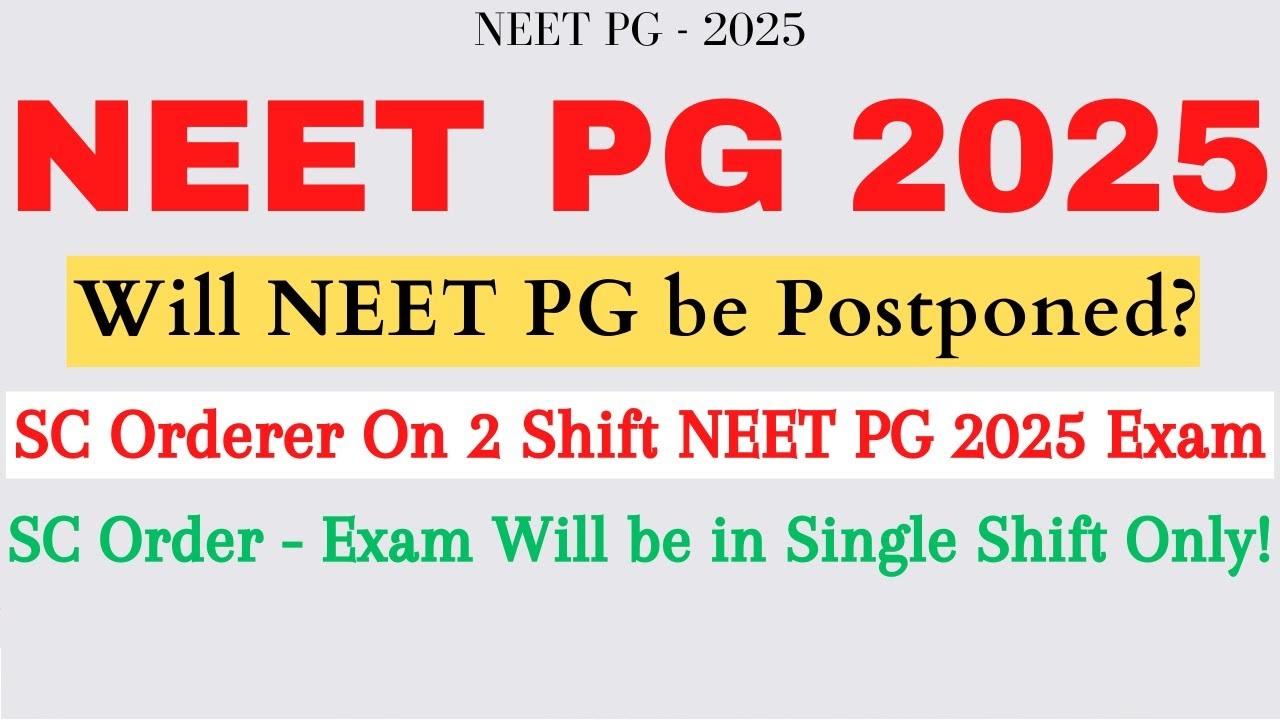
The National Eligibility cum Entrance Test for Postgraduate (NEET PG) 2025 has been a focal point of discussion among medical aspirants, particularly due to a significant Supreme Court ruling on May 30, 2025. This landmark decision addresses the contentious issue of conducting the exam in a single shift, overturning the National Board of Examinations’ (NBE) plan to hold it in two shifts. This article delves into the Supreme Court’s order, its implications for candidates, the reasons behind the decision, and what aspirants can expect moving forward. With a focus on fairness, transparency, and logistical feasibility, this ruling reshapes the NEET PG 2025 landscape, ensuring a level playing field for all candidates.
Understanding the NEET PG 2025 Exam
NEET PG is a critical examination for medical graduates in India, serving as the gateway to postgraduate medical courses such as MD, MS, and other specialized programs. Conducted annually by the NBE, the exam evaluates candidates’ knowledge and aptitude, determining their eligibility for admission to prestigious medical institutions across the country. In 2025, the exam is scheduled for June 15, with approximately 242,678 candidates registered to appear, making it one of the largest competitive exams in India.
The decision to conduct NEET PG 2025 in two shifts sparked widespread concern among aspirants, primarily due to potential disparities in question paper difficulty and the risk of malpractices. The Supreme Court’s intervention, prompted by petitions from candidates, addresses these concerns head-on, emphasizing the need for a fair and transparent examination process.
Why the Supreme Court Stepped In
The Supreme Court’s involvement in NEET PG 2025 stems from a petition challenging the NBE’s decision to hold the exam in two shifts. The petitioners argued that a dual-shift format introduces arbitrariness, as question papers across shifts may vary in difficulty, impacting candidates’ performance and rankings. Additionally, they raised concerns about the disclosure of answer sheets and question papers, though the court primarily focused on the shift-related issue in its May 30 ruling.
The court issued notices on May 5, 2025, requiring the NBE to justify its decision to conduct the exam in two shifts. The NBE cited two main reasons: the large number of candidates and the difficulty in securing enough centers for a single-shift exam, and the potential for malpractices in a single-shift format. However, the Supreme Court found these arguments unconvincing, leading to a directive that reshapes the exam’s structure.
Addressing the Two-Shift Controversy
The NBE’s primary justification for a two-shift exam was the logistical challenge of accommodating 242,678 candidates in a single session. They argued that finding secure examination centers across the country for such a large cohort was impractical. Additionally, they suggested that a single-shift exam could increase the risk of malpractices, as unscrupulous elements might exploit the process.
The Supreme Court, however, rejected these claims, emphasizing India’s technological advancements and the availability of resources to conduct a single-shift exam. The court noted that the exam is held nationwide, not in a single city, and with over two weeks remaining before the scheduled date of June 15, 2025, the NBE has sufficient time to identify additional secure centers. The ruling underscores the court’s confidence in the NBE’s ability to overcome logistical hurdles and prioritize fairness.
The Arbitrariness of Two Shifts
A critical point in the Supreme Court’s ruling is the inherent arbitrariness of a two-shift exam. The court highlighted that no two question papers, even if designed with care, can have identical levels of difficulty. Variations in question complexity could unfairly advantage or disadvantage candidates in one shift over the other, affecting their rankings in a highly competitive exam where a single mark can shift ranks by thousands.
To mitigate this, the court dismissed the routine use of normalization—a statistical method to adjust scores across shifts—as an inadequate solution. Normalization, while useful in exceptional cases, cannot consistently ensure fairness when applied year after year. By mandating a single-shift exam, the court eliminates the need for normalization, ensuring all candidates face the same set of questions under identical conditions.
The Supreme Court’s Directive: A Single Shift Exam
In its May 30, 2025, order, the Supreme Court directed the NBE to make arrangements for conducting NEET PG 2025 in a single shift. The court emphasized the importance of transparency and security, instructing the NBE to identify secure examination centers to accommodate all candidates. This directive aligns with the court’s broader goal of ensuring a fair and equitable examination process, free from the uncertainties introduced by multiple shifts.
The court also addressed the NBE’s concerns about potential delays in identifying additional centers. The respondents argued that securing more centers might require extra time, potentially delaying the exam and subsequent processes like counseling and admissions. However, the court dismissed this argument, noting that with over two weeks until the exam, the NBE has ample time to act. The court left the door open for the NBE to request an extension if necessary, but urged them to “burn a little midnight oil” and prioritize finding solutions.
Implications for NEET PG 2025 Aspirants
The Supreme Court’s ruling has far-reaching implications for the 242,678 candidates preparing for NEET PG 2025. By mandating a single-shift exam, the court addresses one of the most pressing concerns raised by aspirants: fairness. A single-shift format ensures that all candidates face the same question paper, eliminating the risk of varying difficulty levels. This creates a level playing field, where performance depends solely on preparation and ability, not external factors like shift allocation.
Boosting Candidate Confidence
The decision has been met with widespread approval among aspirants, as evidenced by posts on X celebrating the ruling. Candidates and medical professionals alike have praised the court’s intervention, with many expressing gratitude to advocates and organizations that supported the petition. The single-shift format restores confidence in the examination process, ensuring that rankings reflect true merit rather than arbitrary factors.
Transparency and Security Measures
The court’s emphasis on transparency and secure examination centers addresses another critical concern: the integrity of the exam process. By requiring the NBE to identify secure centers, the court aims to minimize the risk of malpractices, such as question paper leaks or cheating. This focus on security reassures candidates that their efforts will be rewarded in a fair and controlled environment.
Potential for Exam Postponement
While the court is optimistic about the NBE’s ability to arrange a single-shift exam by June 15, 2025, it acknowledged the possibility of logistical challenges. The NBE was granted the liberty to apply for an extension if they cannot secure enough centers in time. However, the court urged the NBE to act proactively, criticizing their lack of preparation in previous years. Aspirants should stay informed about any updates regarding potential postponements, though the court’s tone suggests a strong preference for adhering to the original schedule.
The Broader Context: Fairness in Competitive Exams
The Supreme Court’s ruling on NEET PG 2025 reflects a broader commitment to fairness in competitive examinations. In a country where medical education is highly competitive, ensuring an equitable process is paramount. The decision aligns with previous judicial interventions in educational matters, where courts have prioritized transparency and meritocracy.
The Role of Normalization in Exams
Normalization has been a contentious issue in multi-shift exams, not just for NEET PG but also for other competitive tests like JEE and CAT. While normalization aims to adjust scores to account for differences in difficulty, it often raises questions about fairness. Candidates frequently perceive it as an imperfect solution, as it relies on statistical assumptions that may not fully capture the nuances of question paper variations. By mandating a single-shift exam, the Supreme Court sidesteps this issue, setting a precedent for other examinations to follow suit.
Technological Advancements and Exam Logistics
The court’s reference to India’s technological advancements highlights the potential for leveraging technology to streamline exam logistics. From digital registration systems to secure online testing platforms, modern tools can facilitate large-scale examinations in a single session. The NBE’s reliance on the two-shift model may reflect outdated logistical practices, and the court’s ruling pushes them to adopt more innovative solutions.
What Candidates Can Expect Next
With the Supreme Court’s directive in place, candidates preparing for NEET PG 2025 should focus on their studies while staying updated on official announcements from the NBE. Here’s what aspirants can expect in the coming weeks:
1. Official Updates from NBE
The NBE is likely to issue a statement clarifying the steps they are taking to comply with the court’s order. This may include details about new examination centers, updated guidelines for candidates, and any changes to the exam schedule. Aspirants should regularly check the NBE’s official website and social media channels for updates.
2. Potential Extension Requests
If the NBE encounters significant challenges in securing enough centers, they may file an affidavit requesting an extension. The Supreme Court has indicated it will consider such requests, but candidates should prepare for the possibility of a slight delay. Any postponement would likely be minimal, as the court emphasized the importance of adhering to the academic timeline.
3. Enhanced Security Measures
To comply with the court’s directive on transparency and security, the NBE may introduce additional measures, such as stricter invigilation protocols or advanced monitoring systems. Candidates should familiarize themselves with any new rules to ensure a smooth exam experience.
4. Continued Advocacy
The NEET PG 2025 community has shown remarkable unity in advocating for a single-shift exam, as seen in the social media campaigns and petitions leading up to the court’s ruling. Aspirants should remain engaged with these efforts, as collective advocacy can influence future decisions and ensure ongoing improvements in the examination process.
Preparing for NEET PG 2025: Tips for Success
With the exam date approaching, candidates must optimize their preparation to perform at their best. Here are some actionable tips to excel in NEET PG 2025:
1. Focus on High-Yield Topics
Prioritize topics that carry significant weight in the exam, such as medicine, surgery, and pharmacology. Use reliable study resources like standard textbooks and online platforms to cover these areas thoroughly.
2. Practice with Mock Tests
Simulate exam conditions by taking full-length mock tests. This helps build stamina, improve time management, and identify weak areas for targeted revision.
3. Stay Updated on Exam Guidelines
Given the recent changes, candidates should stay informed about any updates to the exam format, center allocations, or security protocols. Regularly check official sources to avoid last-minute surprises.
4. Maintain Mental and Physical Health
The intense preparation period can be stressful, so prioritize self-care. Incorporate breaks, exercise, and a balanced diet into your routine to stay focused and energized.
5. Join Study Groups
Collaborating with peers can enhance your understanding of complex topics and provide moral support. Join online forums or local study groups to exchange knowledge and strategies.
The Role of Social Media in Shaping NEET PG 2025
Social media platforms, particularly X, have played a significant role in amplifying aspirants’ voices and bringing the two-shift issue to the forefront. Posts on X from May 2025 highlight the widespread demand for a single-shift exam, with polls indicating that 9 out of 10 aspirants supported this change for fairness. The Supreme Court’s ruling validates these concerns, demonstrating the power of collective advocacy in influencing policy decisions.
Celebrating the Victory
Following the court’s order, X users expressed jubilation, congratulating advocates and organizations that championed the cause. Posts from users like @LiveLawIndia, @DrMeet_Ghonia, and @Lap_surgeon celebrated the decision as a “landmark” victory for fairness, reflecting the medical community’s relief and optimism.
Ongoing Vigilance
While the ruling is a significant win, aspirants must remain vigilant. Social media will continue to serve as a platform for sharing updates, discussing preparation strategies, and holding the NBE accountable for implementing the court’s directive. Candidates should follow credible accounts and verify information to avoid misinformation.
The Future of NEET PG: A Fairer Examination Process
The Supreme Court’s intervention sets a precedent for future NEET PG examinations, signaling that fairness and transparency are non-negotiable. By addressing the two-shift controversy, the court has paved the way for a more equitable process, potentially influencing other competitive exams in India. The ruling also underscores the importance of proactive planning by examining bodies, urging them to leverage technology and resources to accommodate large candidate pools.
Long-Term Implications
The shift to a single-session exam may prompt the NBE to invest in better infrastructure, such as additional examination centers and advanced security systems. This could lead to a more streamlined and secure examination process in the coming years, benefiting future aspirants.
A Call for Accountability
The court’s criticism of the NBE’s lack of preparation highlights the need for greater accountability. Examining bodies must anticipate logistical challenges and plan accordingly to avoid last-minute disruptions. The NEET PG 2025 ruling serves as a reminder that fairness cannot be compromised, regardless of logistical constraints.
Conclusion: A Step Toward Fairness
The Supreme Court’s order on May 30, 2025, marks a pivotal moment for NEET PG aspirants, ensuring that the 2025 exam is conducted in a single shift to promote fairness and transparency. By addressing the arbitrariness of a two-shift format and emphasizing the importance of secure examination centers, the court has responded to the concerns of thousands of candidates. As the NBE works to implement this directive, aspirants should stay focused on their preparation, remain informed about updates, and continue advocating for a fair examination process.
This ruling not only benefits the 242,678 candidates appearing for NEET PG 2025 but also sets a precedent for future examinations, reinforcing the principles of meritocracy and equity. With the exam date approaching, candidates can approach their studies with renewed confidence, knowing that their performance will be judged on a level playing field. Stay tuned for updates, and best of luck to all NEET PG 2025 aspirants