
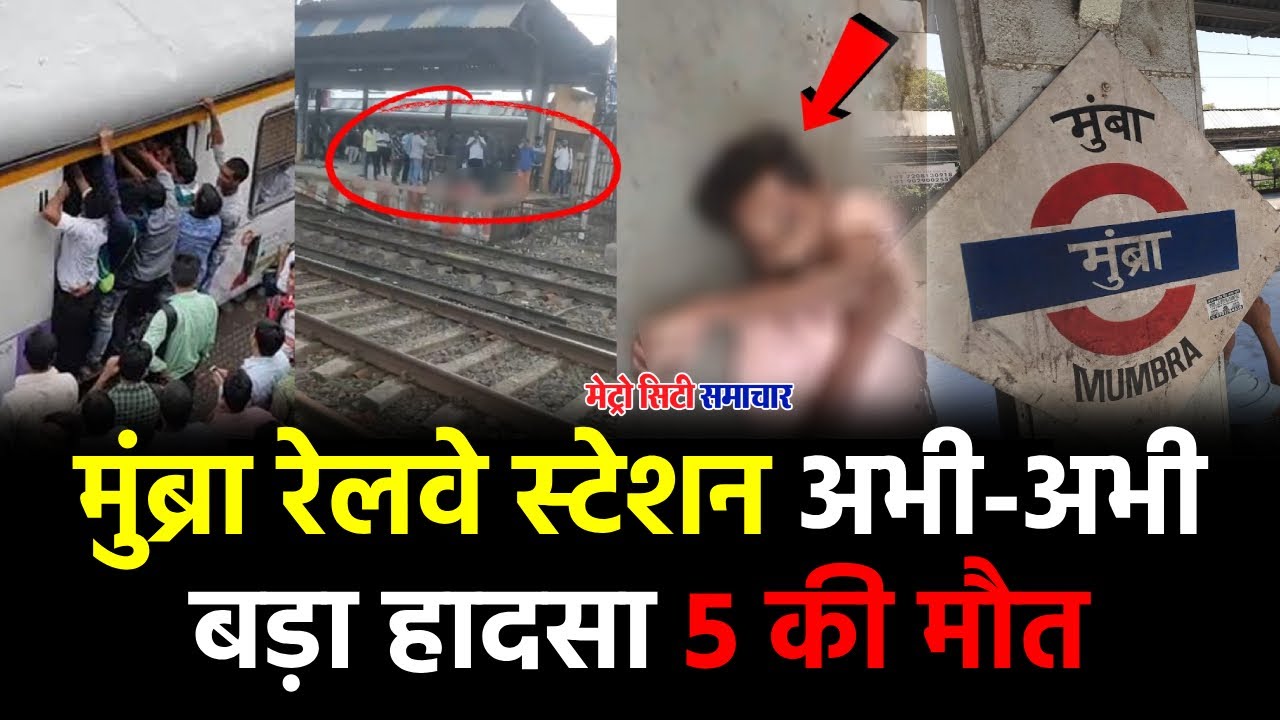
The bustling city of Mumbai, known as the financial capital of India, relies heavily on its iconic local train network to keep its pulse beating. However, a devastating train accident near Mumbra Railway Station has cast a shadow over this lifeline, claiming lives and exposing critical safety lapses. This article delves into the tragic incident, its causes, the immediate response, and the urgent measures needed to prevent future calamities. With a focus on overcrowding, infrastructure challenges, and railway reforms, we aim to provide a comprehensive analysis that sheds light on this preventable disaster.
The Tragic Mumbai Train Accident: What Happened?
On a fateful morning, a fast-moving local train bound for Chhatrapati Shivaji Maharaj Terminus (CSMT) became the site of a horrific accident near Mumbra Railway Station, located between Thane and Mumbai. Reports indicate that 10 to 13 passengers fell from the overcrowded train, with at least five feared dead and several others critically injured. The incident, which occurred around 9:30 AM, sent shockwaves through the city and sparked outrage over the persistent issue of overcrowding in Mumbai’s suburban trains.
Eyewitnesses described a chaotic scene, with passengers clinging to the doors and footboards of the train, a common sight during peak hours. The train’s sharp bend near Mumbra, combined with excessive crowding, likely caused passengers to lose balance and fall onto the tracks. Visuals from the site showed scattered belongings—shoes, bags, and clothing—serving as grim reminders of the lives lost and disrupted.
The Railway Ministry and local authorities swiftly responded, rushing the injured to nearby hospitals, including Kalwa Hospital and Jupiter Hospital. Ambulances arrived within 20 minutes, but the delay in initial assistance highlighted gaps in emergency response protocols. As investigations unfold, questions loom large: Could this tragedy have been avoided, and what steps must be taken to ensure passenger safety?
Overcrowding: The Root Cause of the Mumbai Train Accident
Mumbai’s local trains, often called the city’s lifeline, transport over 7.5 million passengers daily across more than 2,500 train services. While this network is a marvel of efficiency, it grapples with severe overcrowding, especially during rush hours. The Mumbra train accident underscores how this chronic issue can turn deadly.
Why Overcrowding Persists in Mumbai’s Local Trains
Several factors contribute to the overcrowding crisis:
- High Population Density: Mumbai’s population exceeds 20 million, with many residents relying on local trains for daily commutes due to affordable fares and traffic congestion on roads.
- Insufficient Train Frequency: Despite the high volume of services, the frequency of trains during peak hours fails to match demand, forcing passengers to board already packed compartments.
- Limited Infrastructure Upgrades: Many trains operate with outdated designs, lacking modern safety features like automatic door closure systems.
- Economic Constraints: For many Mumbaikars, local trains are the only affordable mode of transport, as cab fares and other alternatives remain prohibitively expensive.
Passengers often resort to dangerous practices, such as hanging onto doors or traveling on footboards, to secure a spot on these trains. The Mumbra accident, where victims were predominantly footboard travelers, highlights the dire consequences of such overcrowding.
The Human Cost of Overcrowding
The loss of at least five lives in the Mumbra tragedy is a stark reminder of the human toll exacted by systemic failures. Survivors and eyewitnesses recounted harrowing moments of helplessness as passengers fell onto the tracks. The presence of a passing express train, such as the Pushpak Express, may have exacerbated the situation, with its jerk potentially destabilizing those clinging to the local train.
Families of the victims, gathered outside Kalwa Hospital, faced agonizing uncertainty as they awaited news of their loved ones. The confusion over the exact number of casualties—ranging from 8 to 13 injured and 5 to 6 deaths—added to their distress. This incident is not an isolated one; Mumbai’s local trains have witnessed similar accidents in the past, underscoring the urgent need for reform.
Immediate Response to the Mumbra Train Accident
The response to the Mumbra train accident was swift but revealed areas for improvement. Railway authorities, police, and emergency services mobilized to address the crisis, while political leaders expressed condolences and promised action.
Emergency Measures and Medical Response
- Ambulance Deployment: Ambulances reached the site by 9:50 AM, transporting the injured to Kalwa Hospital, the nearest government facility, and Jupiter Hospital for advanced care.
- Hospital Updates: Kalwa Hospital reported 10 injured patients, with one declared dead on arrival. Two critically injured individuals were transferred to Jupiter Hospital for specialized treatment.
- Railway and Police Action: The railway administration and police secured the site, collecting evidence and initiating an investigation. CCTV footage from Mumbra Station is being analyzed to determine the exact sequence of events.
Political and Administrative Reactions
Maharashtra Chief Minister Devendra Fadnavis tweeted about the incident, assuring a thorough investigation and accountability for those responsible. The Railway Ministry announced a significant safety measure: all suburban trains in the Mumbai region will now be equipped with gate closure systems. This initiative will extend to both new and existing trains, aiming to prevent passengers from traveling on footboards or hanging onto doors.
Local MP Shrikant Shinde visited Kalwa Hospital to meet the injured, emphasizing the need for immediate action. The presence of political figures at the site reflects the gravity of the situation and the public’s demand for accountability.
The Role of Infrastructure in Mumbai Train Accidents
The Mumbra train accident has brought renewed attention to the infrastructure challenges plaguing Mumbai’s railway network. From sharp track bends to outdated train designs, several structural issues contributed to this tragedy.
Dangerous Track Bends at Mumbra
Mumbra Railway Station, located on a curved track, is notorious for its sharp bends, which pose challenges for train operators and passengers alike. The bend near Platform 4, where the accident occurred, creates a precarious situation for overcrowded trains traveling at high speeds. Passengers standing on footboards or clinging to doors are particularly vulnerable to losing balance on such curves.
The high speed of fast local trains, combined with the track’s design, amplifies the risk. Eyewitnesses noted that a train passing in the opposite direction may have created a jerk, further destabilizing passengers. Addressing these infrastructural hazards is critical to preventing similar accidents in the future.
Outdated Train Designs
Many of Mumbai’s local trains, particularly older models, lack modern safety features like automatic door closure systems. These systems, standard in newer air-conditioned (AC) rakes, prevent passengers from hanging onto doors or traveling on footboards. While the Railway Ministry has promised to retrofit existing trains with such systems, the implementation timeline remains unclear.
The absence of adequate safety mechanisms in older trains has been a long-standing concern. Promises of additional coaches and new trains have often fallen short, leaving the network strained under the weight of growing passenger demand.
Railway Safety Reforms: A Path Forward
The Mumbra train accident serves as a wake-up call for the Railway Ministry and local authorities to prioritize passenger safety. While immediate measures like gate closure systems are a step in the right direction, comprehensive reforms are needed to address the root causes of such incidents.
Key Safety Initiatives to Prevent Future Accidents
- Automatic Door Closure Systems:
- Retrofitting all existing trains with automatic door closure systems to prevent footboard travel.
- Accelerating the deployment of new AC rakes equipped with these systems across the suburban network.
- Increased Train Frequency:
- Adding more train services during peak hours to reduce overcrowding.
- Expanding the fleet of trains to accommodate Mumbai’s growing population.
- Infrastructure Upgrades:
- Straightening dangerous track bends where feasible or implementing speed restrictions in high-risk areas like Mumbra.
- Upgrading signaling systems to improve train control and reduce the risk of collisions or derailments.
- Emergency Response Protocols:
- Establishing rapid-response teams at key stations to ensure immediate assistance during accidents.
- Enhancing coordination between railway authorities, police, and hospitals to streamline rescue operations.
- Passenger Awareness Campaigns:
- Educating commuters about the dangers of footboard travel and overcrowding.
- Promoting alternative transport options during peak hours to alleviate pressure on trains.
The Role of Technology in Railway Safety
Technology can play a pivotal role in enhancing safety on Mumbai’s local trains. For instance, real-time monitoring systems could alert authorities to overcrowding on specific trains, allowing for dynamic adjustments in service frequency. Additionally, AI-powered analytics could identify high-risk areas and predict potential accidents based on historical data.
The Railway Ministry’s decision to review CCTV footage from Mumbra Station is a positive step toward leveraging technology for investigations. Expanding the use of surveillance systems across all stations could deter unsafe practices and aid in post-incident analysis.
The Socioeconomic Context of Mumbai’s Train Network
Mumbai’s local trains are more than just a mode of transport; they are a lifeline for millions of workers, students, and families. The socioeconomic realities of the city shape the challenges faced by the railway network and its passengers.
Why Mumbaikars Depend on Local Trains
- Affordability: Local train fares are significantly lower than cabs or private vehicles, making them the preferred choice for low- and middle-income commuters.
- Traffic Congestion: Mumbai’s notorious traffic jams make road travel unreliable, pushing more people toward trains.
- Accessibility: The extensive suburban network connects far-flung areas to the city center, enabling access to jobs and education.
However, this dependence comes at a cost. The pressure on the railway system has led to overcrowding, strained infrastructure, and recurring safety issues. The Mumbra accident highlights the need for a holistic approach that addresses both transportation and socioeconomic challenges.
Balancing Safety and Accessibility
While safety reforms are critical, they must not compromise the accessibility of local trains. For instance, increasing fares to fund upgrades could exclude low-income commuters, while reducing train capacity to curb overcrowding might limit access during peak hours. Policymakers must strike a balance to ensure that safety measures enhance, rather than restrict, the network’s role as a public good.
Lessons from the Mumbra Train Accident
The Mumbra train accident is a tragic reminder of the fragility of Mumbai’s railway system and the urgent need for systemic change. It exposes the consequences of neglecting overcrowding, outdated infrastructure, and inadequate safety measures. However, it also presents an opportunity to rebuild a safer, more resilient network.
A Call for Accountability
The Railway Ministry, local authorities, and elected officials must be held accountable for implementing promised reforms. The public’s trust in the system hinges on tangible improvements, not just assurances. Investigations into the Mumbra accident should identify specific lapses and ensure that those responsible face consequences.
Empowering Commuters
Commuters, too, have a role to play in enhancing safety. By adhering to safety guidelines, avoiding footboard travel, and reporting overcrowding, passengers can contribute to a safer travel environment. Community-driven initiatives, such as commuter forums, could amplify voices and push for systemic change.
Conclusion: Building a Safer Future for Mumbai’s Railways
The Mumbra train accident is a heartbreaking chapter in Mumbai’s history, but it must not be in vain. By addressing overcrowding, upgrading infrastructure, and prioritizing passenger safety, authorities can prevent future tragedies and restore faith in the city’s lifeline. The loss of lives and the suffering of the injured demand immediate action—action that is both bold and sustainable.
As Mumbai mourns, the path forward lies in collective responsibility. From policymakers to commuters, everyone has a stake in ensuring that local trains remain a safe and reliable mode of transport. Let this tragedy be the catalyst for change, transforming Mumbai’s railways into a model of safety and efficiency for the world to emulate.