
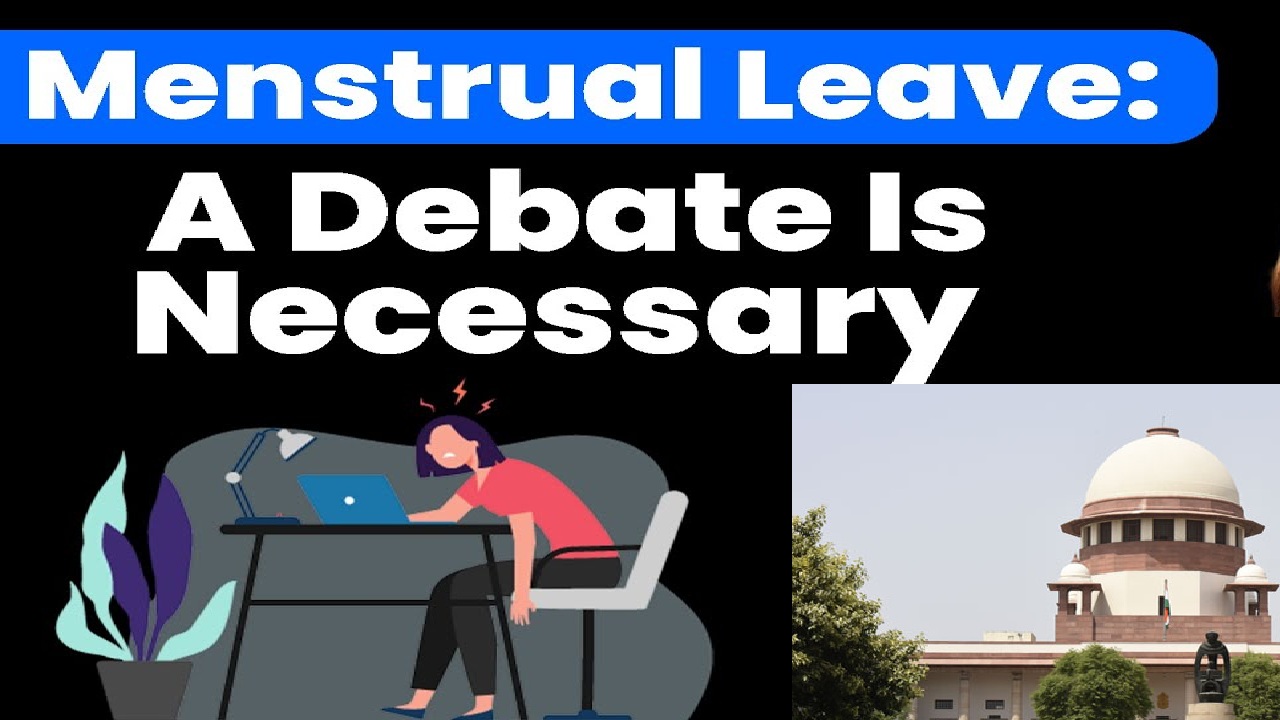
Supreme Court Advocates for Stakeholder Consultation on Menstrual Leave Policy
The Supreme Court of India has urged the Central government to engage in a comprehensive stakeholder consultation to develop a model policy for menstrual leave for women employees. This move came after a petition filed by advocate Shailendra Tripathi, highlighting the need for a structured approach to menstrual leave in the workplace.
Supreme Court’s Directive to the Central Government
On Monday, a bench consisting of Chief Justice of India DY Chandrachud, Justice JB Pardiwala, and Justice Manoj Mishra issued a directive to the Central government. They emphasized that the issue of menstrual leave is a matter of governmental policy and should be addressed through a formal consultation process involving all relevant stakeholders. The bench has permitted the petitioner to present his case to the Secretary of the Ministry of Women and Child Development.
The Court’s Rationale
The Court reiterated that the responsibility for creating a policy on menstrual leave lies with the government and not the judiciary. The bench highlighted the potential adverse effects of mandating menstrual leave, such as employers possibly being reluctant to hire women. Chief Justice Chandrachud pointed out that while the intention is to protect women, such policies might inadvertently work against their interests by reducing their employment opportunities.
A Call for Comprehensive Consultation
The Supreme Court’s order encourages the Secretary of the Ministry of Women and Child Development to examine the issue at the policy level. The Court requested that a decision be made after consulting all stakeholders, including state governments. Importantly, the Court clarified that this directive does not prevent individual states from making independent decisions regarding menstrual leave.
Previous Plea for Menstrual Leave
This directive follows a previous plea in which the Supreme Court had disposed of a request for menstrual pain leave for female students and working women across India. At that time, a bench led by CJI Chandrachud and Justices PS Narasimha and JB Pardiwala suggested that the petitioners present their case to the Central government, citing the policy nature of the issue.
The Petitioner’s Persistent Efforts
Advocate Shailendra Tripathi’s counsel informed the Court that their initial representation had not received a response from the government. In response, Chief Justice Chandrachud reiterated that the matter should be handled by the government. He also expressed concerns about the potential negative impacts of mandatory menstrual leave on women’s employment.
Addressing Policy Concerns
The Supreme Court acknowledged the complexity of the issue, noting that it involves multiple policy dimensions. The Court permitted the petitioner to move forward by approaching the Secretary of the Ministry of Women and Child Development and Additional Solicitor General Aishwarya Bhati. The Court’s decision underscores the need for a balanced approach that considers the perspectives of all stakeholders.
States Leading the Way
Currently, Bihar and Kerala are the only states in India that have provisions for menstrual leave. Bihar offers a two-day leave policy for women employees, while Kerala provides a three-day period leave for women students. These states serve as examples of how menstrual leave policies can be implemented at the state level, providing valuable insights for a potential national model.
The Future of Menstrual Leave Policy in India
The Supreme Court’s directive marks a significant step towards addressing the issue of menstrual leave in India. By advocating for a stakeholder consultation, the Court has paved the way for a more inclusive and comprehensive policy framework. As the Central government engages with various stakeholders, including state governments, employers, and women’s rights groups, it is hoped that a balanced and effective policy will emerge.
Conclusion
The Supreme Court’s involvement in the menstrual leave policy debate highlights the importance of addressing women’s health and employment concerns in a holistic manner. By encouraging a thorough consultation process, the Court has set the stage for a policy that not only protects women’s rights but also ensures their continued participation in the workforce. As the government moves forward with this directive, it is crucial to keep the diverse needs and perspectives of women at the forefront of the policy-making process.