
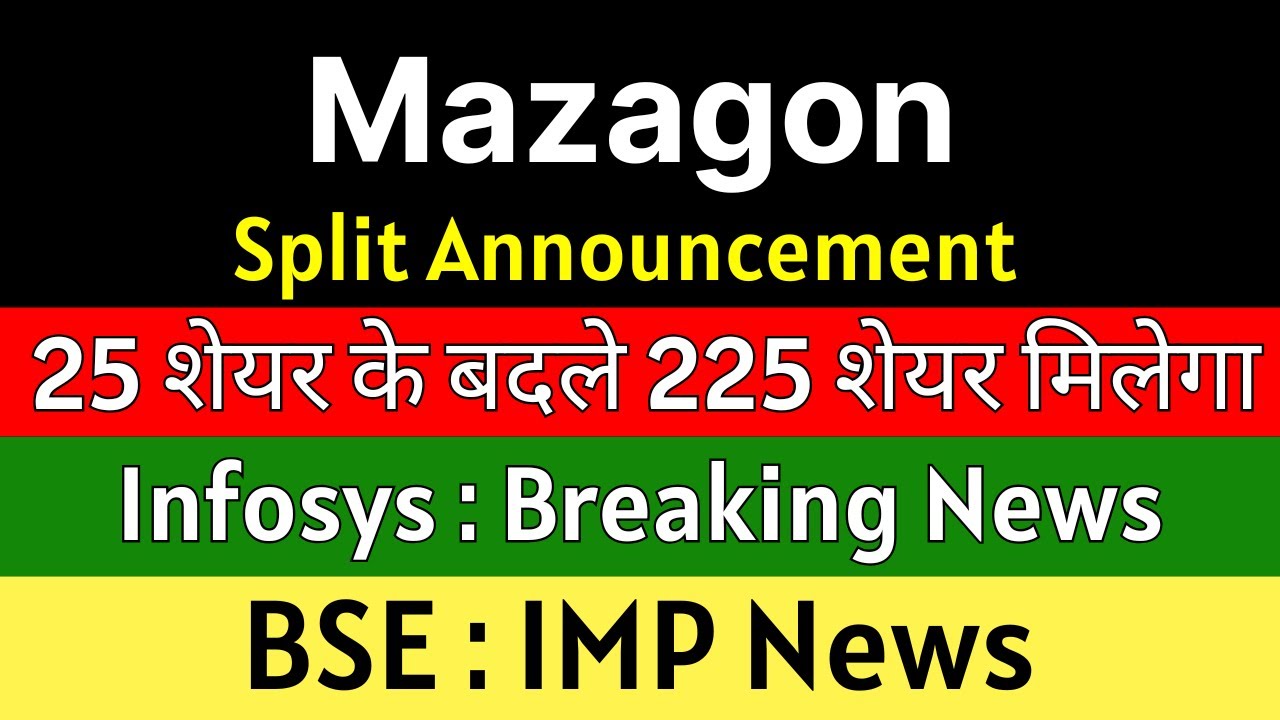
The Indian stock market is a dynamic landscape, offering investors opportunities and challenges in equal measure. With companies like Mazagon Dock Shipbuilders, Infosys, BSE, and CoForge making headlines, staying informed is crucial for making strategic investment decisions. This comprehensive guide dives into the latest updates surrounding these companies, analyzing their market performance, key announcements, and the broader economic factors influencing their trajectories. Whether you’re a seasoned investor or a beginner, this article provides actionable insights to navigate the evolving financial markets in 2025.
Why Stock Market Updates Matter in 2025
The Indian stock market is influenced by a mix of domestic and global factors, from geopolitical tensions to corporate announcements. Understanding these updates helps investors align their portfolios with emerging trends. In this article, we explore:
- Mazagon Dock Shipbuilders’ stock split and revenue projections.
- Infosys’ struggles within the IT sector amid global trade concerns.
- BSE’s competitive edge as NSE’s IPO looms.
- CoForge’s stock split announcement and its implications.
Let’s dive into these updates to uncover opportunities and risks in today’s market.
Mazagon Dock Shipbuilders: Navigating Growth and Challenges
Mazagon Dock Shipbuilders Limited, a leading defense PSU, has been a focal point for investors due to its strategic importance and recent market movements. Below, we analyze the company’s latest developments and their impact on its stock performance.
Stock Split Announcement: Boosting Accessibility
Mazagon Dock recently announced a stock split, a move designed to make its shares more affordable for retail investors. By reducing the face value of each share, the company aims to increase liquidity and attract a broader investor base. This announcement has sparked interest, as stock splits often signal management’s confidence in future growth.
- Details of the Split: The split is expected to follow a specific ratio (to be confirmed), with the record date set for mid-2025. Shareholders holding the stock before this date will benefit from additional shares, potentially enhancing portfolio value.
- Market Impact: Historically, stock splits lead to short-term price volatility but can drive long-term interest due to improved affordability.
Investors should monitor trading volumes post-split to gauge market sentiment.
Q4 Results: A Mixed Bag
Mazagon Dock’s Q4 results for FY25 fell short of expectations, leading to profit booking in recent trading sessions. The company reported a significant decline in profits, with a year-on-year drop exceeding 50%. This underperformance stems from:
- Increased Provisions: The company set aside provisions for three major projects, including two for the Indian Coast Guard and one for a Denmark-based client, totaling ₹3,500 crore. These provisions impacted profit margins, raising concerns about cost management.
- High Valuations: Analysts have flagged Mazagon Dock’s valuations as expensive, contributing to the recent correction in its stock price.
Despite these challenges, the company’s management remains optimistic about its long-term growth prospects.
Revenue Growth Guidance for 2026
Mazagon Dock’s management has projected a revenue growth of 10-12% for FY26, consistent with previous guidance. While this target is modest, it reflects the company’s cautious approach amid geopolitical uncertainties. Key points include:
- Order Book Strength: As of the end of FY25, Mazagon Dock’s order book stands at ₹32,260 crore, a robust foundation for future revenue.
- New Orders on the Horizon: The company anticipates securing two major orders, including the P75 and P75I submarine projects, potentially valued between ₹300-400 crore. If secured, these contracts could push the order book to ₹1.25 lakh crore by FY26, nearly tripling its current value.
- Long-Term Outlook: Successful execution of these orders could make FY27 a standout year for revenue and profitability.
Investors should weigh the potential of these orders against the risks of execution delays and geopolitical tensions.
Geopolitical Tensions and Strategic Importance
Mazagon Dock operates in the defense sector, making it sensitive to geopolitical developments. The company’s management has acknowledged global tensions, particularly the Russia-Ukraine conflict, as a factor influencing its operations. However, India’s push for self-reliance in defense manufacturing positions Mazagon Dock as a key player in the “Make in India” initiative.
- Strategic Contracts: The potential P75 and P75I orders align with India’s defense modernization goals, enhancing Mazagon Dock’s long-term growth potential.
- Risks to Monitor: Delays in order execution or cost overruns could impact profitability, as seen in the recent provisions.
For investors, Mazagon Dock offers a compelling mix of growth potential and risks, making it a stock to watch closely in 2025.
Infosys: Navigating IT Sector Headwinds
Infosys, a titan in India’s IT sector, has faced significant challenges in 2025, reflecting broader pressures on the industry. Let’s explore the factors driving its performance and what lies ahead.
IT Sector Under Pressure
The Indian IT sector, including giants like Infosys, TCS, and Tech Mahindra, experienced a sharp decline in early 2025, with some stocks dropping by up to 7%. The Nifty IT Index fell by 1.4%, signaling widespread investor caution. Key reasons include:
- Geopolitical Tensions: The U.S. Senate’s proposal to impose 500% tariffs on oil trade partners of Russia has raised concerns. India, a significant buyer of discounted Russian oil since the Russia-Ukraine conflict, could face economic repercussions if these tariffs are implemented.
- U.S. Revenue Dependency: Indian IT companies, including Infosys, derive 50-80% of their revenue from U.S. clients. A tariff-driven economic slowdown in the U.S. could reduce IT spending, impacting revenue growth.
While no specific updates directly tied to Infosys have emerged, the company’s performance is closely linked to these sector-wide challenges.
Why Are IT Stocks Falling?
The proposed U.S. tariffs aim to curb Russia’s funding for the ongoing war in Ukraine by targeting countries purchasing its oil. India, importing over 80% of its crude oil needs (with a significant portion from Russia), could face higher costs if tariffs are enforced. This could lead to:
- Economic Ripple Effects: Higher oil prices could strain India’s economy, reducing corporate budgets for IT services.
- Client Spending Cuts: U.S. clients, facing their own economic pressures, may scale back on outsourcing, directly affecting Infosys’ revenue.
However, the tariff proposal remains uncertain, as U.S. policy under the current administration is known for frequent reversals. Investors should stay vigilant for updates on U.S.-India trade negotiations expected in mid-2025.
Infosys’ Strategic Response
Despite these challenges, Infosys remains a resilient player with a strong track record. The company is likely to focus on:
- Diversifying Revenue Streams: Expanding into non-U.S. markets, such as Europe and Asia, to reduce dependency on American clients.
- Investing in AI and Cloud: Infosys is leveraging emerging technologies to stay competitive, potentially offsetting sector-wide pressures.
For investors, Infosys presents a long-term opportunity but requires caution due to short-term volatility driven by global trade dynamics.
BSE: Gaining Ground Amid NSE’s IPO Buzz
The Bombay Stock Exchange (BSE) is carving out a strong position in India’s financial markets, particularly as its competitor, the National Stock Exchange (NSE), prepares for a potential IPO. Here’s what investors need to know.
NSE’s IPO and Its Impact on BSE
The NSE’s anticipated IPO has created significant buzz, with reports suggesting that regulatory hurdles with SEBI are nearing resolution. This development has driven NSE’s unlisted shares to record highs, reflecting investor optimism. For BSE, this presents both opportunities and challenges:
- Competitive Dynamics: BSE currently dominates the derivatives market, capturing a majority of trading volumes. NSE’s IPO could intensify competition, but it also validates the growth potential of India’s exchange ecosystem.
- Valuation Boost: As NSE’s valuations rise, BSE’s valuations could follow suit, given their comparable market roles. Analysts see this as a positive signal for BSE’s stock price.
BSE’s Strategic Advantages
BSE has strengthened its position through:
- Market Share Growth: The exchange has capitalized on the increasing popularity of derivatives trading, positioning itself as a leader in this segment.
- Technological Upgrades: Investments in trading platforms and data analytics enhance BSE’s appeal to institutional and retail investors.
Investors should monitor BSE’s ability to maintain its derivatives market dominance as NSE’s IPO progresses.
CoForge: Stock Split Signals Confidence
CoForge, a prominent IT services company, recently announced a 1:5 stock split, a move that underscores its growth ambitions. Here’s how this impacts investors.
Stock Split Details
- Ratio and Timeline: The 1:5 split, with a record date in mid-2025, will increase the number of shares while reducing the per-share price, making CoForge more accessible to retail investors.
- Eligibility: Shareholders as of the record date will receive additional shares, potentially boosting portfolio value.
Market Implications
Stock splits often signal management’s confidence in future growth, as they aim to broaden the investor base. For CoForge, this move aligns with its strong performance in the IT sector, despite broader industry challenges. Key considerations include:
- Increased Liquidity: A lower share price could attract more investors, driving trading volumes.
- Short-Term Volatility: Splits can lead to price fluctuations as the market adjusts to the new share structure.
Investors holding CoForge shares should view the split as a positive development, while non-shareholders may consider it a signal to evaluate the stock.
Broader Market Context: Geopolitical and Economic Factors
The performance of Mazagon Dock, Infosys, BSE, and CoForge is shaped by broader market dynamics. Here’s a look at the key factors influencing the Indian stock market in 2025:
Geopolitical Tensions and Trade Policies
The Russia-Ukraine conflict continues to impact global markets, with the U.S. leveraging tariffs to pressure Russia’s oil trade partners. India’s reliance on Russian oil makes it vulnerable to these policies, potentially affecting:
- Inflation and Costs: Higher oil prices could increase operational costs for companies like Infosys and Mazagon Dock.
- Investor Sentiment: Uncertainty around tariffs may lead to short-term market volatility.
India’s Economic Resilience
Despite global challenges, India’s economy remains a bright spot, driven by:
- Defense Sector Growth: Government initiatives like “Make in India” bolster companies like Mazagon Dock.
- Financial Market Expansion: The rise of derivatives trading benefits exchanges like BSE.
Investors should balance these opportunities with the risks posed by global uncertainties.
How to Approach These Stocks in 2025
Navigating the stock market requires a strategic approach. Here are tips for investors considering Mazagon Dock, Infosys, BSE, and CoForge:
- Mazagon Dock: Focus on its order book growth and execution capabilities. The stock split and potential submarine contracts make it a compelling long-term investment, but monitor provisions and geopolitical risks.
- Infosys: Exercise caution due to IT sector headwinds. Look for signs of revenue diversification and updates on U.S. trade policies.
- BSE: Capitalize on its derivatives market leadership. The NSE IPO could drive valuations higher, but competition remains a factor.
- CoForge: The stock split signals growth potential. Evaluate its performance post-split for entry opportunities.
Conclusion: Stay Informed, Stay Strategic
The Indian stock market in 2025 offers a wealth of opportunities for investors willing to navigate its complexities. Mazagon Dock’s stock split and order book growth, Infosys’ resilience amid IT sector challenges, BSE’s competitive edge, and CoForge’s strategic split highlight the dynamic nature of the market. By staying informed and aligning investments with long-term trends, investors can unlock significant value.
For real-time updates and deeper insights, consider joining financial communities or following trusted analysts. The stock market rewards those who combine knowledge with action—start building your wealth today.