
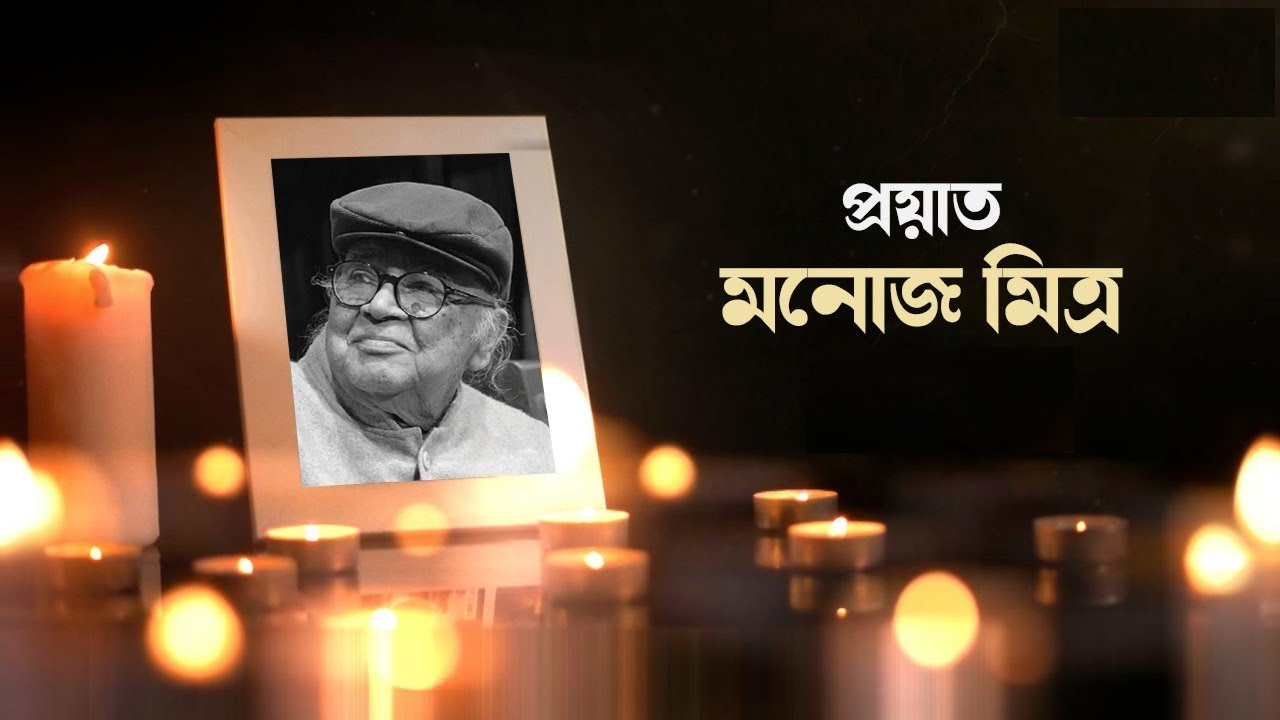
The Bengali theatre sphere has recently lost one of its great giants. Manoj Mitra at 85 tends to focus on a lifetime of contributions that have shaped the cultural landscape of Bengal and beyond. The life and work of Mitra are a veritable treasure trove of inspirations for theatre enthusiasts, lovers of Bengali culture, and aspiring playwrights. In this post, we shall discuss Manoj Mitra’s biography, his impact on Bengali theatre, his major works, and the themes that defined his oeuvre. We shall also look into how budding playwrights can borrow from Mitra’s craft so that his legacy continues to haunt us.
Introduction to Manoj Mitra
Born in 1938, Manoj Mitra hails from what is now Bangladesh. He was born in Satkhira and, during his lifetime, he was a very prolific actor, playwright, and director who had spent considerable time in Bengali theatre. Scottish Church College-educated, this was someone defined by love of theatre from a very young age. He was a giant in the Bengali theatre world and would have, in his professional life, followed both stage and silver screen.
Besides his acting, Mitra was a prolific writer of plays. Most of his works are classics in Bengali literature today. Besides the theatre, he acted in films by legend directors Tapan Sinha and Satyajit Ray among other legendary ones. The end of an era with the demise of Mitra is going to be celebrated all over the world.
In 2023, Mitra succumbed to age-related illnesses in Kolkata, leaving behind a niche deeply felt. His life story is testimony to his commitment to the cause of theater, his cultural contributions, and tenacious passion for storytelling.
Impact of Manoj Mitra on Bengali Theatre
Manoj Mitra’s influence on Bengali theatre cannot be put into words. He was, in a way, a pioneer of freshness the stage got from life: creativity, innovation, and authenticity were introduced to it through him. Whispers of his works are felt in every nook and corner of the Bengali cultural scenario and have extensively left an impact on both the masses as well as the artists.
Mitra’s open theatre had a wide audience and resonated with every section of the people. The fact that his plays offered the representation of human emotions and societal issues made them popular among a wide spectrum of audients. He challenged the individualist norms of society, questioned the bounds of his authoritative position, as well as diversified human situations within its compassionate spectrum.
Mitra supported the growth of the next generation of theatre artists through his creative works. He supported and mentored many young budding playwrights and actors. Apart from the contribution to the dramatic canon, the practicing artists nurtured by Mitra bring his work into the present day.
Analysis of Manoj Mitra’s Major Works and Contribution
Mitra has penned some impressive number of plays. Also, quite a number of his works are today considered as a repertoire of the Bengali play. He has dealt with mighty themes, from power plays to human bonds and societal transformations. Among his highest rated is “Banchharamer Bagan,” “Alokanandar Putra Kanya,” and “Sajano Bagan.”
“Banchharamer Bagan” is perhaps one of Mitra’s best-known plays. It tells the story of a humble gardener and speaks out against societal greed and corruption. The play shows a lot of humor and wit, making it an enjoyable product to watch, yet deep and effective in conveying its message. It was no surprise that the play was made into a film also based on this work.
Another notable contribution is “Alokanandar Putra Kanya” that explores family and social life. Mitra’s subtle as well as minute style of building up characters and situation interweaves this as a masterly presentation of human behaviour. Humour is intrinsic to his works even when he incorporates seriousness into his narration.
Whereas his huge role in bringing Bengali theater on the national and international level, association with works of great directors, and above all contributions to education made him a cultural icon.
Manoj Mitra’s Work on Contemporary Playwriting
Truly deep is the influence Mitra has had on the new era of playwriting in contemporary times, since his style and issues are an inspiration to many playwrights. His success in seamlessly merging the touch of traditional elements with modernization has set the bar for playwrights who wish to create works that appeal to both local and global crowds.
In fact, one of the most influential ones that can be noticed in Mitra’s works is his focus on story-telling. Most of his plays focus on significant stories which play a thought-provoking role regarding society and its realities. This mode of narration has inspired contemporary playwrights to associate storytelling with the tales they present. Today, they curate the very essence of most prevailing issues of this world into their work.
Another legacy that will never cease to impact on the craft of playwriting is Mitra’s juxtaposition of humor with grave matters. A writing style that he used to make an otherwise complicated text most light-hearted, it motivates dramatists to stretch out the scope of techniques of narration. This reaches the audiences in far more deeply engaging ways than myriad cultural and linguistic barriers.
This is a testament to genius because he is still current and relevant today. Being able to speak to universal themes while maintaining cultural specificity continues to inspire playwrights around the globe, cementing his impact.
Insight into Themes and Styles in Mitra’s Plays
With universal themes shot through with a distinct Bengali sensibility, Mitra’s plays seek answers to the fundamental questions of who we are, where do we stand in the cosmos, how do we treat others, and how we strive for justice and the truth that is fundamental to all.
In large part, the power dynamics underlie much of Mitra’s work because his plays frequent critique both the authority figures and societal structures in name of addressing the plight of ordinary people. What makes this possible is the solidarity that such theater relates to the Bengali experience of cultural and political climate.
The wit of Mitra’s style, and his humor, adds a charm through which he facilitates funny moments in grueling situations. Through this way, he wins the hearts of the audience. His concentration and focus on complex ideas through which he elevates the depth of rich tapestries of feelings, that is the beauty of Mitra’s style.
Usage of folklore and mythology forms another distinguishable feature of Mitra’s style. Cultivating traditional elements, he bases his plays within cultural heritage while, in the same breath, probing contemporary themes. The result is a play of singularly disturbing or troubling import which is yet contemporary today.
A Heritage of Manoj Mitra That Goes Beyond Bengali Culture
Beyond the theatre world, the memory of Mitra becomes a precious memory to Bengali people and others, crossing the limits of the theatre. He was not only a master of storytelling but also an ambassador of culture who represented Bengali theatre in the whole world.
Mitra’s contribution continues to inspire artists from the arenas of disciplines as greatly diversified as theater to films, literature, and even poetry. His influence can also be sensed in new actors who are inventing off the textures of his work and the techniques he uses. End.
Besides his artistic contributions, Mitra’s legacy lies in education and mentorship for aspiring artists. He was a guiding light for generations of men and women who hoped to follow in the vanguard of the leaders of Modern Indian art. He nurtured them, encouraged them, and guided them all through his life.
Mitra’s work is a mighty testimony to the influence that can be wielded through the teller, despite culture’s confines and borders as determined by language. His legacy inspires audiences and artists around the globe in all he will have done, honoring his memory while living on his influence.
How Amateur Playwrights Can Learn from Mitra’s Craft
From Mitra’s art of work, aspiring playwrights can learn significant information, get inspiration from new ways he departs from storytelling techniques, and cultural authenticity. His works set benchmarks to those who are aiming at delivering powerful and engrossing performances in the theatre.
Apart from the mechanism of effectively transferring knowledge, another lesson from Mitra’s work is the role of narration. The plays set much store on narrative storytelling as the chief narrative which drives the plot and connects the audience. On his part, aspiring playwrights should nurture compelling stories that have the individual’s point of view but at the same time touch universal themes.
Another good lesson is the use by Mitra of humor. He mixes comedy with important subjects so masterfully that it creates tremendous power of humor to bring an audience into realms of a play. It makes the play provide a chance for including humor in ways that start inside the playwright instead of relying on heavy-handed exposition or presentation.
Lastly, Mitra’s effort in his work towards cultural authenticity is a lesson that future writers should learn. His work is the result of a deep understanding of cultural heritage because he tries to include traditional elements in his works that are contemporary narratives. With respect to their cultural roots while presenting something new and different by the playwright, therefore, works will be established that will be well resonant with different groups of audience.
The Ever-Living legacy of Manoj Mitra in Theatre
Manoj Mitra: A testament to his glory is the legacy which his extra-ordinary talent and dedication towards the science of storytelling has left behind for posterity in theatre. His contribution to the Bengali ethos stands the test of time undefeated, influencing generations upon generations of artists and audiences alike.
In so many ways, Mitra started contributing to the theatre, from developing newer plays and nourishing new talent. His dramatic inclusions of the earlier along with the modern created a form of theatrical experience that still remains fresh for the audience worldwide.
Future writers may take a lesson in Mitra’s skill, using it to tell thematically meaningful stories that speak well to who they are and where they come from. In fact, he sets a precedent for all those who genuinely wish to make a difference in the world of theater.
Therefore, Mitra’s legacy is a celebration of the strength of storytelling and how it spans the continuum of the cultural and linguistic limits. His work holds immense influence in that voice will continue to inspire and entertain generations yet to come. Anyone interested in researching more about his work and contribution to the theatre can find a wide variation of such resources as published plays to documentaries, all keeping his memory alive and the impact very much active today.