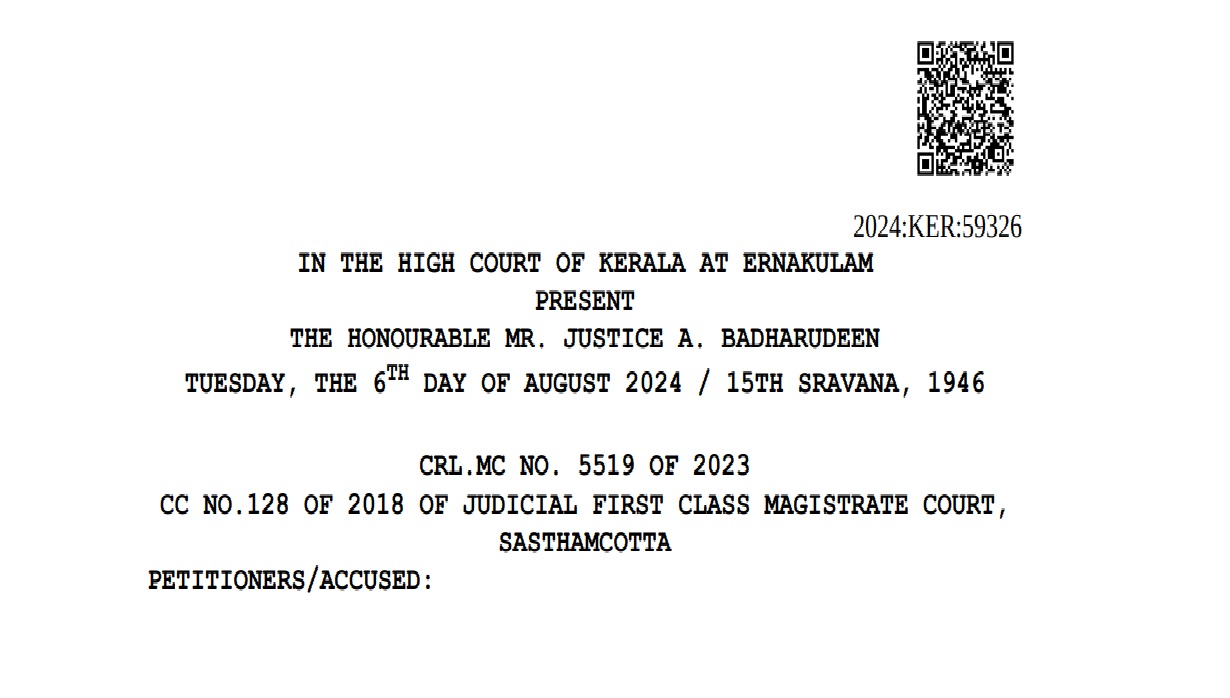
In a significant judgment, the Kerala High Court clarified that a managing director of a newspaper organization has no direct involvement in selecting news items. This verdict was delivered during a defamation case against the Managing Director of Rashtradeepika newspaper. The complainant alleged that a published news item was defamatory, targeting her integrity. However, the court quashed the proceedings against the Managing Director while maintaining charges against the Chief Editor.
Role of Chief Editor in News Selection
Justice A. Badharudeen, while delivering the verdict, emphasized the hierarchical responsibilities within a newspaper organization. According to the court, it is the Chief Editor or Editor who typically assumes responsibility for selecting news items, not the Managing Director. The court stated, “The Chief Editor or Editor, in the ordinary course, is responsible for the selection of news items, and the Managing Director has no direct role in this process.” This ruling, therefore, invalidates the defamation charges against the Managing Director in this particular instance.
The complainant alleged that a news story in Rashtradeepika accused her of embezzling ₹3 crores from a residential project. Based on this claim, the defamation case was filed, implicating several individuals from the newspaper, including the Managing Director and the Chief Editor.
Defamation and Criminal Conspiracy Allegations
The charges brought against the petitioners, including defamation under Sections 499 and 500, and criminal conspiracy under Section 120B of the Indian Penal Code (IPC), were considered by the court. The Magistrate initially took cognizance of the complaint, leading to legal proceedings. However, the petitioners argued that the Magistrate’s decision to include Section 120B (criminal conspiracy) was inappropriate, given the constraints of Section 196(2) of the Code of Criminal Procedure (Cr.P.C.).
Section 196(2) of Cr.P.C. restricts the court’s authority to take cognizance of conspiracy-related offenses without prior consent from the government, unless the conspiracy involves crimes punishable by death, life imprisonment, or rigorous imprisonment of two years or more. The petitioners contended that since such consent was absent, the proceedings under Section 120B should be dismissed.
Legal Interpretation of Section 196(2) Cr.P.C.
To clarify this legal nuance, the court appointed Adv. Firoz K.M. as an amicus curiae, or a legal advisor to assist the court. The amicus curiae explained that Section 196(2) is primarily intended for offenses against the state, with the section’s heading itself highlighting “prosecution for offenses against the state and criminal conspiracy to commit such offenses.” Therefore, the bar under Section 196(2) Cr.P.C. did not apply in this defamation case, which was not categorized as an offense against the state.
Furthermore, the court noted that the Magistrate’s cognizance was taken under Section 34 of IPC, which deals with acts done by several persons with a common intention, not under Section 120B as argued by the petitioners. This interpretation nullified the petitioners’ challenge regarding Section 196(2), and the defamation case proceeded against the Chief Editor.
Historical Context of Section 196 Cr.P.C.
The legal provisions regarding criminal conspiracy have evolved over time. The court was referred to a previous judgment, M.Gnanam’s case, which shed light on the historical context of Section 196. The 1898 Criminal Procedure Code, which preceded the current Cr.P.C., also included provisions for handling criminal conspiracies. The Law Commission of India’s Forty-First Report played a crucial role in recommending changes to Section 196 and 196A, focusing on restricting unauthorized prosecutions related to state matters and conspiracies.
In its report, the Law Commission emphasized the need to limit the initiation of criminal prosecutions to authorized government bodies. This measure aimed to prevent unauthorized individuals from instigating prosecutions for state-related offenses. The Commission further proposed simplifications in the legal language and procedure to avoid time-consuming controversies in the courts.
Court’s Reference to Law Commission Reports
The Kerala High Court, guided by historical legal interpretations, referred to several recommendations from the Law Commission Report. One significant recommendation was to simplify Section 196, allowing only the Central or State Government to initiate complaints related to criminal conspiracy. The court also noted the distinction made in the old law between major and petty conspiracies, further clarifying that not all criminal conspiracies require government consent for prosecution.
Section 196A of the Criminal Procedure Code, introduced by the Criminal Law Amendment Act of 1913, was also discussed. This section allowed for criminal conspiracies to be prosecuted with specific permissions from the government. However, the Law Commission recommended simplifying this section to ensure smoother legal proceedings.
Court’s Final Ruling: Dismissal of Proceedings Against Managing Director
In conclusion, the Kerala High Court reiterated that the Managing Director’s role in a newspaper does not involve direct responsibility for news selection. The court found that the defamation charges against the Managing Director were unjustified, as it is the Chief Editor or Editor who is responsible for the selection and publication of news items. Therefore, the court quashed the defamation proceedings against the Managing Director.
However, the case against the Chief Editor will continue, as the court declined to extend similar relief to this individual. This ruling underscores the importance of understanding the distinct roles within media organizations and emphasizes the responsibility that lies with the editorial team for news content.
Legal Implications of the Judgment
This judgment from the Kerala High Court sets a critical precedent for media organizations in India. It clarifies the limited role of non-editorial executives in the news selection process, thereby shielding them from direct legal accountability in defamation cases related to published content. Moving forward, this ruling may influence similar cases where corporate executives face defamation charges for editorial decisions they are not directly responsible for.
For legal practitioners, this case serves as a reminder of the importance of understanding the nuanced responsibilities within corporate and media structures, ensuring that charges are accurately applied to individuals with direct involvement in the matter at hand.