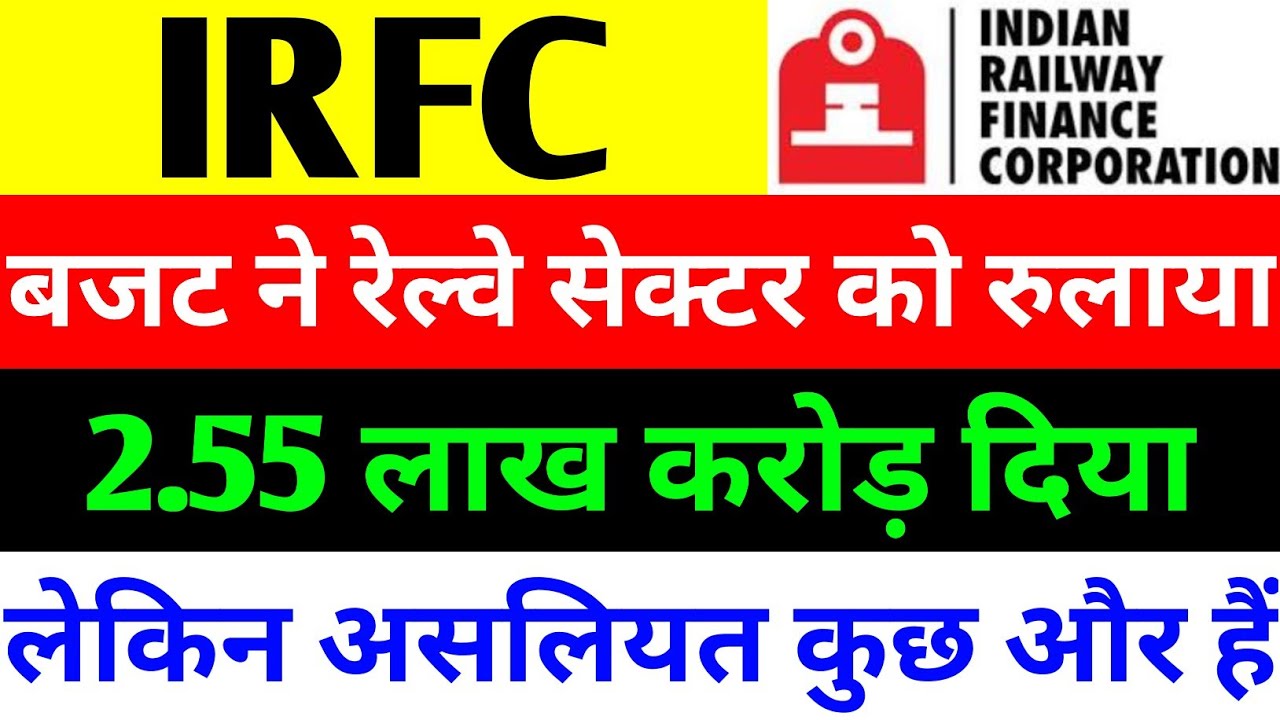
The Indian Railway Finance Corporation (IRFC) and other railway stocks faced significant declines after the Indian government announced its 2025-26 Union Budget, falling short of the expectations many had for the railway sector. Investors and market watchers had anticipated a robust allocation of over ₹3 lakh crore for railway infrastructure, but the reality turned out to be quite different. The announcement caused a stir in the stock market, especially for railway-related shares. In this article, we will explore the key details of the budget allocation for the railway sector, the current state of the IRFC stock, and what the future holds for railway investments.
IRFC’s Performance and Market Reaction to Budget 2025
The initial market reaction to the budget was one of disappointment, as IRFC shares and others like IRCON and RailTel saw significant declines. IRFC’s stock closed at ₹141, a drop of 6.44%, after reaching an intraday low of ₹139 and a high of ₹155 earlier in the day. Before the budget was announced, there had been some optimism, especially following the Economic Survey of 2025, which suggested that key sectors like ports, shipping, civil aviation, and railways would receive increased capital expenditure.
The Railway Sector Budget: Expectations vs Reality
Many experts had predicted that the railway sector’s capital expenditure (capex) would exceed ₹3 lakh crore in the 2025-26 budget. This forecast was fueled by reports showing an increase in capital investment in the railway sector between 2024 and 2025. However, when the actual budget was presented, the allocation for the railway sector fell short, with a total of ₹2.55 lakh crore being allocated, the same amount as the previous financial year.
Investors were hoping for substantial announcements to boost railway infrastructure, including new projects and expansions. However, the budget did not include any groundbreaking new initiatives for the sector. Instead, the focus was on completing previously announced projects.
Key Allocations in the Indian Railways Budget
The railway budget in 2025-26 includes provisions for various infrastructure improvements, including:
- Revenue Allocation: ₹34,450 crore
- Capital Expenditure: ₹2.52 lakh crore
- Pension Fund: ₹66,000 crore
- New Railway Lines: ₹3,235 crore
- Double Tracking: ₹32,000 crore
- Gauge Conversion: ₹4,550 crore
- Signaling and Telecom: ₹800 crore
- Electrification: ₹61 crore
These allocations reflect the ongoing commitment to improving the railway infrastructure but have left some investors disappointed due to the lack of significant new funding announcements.
Focus on Previous Projects
Unlike the previous years where ambitious projects like the introduction of Vande Bharat trains and the creation of new economic corridors were announced, the 2025-26 budget did not unveil any such fresh initiatives. Instead, the government chose to focus on completing existing projects. This includes the development of the three major economic corridors that had been previously discussed, aimed at improving connectivity across key sectors like energy, cement, ports, and high-traffic railway lines.
IRFC Stock: Short-Term Decline, Long-Term Potential
Despite the disappointment in the immediate market reaction, there is still optimism for the IRFC and other railway stocks in the long run. The government’s commitment to railway development, albeit at a slower pace, suggests that infrastructure spending will continue, even if it is at a lower rate than initially expected.
Railway stocks, including IRFC, may experience volatility in the short term, but as the government continues to invest in existing projects, we can expect growth over time. It’s crucial for investors to keep an eye on the long-term prospects of the railway sector and the eventual completion of major projects that could lead to a more robust railway system.
Middle-Class Tax Relief and its Impact on Railway Investments
While the railway sector’s budget allocation did not meet expectations, the 2025-26 budget included measures aimed at providing relief to the middle class. The government announced a zero-tax slab for individuals earning up to ₹12 lakh annually, which could boost consumer spending and stimulate economic growth.
This relief is expected to have a positive effect on infrastructure-related sectors, including railways, as increased spending could lead to greater demand for goods and services, ultimately benefitting the transport sector. The positive economic outlook could help mitigate some of the negative impacts on railway stocks in the short term.
Challenges and Opportunities for Railway Stocks
One of the major challenges faced by the railway sector is the lack of fresh investment in new projects. The current focus on completing ongoing projects means that the sector may not see as many growth drivers in the immediate future. However, the continuous allocation of funds for vital upgrades, including safety features like the “Kavach” system and improvements in railway electrification, signals a commitment to enhancing the existing infrastructure.
In the long run, as projects such as the three major economic corridors come to fruition, there will likely be increased demand for railway services, boosting growth prospects for railway-related companies, including IRFC.
Conclusion: What’s Next for IRFC and Railway Stocks?
The Union Budget for 2025-26 may not have met the expectations of investors looking for massive new announcements for the railway sector. However, the continued focus on infrastructure upgrades and the completion of existing projects will still contribute to the growth of the railway system over time. IRFC and other railway stocks might experience some short-term volatility, but investors should maintain a long-term perspective on the potential for growth in the railway sector.
As always, it’s essential for investors to conduct thorough research and consult with financial advisors before making any investment decisions. The railway sector remains a crucial part of India’s economy, and while the short-term outlook may be mixed, the long-term potential remains strong.