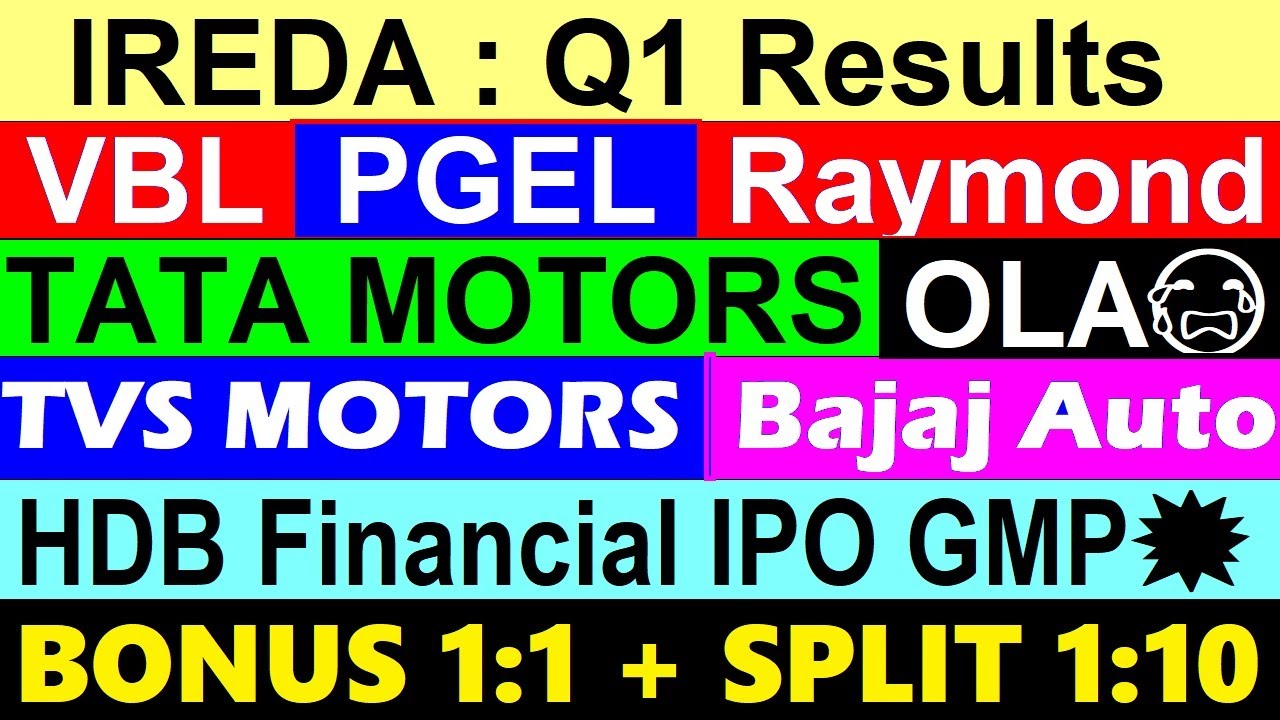
The Indian stock market is a dynamic landscape, with companies like IREDA, Ola Electric, Tata Motors, Raymond, Varun Beverages, and PG Electroplast driving investor attention. This article dives into their recent performances, strategic moves, and what they mean for investors. From IREDA’s Q1 results to Ola Electric’s slipping market share and Tata Motors’ challenges, we’ll explore key trends, growth metrics, and investment insights to help you navigate this ever-evolving market.
IREDA Q1 Results: A Snapshot of Robust Growth
The Indian Renewable Energy Development Agency (IREDA) recently released its Q1 business update, showcasing impressive growth metrics that have caught the market’s eye. This update serves as a “trailer” for the full quarterly results, offering a glimpse into IREDA’s operational strength.
Loan Sanctions and Disbursements Surge
IREDA reported a significant uptick in loan sanctions, climbing from ₹9,000 crore last year to ₹11,000 crore in Q1, marking a 29% year-on-year growth. Disbursements also saw a strong increase, rising from ₹5,326 crore to approximately ₹7,000 crore, a 31% jump. This growth reflects IREDA’s expanding role in financing renewable energy projects, a sector poised for long-term growth as India pushes toward sustainability.
Loan Book Expansion Signals Confidence
The total loan book grew by 27%, reaching nearly ₹80,000 crore compared to ₹63,000 crore last year. This expansion underscores IREDA’s ability to scale its operations while maintaining a robust portfolio. The market responded positively to these updates, with IREDA’s stock witnessing a mild uptick, signaling investor confidence in its growth trajectory.
Why IREDA Matters for Investors
IREDA’s performance highlights its pivotal role in India’s renewable energy ecosystem. As the government prioritizes clean energy, IREDA stands to benefit from increased funding and project opportunities. Investors looking for exposure to the green energy sector should keep IREDA on their radar, but thorough due diligence is essential to assess valuation and long-term potential.
Ola Electric: Losing Ground in the EV Race
Ola Electric, once the undisputed leader in India’s electric two-wheeler market, has slipped to third place, trailing behind TVS and Bajaj Auto. This shift raises questions about its competitive edge and long-term prospects.
Market Share Decline: From Dominance to Third Place
In its heyday, Ola Electric commanded over 50% of the electric two-wheeler market. However, recent data shows its market share dwindling to just under 20%, with TVS leading at 24% and Bajaj Auto at 22%. This decline reflects growing competition and challenges in maintaining leadership in a rapidly evolving sector.
Lessons from Ola’s Slide
Ola’s journey from market leader to third place underscores a critical lesson for investors: leadership is not guaranteed. Companies must continuously innovate and execute to retain their edge. Ola’s struggles highlight the importance of operational discipline and adaptability in a competitive market. Investors should monitor whether Ola can regain momentum through new product launches or strategic partnerships.
Investment Implications for Ola Electric
While Ola Electric’s IPO and brand recognition make it a compelling story, its declining market share signals caution. Investors should weigh its growth potential against competitive pressures and evaluate whether its valuation aligns with its current performance.
Tata Motors: Navigating a Challenging Quarter
Tata Motors, a stalwart in India’s automotive industry, reported underwhelming sales figures for Q1, reflecting challenges in both commercial and passenger vehicle segments.
Commercial and Passenger Vehicle Sales Decline
Tata Motors’ commercial vehicle sales dropped by 6% year-on-year, with the company selling fewer units compared to the previous year. Passenger vehicle sales were hit harder, declining by 10% on an annual basis. In June 2025, Tata Motors sold approximately 65,000 passenger vehicles compared to 74,000 in June 2024, marking a 12% drop. The first quarter as a whole saw a 10% decline in domestic sales.
Electric Vehicle Segment: A Mixed Bag
While Tata Motors’ overall performance was lackluster, its electric vehicle (EV) segment showed some resilience. In June 2025, the company sold over 5,000 EVs, a 12% increase from 4,657 units in June 2024. However, quarterly EV sales growth was negative, declining by 2%. This mixed performance highlights Tata Motors’ strength in EVs but also its vulnerability to broader market trends.
What’s Next for Tata Motors?
To stage a comeback, Tata Motors needs consistent, high-impact performance across its portfolio. Investors should watch for signs of recovery in commercial vehicle demand and sustained growth in the EV segment, where Tata remains a key player. Strategic initiatives, such as new model launches or cost optimization, could drive a turnaround.
Raymond: A Triple Play in the Market
Raymond has been making waves with its diversified business model, now spanning three listed entities: Raymond Ltd., Raymond Lifestyle, and Raymond Realty. This strategic restructuring has created new opportunities for shareholders.
Raymond’s Three-Pronged Strategy
Raymond’s core business, Raymond Lifestyle, and the newly listed Raymond Realty form a diversified portfolio catering to textiles, lifestyle, and real estate. The listing of Raymond Realty, in particular, has drawn attention, debuting at a discount but offering potential for long-term growth if the company delivers strong results.
Benefits for Shareholders
Raymond’s restructuring has unlocked value for shareholders, who now hold stakes in three distinct entities. The real estate arm, in particular, taps into India’s booming property market, while the lifestyle and textile segments benefit from Raymond’s established brand. Investors should assess each entity’s growth prospects and market positioning to make informed decisions.
Investment Outlook for Raymond
Raymond’s diversified approach mitigates risk while offering exposure to high-growth sectors like real estate. However, investors should monitor execution risks and market dynamics, as the success of each entity depends on its ability to compete in its respective sector.
Varun Beverages: Facing Competitive Heat
Varun Beverages (VBL), PepsiCo’s leading bottler in India, is facing increased competition, raising concerns about its market leadership.
Competitive Threats from Coca-Cola and Campa Cola
VBL’s dominance is under pressure from Coca-Cola’s bottler, which is reportedly planning an IPO, and Campa Cola, backed by Mukesh Ambani’s Reliance Industries. Campa Cola’s ₹8,000 crore capital expenditure plan signals an aggressive push into the beverage market, directly challenging VBL’s position.
Market Dynamics and Investor Sentiment
The competitive landscape is heating up, with VBL’s stock experiencing pressure amid these developments. Investors are debating whether VBL can maintain its edge or if its “crown” is at risk, similar to Asian Paints’ challenges in the paint industry. The potential listing of Coca-Cola’s bottler could further intensify competition.
Investment Considerations for VBL
VBL remains a strong player, but investors should closely monitor its response to competitive pressures. Strategic partnerships, product innovation, and operational efficiency will be key to sustaining growth. A cautious approach is warranted until clarity emerges on VBL’s competitive strategy.
PG Electroplast: A Lesson in Market Timing
PG Electroplast, once a high-flying stock, has seen its momentum stall, highlighting the risks of chasing market exuberance.
From Losses to Profits: PG Electroplast’s Journey
PG Electroplast transitioned from losses to consistent profits, delivering stellar returns for early investors. However, those who entered during periods of extreme bullishness faced profit booking and subsequent declines, leaving latecomers feeling trapped.
The Importance of Business Fundamentals
The stock’s performance underscores a timeless investing principle: focus on business fundamentals, not market momentum. Companies go through cycles of rapid growth, consolidation, and decline. Investors who chase highs without understanding the underlying business risk significant losses.
Investment Strategy for PG Electroplast
For PG Electroplast, investors should evaluate its long-term growth potential in the electronics manufacturing sector. While past performance was strong, future success depends on sustained earnings growth and market demand. Avoid emotional decisions driven by short-term price movements.
HDB Financial Services IPO: A Promising Opportunity
HDB Financial Services, a subsidiary of HDFC Bank, is generating buzz with its upcoming IPO, with grey market premiums (GMP) indicating strong investor interest.
GMP and Market Expectations
Reports suggest HDB Financial’s IPO commands a GMP of over 10%, a positive sign despite a brief dip to 6.5%. This premium reflects market optimism about the company’s growth prospects in the non-banking financial sector.
Why HDB Financial Matters
As a leading NBFC, HDB Financial benefits from HDFC Bank’s strong brand and financial expertise. Its IPO offers investors a chance to tap into India’s growing financial services market, but careful valuation analysis is crucial to avoid overpaying.
BMCO Hydro: Bonus and Stock Split Announcement
BMCO Hydro, a smaller player, recently announced a 1:1 bonus issue and a 1:10 stock split, creating excitement among investors.
Understanding Bonus and Stock Split Impacts
While bonus issues and stock splits enhance liquidity and affordability, they don’t inherently add value to a company. Investors should focus on BMCO Hydro’s business fundamentals, such as revenue growth and profitability, rather than getting swayed by these corporate actions.
Investment Takeaway for BMCO Hydro
BMCO Hydro’s announcements are positive, but they should not drive investment decisions. Evaluate the company’s growth prospects in the context of its industry and competitive landscape before committing capital.
Key Investment Lessons from Market Trends
The performances of IREDA, Ola Electric, Tata Motors, Raymond, Varun Beverages, PG Electroplast, HDB Financial, and BMCO Hydro offer valuable lessons for investors:
- Focus on Fundamentals: Business performance, not market hype, drives long-term returns. Avoid chasing stocks based on short-term momentum.
- Adaptability is Key: Companies like Ola Electric show that market leadership requires constant innovation and execution.
- Diversification Mitigates Risk: Raymond’s three-pronged strategy highlights the benefits of exposure to multiple sectors.
- Competition Shapes Outcomes: VBL and Asian Paints face growing competition, emphasizing the need to monitor industry dynamics.
- Corporate Actions Aren’t Everything: Bonus issues and stock splits, as seen with BMCO Hydro, are secondary to business growth.
Conclusion: Navigating the Indian Stock Market
The Indian stock market offers immense opportunities, but success requires discipline, research, and a focus on fundamentals. IREDA’s robust Q1 performance signals strength in renewable energy, while Ola Electric and Tata Motors highlight the challenges of maintaining leadership in competitive sectors. Raymond’s diversification, VBL’s competitive pressures, and PG Electroplast’s market cycles underscore the importance of strategic investing. HDB Financial’s IPO and BMCO Hydro’s corporate actions add to the market’s dynamism, but investors must prioritize business quality over short-term catalysts.
By staying informed, avoiding emotional decisions, and focusing on long-term value creation, investors can navigate this vibrant market with confidence. Whether you’re eyeing renewable energy, electric vehicles, or financial services, thorough analysis and patience are your best allies.