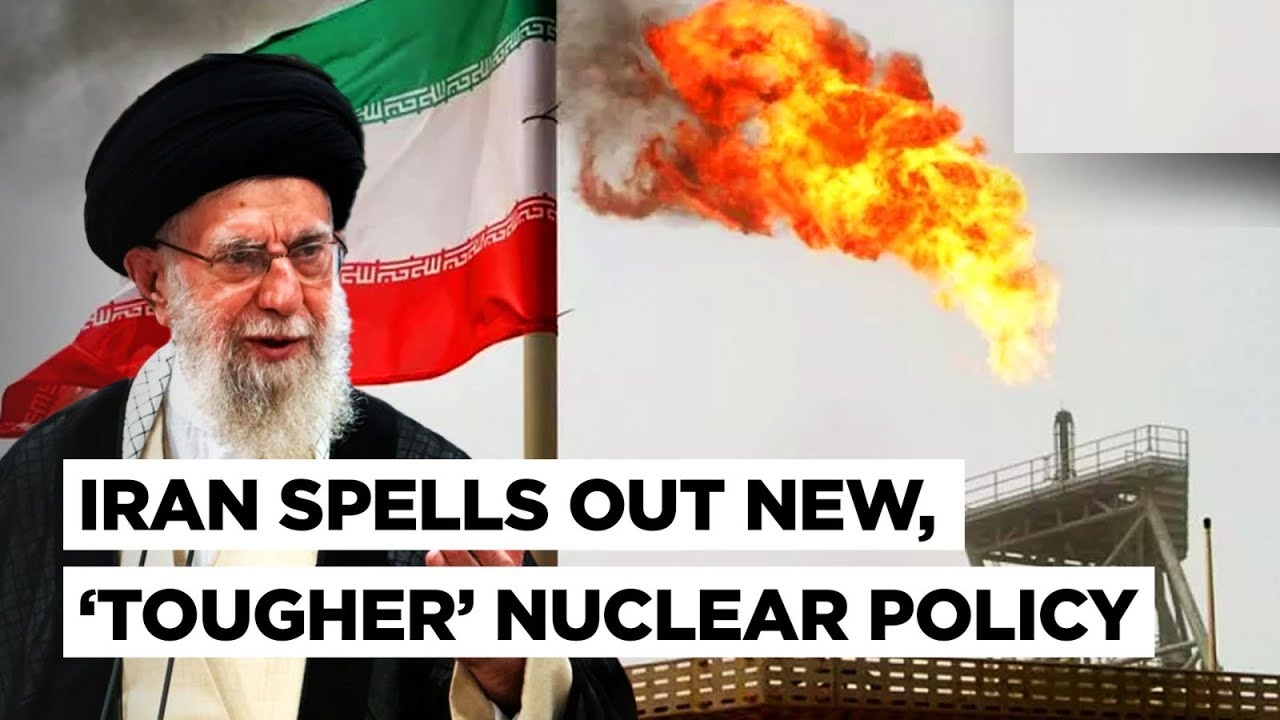
Iran’s Supreme Leader, Ayatollah Ali Khamenei, recently hinted at the possibility of renewed negotiations with the United States over Iran’s rapidly advancing nuclear program. His remarks, while setting strict boundaries for any such talks, reflect a cautious openness to diplomacy, echoing the sentiments during the 2015 nuclear deal negotiations. However, the complex geopolitical landscape and ongoing regional tensions make the prospect of successful negotiations uncertain.
Khamenei’s Strategic Openness to U.S. Negotiations
Ayatollah Khamenei, known for his conservative stance, surprised many by suggesting that engaging with the U.S. could be permissible under certain circumstances. “There is no harm in interacting with the enemy in specific situations,” Khamenei stated, according to a transcript on his official website. However, he was quick to warn Iran’s civilian government, led by reformist President Masoud Pezeshkian, not to place their hopes in Washington, emphasizing the need for caution and vigilance.
This approach mirrors Khamenei’s stance during the 2015 nuclear deal negotiations, where Iran agreed to limit its nuclear activities in exchange for lifting economic sanctions. Despite this apparent willingness to engage, Khamenei’s distrust of the U.S. remains evident, especially after the U.S. unilaterally withdrew from the deal in 2018 under then-President Donald Trump.
Challenges Facing Potential Talks
While Khamenei’s comments open the door for dialogue, the path forward is fraught with challenges. The political environment in both Iran and the U.S. is volatile, with tensions in the Middle East exacerbated by the ongoing Israel-Hamas conflict. The U.S. is also approaching a presidential election, with Vice President Kamala Harris and former President Trump as the leading candidates, adding further uncertainty to the potential for future negotiations.
President Pezeshkian, who ascended to power after a helicopter crash claimed the life of hard-line President Ebrahim Raisi, has shown a willingness to reengage with the West. His administration, particularly through his foreign minister Abbas Araghchi, who played a significant role in the 2015 deal, may push for renewed talks. However, with Khamenei holding ultimate authority, the extent to which Pezeshkian can navigate these negotiations remains unclear.
U.S. Stance on Iran’s Nuclear Program
The U.S. government has maintained a firm stance on preventing Iran from acquiring nuclear weapons. The State Department reiterated that while diplomacy is viewed as the best path forward, Iran’s recent actions, including its nuclear escalations and lack of cooperation with the International Atomic Energy Agency (IAEA), have created significant barriers to progress.
Iran’s nuclear activities have advanced significantly since the collapse of the 2015 deal. The country is now enriching uranium to levels close to weapons-grade, and surveillance by the IAEA has been hindered. Iran has also barred some of the agency’s most experienced inspectors, raising concerns about its intentions. Amid these developments, the U.S. has emphasized that any new negotiations must address these escalations and ensure robust oversight to prevent Iran from developing nuclear weapons.
Regional and Global Implications
The potential for renewed negotiations is also complicated by the broader regional and global context. The Israel-Hamas conflict has heightened tensions between Iran and Israel, with both countries engaging in a shadow war that has included missile and drone attacks. Iran’s support for Hamas and other militant groups in the region further strains its relations with the U.S. and its allies.
Additionally, the global landscape is shifting, with the war in Ukraine influencing European perspectives on security and the dynamics of international diplomacy. These factors contribute to the complexity of reviving the nuclear deal, as any new agreement would need to account for these changing circumstances.
Conclusion: A Delicate Balance
Ayatollah Khamenei’s recent remarks suggest a potential opening for renewed negotiations with the U.S., but the path forward is uncertain and fraught with challenges. The Iranian leadership remains deeply suspicious of Washington, and any future talks will need to navigate a complex web of regional tensions, global conflicts, and domestic political pressures.
President Pezeshkian’s administration may seek to capitalize on this opening, but the ultimate success of any negotiations will depend on the willingness of both sides to compromise and address the critical issues at hand. As the U.S. presidential election looms and tensions in the Middle East continue to escalate, the prospect of a new nuclear deal remains uncertain, with significant hurdles yet to be overcome.