
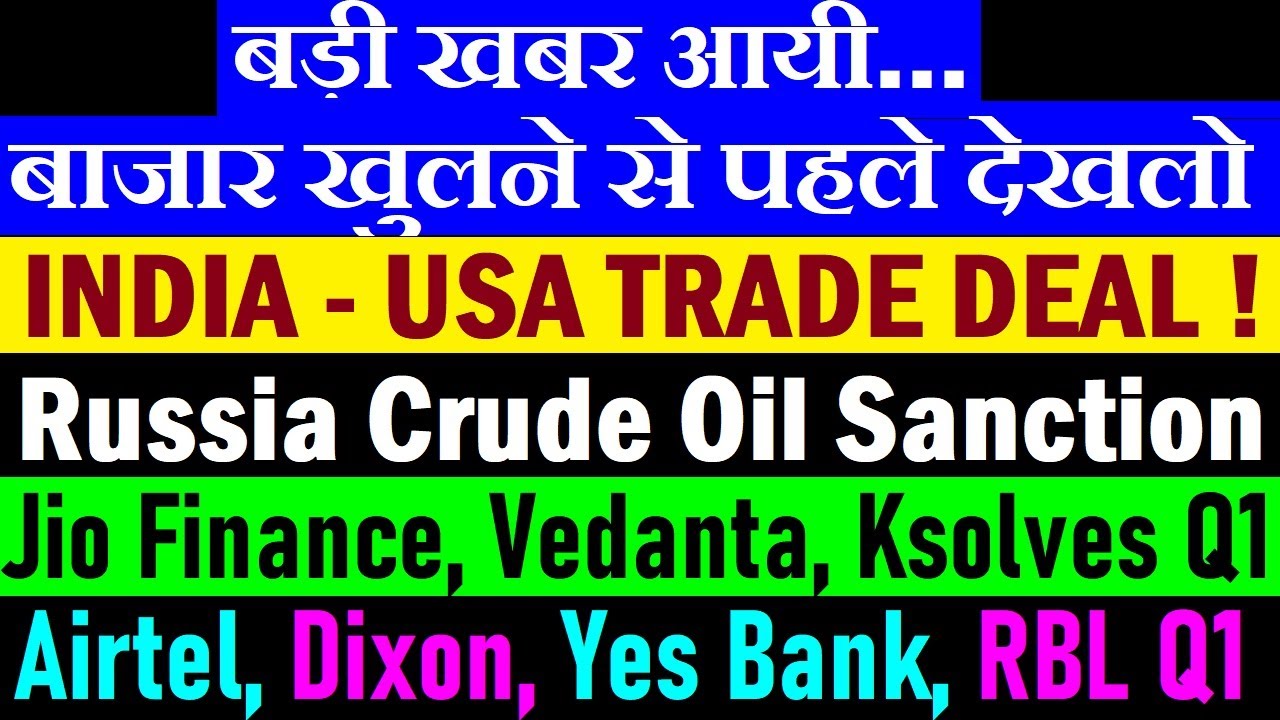
As global markets evolve at a breakneck pace, staying ahead of the curve is critical for investors. From transformative trade deals to geopolitical sanctions and corporate earnings, the financial landscape in 2025 is brimming with opportunities and challenges. This comprehensive guide dives into the latest developments shaping the Indian and global markets, offering actionable insights for investors looking to capitalize on emerging trends. Whether you’re tracking stock market movements, analyzing trade agreements, or evaluating company performance, this article equips you with the knowledge to make informed decisions.
The Global Trade Landscape: Opportunities and Challenges
Global trade agreements and geopolitical shifts significantly influence market dynamics. In 2025, several key developments are poised to reshape economic relationships and investment opportunities.
India-EFTA Trade Deal: A Game-Changer for Investors
Starting October 1, 2025, the India-EFTA (European Free Trade Association) trade agreement will unlock significant investment opportunities. This landmark deal, valued at approximately $100 billion, aims to boost trade by reducing tariffs on Swiss goods and other EFTA member products. For Indian investors, this translates into access to high-quality imports at competitive prices, potentially benefiting sectors like consumer goods, manufacturing, and technology.
- Key Benefits: Lower import costs for Swiss machinery, pharmaceuticals, and luxury goods.
- Market Impact: Stocks in sectors like retail, manufacturing, and logistics may see increased activity due to enhanced trade flows.
- Investor Action: Monitor companies with exposure to EFTA markets, such as those in the FMCG and industrial sectors, for potential growth.
This deal underscores India’s growing role in global trade, offering a stable platform for long-term investment strategies.
India-US Trade Negotiations: Navigating Complexities
The ongoing India-US trade discussions remain a focal point for investors. While no official updates have been confirmed as of July 2025, reports suggest challenges in reaching a consensus, particularly in agriculture and dairy segments.
- US Interests: The US is pushing for greater access to India’s agriculture and dairy markets, including crops and processed goods.
- India’s Stance: Led by Commerce Minister Piyush Goyal, India emphasizes protecting local farmers and industries. High tariffs on foreign agricultural products safeguard domestic players, ensuring market stability.
- Potential Risks: Allowing unrestricted US access could disrupt local markets, leading to widespread economic and social implications.
Investors should remain cautious about sectors like agriculture and dairy, as any breakthrough in these talks could significantly impact companies such as Amul, Mother Dairy, and other domestic players. Conversely, a stalled deal may maintain the status quo, favoring local firms.
EU-Russia Crude Oil Sanctions: A Ripple Effect on Indian Markets
The European Union’s recent sanctions on Russian crude oil, effective in 2025, have introduced new complexities for Indian companies, particularly in the energy sector. These sanctions include a price cap reduction from $60 per barrel to $47.60 per barrel and a ban on refined petroleum products derived from Russian crude, even if processed in third countries like India.
- Impact on Reliance Industries: As a major player in refining Russian crude for export to Europe, Reliance Industries faces significant challenges. The ban on refined products could disrupt its supply chain and profitability.
- Nayara Energy Concerns: With a 49% stake held by Russia’s Rosneft, Nayara Energy, another key player, may face operational hurdles due to these sanctions.
- Government Response: India’s Ministry of External Affairs has criticized the EU’s sanctions, highlighting their adverse effects on Gujarat-based refineries, a critical hub for India’s energy sector.
Investor Strategy:
- Monitor Reliance Industries’ stock for volatility, as it navigates these sanctions and explores alternative markets.
- Evaluate energy sector stocks for potential short-term dips but long-term recovery as companies adapt to new trade realities.
- Stay updated on diplomatic efforts to mitigate the impact of these sanctions, as they could influence market sentiment.
Corporate Earnings and Market Movers
As markets reopen after weekend closures, corporate earnings and strategic announcements drive stock-specific movements. Here’s a deep dive into key companies and sectors to watch in 2025.
Banking Sector: Mixed Performance and Strategic Shifts
The banking sector remains a cornerstone of the Indian stock market, with major players like HDFC Bank, ICICI Bank, and Yes Bank shaping market momentum.
- HDFC Bank and ICICI Bank: Both banks reported quarterly results in line with expectations, reinforcing their stability. Investors should focus on their ability to sustain margins and manage asset quality in a high-interest-rate environment.
- Yes Bank: Despite a 46% drop in net profit and a 13% decline in net interest income due to higher provisioning, Yes Bank’s CEO remains optimistic about a Q3 margin rebound. Investors should assess whether the market trusts this outlook.
- AU Small Finance Bank: With a 16% yearly increase in net profit to ₹51 crore and a 6% rise in net interest income, AU Small Finance Bank shows resilience. Its stock could be a sleeper hit for growth-focused investors.
Investor Takeaway: Banking stocks remain a safe bet for long-term portfolios, but selective exposure to smaller banks like AU Small Finance could yield higher returns if margin improvements materialize.
Reliance Industries: Navigating Challenges and Opportunities
Reliance Industries, a market heavyweight, is under the spotlight due to the EU sanctions and its foray into new sectors.
- Energy Sector Challenges: The EU’s ban on refined Russian crude products directly impacts Reliance’s refining business. Investors should watch how Reliance pivots to alternative markets like Asia or domestic consumption to offset losses.
- Jio Financial Services Expansion: Reliance’s Jio Financial Services recently announced a strategic tie-up in the insurance sector, entering both general and life insurance markets. This move positions Jio as a formidable player in a competitive space, potentially challenging established names like LIC, HDFC Life, and SBI Life.
Investor Action:
- Keep Reliance on your radar for potential short-term volatility but long-term growth, driven by its diversified portfolio.
- Evaluate insurance stocks like ICICI Lombard and New India Assurance for competitive dynamics as Jio enters the market.
Airtel’s AI-Powered Growth Strategy
Bharti Airtel is making waves with its strategic partnership with Perplexity, an AI-driven platform. Airtel’s offer of free access to Perplexity Pro for its subscribers positions it as a leader in integrating AI into telecom services.
- Market Impact: This partnership enhances Airtel’s appeal to tech-savvy consumers, potentially boosting subscriber growth and ARPU (Average Revenue Per User).
- Long-Term Potential: By leveraging AI, Airtel is future-proofing its business, aligning with global trends toward technology-driven services.
Investor Strategy: Airtel’s stock is a strong candidate for growth portfolios, especially for investors betting on the convergence of telecom and technology.
Solar Sector: Tariff Threats and Market Corrections
The solar energy sector, including companies like Waaree Energies, Premier Energies, and Sterling and Wilson Solar, faced a 4-5% correction following reports of potential US tariffs on Indian solar module exports.
- US Tariff Concerns: American companies have requested anti-dumping duties, citing competitive pricing by Indian firms. While no decision has been made, the uncertainty has triggered market corrections.
- Investor Outlook: Solar stocks remain attractive for long-term investors, given India’s renewable energy push. However, short-term volatility may persist until clarity on US trade policies emerges.
Action Plan: Consider accumulating solar stocks during dips, focusing on companies with strong domestic order books and diversified export markets.
Vedanta: Addressing Allegations and Semiconductor Ambitions
Vedanta faces scrutiny over allegations related to its ₹500 crore semiconductor project, labeled baseless by the company. Despite these challenges, Vedanta’s long-term vision in semiconductors aligns with India’s push for self-reliance in technology.
- Market Sentiment: Allegations may weigh on short-term stock performance, but Vedanta’s diversified portfolio in metals and mining provides a buffer.
- Investor Strategy: Monitor Vedanta for updates on its semiconductor plans and regulatory clearances, as success in this space could drive significant upside.
Key Stocks to Watch in 2025
Several companies are poised to influence market trends based on their quarterly results and strategic developments. Here’s a curated list for investors:
- Zomato: Strong quarterly growth but annual declines warrant caution. Study its delivery and quick-commerce segments for growth signals.
- IDBI Bank: With privatization talks ongoing, IDBI’s results could drive significant stock movement.
- Latent View Analytics: Post-IPO corrections continue, but its data analytics focus makes it a long-term bet.
- UltraTech Cement: As a market leader, its Q1 results will set the tone for the cement sector.
- PNB Housing and UCO Bank: Both offer value for investors seeking exposure to housing finance and public-sector banking.
Investor Tip: Study Q1 results meticulously, focusing on revenue growth, margin stability, and management commentary for forward guidance.
Geopolitical and Regulatory Considerations
Geopolitical developments and regulatory scrutiny continue to shape market dynamics, requiring investors to stay agile.
Dixon Technologies: Navigating China-Related Scrutiny
Dixon Technologies, a key player in electronics manufacturing, faces regulatory scrutiny due to its ties with Chinese companies. While no bans have been imposed, government checks could impact its operations.
- Market Impact: Dixon’s stock experienced a correction due to these concerns, but its strong domestic manufacturing base offers resilience.
- Investor Strategy: Monitor regulatory updates and Dixon’s ability to diversify partnerships to mitigate risks.
EU’s Double Standards: A Broader Perspective
India’s criticism of the EU’s sanctions on Russian crude highlights broader geopolitical tensions. The EU’s selective exemptions and complex restrictions create uncertainty for Indian refineries, particularly in Gujarat.
- Global Implications: These sanctions could push Indian companies to explore alternative markets, potentially strengthening trade ties with Asia and the Middle East.
- Investor Action: Diversify energy sector investments to include companies with exposure to non-EU markets.
Crafting a Winning Investment Strategy
With markets reopening on July 21, 2025, investors must synthesize these developments into a cohesive strategy. Here’s how to approach the current landscape:
- Diversify Across Sectors: Balance exposure to banking, energy, telecom, and technology to mitigate risks from sector-specific challenges.
- Focus on Long-Term Trends: Investments like AI (Airtel), insurance (Jio Financial), and renewables (solar companies) align with global megatrends.
- Monitor Geopolitical Risks: Stay updated on India-US trade talks and EU sanctions, as they could trigger short-term volatility.
- Leverage Earnings Insights: Prioritize companies with strong Q1 results and positive management outlooks, such as AU Small Finance Bank and Airtel.
- Stay Agile: Use market corrections in solar and energy stocks as buying opportunities, but maintain stop-losses to manage risks.
Conclusion: Seizing Opportunities in a Dynamic Market
The financial markets in 2025 are a complex interplay of trade deals, geopolitical sanctions, and corporate performance. From the India-EFTA trade agreement to the EU’s Russian crude sanctions, global developments are reshaping investment opportunities. Companies like Reliance Industries, Airtel, and AU Small Finance Bank are navigating these changes with strategic agility, offering investors a mix of risks and rewards.
By staying informed and adopting a proactive investment approach, you can unlock significant value in this dynamic landscape. Study quarterly results, track geopolitical updates, and diversify your portfolio to capitalize on emerging trends. The markets are poised for action—position yourself to thrive.