
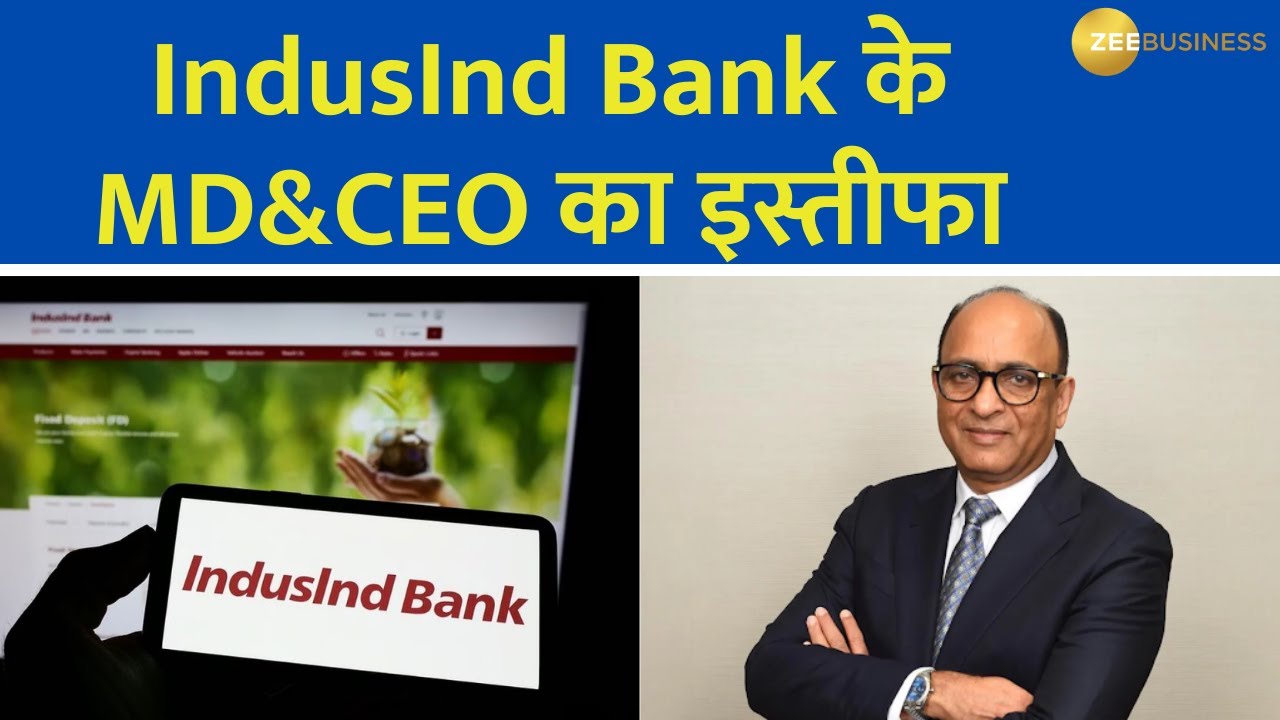
The sudden resignation of IndusInd Bank’s Managing Director and CEO, Sumant Kathpalia, has sent shockwaves through India’s banking sector. Effective immediately on April 29, 2025, Kathpalia’s departure stems from what he described as taking “moral responsibility” for significant accounting discrepancies in the bank’s derivatives portfolio, costing nearly ₹1,979 crore. This high-profile exit, coupled with the resignation of Deputy CEO Arun Khurana just a day prior, signals a turbulent period for IndusInd Bank, a key player in India’s private banking landscape. In this comprehensive article, we delve into the details of Kathpalia’s resignation, the underlying issues in the derivatives portfolio, expert insights, and what lies ahead for IndusInd Bank.
Why Did Sumant Kathpalia Resign?
Sumant Kathpalia’s resignation is directly tied to a major accounting lapse in IndusInd Bank’s derivatives portfolio, which has eroded approximately 2.27% of the bank’s net worth. In his resignation letter, Kathpalia acknowledged “acts of commission or omission” that came to his notice, prompting him to step down immediately. This move follows intense scrutiny from the Reserve Bank of India (RBI), which had been investigating the bank’s derivatives contracts since the discrepancies were first disclosed on March 10, 2025.
The accounting errors primarily arose from internal derivative trades between the bank’s asset-liability management (ALM) desk and its treasury unit. Unlike external trades, which were marked to market (reflecting immediate gains or losses based on market prices), internal trades used accrual accounting. This mismatch allowed the bank to defer losses internally while prematurely booking gains externally, artificially inflating earnings. An independent audit by firms like PwC, EY, and Grant Thornton confirmed the financial impact, pegging the loss at ₹1,959.98 crore as of March 31, 2025.
Kathpalia’s decision to resign reflects not only personal accountability but also pressure from the RBI, which reportedly urged both him and Khurana to step down. The central bank’s involvement underscores the severity of the issue, as it seeks to ensure robust governance and transparency in India’s banking system.
The Derivatives Scandal: What Went Wrong?
The derivatives scandal at IndusInd Bank is a complex issue rooted in flawed accounting practices and inadequate oversight. Here’s a breakdown of the key factors:
1. Accounting Discrepancies in Derivative Trades
The core issue lies in the bank’s handling of internal derivative trades. IndusInd Bank employed a dual accounting system: external trades were marked to market, while internal trades between the ALM desk and treasury were recorded using accrual accounting. This practice, which had been in place for 6-7 years, enabled the bank to defer losses on internal trades while recognizing gains prematurely. The result was an overstatement of earnings, which went undetected until the RBI’s surveillance flagged irregularities.
2. Lack of Oversight and Weak Internal Controls
Experts point to a failure in the bank’s internal control mechanisms. As Jain Gupta, a former SEBI Executive Director, noted in a recent interview, a single individual cannot execute such transactions without oversight. Banks operate with multiple layers of supervision, including supervisors and senior management, who are responsible for reviewing transactions. The fact that these discrepancies persisted for years raises questions about the effectiveness of IndusInd’s internal checks and balances.
3. RBI’s Role in Uncovering the Issue
The RBI’s proactive surveillance played a critical role in identifying the problem. Despite the bank’s initial reluctance to disclose the issue, the central bank mandated both internal and external audits. Reports from firms like Grant Thornton, PwC, and EY validated the RBI’s concerns, revealing a loss of nearly ₹100 crore that had been misrepresented in the bank’s books. The RBI’s insistence on transparency forced IndusInd to confront the issue head-on, culminating in the resignations of top executives.
4. Microfinance Portfolio Under Scrutiny
In addition to the derivatives issue, IndusInd Bank faces challenges in its microfinance portfolio. Approximately ₹300 crore of its loan book is under investigation, adding further pressure on the bank’s leadership. This dual crisis has compounded the reputational damage and financial strain, making Kathpalia’s resignation a pivotal moment for the bank.
Expert Insights: What Does This Mean for IndusInd Bank?
The resignation of Sumant Kathpalia and Arun Khurana marks a significant turning point for IndusInd Bank. Industry experts and analysts have weighed in on the implications for the bank, its stakeholders, and the broader banking sector.
Reputational Damage and Recovery
Jain Gupta emphasized that while the financial impact of the derivatives scandal is manageable, the reputational hit is a more pressing concern. IndusInd Bank’s shares have already taken a beating, falling nearly 8% since the issue was first disclosed on March 10, 2025. The bank’s ability to recover its reputation will depend on how quickly it can restore investor confidence and implement robust governance measures.
Comparisons have been drawn to Yes Bank, which faced a similar reputational crisis in recent years. However, Gupta noted that IndusInd’s issue is less severe, as the bank’s capital adequacy and financial reserves remain strong. The bank plans to absorb the entire ₹1,979 crore loss through its profit and loss account in the fourth quarter of FY25, without dipping into reserves. This approach signals financial resilience but does little to mitigate the immediate reputational fallout.
RBI’s Supervisory Role Under Scrutiny
The scandal has also sparked a broader debate about the RBI’s supervisory framework. Gupta highlighted a potential weakness in the central bank’s ability to process information and generate early warning signals. Despite the RBI’s rigorous monitoring of banks’ cash reserves, risk capital, and reporting requirements, high-profile failures like Yes Bank, BHFL, Nirav Modi, and now IndusInd suggest gaps in the system. The RBI must introspect and strengthen its surveillance mechanisms to prevent similar lapses in the future.
Management Overhaul and Future Leadership
IndusInd Bank has sought RBI approval to establish a temporary executive committee to oversee operations until a new CEO is appointed. This interim arrangement aims to stabilize the bank during the transition period. However, the board faces the daunting task of identifying a successor who can navigate the bank through this crisis and restore trust among stakeholders.
Analysts predict further resignations, particularly among senior and junior-level employees who were aware of the discrepancies but failed to act. The bank has categorized its staff into three groups: those who knowingly failed to act, those who had information but lacked authority, and junior employees with limited influence. This framework will guide the ongoing management reshuffle, with more exits expected in the coming weeks.
The Road Ahead for IndusInd Bank
As IndusInd Bank grapples with the fallout from the derivatives scandal, several key steps will shape its future trajectory:
1. Strengthening Governance and Controls
To prevent a recurrence of such lapses, IndusInd must overhaul its internal control systems. The bank has already discontinued internal derivative trading as of April 1, 2024, a proactive step to mitigate risk. Additionally, a realignment of senior management roles is underway to enhance accountability and transparency.
2. Restoring Investor Confidence
The bank’s share price, which rose marginally by 0.84% to ₹837.50 on April 29, 2025, reflects cautious optimism among investors. However, sustained efforts are needed to rebuild trust. Transparent communication, timely disclosures, and a clear roadmap for recovery will be critical in winning back investors and analysts.
3. Addressing Microfinance Challenges
The ongoing investigation into the ₹300 crore microfinance loan book adds another layer of complexity. IndusInd must address these issues promptly to avoid further financial and reputational damage. A comprehensive review of its lending practices and risk management protocols will be essential.
4. RBI’s Continued Oversight
The RBI’s role will remain pivotal in guiding IndusInd through this crisis. The central bank’s approval of a one-year extension for Kathpalia in March 2025, rather than the board’s proposed three years, signaled its concerns about the bank’s leadership. Moving forward, the RBI will closely monitor IndusInd’s corrective actions and leadership transition.
Lessons for India’s Banking Sector
The IndusInd Bank scandal offers valuable lessons for India’s banking industry. It underscores the importance of robust governance, effective internal controls, and proactive regulatory oversight. While the RBI’s vigilance helped uncover the issue, the fact that such discrepancies went unnoticed for years highlights systemic vulnerabilities. Banks must invest in advanced risk management systems, regular audits, and employee training to prevent similar crises.
Moreover, the incident reinforces the need for a culture of accountability at all levels of an organization. Top executives like Kathpalia and Khurana have set a precedent by accepting moral responsibility, but the responsibility also lies with regulators, auditors, and boards to ensure transparency and integrity.
Conclusion: A Turning Point for IndusInd Bank
Sumant Kathpalia’s abrupt resignation as IndusInd Bank’s CEO marks a critical juncture for the institution. The derivatives scandal, coupled with challenges in the microfinance portfolio, has exposed weaknesses in the bank’s governance and oversight mechanisms. While the financial impact is manageable, the reputational damage poses a significant challenge. With the RBI’s guidance, a temporary executive committee, and a commitment to reform, IndusInd Bank has an opportunity to emerge stronger from this crisis.
As the bank navigates this turbulent period, stakeholders will closely watch its efforts to restore trust, strengthen controls, and appoint a capable new leader. The lessons from this episode will resonate across India’s banking sector, emphasizing the need for vigilance, transparency, and accountability in an increasingly complex financial landscape.