
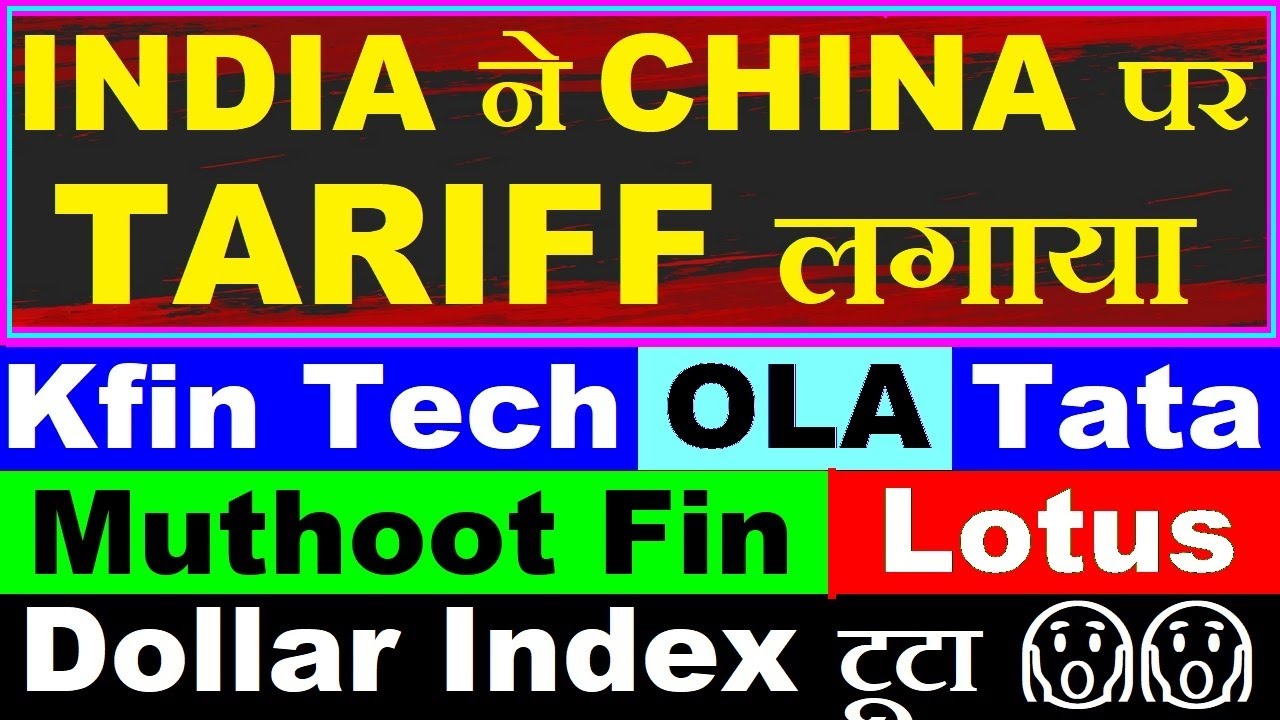
In a rapidly evolving global economic landscape, India’s recent decision to impose tariffs on Chinese steel imports has sent ripples across financial markets. This strategic move aims to protect domestic industries while navigating complex international trade dynamics. Coupled with significant market developments, such as the U.S. market downturn, gold price surges, and corporate earnings from companies like Tata Investments and Muthoot Finance, this article delves into the intricacies of these events, their implications, and opportunities for investors. With a focus on delivering actionable insights, we explore how these shifts shape India’s economic trajectory and global market trends.
Understanding India’s Tariff Strategy on Chinese Steel
India’s imposition of a 12% temporary tariff on Chinese steel imports marks a pivotal step in safeguarding its domestic steel industry. This decision stems from the need to counter anti-dumping practices by China, the world’s largest steel producer. By flooding markets like India with low-cost steel, China risks destabilizing local industries. India’s tariff aims to curb these cheap Chinese imports, ensuring that domestic players like Tata Steel and JSW Steel remain competitive.
Why India Imposed Tariffs
The rationale behind this tariff is straightforward: protect local industries. China’s surplus steel production, exacerbated by U.S. tariffs, has led to aggressive dumping in other markets. India, anticipating this influx, introduced the tariff to shield its steel sector from unfair pricing. This anti-dumping duty not only supports local manufacturers but also aligns with India’s broader economic goal of fostering self-reliance under initiatives like Atmanirbhar Bharat.
Impact on the Indian Steel Industry
The tariff is expected to bolster India’s metal stocks, with companies like Tata Steel, SAIL, and Jindal Steel likely to benefit. By leveling the playing field, this measure ensures that domestic producers can maintain profitability despite global price pressures. Investors should keep an eye on metal sector stocks, as they are poised for increased focus in the near term.
Temporary Nature of the Tariff
Notably, the tariff is labeled as temporary, signaling India’s openness to reassess based on future trade developments. If global steel dynamics stabilize or negotiations with China yield positive outcomes, the tariff could be lifted. This flexibility underscores India’s pragmatic approach to balancing protectionism with global trade relations.
Global Market Turbulence: U.S. Markets in Freefall
The U.S. financial markets have recently experienced significant volatility, with indices like the Dow Jones, NASDAQ, and S&P 500 witnessing sharp declines. The Dow plummeted by nearly 1,300 points, reflecting a 5.25% drop, while the NASDAQ and S&P 500 saw declines of 3.5% and 5.25%, respectively. Several factors contribute to this downturn, each with far-reaching implications for global markets, including India.
Key Drivers of U.S. Market Declines
- U.S.-China Trade Tensions: China’s rejection of claims about productive trade talks with the U.S. has heightened uncertainty. Beijing’s warning of restrictions on countries aligning with U.S. policies against China has further strained relations, spooking investors.
- Trump-Powell Conflict: The ongoing feud between former President Donald Trump and Federal Reserve Chair Jerome Powell has escalated, eroding confidence in U.S. monetary policy. This discord fuels fears of recession, with probabilities rising steadily.
- Rising Bond Yields: The U.S. 10-year Treasury yield is climbing, signaling increased bond sell-offs. Higher yields raise borrowing costs, pressuring equities and adding to market woes.
Implications for India
The U.S. market downturn indirectly impacts India through global capital flows. A weaker U.S. market often prompts investors to seek safe-haven assets like gold, which has surged to record highs, nearing ₹1 lakh per 10 grams in some Indian cities. Additionally, a declining U.S. dollar index, now below 99, weakens the dollar globally, potentially strengthening the Indian rupee and benefiting Indian exporters.
Gold’s Meteoric Rise: A Safe-Haven Surge
Gold prices have soared to unprecedented levels, driven by global uncertainties. In India, gold has breached the ₹1 lakh mark in select markets, fueled by geopolitical tensions, U.S.-China trade disputes, and fears of a U.S. recession. This rally has significant implications for investors and companies in the gold loan sector.
Why Gold Prices Are Surging
- Global Uncertainty: The U.S.-China trade war, coupled with domestic U.S. policy conflicts, has driven investors to gold as a safe-haven asset.
- Weak Dollar Index: A declining dollar index enhances gold’s appeal, as it is priced in dollars globally.
- Trump’s Influence: Policies and statements from Donald Trump have amplified market volatility, pushing gold higher.
Beneficiaries in India
Companies like Muthoot Finance and Manappuram Finance, leaders in the gold loan sector, are reaping the benefits of this surge. Higher gold prices increase the collateral value of gold loans, boosting these companies’ lending capacity and profitability. Investors should consider these stocks for their strong performance potential in the current market environment.
Corporate Earnings: Mixed Signals from Indian Companies
The ongoing Q4 earnings season in India has revealed a mix of performances, with companies like Tata Investments and Lotus Chocolate reporting varied results. These earnings provide critical insights into corporate health and market sentiment.
Tata Investments: A Profit Dip
Tata Investments reported a 38% decline in net profit, earning just ₹38 crore compared to the previous period. Despite this setback, the company declared a ₹27 per share dividend, signaling confidence in its long-term prospects. The profit drop reflects broader market challenges, but the dividend announcement may attract income-focused investors.
Lotus Chocolate: Revenue Growth, Profit Decline
Acquired by Reliance Industries, Lotus Chocolate showcased robust revenue growth, rising from ₹65 crore to ₹157 crore. However, its net profit fell sharply from ₹4 crore to ₹1.42 crore, with earnings per share (EPS) dropping to ₹1.11. While operational profits improved slightly, the bottom line reflects margin pressures. Investors should monitor Lotus Chocolate for signs of stabilization under Reliance’s stewardship.
Upcoming Earnings to Watch
The Q4 earnings season is heating up, with several key companies set to release results. These include:
- AU Small Finance Bank: A key player in the banking sector, with implications for the Bank Nifty index.
- HCL Tech: A bellwether for the IT sector.
- Mahindra & Mahindra Finance: A leader in financial services.
- Tata Communications and Wipro: Critical for gauging tech sector performance.
These results will provide further clarity on India’s economic resilience amid global headwinds.
Ola Electric’s Regulatory Woes
Ola Electric, a prominent player in India’s electric vehicle (EV) sector, is facing regulatory challenges in Maharashtra. The state’s Regional Transport Offices (RTOs) have flagged several Ola stores for operating without proper trade certificates, leading to potential shutdowns. This development could dent Ola’s expansion plans and investor confidence in the EV space.
Implications for Ola Electric
The regulatory scrutiny highlights the challenges of scaling in a highly regulated sector. While Ola Electric has driven significant growth in India’s EV market, these setbacks could slow its momentum. Investors should weigh the company’s long-term potential against short-term regulatory hurdles.
KFin Technologies: A Bright Spot
KFin Technologies, a leading player in financial technology, is poised for strong performance. The company anticipates a 50% jump in international revenue, driven by its acquisition of a 51% stake in Ascent. This strategic move is expected to bolster KFin’s top-line growth, making it an attractive pick for investors seeking exposure to the fintech sector.
Why KFin Stands Out
- Acquisition Synergies: The Ascent acquisition enhances KFin’s global footprint and service offerings.
- Robust Revenue Outlook: A projected 50% increase in international revenue signals strong growth potential.
- Market Positioning: KFin’s focus on technology-driven financial solutions aligns with India’s digital transformation.
Crude Oil and Recession Fears
Global crude oil prices have softened amid rising recession fears. As economic activity slows, demand for crude declines, exerting downward pressure on prices. This trend benefits India, a major oil importer, by reducing its import bill and supporting macroeconomic stability.
Impact on Indian Markets
Lower crude prices could ease inflationary pressures, benefiting sectors like automotive, aviation, and manufacturing. Companies such as Maruti Suzuki, IndiGo, and Asian Paints may see improved margins, making them worth watching for investors.
Dollar Index Decline: A Double-Edged Sword
The U.S. dollar index has fallen below 99, signaling a weakening dollar. While this trend supports gold prices and benefits Indian exporters, it poses challenges for the U.S. economy, which relies on a strong dollar for global trade dominance.
Implications for India
- Export Competitiveness: A weaker dollar enhances the competitiveness of Indian exports, particularly in IT, pharmaceuticals, and textiles.
- Rupee Strength: The Indian rupee may appreciate, benefiting importers but pressuring exporters’ margins.
- Global Capital Flows: A declining dollar could redirect capital to emerging markets like India, boosting equity markets.
Investment Opportunities Amid Market Shifts
The current economic environment presents a mix of challenges and opportunities for investors. Here are key sectors and stocks to consider:
Metal Stocks
With India’s tariff on Chinese steel, companies like Tata Steel, JSW Steel, and SAIL are well-positioned to capitalize on improved pricing power and market share.
Gold Loan Companies
Muthoot Finance and Manappuram Finance offer strong growth prospects as gold prices continue to climb.
Fintech Players
KFin Technologies stands out for its robust revenue outlook and strategic acquisitions, making it a compelling pick in the fintech space.
Defensive Sectors
Amid global uncertainties, defensive sectors like FMCG (e.g., Hindustan Unilever) and pharmaceuticals (e.g., Sun Pharma) offer stability.
Conclusion: Navigating a Complex Economic Landscape
India’s tariff on Chinese steel, coupled with global market volatility, underscores the complexities of today’s economic environment. By protecting its domestic industries, India is taking proactive steps to ensure economic resilience. Meanwhile, gold’s surge, corporate earnings, and regulatory developments like Ola Electric’s challenges highlight the dynamic nature of investment opportunities.
Investors should stay informed, focus on fundamentally strong companies, and diversify across sectors to mitigate risks. As global uncertainties persist, India’s strategic moves and robust corporate landscape position it as a beacon of opportunity in a turbulent world.