
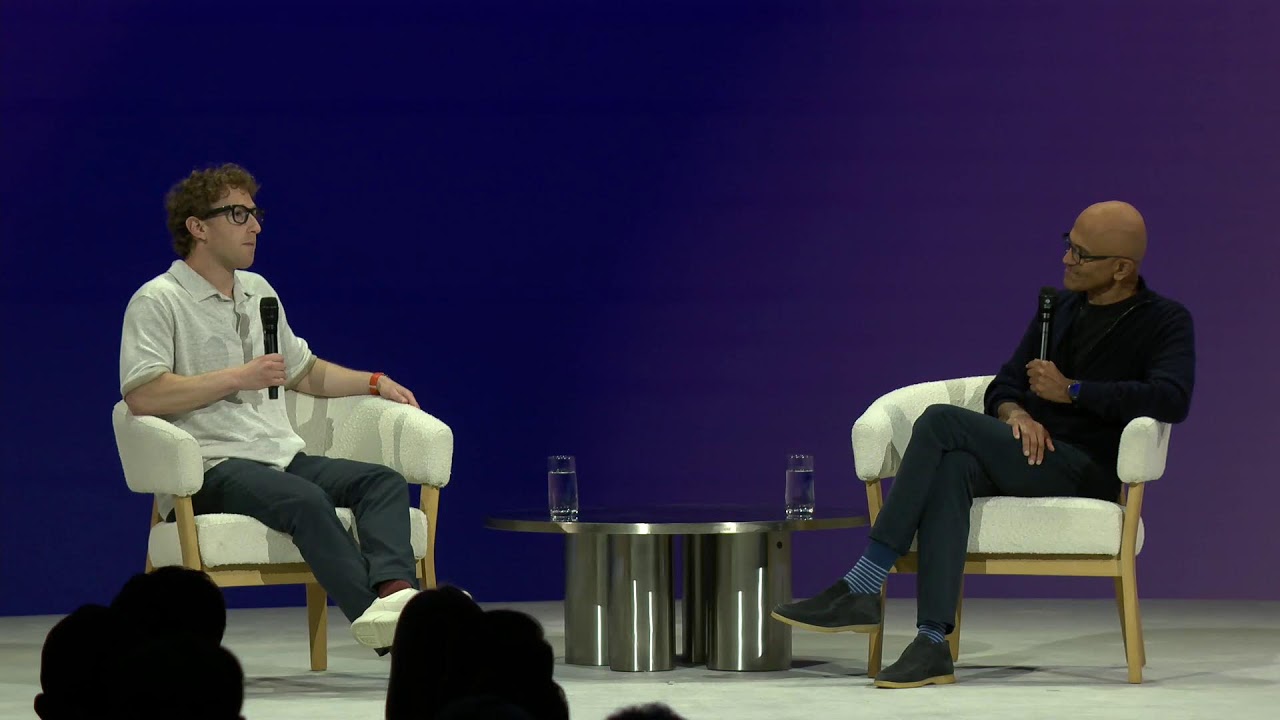
The intersection of artificial intelligence (AI) and software development is reshaping the technological landscape, with industry titans like Mark Zuckerberg and Satya Nadella leading the charge. In a riveting discussion, the CEOs of Meta and Microsoft shared their visions for AI’s transformative role in coding, open-source ecosystems, and enterprise productivity. This article delves into their insights, exploring how AI is revolutionizing coding practices, enhancing developer efficiency, and paving the way for a new era of innovation. From AI-driven code generation to the power of open-source collaboration, we uncover the strategies and tools driving this seismic shift.
The Dawn of AI-Driven Software Development
AI is no longer a futuristic concept—it’s a cornerstone of modern software development. Zuckerberg and Nadella highlighted how AI is automating coding tasks, enabling developers to focus on higher-level problem-solving. At Meta, AI-generated code is becoming a significant portion of project repositories, particularly in controlled domains like feed and ad ranking experiments. Nadella echoed this sentiment, noting that Microsoft tracks AI code acceptance rates, which are steadily climbing, especially for languages like Python.
AI-Powered Code Completion and Beyond
AI tools like GitHub Copilot have evolved from simple code completion to sophisticated agents that streamline entire workflows. Nadella emphasized the integration of code completion, chat functionalities, and agentic workflows, which allow developers to assign tasks directly to AI agents. This trifecta enhances productivity by keeping developers in the flow, eliminating the need to scour external resources like Stack Overflow. At Microsoft, AI-driven code reviews are also gaining traction, with agents reviewing up to 30% of code in some projects.
Overcoming Language-Specific Challenges
While AI excels in languages like Python, Nadella acknowledged challenges with legacy languages like C++. Recent advancements have improved AI’s ability to handle complex C++ codebases, but greenfield projects—those built from scratch—see the highest AI adoption. This distinction underscores the need for AI tools to integrate seamlessly with existing developer workflows, particularly in large, established codebases.
The Role of Open-Source in AI Innovation
Open-source ecosystems are at the heart of AI’s rapid evolution, and both Zuckerberg and Nadella are staunch advocates for their importance. Meta’s Llama models and Microsoft’s Azure platform exemplify how open-source frameworks empower developers to build cutting-edge applications.
Meta’s Llama Ecosystem: A Catalyst for Innovation
Zuckerberg highlighted Meta’s commitment to the Llama ecosystem, a family of open-source AI models designed for efficiency and scalability. The Llama 3 model, with its 8 billion parameters, has become a favorite among developers for its balance of performance and resource efficiency. Meta’s focus on distillation—compressing large models into smaller, more practical versions—has made Llama accessible to a broader range of developers, from startups to individual hobbyists.
Microsoft’s Open-Source Journey with Azure
Nadella reflected on Microsoft’s transformation into an open-source champion under his leadership. Azure’s ability to support both open and closed models, such as PostgreSQL alongside SQL Server, mirrors its approach to AI. By offering robust infrastructure for open-source AI models, Azure enables enterprises to distill proprietary models while leveraging the flexibility of open-source frameworks. This dual approach ensures that Microsoft meets customers where they are, fostering interoperability and innovation.
The Power of Distillation in Open-Source AI
Distillation, the process of compressing large AI models into smaller, task-specific versions, emerged as a key theme. Zuckerberg described Meta’s Maverick model, which achieves near-comparable performance to larger models like DeepSeek while excelling in multimodal tasks. Nadella envisioned a “distillation factory” on Azure, where developers can create tailored models for specific workflows, such as Microsoft 365 tenant-specific agents. This democratization of AI model creation is poised to accelerate application development across industries.
Transforming Enterprise Productivity with AI
AI’s impact extends beyond coding, revolutionizing enterprise productivity by automating repetitive tasks and enhancing decision-making. Nadella shared compelling examples of how AI is reshaping workflows at Microsoft and beyond.
Redefining Knowledge Work
Nadella recounted how AI has transformed his preparation for customer meetings. Previously reliant on manually compiled reports, he now uses Copilot to aggregate real-time insights from internal CRMs, web data, and proprietary sources. This shift eliminates the need for intermediaries, allowing executives to access critical information instantly. Similar transformations are occurring in sales, marketing, and customer service, where AI streamlines content creation and collateral development.
The Evolution of Developer Tools
Microsoft’s GitHub Copilot is a prime example of how AI is redefining developer tools. By integrating code completion, chat, and agentic workflows, Copilot empowers developers to tackle complex tasks with ease. Nadella emphasized the importance of embedding these tools within existing repositories, ensuring compatibility with large codebases. This integration is critical for realizing productivity gains, as most developers work on iterative projects rather than greenfield applications.
AI as a New Factor of Production
Nadella’s vision for AI extends to its role as a new factor of production, akin to electricity during the Industrial Revolution. He argued that for AI to drive significant GDP growth—potentially enabling developed economies to grow at 10% annually—it must deliver productivity gains across all sectors, from healthcare to retail. This requires not only technological advancements but also systemic changes in management and workflows, a process Nadella likened to the adoption of electricity in factories.
The Future of AI and Coding: A Developer-Centric Vision
Looking ahead, Zuckerberg and Nadella shared optimistic visions for AI’s role in empowering developers and transforming industries. Their insights highlight the tools, strategies, and philosophies shaping the future of software development.
AI as a Developer’s Ally
Zuckerberg predicted that engineers will increasingly resemble tech leads, overseeing armies of AI agents that handle routine coding tasks. This shift will elevate developers’ roles, allowing them to focus on strategic decision-making and innovation. Meta’s investment in AI-driven Llama development underscores this vision, with plans to have AI contribute to 50% of coding tasks within the next year.
Building Infrastructure for AI Agents
Nadella emphasized the need to reconceptualize developer tools and infrastructure for AI agents. GitHub repositories, for instance, may evolve to support agent-specific sandboxes and workflows. Azure’s Foundry platform is designed to package essential services—search, memory, safety, and evaluation—into frameworks that accelerate application development. This infrastructure will enable developers to create sophisticated, multimodal applications with ease.
Blurring the Lines Between Applications and Documents
One of Nadella’s most intriguing predictions was the dissolution of traditional boundaries between documents, applications, and websites. AI-powered tools like Copilot and Meta’s chat platforms allow users to start with high-level intents and create “living artifacts” that evolve into applications. This malleability, driven by AI’s ability to persist and transform data structures, promises to redefine how software is created and consumed.
Navigating the Hype: A Rational Approach to AI Investment
Amid the hype surrounding AI, Nadella’s pragmatic approach stands out. He cautioned that realizing AI’s full potential will take years, requiring sustained investment and systemic change. Drawing parallels to historical technological shifts, he noted that electricity took decades to transform factories, and AI will likely follow a similar trajectory.
Measuring AI’s Impact
To gauge AI’s progress, Nadella suggested focusing on productivity gains across industries and their reflection in GDP growth. Over the next three to seven years, he expects AI to drive significant improvements in healthcare, retail, and knowledge work, provided organizations adapt their workflows. This long-term perspective underscores the need for patience and strategic planning in AI adoption.
Balancing Innovation and Stability
Zuckerberg and Nadella both emphasized the importance of balancing innovation with stability. Meta’s focus on efficient, scalable models like Llama ensures that AI remains accessible, while Microsoft’s Azure provides robust infrastructure for both open and closed models. This balanced approach enables developers to experiment with cutting-edge technologies while maintaining reliable, enterprise-grade performance.
Challenges and Opportunities in AI Adoption
While AI offers immense potential, its adoption is not without challenges. Zuckerberg and Nadella highlighted several key areas that developers and organizations must address to fully harness AI’s capabilities.
Integrating AI into Existing Workflows
One of the biggest hurdles is integrating AI tools into existing developer workflows. Nadella stressed that productivity gains depend on seamless integration with large codebases and established processes. Microsoft’s investment in GitHub Copilot reflects this priority, ensuring that AI enhances rather than disrupts developer productivity.
Scaling AI Infrastructure
Zuckerberg noted that operating large-scale AI models, like Meta’s Behemoth, requires significant infrastructure. Distilling these models into smaller, more accessible versions is critical for democratizing AI, but it demands sophisticated tooling and expertise. Microsoft’s Azure is well-positioned to address this challenge, offering cloud-based solutions that lower barriers to entry.
Keeping Pace with Rapid Advancements
The rapid pace of AI advancements poses both an opportunity and a challenge. Nadella highlighted the need for developers to quickly adapt to new models and samples, as fine-tuning for one model may become obsolete with the next release. Azure’s tooling aims to streamline this process, enabling developers to stay agile in a fast-moving landscape.
The Developer’s Role in Shaping AI’s Future
Zuckerberg and Nadella concluded their discussion with a call to action for developers, emphasizing their critical role in realizing AI’s potential. By leveraging open-source ecosystems, embracing AI-driven tools, and rethinking traditional workflows, developers can drive transformative change across industries.
Fearless Innovation
Nadella’s optimism is rooted in software’s malleability, which he described as the most powerful resource for solving complex problems. He urged developers to approach AI fearlessly, experimenting with new tools and methodologies to address real-world challenges, from IT backlogs to global issues.
Collaboration and Community
The open-source community is a cornerstone of AI innovation, and both CEOs encouraged developers to contribute to and benefit from this ecosystem. Meta’s Llama and Microsoft’s Azure provide platforms for collaboration, enabling developers to share knowledge, refine models, and build applications that push the boundaries of what’s possible.
A Vision for the Future
As AI continues to evolve, developers will play a pivotal role in shaping its trajectory. Zuckerberg’s vision of engineers as tech leads, supported by AI agents, and Nadella’s dream of a unified, malleable software ecosystem highlight the transformative potential of AI-driven development. By embracing these opportunities, developers can create a future where technology empowers individuals and organizations alike
The artificial intelligence (AI) revolution is not just a buzzword—it’s a seismic shift transforming industries, redefining workflows, and unlocking unprecedented productivity. From the early days of client-server computing to the rise of the web, mobile, and cloud, technology has continuously evolved, but AI represents a new frontier. This article explores how AI is reshaping the technological and business landscapes, drawing insights from industry leaders and examining the tools, infrastructure, and strategies driving this transformation. With a focus on enterprise applications, open-source ecosystems, and developer empowerment, we’ll uncover why AI is the catalyst for the next era of innovation.
The Evolution of Technology: AI as the Next Platform Shift
From Client-Server to AI: A Historical Perspective
Technology evolves in waves, each redefining how we interact with systems and data. The journey began with client-server architectures, which gave way to the web, mobile, and cloud eras. Each shift required a rethinking of the technology stack, from hardware to software, and AI is no exception. Industry pioneers recall the birth of client-server systems in the early 1990s, followed by the web’s explosion, which transcended its Windows roots to become a global platform. Mobile and cloud computing further democratized access, but AI introduces a new paradigm—one where intelligence is embedded in every layer of the stack.
AI’s impact mirrors these past transitions but operates at an accelerated pace. Unlike the web, which took years to mature, AI advancements are compounding rapidly, driven by innovations in hardware, software, and model architectures. This rapid evolution challenges businesses to adapt quickly, as each platform shift redefines competitive advantages and customer expectations.
Why AI is Different: The Power of Compounding S-Curves
What sets AI apart is its ability to deliver compounding improvements across multiple dimensions. Historically, Moore’s Law drove exponential growth in computing power, but as it slowed, many feared a plateau in innovation. AI has shattered this concern, ushering in a “hyperdrive Moore’s Law” where advancements in chips, system software, model optimizations, and even prompt caching deliver 10x improvements every six to twelve months. These compounding S-curves—layered innovations in hardware, algorithms, and infrastructure—enable AI models to become more efficient, intelligent, and accessible.
For businesses, this means skyrocketing consumption of AI-driven services. As models become more efficient and costs drop, enterprises are deploying AI across diverse applications, from customer service to supply chain management. The result is a virtuous cycle: enhanced capabilities fuel adoption, which drives further innovation.
AI in the Enterprise: Transforming Workflows and Productivity
The Rise of AI-Driven Workflows
Enterprises are at the forefront of AI adoption, leveraging its capabilities to streamline operations and boost productivity. Traditional workflows, such as preparing for customer meetings, have remained static for decades, relying on manual reports and document sharing. AI disrupts this status quo by delivering real-time insights from internal databases, CRMs, and the web. For example, sales teams can now access comprehensive customer profiles instantly, eliminating the need for pre-meeting prep documents.
This transformation extends beyond sales. In software development, AI-powered tools like GitHub Copilot have evolved from simple code completion to agentic workflows, where developers assign tasks to AI agents that integrate seamlessly with existing repositories. These agents handle code reviews, suggest optimizations, and even generate pull requests, allowing developers to focus on higher-level tasks.
Measuring Productivity Gains
Quantifying AI’s impact is critical for enterprises. Inside leading tech companies, AI contributes to 20-30% of code written in certain projects, with acceptance rates for AI-generated code steadily increasing. Languages like Python benefit most, while legacy languages like C++ are catching up as AI tools improve. Beyond coding, AI enhances knowledge work by automating tasks like content creation, marketing collateral development, and customer service interactions.
The productivity gains are tangible but require integration with existing workflows. Enterprises must adapt their processes to leverage AI effectively, much like factories restructured to harness electricity in the early 20th century. This adaptation involves not just technology but also management and cultural shifts to embrace AI as a collaborative partner.
The Role of Multimodal AI
Multimodal AI, which processes text, images, and other data types, is a game-changer for enterprises. Models like Maverick, which excel in both text and multimodal tasks, demonstrate how smaller, distilled models can rival larger counterparts in performance. By combining text analysis with image processing, multimodal AI enables applications like automated quality control in manufacturing or enhanced customer support through visual troubleshooting. As enterprises adopt these models, they unlock new use cases that drive efficiency and innovation.
The Open-Source Ecosystem: Fueling AI Innovation
The Importance of Open Source in AI
Open source has been a cornerstone of technological progress, and AI is no exception. Companies like Microsoft, once known for proprietary systems, now embrace open source to meet customer demands for interoperability and flexibility. Open-source AI models, such as Llama, offer enterprises the ability to customize and distill models to fit specific use cases, preserving intellectual property and reducing dependency on closed systems.
The open-source ecosystem fosters innovation by enabling developers to mix and match models, tools, and infrastructure. For example, enterprises can deploy open-source models alongside closed-source frontier models on platforms like Azure, which supports both Linux and Windows, PostgreSQL and SQL Server. This flexibility ensures that businesses can tailor AI solutions to their unique needs, driving adoption and experimentation.
The Distillation Factory: Democratizing AI Development
One of the most transformative concepts in AI is the “distillation factory,” a framework for creating smaller, task-specific models from larger ones. Distillation allows enterprises to harness the intelligence of massive models like Llama or Behemoth while deploying them in cost-effective, efficient forms. For instance, a distilled model tailored for a Microsoft 365 tenant could power a custom workflow within Copilot, enhancing productivity without requiring extensive infrastructure.
Cloud platforms like Azure are pivotal in making distillation accessible. By providing tools and services to streamline the process, these platforms lower barriers for developers, enabling even small organizations to create bespoke AI models. The ability to distill models rapidly and adapt them to new data or requirements is crucial in a fast-moving AI landscape, where agility is a competitive advantage.
The Future of Open Source: Hybrid and Multimodel Applications
The future of open-source AI lies in hybrid and multimodel applications. Developers are moving beyond single-model reliance to orchestrate workflows involving multiple models, each optimized for specific tasks. Protocols like MCP and A2N facilitate communication between agents, enabling deterministic workflows that combine the strengths of different models. Open source plays a critical role here, providing the flexibility to experiment and innovate without proprietary constraints.
Hybrid models, combining dense and thinking architectures, are also gaining traction. These models balance latency and depth, allowing developers to tailor performance to specific applications, from real-time chatbots to complex analytical tools. As open-source communities continue to refine these approaches, the ecosystem will become richer and more accessible, empowering developers worldwide.
Infrastructure for the AI Era: Building the Foundation
The Role of Cloud Infrastructure
AI workloads demand robust infrastructure, encompassing compute, storage, networking, and specialized AI accelerators. Cloud platforms like Azure are investing heavily in building world-class infrastructure-as-a-service (IaaS) to support the next generation of AI agents. Unlike traditional workloads, AI requires optimized storage systems for data-parallel synchronous tasks, distinct from earlier systems like Hadoop.
This infrastructure is the backbone of AI development, enabling enterprises to scale applications efficiently. By abstracting complexity, cloud providers allow developers to focus on building innovative solutions rather than managing hardware. This democratization of infrastructure is critical for widespread AI adoption, particularly for smaller organizations lacking in-house expertise.
App Servers and Tooling: Simplifying Development
Beyond raw infrastructure, AI development requires sophisticated app servers and tooling. Platforms like Foundry package essential services—search, memory, safety, and evaluation—into frameworks that developers can easily integrate. These tools streamline the creation of AI-driven applications, from chatbots to enterprise workflows, by providing pre-built components and APIs.
GitHub Copilot exemplifies this trend, offering a suite of tools that enhance developer productivity. From code completion to agentic workflows, Copilot integrates seamlessly with existing repositories, allowing developers to work within familiar environments. As these tools evolve, they will become the foundation for AI-driven development, enabling engineers to act as tech leads overseeing armies of AI agents.
The Developer Experience: Empowering the Next Generation
For developers entering the AI era, the landscape is both exciting and complex. Choosing the right tools is critical, and platforms like Azure and GitHub aim to differentiate by offering comprehensive ecosystems. These platforms provide not just infrastructure but also community-driven resources, tutorials, and integrations that simplify the learning curve.
Developers today are less constrained by traditional boundaries between documents, applications, and websites. AI enables a fluid transition from high-level intent to living artifacts—applications that evolve dynamically. This malleability, driven by tools like Copilot and open-source models, empowers developers to create innovative solutions that transcend legacy categories.
AI’s Long-Term Impact: Productivity and Economic Growth
The Productivity Promise
AI’s ultimate promise is to drive massive productivity gains across industries. By automating repetitive tasks, enhancing decision-making, and enabling new workflows, AI has the potential to transform healthcare, retail, manufacturing, and knowledge work. However, realizing this potential requires more than technology—it demands systemic changes in how organizations operate.
Historical analogies, like the adoption of electricity, highlight the need for patience. While electricity took decades to reshape factories, AI’s impact is expected to materialize faster, driven by rapid technological advancements. Enterprises must invest in training, process redesign, and cultural shifts to fully harness AI’s capabilities.
Economic Implications: A New Factor of Production
The global economy faces pressing challenges, from aging populations to resource constraints. AI offers a new factor of production, enabling growth rates akin to those seen during the Industrial Revolution. Achieving 10% GDP growth in developed economies—a lofty goal—requires AI to deliver productivity gains across all sectors. This transformation will unfold over years, not months, as businesses integrate AI into their core operations.
To track progress, economists and business leaders should monitor metrics like AI adoption rates, productivity per worker, and sectoral GDP contributions. Over the next three to seven years, expect incremental gains as enterprises refine AI implementations, followed by exponential growth as workflows and business models fully align with AI’s potential.
Balancing Hype and Reality
AI is surrounded by hype, but its long-term impact depends on grounded investments and realistic expectations. Industry leaders advocate for a rational approach, focusing on tangible outcomes rather than speculative promises. By prioritizing interoperability, open-source collaboration, and developer empowerment, businesses can navigate the hype cycle and build sustainable AI strategies.
The Developer’s Role: Building the Future
From Engineers to Tech Leads
The role of developers is evolving. In the AI era, engineers are becoming tech leads, orchestrating teams of AI agents to tackle complex tasks. This shift requires new skills, from prompt engineering to model orchestration, as well as a deep understanding of infrastructure and tooling. Platforms like GitHub and Azure are equipping developers with the resources to thrive in this new paradigm, fostering a culture of fearless innovation.
Solving Real-World Problems
The true measure of AI’s success lies in its ability to address real-world challenges. From reducing IT backlogs to solving societal issues like healthcare access or climate change, AI offers a malleable resource for innovation. Developers are at the heart of this mission, leveraging open-source models, cloud infrastructure, and collaborative ecosystems to build solutions that matter.
A Call to Action
The AI revolution is a call to action for developers, enterprises, and society. By embracing AI’s potential, we can create a future where technology amplifies human ingenuity. Whether it’s distilling models, orchestrating multimodel workflows, or reimagining business processes, the opportunities are boundless. As Bob Dylan once said, “You’re either busy being born or busy dying.” In the AI era, let’s choose to be born anew, building a world where innovation knows no limits.
Conclusion: The Dawn of a New Era
The AI revolution is reshaping technology and business at an unprecedented pace. From enterprise workflows to open-source ecosystems, AI is unlocking new possibilities for productivity, innovation, and economic growth. By investing in infrastructure, embracing open source, and empowering developers, we can harness AI’s full potential. The journey has just begun, but the destination—a world transformed by intelligent systems—is within reach. Let’s seize this moment and build the future together.