
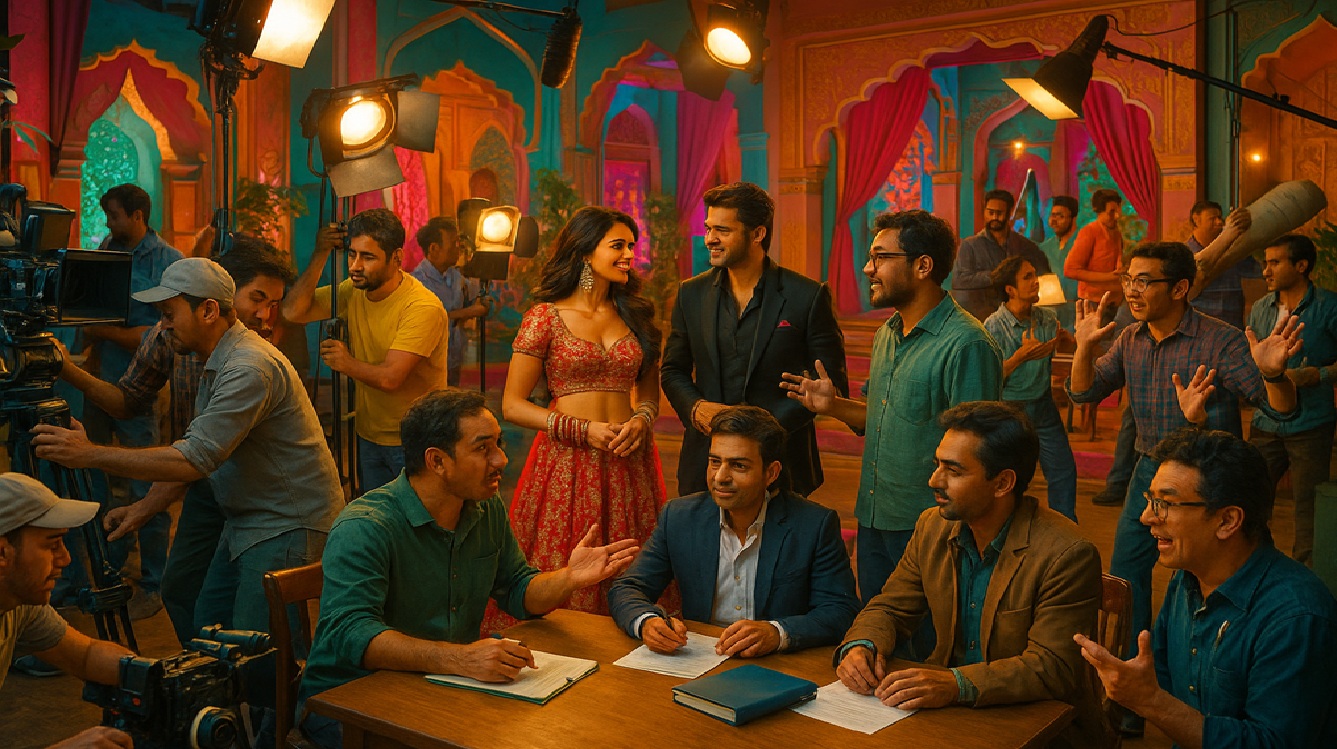
In an era where Bollywood’s glittering facade increasingly crumbles under public scrutiny, Aryan Khan’s directorial debut ‘The Ba*ds of Bollywood’** arrives as a brutal mirror reflecting the industry’s most controversial truths. This Netflix series doesn’t just entertain—it exposes the systemic rot that has plagued Indian cinema for decades, from rampant nepotism to underworld connections, fake PR stunts to manufactured friendships that dissolve faster than box office collections.
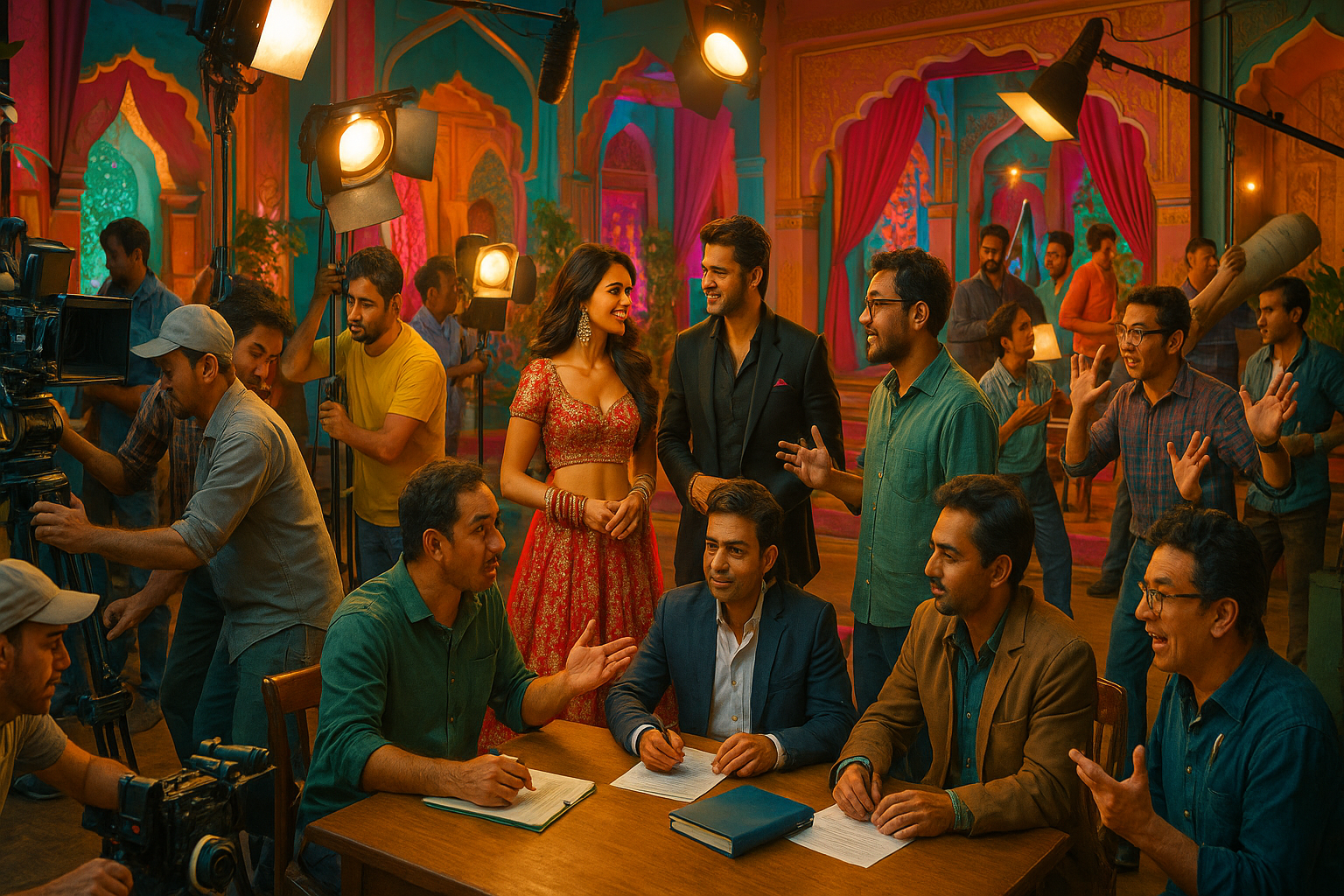
The chaotic reality behind Bollywood’s glittering facade
The seven-episode satirical drama, streaming since September 18, 2025, represents more than just another industry insider’s perspective. It’s a fearless dissection of everything audiences love to hate about Bollywood—the very elements that simultaneously repel and fascinate millions of viewers who can’t look away from the beautiful mess that is Indian cinema.
The Filmy Circus That Never Ends: Why We’re Addicted to Bollywood Drama
Bollywood thrives on chaos, and audiences have developed an insatiable appetite for the industry’s behind-the-scenes drama. The Ba*ds of Bollywood** capitalizes on this voyeuristic fascination by presenting what many consider the most honest portrayal of Bollywood’s underbelly ever attempted by an industry insider.
The series follows Aasmaan Singh (Lakshya), an ambitious outsider navigating the treacherous waters of Indian cinema, where success depends less on talent and more on political maneuvering, strategic alliances, and the ability to survive systematic exploitation. His journey becomes a metaphor for every aspiring artist who discovers that Bollywood’s golden gates open not through merit, but through connections, compromises, and calculated risks.
Aryan Khan’s creative vision demonstrates remarkable self-awareness for someone born into Bollywood royalty. Rather than sanitizing the industry that birthed his celebrity status, he embraces the mess, the hypocrisy, and the beautiful toxicity that defines contemporary Indian cinema. This approach transforms what could have been another privileged insider’s vanity project into a genuinely subversive commentary on the system that created him.news18+1
The show’s brilliance lies in its understanding that audiences don’t want sanitized versions of their favorite stars—they crave the messy, complicated, sometimes ugly truth behind the manufactured perfection. In an age of social media transparency, viewers have grown sophisticated enough to distinguish between authentic storytelling and corporate-sponsored mythology.
Aryan Khan’s Debut: A Love Letter to Bollywood’s Beautiful Mess
Shah Rukh Khan’s son could have played it safe with his directorial debut, choosing conventional crowd-pleasing narratives that wouldn’t ruffle industry feathers. Instead, Aryan Khan delivers a bold, unapologetic satire that doesn’t hesitate to bite the hand that feeds him.
The series opens with immediate provocations: digs at enforcement officials, tongue-in-cheek portrayals of paid paparazzi, and Karan Johar casually calling himself a “movie mafia” while claiming affection for outsiders. These aren’t accidental references—they’re calculated provocations designed to establish the show’s fearless tone from the opening moments.
Aryan’s directorial confidence emerges through his willingness to address controversial topics that even seasoned filmmakers avoid. The series tackles nepotism head-on, features Shah Rukh Khan dubbed the “Baadshah of the Hour,” shows Salman Khan joking that fatherhood is his greatest fear, and reimagines Emraan Hashmi as an intimacy coach. These characterizations blur the lines between fiction and reality so effectively that viewers question where satire ends and truth begins.
The show’s self-referential humor extends to Aryan poking fun at himself, with Arjun Kapoor joining in on the self-mockery. This meta-theatrical approach acknowledges the inherent absurdity of a star kid creating content about nepotism while simultaneously demonstrating the complex relationship between privilege and artistic expression.
Co-created with Bilal Siddiqi and Manav Chauhan, the series benefits from collaborative storytelling that balances insider knowledge with outsider perspectives. This combination prevents the show from becoming either too insular or too detached from the realities it attempts to expose.
The “Bads of Bollywood” Everyone Loves to Hate
Nepotism: Beyond the Buzzword Into Systemic Privilege
The Ba*ds of Bollywood** addresses nepotism not as an abstract concept but as a lived reality that shapes every aspect of career trajectories in Indian cinema. The series demonstrates how privilege manifests not just in casting decisions, but in access to top-tier directors, substantial PR machinery, and multiple chances to prove oneself.
The nepotism debate has evolved significantly in 2025, with audiences becoming more sophisticated in their understanding of how systemic advantages operate. The series captures this evolution by showing how star kids continue to receive opportunities that outsiders can only dream of, while simultaneously facing unique pressures and expectations that come with famous surnames.
Recent industry developments show that nepotism alone doesn’t guarantee success. Several star kids have failed to sustain careers despite well-funded debuts, while self-made talents like Rajkummar Rao, Pankaj Tripathi, and Triptii Dimri have proven that exceptional performances and audience connection can create lasting careers. OTT platforms have democratized opportunities, providing talented newcomers with platforms to showcase abilities without the baggage of surnames.
The series explores the psychological impact of growing up in Bollywood families, where children become celebrities before their debuts and face constant comparisons to legendary parents. This generational pressure creates its own form of trauma, even as it provides undeniable advantages in career development.
PR Manipulations and Manufactured Realities
Bollywood’s relationship with publicity has become increasingly sophisticated and ethically questionable. The series exposes how fake stories are routinely planted in media outlets to generate buzz around upcoming films, regardless of truth or consequences for the individuals involved.
Abhay Deol’s revelations about ‘Shanghai’ provide a real-world example of how filmmakers deliberately encourage negative publicity to generate attention. Directors literally tell journalists to write false, negative stories because controversy gets more eyeballs. These manufactured controversies often have lasting consequences for the individuals involved, creating permanent false narratives that become part of public perception.
Recent publicity stunts have demonstrated the extreme lengths celebrities will pursue for attention:
- Poonam Pandey’s fake death hoax for cervical cancer awareness backfired spectacularly, leading to contract terminations and industry backlash
- Kajol’s mysterious “break from social media” turned out to be promotion for her web series
- Dulquer Salman’s Instagram post about sleeplessness was revealed as planned marketing for phone brand iQOO
- Snoop Dogg’s “quitting smoke” announcement was eventually disclosed as corporate marketing
These incidents reveal the calculating nature of celebrity image management, where authentic personal struggles are manufactured for commercial gain. The erosion of trust between celebrities and audiences reflects broader cultural shifts toward skepticism about manufactured celebrity personas.
Superficial Friendships and Strategic Backstabbing
Bollywood friendships operate according to transactional principles rather than genuine emotional connections. The series explores how relationships form and dissolve based on career trajectories, box office performance, and strategic advantages.
Industry insiders acknowledge that most celebrity friendships are professionally motivated. Actors maintain cordial relationships while actively competing for the same roles, endorsements, and media attention. Social media has intensified this performance, requiring constant public displays of affection even when private relationships are strained or nonexistent.
The culture of strategic networking means that successful actors surround themselves with individuals who can advance their careers rather than provide genuine companionship. This creates an environment of perpetual suspicion, where every interaction is evaluated for potential benefit or threat.
Veteran actors often describe feeling isolated despite being surrounded by hundreds of industry colleagues. The pressure to maintain public facades prevents the development of authentic relationships, contributing to mental health challenges that are rarely discussed publicly.
Plastic Surgery Politics and Beauty Standards Manipulation
The Ba*ds of Bollywood** addresses the industry’s complicated relationship with physical appearance, where natural aging is treated as career death and cosmetic enhancement is simultaneously expected and denied. The series explores how appearance-related pressures affect both male and female performers, though women face disproportionately intense scrutiny.
Industry standards have evolved to normalize extensive cosmetic procedures while maintaining the fiction of natural beauty. Actors routinely undergo multiple surgeries but deny modifications when questioned by media, creating unrealistic beauty standards for audiences and contributing to body dysmorphia among aspiring performers.
The economic implications of appearance-related expenses represent significant financial burdens for actors, particularly those from non-affluent backgrounds. Maintenance of competitive appearance requires ongoing investment in procedures, treatments, and products that can consume substantial portions of earnings.
Exclusive Contracts and Replacement Culture
The series explores how contractual obligations create virtual imprisonment for successful actors, who forfeit creative control and personal autonomy in exchange for financial security and career advancement. Exclusive arrangements often prevent actors from working with competing production houses, limiting artistic growth and reducing negotiating power.
Producer-actor relationships frequently become exploitative, with successful performers essentially owned by production companies that control their career trajectories. Breach of contract consequences can include industry blacklisting, making resistance to exploitative terms professionally suicidal.
The replacement culture means that even successful actors live in constant fear of being substituted by younger, cheaper, or more compliant alternatives. This insecurity drives performers to accept increasingly unfavorable terms and prevents collective action against exploitative industry practices.

The manufactured glamour of Bollywood award ceremonies
Characters as Industry Archetypes: The Faces Behind the Facades
Lakshya’s Bollywood Hero: The Eternal Outsider’s Struggle
Lakshya Lalwani’s portrayal of Aasmaan Singh represents every aspiring actor who arrives in Mumbai with dreams, determination, and dangerous naivety about industry realities. His character embodies the classic outsider archetype: talented, hardworking, and completely unprepared for the political machinations that determine success in Bollywood.t
Aasmaan’s journey from stuntman to star illustrates how genuine talent can create opportunities, but also reveals how quickly success can be manipulated, controlled, and ultimately destroyed by industry power structures. His willingness to risk physical safety for career advancement reflects the desperate measures that outsiders employ to distinguish themselves from privileged competitors.
The character’s romantic entanglement with Karishma Talwar serves as more than typical film industry romance—it represents the collision between merit-based success and inherited privilege. Their relationship becomes a battleground for broader questions about industry access, artistic authenticity, and the price of ambition.
Aasmaan’s evolution throughout the series demonstrates how the industry corrupts even well-intentioned individuals, forcing moral compromises and strategic calculations that fundamentally alter personal values and relationships. His transformation reflects the broader question: Can anyone maintain integrity while achieving success in Bollywood’s current system
Bobby Deol’s Symbolic Comeback: Legacy, Redemption, and Reinvention
Bobby Deol’s casting as Ajay Talwar represents one of the series’ most strategic decisions, utilizing his real-life career resurrection to explore themes of fading stardom, family legacy, and professional redemption. His character embodies the veteran actor archetype: protective of family, suspicious of newcomers, and determined to maintain relevance in an industry that constantly prioritizes youth over experience.
Deol’s recent career renaissance through projects like ‘Animal’ and ‘Aashram’ provides authentic depth to his portrayal of an established star navigating contemporary industry challenges. His ability to reinvent himself professionally mirrors his character’s struggle to adapt to changing industry dynamics while protecting his daughter’s career trajectory.
The nepotism irony in Deol’s casting adds layers of complexity: as Dharmendra’s son, he experienced industry advantages but also faced the pressure of living up to legendary expectations. His perspective on privilege and merit brings nuanced understanding to discussions about inherited advantages and earned success.
Ajay Talwar’s protective instincts toward his daughter reflect broader industry paternalism, where established figures attempt to control younger generation career choices while claiming to act in their best interests. This paternalistic control often stifles artistic growth and perpetuates existing power structures.
Rajat Bedi: The “Almost Recognized” Face and Fading Stardom
Rajat Bedi’s inclusion represents the industry’s most tragic archetype: actors who achieve modest success but never quite break through to stardom, spending decades navigating the uncomfortable space between recognition and anonymity. His character embodies the existential anxiety that haunts most Bollywood careers—the fear of being forgotten, replaced, or relegated to irrelevance.
The “almost famous” category includes hundreds of actors who work consistently but never achieve the security of genuine stardom. These performers often possess significant talent but lack the combination of timing, luck, and strategic positioning required for breakthrough success.
Bedi’s career trajectory illustrates how industry success depends on factors beyond individual merit: market timing, production house relationships, audience preferences, and pure chance often determine career outcomes more than acting ability. His continued presence in industry projects demonstrates the persistence required for long-term survival even without blockbuster success.
The psychological impact of sustained moderate success creates unique challenges: enough recognition to maintain hope but insufficient security to feel confident about future prospects. This emotional limbo affects personal relationships, financial planning, and mental health in ways rarely acknowledged publicly.
Celebrity Cameos: The Psychology of Star Power Marketing
Shah Rukh Khan to Salman: Strategic Self-Presentation
The series features an impressive array of celebrity cameos—Shah Rukh Khan, Salman Khan, Aamir Khan, Ranveer Singh, Ranbir Kapoor, Karan Johar, and others—but these appearances serve deeper purposes than simple fan service or nepotistic networking.
Each cameo functions as commentary on the celebrity’s public persona and industry position. Salman Khan’s joke about fatherhood being his greatest fear references decades of speculation about his personal life. Shah Rukh Khan being dubbed “Baadshah of the Hour” acknowledges both his legendary status and contemporary relevance challenges.
The marketing psychology behind celebrity cameos in OTT content reflects changing audience consumption patterns. Streaming platforms depend on viral moments and social media engagement, making strategic celebrity appearances more valuable than traditional promotional campaigns.
Cameo performances also serve as industry networking opportunities, allowing established stars to support emerging talent while maintaining relevance in contemporary entertainment conversations. For Aryan Khan, these appearances provide credibility and industry legitimacy that enhances his directorial debut’s reception.
The self-referential nature of these cameos creates meta-theatrical elements that blur boundaries between fiction and reality. Audiences enjoy the insider knowledge and authentic industry interactions that traditional fictional narratives cannot provide.
Karan Johar’s “Movie Mafia” Admission: Truth in Jest
Karan Johar’s appearance includes his casual self-identification as “movie mafia” while simultaneously claiming affection for outsiders. This seemingly contradictory statement captures the industry’s fundamental hypocrisy: acknowledging systemic problems while continuing to perpetuate them.
Johar’s complex industry position as both advocate for new talent and architect of nepotistic practices reflects broader contradictions within Bollywood power structures. His Dharma Productions has launched numerous star kids while also providing opportunities for outsiders, creating complicated legacy regarding industry access and opportunity distribution.
The “movie mafia” terminology references long-standing criticism of industry gatekeepers who control access to major projects, funding, and career opportunities. Johar’s willing adoption of this label demonstrates either remarkable self-awareness or strategic co-option of criticism through humor.
His cameo performance functions as both confession and deflection, acknowledging industry problems while maintaining plausible deniability through comedic framing. This approach allows continued operation within existing power structures while appearing responsive to public criticism.
What Works: Humor, Relatability, and Heart in Industry Satire
Tongue-in-Cheek Writing Excellence
The Ba*ds of Bollywood** succeeds primarily through sophisticated satirical writing that balances sharp criticism with genuine affection for the industry it’s examining. The dialogue contains multiple layers of meaning, operating simultaneously as entertainment, social commentary, and industry insider knowledge.
Aryan Khan’s writing demonstrates remarkable understanding of contemporary cultural conversations about Bollywood’s role in Indian society. References to pan masala endorsements, South industry competition, and review system dynamics reflect genuine awareness of current industry challenges and public perceptions.
The series avoids the trap of becoming either completely cynical or unrealistically optimistic about industry reform possibilities. Instead, it presents a nuanced view that acknowledges both problems and the human complexity of individuals operating within flawed systems.
Satirical elements work because they emerge from authentic industry experience rather than external observation or theoretical criticism. Aryan’s insider perspective provides credibility and specificity that makes the humor both funnier and more meaningful.
The Human Side of Stars: Vulnerability Behind Glamour
One of the series’ greatest strengths lies in its portrayal of celebrities as complex human beings rather than one-dimensional symbols of success or failure. Characters struggle with genuine emotions, family pressures, financial anxieties, and personal insecurities that audiences can recognize and relate to.
The show demonstrates how industry pressures affect personal relationships, mental health, and authentic self-expression. Even successful characters face constant uncertainty about future prospects, public perception, and personal worth. These universal human concerns transcend the glamorous setting and create genuine emotional connections with viewers from all backgrounds.
Celebrity culture often creates distance between public figures and audiences through idealization or demonization. The Ba*ds of Bollywood** reduces this distance by showing how fame complicates rather than resolves fundamental human needs for acceptance, security, and meaningful relationships.
The series’ emotional authenticity prevents it from becoming purely cynical about industry dynamics. Characters make morally questionable choices but their motivations remain understandable within the context of systemic pressures and limited alternatives.
Tasteful Satire: Walking the Line Between Criticism and Respect
Successful satirical content requires delicate balance between pointed criticism and fundamental respect for the subjects being examined. The Ba*ds of Bollywood** achieves this balance by focusing on systemic problems rather than personal attacks on specific individuals.
The series critiques industry practices like nepotism, manufactured publicity, and exploitative contracts while acknowledging the talent and hard work of individuals operating within these systems. This approach allows for meaningful social commentary without descending into personal vindictiveness or mean-spirited mockery.
Aryan Khan’s position as industry insider provides unique authority for offering criticism while maintaining respect for the institution that shaped his family’s success. His willingness to acknowledge his own privilege while still pursuing artistic expression demonstrates the complexity of navigating inherited advantages responsibly.
The show’s satirical approach encourages reflection and discussion rather than simple condemnation or celebration. By presenting multiple perspectives on controversial industry practices, it allows audiences to form their own opinions based on more complete information about system complexities.
What Doesn’t Work: Structural Weaknesses in Paradise
Flimsy Love Story: Romance as Plot Device
The romantic subplot between Aasmaan and Karishma represents one of the series’ weaker elements, functioning more as convenient plot mechanism than authentic emotional relationship. Their chemistry feels manufactured and their conflicts seem artificial compared to the sharp authenticity of industry-related storylines.
Bollywood’s obsession with romantic narratives often forces love stories into contexts where they don’t organically belong. The Ba*ds of Bollywood** falls into this trap by treating romance as obligatory element rather than integral part of character development or thematic exploration.
The love story lacks stakes that feel meaningful compared to career-related conflicts. While professional struggles carry real consequences for characters’ futures and identities, the romantic elements feel disconnected from larger questions about integrity, ambition, and survival in the entertainment industry.
Future projects could benefit from either developing romance more thoroughly or focusing primarily on industry dynamics that clearly represent the series’ strength. The attempt to satisfy conventional narrative expectations dilutes the impact of more innovative and authentic elements.
Token Characters: Diversity Without Depth
Several supporting characters lack sufficient development to justify their inclusion beyond surface-level representation. Token characters serve demographic quotas without contributing meaningfully to narrative development or thematic exploration.
This approach reflects broader industry problems with superficial diversity efforts that check representation boxes without providing authentic, complex portrayals of different communities and perspectives. Meaningful inclusion requires character development that goes beyond stereotypical roles and engages with specific cultural experiences in substantive ways.
The series succeeds with main characters who receive adequate development time and complex motivations. Supporting characters could benefit from similar attention to authenticity and specificity rather than generic personality traits and predictable story functions.
Character diversity should enhance storytelling by providing different perspectives on central themes and conflicts rather than simply fulfilling demographic requirements. Authentic representation requires genuine understanding of diverse community experiences and their relationship to industry dynamics.
Product Placement Overkill: Commercial Intrusion
Excessive product placement disrupts narrative flow and undermines the series’ credibility as authentic industry critique. Obvious commercial integrations create cognitive dissonance for audiences seeking genuine insights about industry manipulation and commercial pressures.
The irony of criticizing industry commercialization while simultaneously engaging in aggressive product placement weakens the series’ moral authority and satirical effectiveness. This contradiction reflects broader challenges in creating independent content within commercial entertainment systems.
Product placement could be integrated more organically as part of the industry critique rather than simple revenue generation. Showing how commercial pressures corrupt artistic vision could become part of thematic exploration rather than distraction from narrative development.
Future productions could benefit from more subtle commercial integration or more explicit commentary on how financial pressures affect creative decisions in contemporary entertainment production.
Diluted Climax: Losing Narrative Focus
The series’ conclusion lacks the punch and clarity that earlier episodes demonstrate. Multiple plotlines converge without satisfying resolution of central conflicts and character arcs. The ending feels rushed and somewhat anticlimactic compared to the building tension and escalating stakes throughout earlier narrative development.
Satirical content requires strong conclusions that either resolve conflicts meaningfully or leave audiences with clear understanding of ongoing systemic problems. The Ba*ds of Bollywood’s** ending feels uncertain about its ultimate message regarding industry reform possibilities and individual responsibility within flawed systems.
Climax weakness often reflects uncertainty about target audience expectations and desired impact. The series successfully builds complex, realistic problems but struggles to provide conclusion that satisfies both entertainment requirements and social commentary goals.
Stronger endings could embrace either complete cynicism about industry reform possibilities or more hopeful vision of gradual positive change through individual integrity and collective awareness. The current ambiguous conclusion leaves audiences uncertain about the series’ ultimate perspective on questions it raises throughout earlier episodes.
Bollywood as Cultural Currency: Why We Love the Chaos
The “So-Bad-It’s-Good” Entertainment Phenomenon
Indian audiences have developed sophisticated appreciation for entertainment that acknowledges its own absurdity while delivering emotional satisfaction. The Ba*ds of Bollywood** taps into this cultural preference for self-aware content that doesn’t take itself too seriously despite addressing serious social issues.
Bollywood’s embrace of melodrama, coincidence, and larger-than-life characters reflects cultural values that prioritize emotional impact over realistic portrayal. Audiences enjoy the heightened reality because it provides escape from ordinary concerns while still engaging with recognizable human emotions and social dynamics.
The series succeeds by acknowledging these entertainment preferences while providing additional layers of social commentary and industry insight. Viewers can enjoy the drama and glamour while also engaging with deeper questions about power, privilege, and artistic integrity.
Contemporary audiences appreciate content that operates on multiple levels simultaneously, satisfying both entertainment desires and intellectual curiosity about industry dynamics and social issues. This sophistication allows for more complex satirical content that doesn’t sacrifice entertainment value for social commentary goals.
Gossip as Social Bonding: The Cultural Function of Industry Drama
Bollywood gossip serves important social functions beyond simple entertainment consumption. Discussing celebrity relationships, career rivalries, and industry scandals provides shared cultural currency that facilitates social bonding and community formation across diverse demographic groups.
The series recognizes that audiences don’t simply consume entertainment passively but use it as basis for social interaction, identity formation, and cultural participation. Industry drama provides safe topics for discussing broader questions about success, failure, morality, and social justice without direct personal consequences.
Celebrity culture allows audiences to explore complex emotions about ambition, jealousy, admiration, and disappointment through identification with public figures who experience extreme versions of universal human challenges. The heightened stakes in celebrity lives provide emotional intensity that enhances ordinary experience and creates memorable shared narratives.
The Ba*ds of Bollywood** succeeds by providing high-quality gossip that satisfies audience curiosity while also encouraging reflection on systemic issues that affect society beyond entertainment industry. This approach transforms passive consumption into active cultural participation and social consciousness.
Aryan Khan’s Future: Legacy, Pressure, and Artistic Evolution
Directorial Strengths in Debut Performance
Aryan Khan demonstrates remarkable confidence and artistic vision for a first-time director tackling such controversial subject matter. His ability to balance entertainment value with social commentary suggests genuine understanding of both audience expectations and cultural responsibility.
The series showcases his skills in managing complex ensemble casts, coordinating multiple storylines, and maintaining consistent satirical tone throughout seven-episode narrative arc. These technical competencies indicate potential for future projects that could further develop his artistic voice and social consciousness.
His willingness to address nepotism directly while acknowledging his own privileged position demonstrates maturity and self-awareness that many industry veterans lack. This honest approach could establish him as voice for industry reform rather than simple beneficiary of existing power structures.
The collaborative approach with co-creators Bilal Siddiqi and Manav Chauhan suggests understanding that successful creative projects require diverse perspectives and shared responsibility rather than single visionary leadership. This collaborative instinct could serve him well in future projects that require complex storytelling and sensitive social commentary.
Areas for Artistic Growth and Development
Future projects could benefit from stronger romantic subplot development or complete elimination of conventional love story requirements. Aryan’s strengths clearly lie in industry satire and social commentary rather than traditional romantic narrative construction.
Character development could be more evenly distributed across supporting cast members to avoid token representation and create more authentic ensemble storytelling. Meaningful diversity requires deeper understanding of different community experiences and their relationship to central themes.
Commercial pressures will likely increase with success of debut project, creating challenges for maintaining artistic integrity while satisfying industry expectations for profitability and mainstream appeal. Balancing commercial viability with social consciousness represents ongoing challenge for all contemporary filmmakers.
Technical skills will benefit from continued development through diverse project types that challenge different aspects of directorial capabilities. Genre experimentation could help establish broader artistic range and prevent typecasting as specialist in satirical content.
Industry Expectations and Legacy Pressure Management
Being Shah Rukh Khan’s son creates unique pressures for establishing independent artistic identity while honoring family legacy and managing public expectations. The success of his debut will likely intensify both opportunities and scrutiny for future creative decisions.
Industry expectations could push him toward safer, more conventional projects that capitalize on debut success without risking controversial subject matter or experimental storytelling approaches. Resisting these pressures will require strong artistic vision and support system that prioritizes long-term creative development over short-term commercial gains.
The nepotism debate will continue affecting reception of his work regardless of actual quality or artistic merit. Managing this ongoing scrutiny while continuing to produce authentic content represents significant challenge that few industry figures have successfully navigated.
His platform and influence could be used for positive industry change through continued willingness to address systemic problems and support emerging talent from diverse backgrounds. Using privilege responsibly could establish lasting legacy beyond simple career success or family name recognition.
The Madness We Can’t Look Away From: Why “Bads” Keep Us Hooked
The Ba*ds of Bollywood** succeeds because it understands a fundamental truth about human nature: we’re simultaneously attracted to and repelled by excess, corruption, and beautiful disaster. Bollywood’s combination of glamour and dysfunction provides perfect vehicle for exploring these contradictory impulses in safe, entertaining context.
The series recognizes that audiences don’t want sanitized versions of their entertainment industry—they want the mess, the complexity, and the gorgeous toxicity that makes for compelling storytelling. By embracing rather than denying industry problems, the show creates authentic connection with viewers who appreciate honesty over corporate mythology.
Bollywood’s “bads” remain fascinating because they represent extreme versions of problems that exist in all professional environments: favoritism, exploitation, manufactured relationships, and moral compromise for career advancement. The entertainment industry simply amplifies these universal human challenges to dramatic proportions that make for compelling viewing.
The series’ success demonstrates audience appetite for sophisticated satirical content that doesn’t condescend or oversimplify complex social issues. Viewers appreciate being treated as intelligent participants in cultural conversations rather than passive consumers of predetermined messages.
Aryan Khan’s debut establishes him as significant voice in contemporary Indian entertainment, capable of addressing serious social issues while maintaining humor, humanity, and hope for gradual positive change. The Ba*ds of Bollywood** proves that insider criticism can be both authentic and entertaining, providing blueprint for future satirical content that engages with rather than exploits systemic social problems.
The beautiful mess that is Bollywood will continue attracting audiences precisely because it reflects the beautiful mess that is human nature: ambitious, flawed, occasionally brilliant, frequently ridiculous, and always, ultimately, deeply, recognizably human. The Ba*ds of Bollywood** captures this essential truth with rare honesty, intelligence, and compassionate humor.