The Indian stock market remains a dynamic landscape, with companies across sectors making headlines due to their quarterly performances, strategic expansions, and corporate actions. In this comprehensive analysis, we dive into the latest updates from key players like Tech Mahindra, DLF, Railtel, LTTS, Angel One, Waaree Energies, Dixon Technologies, and Ashok Leyland. These updates, covering July 2025, provide critical insights for investors looking to stay ahead in the ever-evolving market. From IT giants to real estate and renewable energy, we explore the numbers, strategies, and market reactions shaping these companies’ trajectories.
Tech Mahindra’s Q1 2025: A Mixed Performance in the IT Sector
Tech Mahindra, a prominent player in India’s IT industry, recently announced its Q1 2025 results, sparking discussions among investors. The company reported a consolidated profit of ₹1,441 crore, reflecting a robust 34% year-on-year jump. However, this figure fell short of market expectations, mirroring the underwhelming performances of peers like TCS and HCL Tech.
Profit Growth with a Catch
While the 34% profit increase sounds impressive, it failed to meet analysts’ estimates, leading to cautious optimism. The IT sector has faced challenges due to global economic uncertainties, and Tech Mahindra’s results reflect this trend. The company’s focus on digital transformation and cloud services continues to drive revenue, but margin pressures and higher operational costs have tempered enthusiasm.
Market Reaction and Outlook
The market’s response to Tech Mahindra’s numbers will likely unfold in the trading sessions following the announcement. Investors are keenly watching whether the stock can maintain its upward trajectory or face selling pressure due to the earnings miss. For long-term investors, Tech Mahindra’s consistent efforts to expand its service offerings and client base remain a positive signal, even if short-term traders may react to the shortfall.
DLF’s Bold Move into Mumbai’s Premium Real Estate Market
DLF, a leading name in North India’s real estate sector, is making waves with its ambitious entry into Mumbai’s competitive property market. Known for its premium residential projects, the company launched its “West Park” project, targeting high-net-worth individuals with homes priced between ₹5.5 crore and ₹7.5 crore.
Why Mumbai Matters
Mumbai, India’s financial capital, is the country’s largest and most lucrative real estate market. DLF’s decision to debut in this space signals its intent to capture a share of this high-demand segment. The company’s established track record in North India, where projects often sell out within days, sets high expectations for its Mumbai venture.
Challenges and Opportunities
The success of DLF’s Mumbai expansion hinges on its ability to replicate its North Indian success in a market dominated by established players. The premium pricing strategy aligns with Mumbai’s affluent buyer base, but competition and local market dynamics will test DLF’s execution. Investors are optimistic about the company’s growth potential, but the response from Mumbai’s buyers will be a critical factor to watch.
Railtel’s Surge: A ₹264 Crore Order Boosts Sentiment
Railtel, a key player in the railway infrastructure and telecom sector, saw its stock surge by 34% after securing a ₹264 crore contract from East Central Railway. This order underscores Railtel’s growing role in modernizing India’s railway network, a sector with significant government backing.
Strategic Importance of the Contract
The ₹264 crore deal involves providing advanced telecom and IT solutions, aligning with India’s push for digital infrastructure in transportation. Such contracts not only boost Railtel’s revenue but also enhance its visibility as a reliable partner in government-led initiatives.
Market Implications
The sharp rise in Railtel’s stock price reflects investor confidence in the company’s ability to capitalize on India’s infrastructure boom. As more orders flow in, Railtel’s financials are expected to strengthen, making it an attractive pick for investors seeking exposure to the infrastructure and telecom sectors.
LTTS Q1 2025: Steady but Uninspiring Performance
Larsen & Toubro Technology Services (LTTS), a mid-sized IT company under the L&T umbrella, released its Q1 2025 results, showing a mixed performance. The company reported a topline revenue of ₹2,866 crore, up from ₹2,462 crore year-on-year but slightly down from ₹2,982 crore in the previous quarter.
Breaking Down the Numbers
- Revenue: ₹2,866 crore, reflecting a year-on-year increase but a quarterly decline.
- Operating Profit: ₹462 crore, marginally higher than ₹456 crore in the prior quarter but lower than ₹476 crore a year ago.
- Net Profit: ₹316 crore, a slight improvement from ₹314 crore last quarter and ₹310 crore last year.
- EPS: ₹29.79, up from ₹29.63 and ₹29.38 in the previous quarters.
Market Perspective
LTTS’s performance can be described as “flatish,” with modest growth that doesn’t inspire significant market excitement. While the company maintains a stable financial position, its lack of significant growth momentum may lead to a muted market response. Long-term investors may still find value in LTTS’s diversified portfolio and strong parentage, but short-term traders might look elsewhere for volatility-driven opportunities.
Angel One’s Q1 2025: A Tough Quarter for Broking Firms
Angel One, a leading brokerage firm, faced a challenging Q1 2025, with its financials reflecting the broader market’s sluggishness. The company reported a total income of ₹1,143 crore, down from ₹1,400 crore year-on-year but slightly up from ₹1,030 crore in the previous quarter.
Profitability Under Pressure
- Profit Before Tax: ₹164 crore, a sharp decline from ₹2,357 crore last quarter and ₹3,968 crore a year ago.
- Net Profit: ₹1,145 crore, compared to ₹1,745 crore last quarter and ₹2,927 crore last year.
- EPS: ₹12.66, down significantly from ₹19.33 last quarter and ₹32.33 a year ago.
The steep drop in profitability highlights the challenges faced by broking firms during periods of market consolidation. Unlike the bull run periods that drive trading volumes and IPO activity, the current market environment has been less favorable, impacting Angel One’s bottom line.
What’s Next for Angel One?
The market’s reaction to Angel One’s numbers is likely to be negative, given the significant decline in EPS and profits. However, the company’s strong brand and growing client base provide a foundation for recovery when market conditions improve. Investors should monitor Angel One’s strategies to diversify revenue streams and reduce dependence on volatile trading volumes.
Waaree Energies: Pre-Q1 Hype and Contract Concerns
Waaree Energies, a key player in the renewable energy sector, has been in the spotlight ahead of its Q1 2025 results, expected on July 17, 2025. The stock surged 15% yesterday and an additional 10% today, though profit booking trimmed the net gain to 5%.
Market Buzz and Challenges
The pre-results rally suggests strong investor anticipation, possibly driven by expectations of robust growth in the renewable energy sector. However, a potential concern looms: reports indicate that a contract from two years ago may have been terminated, which could impact Waaree’s financials. Investors are eagerly awaiting the Q1 numbers to assess the company’s performance and the validity of these concerns.
Why Waaree Matters
India’s push for renewable energy makes Waaree a critical player in the market. The company’s ability to secure new contracts and navigate challenges like contract terminations will determine its growth trajectory. The upcoming results will provide clarity on whether the stock’s recent rally is justified or a result of speculative trading.
Dixon Technologies: Acquisition and Growth Ambitions
Dixon Technologies, a leading electronics manufacturing services provider, made headlines with its acquisition of a 51% stake in QTK India, making it a subsidiary. This move, coupled with a joint venture, positions Dixon for growth in the camera module segment.
Strategic Expansion
The acquisition of QTK India allows Dixon to enter a new revenue stream, enhancing its consolidated financials. Analysts at Nomura are bullish, predicting a potential 29% upside in Dixon’s stock price due to this strategic move. The company’s focus on diversifying its business portfolio aligns with the growing demand for electronics manufacturing in India.
Market Outlook
Dixon’s proactive approach to growth through acquisitions and joint ventures makes it a compelling investment option. The company’s ability to integrate Q Lupus and leverage its expertise in camera modules will be key to sustaining its upward momentum. Investors should watch for updates on how this acquisition impacts Dixon’s Q1 2025 performance.
Ashok Leyland: Understanding the 51% “Crash”
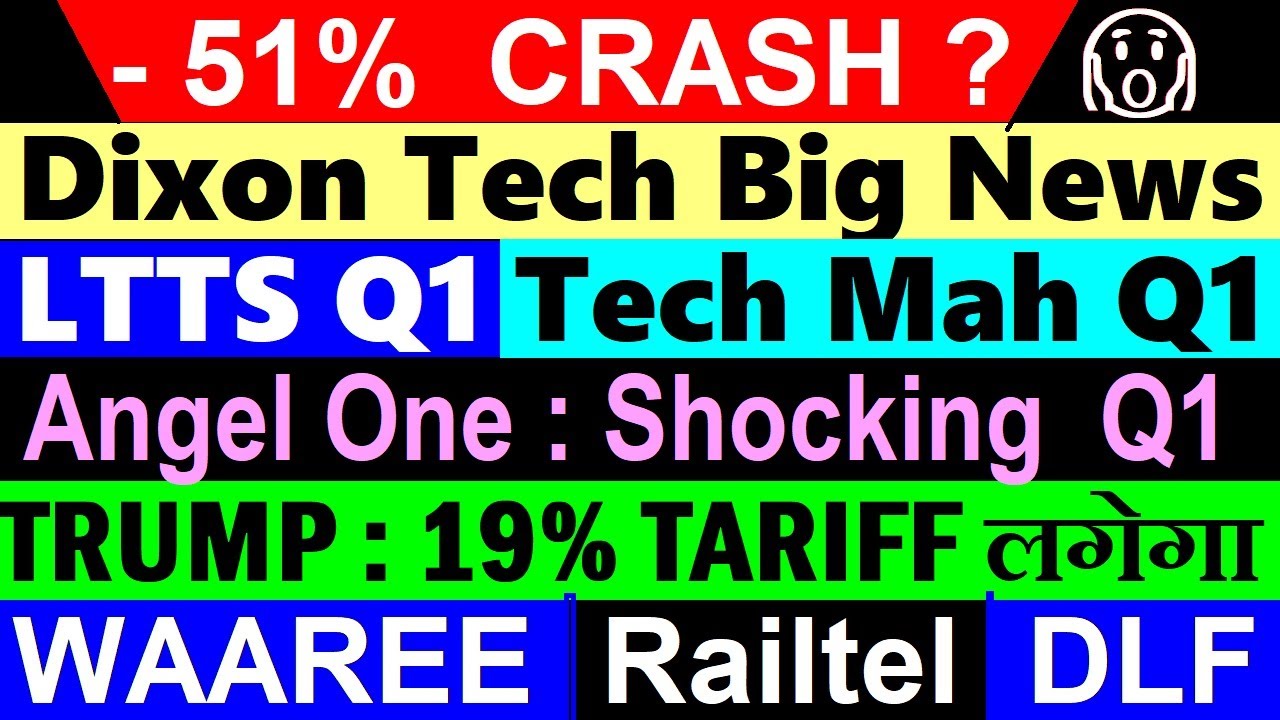
Recent headlines about a 51% “crash” in Ashok Leyland’s stock price caused panic among novice investors. However, this drop is not a cause for alarm but a result of a corporate action—specifically, a 1:1 bonus issue.
Decoding the Corporate Action
A 1:1 bonus issue means shareholders receive one additional share for every share held, effectively doubling the number of shares. Consequently, the stock price is halved to maintain the company’s market capitalization. This adjustment explains the apparent 51% drop, which is a standard outcome of such actions and not indicative of financial distress.
Investor Takeaway
Investors should verify corporate actions on platforms like NSE or BSE to avoid misinterpreting price movements. Ashok Leyland’s fundamentals remain strong, and the bonus issue reflects the company’s confidence in its growth prospects. Long-term investors can view this as an opportunity to accumulate shares at a lower price point.
Trump’s Tariff Impact: A Global Perspective
Former U.S. President Donald Trump’s decision to impose a 19% tariff on Indonesian goods has sparked discussions about its implications for global trade. This tariff, a reduction from the previous 32%, aims to balance trade relations, with the U.S. gaining tariff-free access to Indonesia in return.
Implications for Indonesia
While the reduced tariff is a positive development for Indonesian exporters, the 19% tax still poses challenges. The deal also includes Boeing’s commitment to purchase 50 aircraft, signaling broader trade negotiations. For Indian investors, this development highlights the interconnectedness of global markets and the potential impact on sectors like manufacturing and exports.
Conclusion: Navigating the Stock Market in July 2025
The stock market in July 2025 is a mix of opportunities and challenges, with companies like Tech Mahindra, DLF, Railtel, LTTS, Angel One, Waaree Energies, Dixon Technologies, and Ashok Leyland shaping the narrative. From IT sector struggles to real estate expansions and corporate actions, these updates provide a roadmap for investors. By understanding the numbers, strategies, and market dynamics, investors can make informed decisions to navigate this vibrant market.
Stay tuned for more updates, and always verify corporate actions and financials before making investment decisions. Share your thoughts on these developments in the comments below, and subscribe for the latest stock market insights!