Ganesh Chaturthi, also known as Vinayaka Chavithi, stands as one of India’s most beloved and culturally significant festivals, celebrating the birth of Lord Ganesha, the elephant-headed deity revered as the remover of obstacles and patron of wisdom. This ten-day festival, beginning on August 27, 2025, transforms homes and communities across India into vibrant centers of devotion, bringing families together in shared celebration while honoring ancient traditions that have evolved to embrace modern environmental consciousness. The festival’s journey from intimate household worship to grand public celebrations reflects India’s cultural dynamism, with contemporary practitioners increasingly adopting eco-friendly practices that honor both spiritual tradition and environmental stewardship.
Historical Origins and Cultural Evolution
Ancient Roots and Mythological Foundations
The origins of Ganesh Chaturthi trace back to ancient Hindu scriptures and mythology, with references found in texts such as the Mahabharata and Sushruta Samhita, indicating the festival’s longstanding presence in Indian culture. According to Hindu tradition, Lord Ganesha was created by Goddess Parvati from the dirt of her body to serve as her guardian while Lord Shiva was away. The well-known mythological account describes how Ganesha, unaware of Shiva’s identity, prevented him from entering Parvati’s chambers, leading to a confrontation that resulted in Ganesha losing his head. Lord Shiva, realizing his error, replaced Ganesha’s head with that of an elephant and declared that he would be worshipped before all other deities, establishing Ganesha’s unique position in Hindu worship.
The festival’s spiritual significance centers on Ganesha’s role as “Vighnaharta” (remover of obstacles) and “Buddhi Pradayaka” (giver of wisdom), making him the natural choice for invocation at the beginning of any important endeavor. This positioning explains why Ganesha worship precedes all Hindu rituals and ceremonies, reflecting the deep-seated belief that his blessings ensure successful completion of tasks without impediments.
Modern Revival and National Significance
The transformation of Ganesh Chaturthi from a private family celebration to a grand public festival occurred during the late 19th century, primarily through the efforts of Indian freedom fighter Bal Gangadhar Tilak. Recognizing the festival’s potential as a unifying force, Tilak promoted large-scale public celebrations in Maharashtra around 1894, using the festival as a means to foster national unity and resistance against British colonial rule. This strategic adaptation transformed Ganesh Chaturthi into a powerful symbol of cultural identity and national consciousness, with the festival serving as a platform for community bonding that transcended social and economic barriers.
The historical significance of this transformation cannot be overstated, as it demonstrated how traditional religious practices could be adapted to serve broader social and political purposes while maintaining their spiritual essence. Today, this legacy continues as the festival promotes community solidarity and cultural preservation across India and among Hindu communities worldwide.
Essential Puja Preparations and Samagri Requirements
Fundamental Ritual Items
The success of Ganesh Chaturthi celebrations depends heavily on proper preparation of puja samagri (worship materials), which devotees traditionally gather several days in advance to ensure smooth and uninterrupted ceremonies. The preparation process begins with acquiring a clay idol of Lord Ganesha, preferably made from eco-friendly materials such as natural clay rather than Plaster of Paris, reflecting growing environmental awareness among modern practitioners.
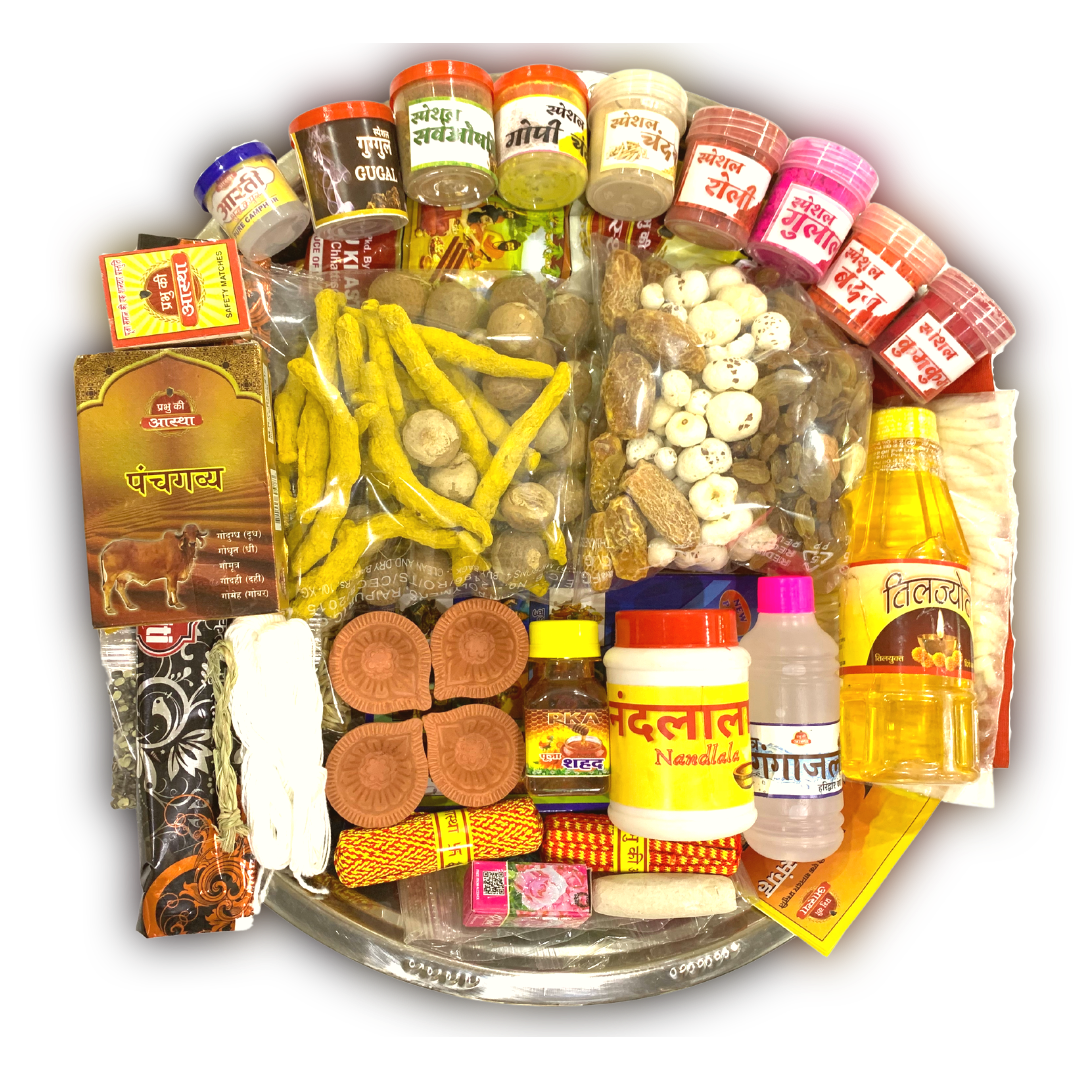
Ganesh Chaturthi puja samagri thali showcasing essential items like turmeric, clay diyas, powders, nuts, and holy liquids for ritual worship
The comprehensive list of essential puja items includes foundational elements such as kalash (sacred water vessel) with coconut and mango leaves, red and yellow cloth for covering the ceremonial platform, and akshat (rice mixed with turmeric), along with haldi (turmeric), kumkum (vermilion), and chandan (sandalwood paste) for ritual applications. Devotees must also prepare durva grass (considered especially sacred to Ganesha), betel leaves and nuts, fresh seasonal fruits (particularly bananas), incense sticks, cotton wicks, ghee or sesame oil, and matchboxes for lighting ceremonial lamps.
The ritual setup requires establishing a proper ceremonial space with a wooden platform or chowki covered with clean cloth, upon which the Ganesha idol is placed with appropriate decorations including flower garlands, rangoli designs using rice flour, and diyas (oil lamps) positioned on either side of the idol. Additional ceremonial items include panchpatra (five-vessel set), conch shells, bells, aarti thali (ceremonial plate), and holy water or Gangajal for purification rituals.
Specialized Offerings and Traditional Elements
Among the most significant aspects of Ganesh Chaturthi preparation is the inclusion of 21 different types of leaves (Ekavimshati Patra Puja), a traditional practice that honors Ganesha with diverse natural offerings, though many contemporary devotees adapt this requirement by using available local varieties including mango leaves, banana leaves, and durva grass. This practice reflects the festival’s deep connection to nature and agricultural cycles, emphasizing the importance of seasonal awareness in spiritual practice.
The preparation of traditional sweets, particularly modak (Ganesha’s favorite sweet), represents another crucial element of festival preparation. These steamed dumplings, filled with grated coconut and jaggery, carry profound symbolic meaning as representations of the sweetness of spiritual realization and divine blessing. The word “modak” derives from Sanskrit “moda,” meaning happiness or bliss, reinforcing its significance as an offering that embodies joy and spiritual fulfillment.
Sacred Rituals and Ceremonial Procedures
Invocation and Installation Ceremonies
The formal commencement of Ganesh Chaturthi involves Prana Pratishtha, the ceremony of invoking Lord Ganesha’s divine presence into the clay idol through specific mantras and ritual procedures. This essential ritual transforms the clay sculpture from a mere artistic representation into a sacred vessel for divine presence, requiring devotees to approach with proper preparation, including ritual bathing and donning clean clothes.
The Shodashopachara Puja (sixteen-step worship) forms the core of daily Ganesh Chaturthi rituals, encompassing Avahanam (invocation), Asana (offering seat), Padya (washing feet), Arghya (offering water), Achamana (offering water for sipping), Snana (ritual bathing with panchamrit), Vastra (offering clothes), Yajnopavita (sacred thread), Gandha (sandalwood paste application), Pushpa (flower offerings), Dhupa (incense), Deepa (lamp lighting), Naivedya (food offerings), Tambula (betel offerings), Dakshina (monetary offerings), and Aarti with Pradakshina (circumambulation).

Traditional modak dumplings with sesame and coconut filling served with sauce, a favorite sweet for Lord Ganesha during Ganesh Chaturthi
Mantra Recitation and Spiritual Practice
The power of Ganesh Chaturthi lies significantly in the recitation of sacred mantras, with the most fundamental being “Om Gan Ganapataye Namaha,” which serves as the basic invocation for seeking Ganesha’s blessings. More elaborate mantras include the widely recited Vakratunda Mahakaya mantra: “Vakratunda Maha-Kaaya Surya-Kotti Samaprabha, Nirvighnam Kuru Me Deva Sarva-Kaaryeshu Sarvadaa,” which translates to a prayer requesting the removal of all obstacles from one’s endeavors.
The Ganesha Gayatri Mantra, “Om Ekadantaya Viddhamahe, Vakratundaya Dhimahi, Tanno Danti Prachodayat,” represents a more sophisticated form of worship, invoking Ganesha’s wisdom and guidance through structured Vedic formulaic prayer. Devotees often commit to reciting these mantras 108 times daily during the festival period, believing that such dedicated practice amplifies the spiritual benefits and strengthens their connection with the divine.
The Significance of Durva Grass and Sacred Offerings
Spiritual and Scientific Properties of Durva
The offering of 21 blades of durva grass represents one of the most distinctive and meaningful aspects of Ganesha worship, with this sacred grass holding special significance due to its unique spiritual and medicinal properties.
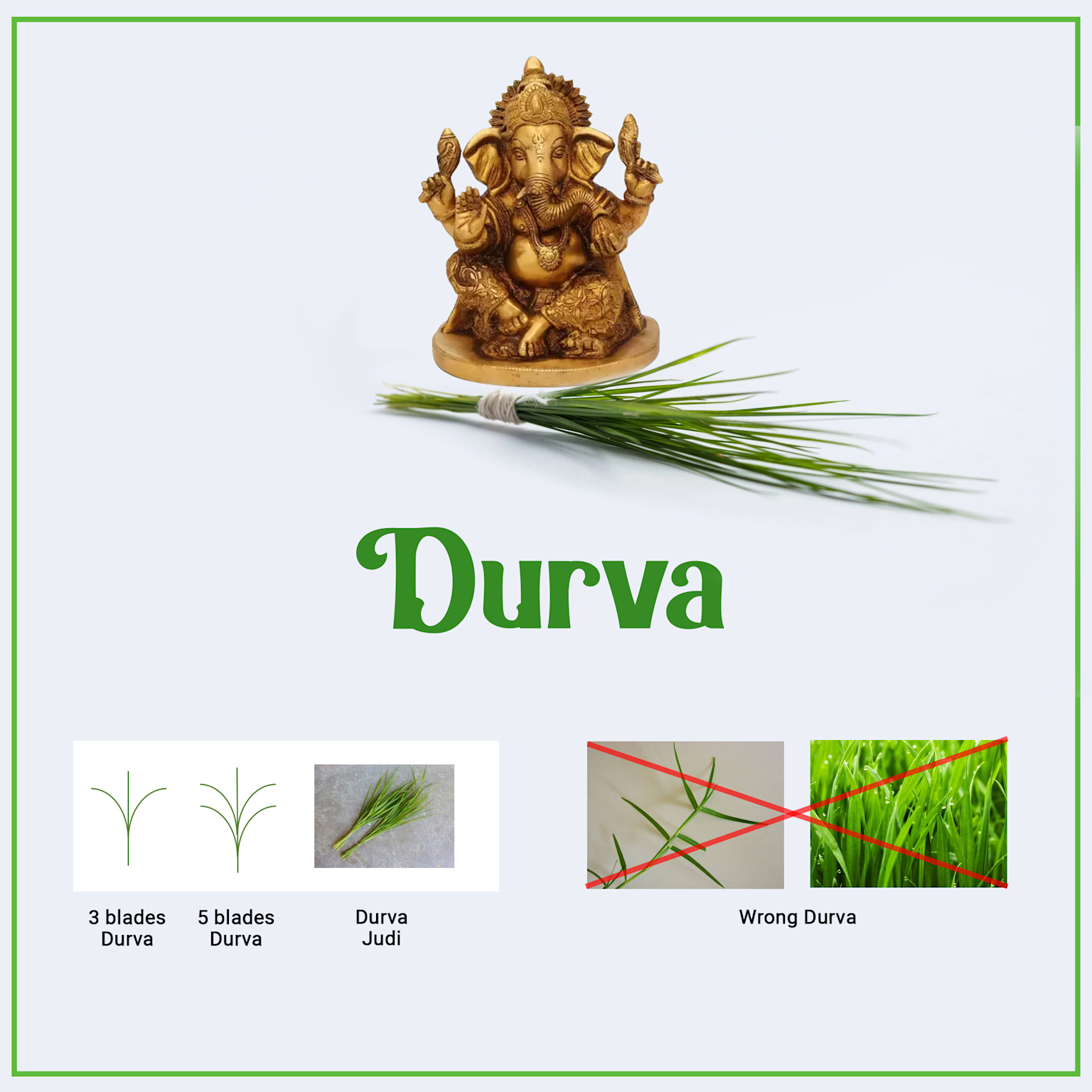
Durva grass used in Ganesh puja should have 3 or 5 blades per tuft; incorrect types are marked as wrong
According to Hindu tradition, durva grass possesses the highest capacity to attract divine Ganesha energy, making it an indispensable element of proper worship. The grass’s three-blade structure symbolically represents the trinity of Shiva (consciousness), Shakti (divine energy), and Ganesha (wisdom), creating a perfect offering that encompasses fundamental cosmic principles.
The mythological explanation for durva’s special status relates to an incident where Ganesha, after swallowing a demon during battle, experienced intense burning in his stomach until sages offered him 21 blades of durva grass, which provided relief and healing. This story illustrates both the grass’s cooling properties and its special connection to Ganesha’s wellbeing, establishing the tradition of offering exactly 21 blades during worship ceremonies.
From a scientific perspective, durva grass (Cynodon dactylon) contains bioactive compounds that provide numerous health benefits, including immune system enhancement, blood sugar regulation, digestive improvement, and natural cooling effects on the body. These properties align perfectly with the grass’s spiritual significance, demonstrating how traditional practices often incorporate profound understanding of natural healing principles.
Traditional Food Offerings and Their Symbolism
The preparation and offering of modak during Ganesh Chaturthi carries deep cultural and spiritual significance beyond mere ritualistic practice. These traditional sweets, prepared with coconut, jaggery, and rice flour, represent not only Ganesha’s favorite food but also symbolize the universe’s structure, with the outer covering representing the material world and the sweet filling representing inner spiritual reality.

Traditional steamed modak, Lord Ganesha’s favorite sweet, served during Ganesh Chaturthi
Regional variations in modak preparation reflect the festival’s adaptation to local ingredients and culinary traditions, with coastal areas favoring steamed varieties made from special ambemohur rice, while inland regions often prepare fried versions using wheat flour. The seasonal timing of Ganesh Chaturthi, coinciding with monsoon periods, makes modak particularly appropriate as a nutrition-rich food that provides energy and warmth during humid weather conditions.
Additional traditional offerings include seasonal fruits (particularly bananas, which hold special significance), panchamrit (mixture of milk, curd, honey, sugar, and ghee), coconuts, betel leaves and nuts, and various laddoos and traditional sweets. Each offering carries specific symbolic meaning, with bananas representing fertility and abundance, coconuts symbolizing the ego’s surrender to divine will, and panchamrit embodying the five essential elements of creation.
Environmental Consciousness and Eco-Friendly Celebrations
The Environmental Challenge of Traditional Practices
Modern Ganesh Chaturthi celebrations face significant environmental challenges, particularly regarding the widespread use of Plaster of Paris (PoP) idols and synthetic decorations that cause substantial water pollution during immersion ceremonies. Studies indicate that approximately 150 million Ganesh idols are immersed annually in Maharashtra alone, with many constructed from non-biodegradable materials that increase heavy metal concentrations in water bodies while decreasing oxygen levels and harming aquatic life.
The environmental impact extends beyond idol immersion to include plastic decorations, thermocol ornaments, synthetic colors, and excessive energy consumption through elaborate lighting displays. These practices contradict the festival’s underlying spiritual message of harmony with nature and respect for all life forms, creating tension between traditional expression and environmental responsibility.
Sustainable Celebration Practices
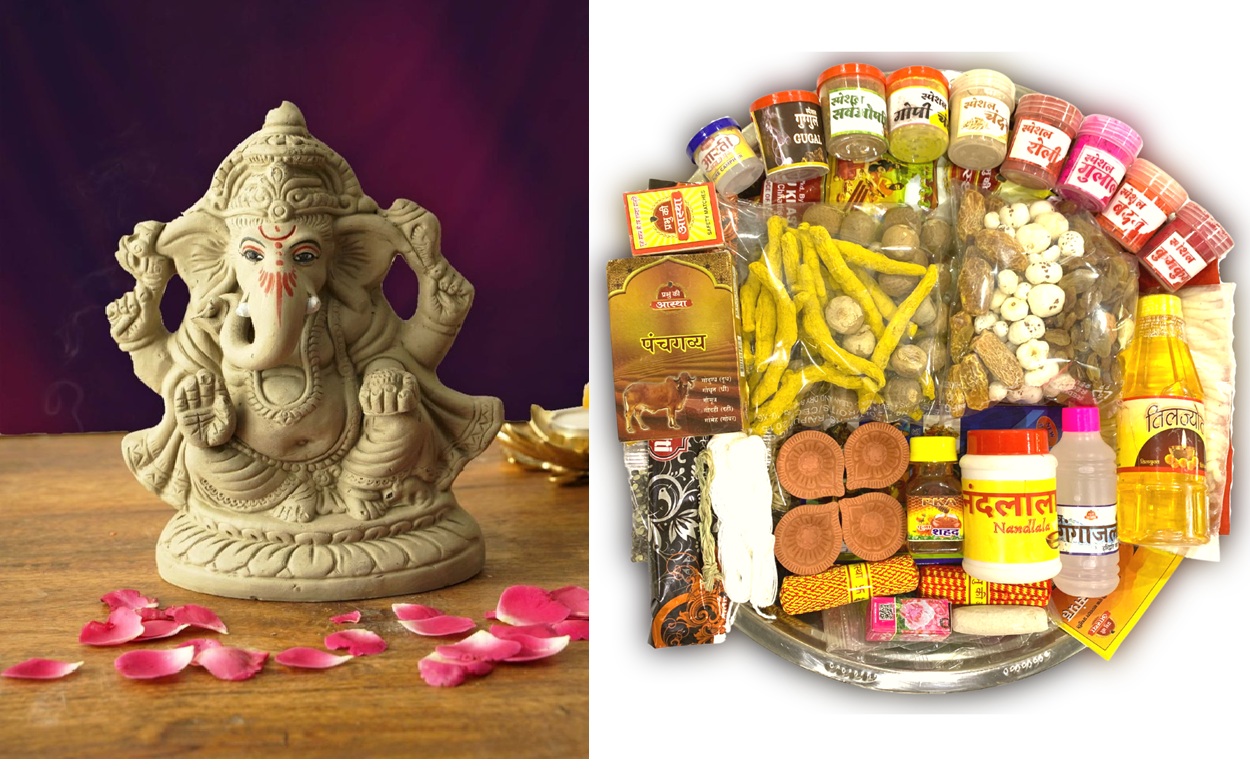
The growing environmental awareness has sparked a significant movement toward eco-friendly Ganesh celebrations, with increasing numbers of devotees adopting sustainable practices that maintain spiritual authenticity while protecting natural resources. Clay idols made from natural materials dissolve harmlessly in water, while seed-embedded Ganesha idols actually contribute to environmental restoration by sprouting into plants after immersion.
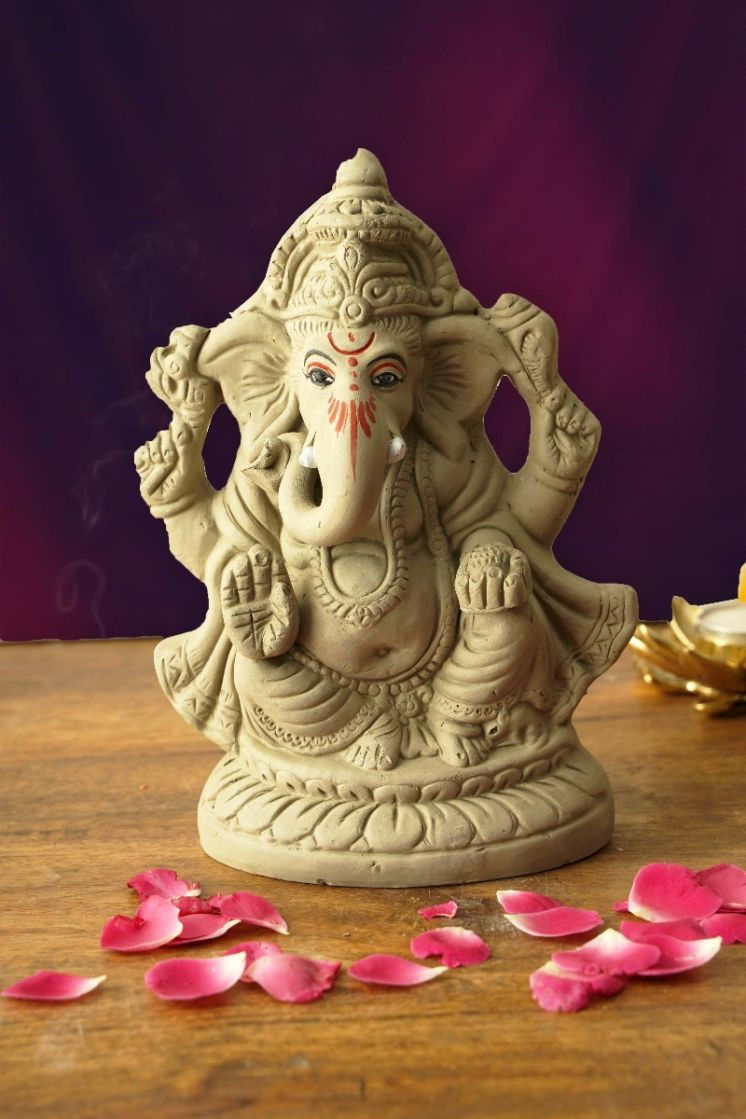
Eco-friendly clay Ganesha idol with traditional detailing and rose petal decor for festival worship
Eco-conscious decorations emphasize natural materials such as fresh flowers, banana leaves, paper crafts from recycled materials, cloth draping using organic fabrics, and energy-efficient LED lighting instead of traditional incandescent bulbs. These alternatives not only reduce environmental impact but often prove more cost-effective and aesthetically pleasing than synthetic alternatives.
Home-based immersion practices represent another significant environmental adaptation, with devotees immersing idols in large containers at home and using the blessed water for plant irrigation rather than contributing to public water body pollution. This practice maintains the ritual’s spiritual significance while demonstrating personal environmental responsibility.
The Ganesh Visarjan Ceremony: Culmination and Renewal
Ritual Significance of Immersion
Ganesh Visarjan, occurring on Ananta Chaturdashi (September 6, 2025), marks the emotional and spiritual culmination of the ten-day festival, symbolizing Lord Ganesha’s return to his celestial abode at Mount Kailash. This immersion ceremony carries profound theological meaning, representing the cyclical nature of existence, the impermanence of material form, and the eternal presence of divine consciousness that transcends physical manifestation.
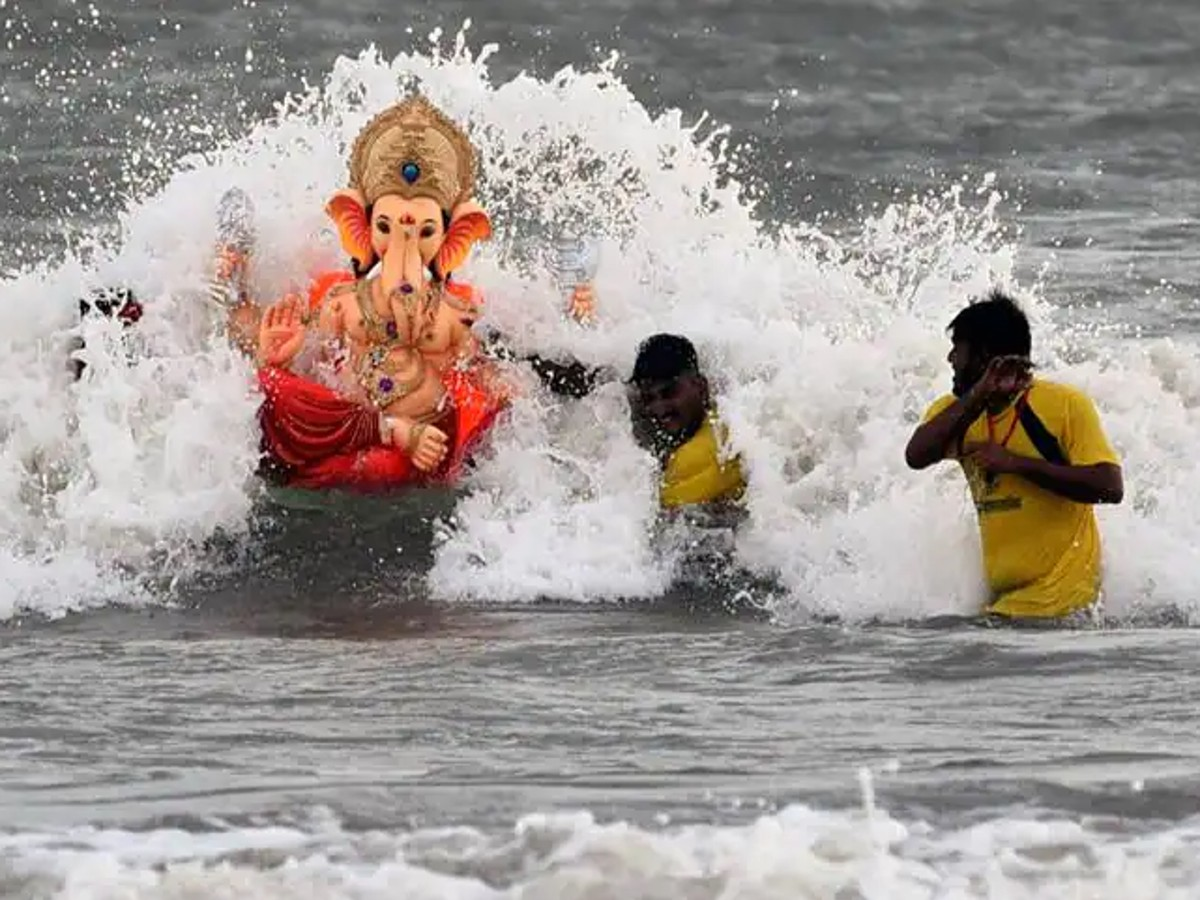
Devotees immerse a Lord Ganesha idol in water during the Ganesh Visarjan ceremony in Maharashtra, marking the conclusion of the Ganesh Chaturthi festival
The ritual process begins with final aarti (ceremonial worship with lamps) and bhajans (devotional songs), followed by adorning the idol with fresh garlands and applying final tilaka markings. The traditional chant “Ganpati Bappa Morya, Pudhchya Varshi Lavkar Ya” (Come back quickly next year, Lord Ganesha) accompanies the procession to immersion sites, expressing both farewell sadness and confident expectation of future reunion.
The immersion itself represents the dissolution of individual ego into universal consciousness, with the water serving as the primordial medium that connects all existence. Devotees understand that while the physical form disappears, Ganesha’s blessings and divine presence remain permanently established in their hearts and homes.
Regional Variations and Community Celebrations
Different regions of India have developed distinctive Visarjan traditions that reflect local geography, culture, and community organization. Maharashtra’s elaborate public processions feature massive community participation, with famous mandals like Lalbaugcha Raja drawing millions of devotees for spectacular farewell celebrations. Karnataka, Tamil Nadu, and Andhra Pradesh typically emphasize family-centered ceremonies with modest immersions in temple tanks or designated water bodies.
Northern and Central Indian celebrations often utilize community-organized artificial tanks or designated immersion sites, while coastal regions take advantage of natural water bodies for traditional sea immersion ceremonies. Many modern communities have created eco-friendly immersion facilities with artificial ponds designed for clay idol dissolution, allowing for water recycling and environmental protection.
Cultural Impact and Contemporary Relevance
Social Cohesion and Community Building
Ganesh Chaturthi serves as a powerful force for social cohesion, bringing together people from diverse backgrounds, economic levels, and religious perspectives in shared celebration and community service. The festival’s inclusive nature breaks down social barriers, with community kitchens, collective decoration efforts, and shared ritual participation creating bonds that extend throughout the year.itokri+3
Community mandals (organized groups) often engage in social service activities during the festival period, including blood donation drives, environmental cleanup campaigns, educational programs, and charitable food distribution. These activities demonstrate how religious celebration can serve broader social purposes, addressing community needs while strengthening civic engagement.
The festival’s economic impact extends to local artisans, sweet makers, flower vendors, and small businesses that depend on increased demand during the celebration period. This economic dimension illustrates how traditional festivals support local economies and preserve traditional crafts and skills.
Educational and Cultural Transmission
Ganesh Chaturthi functions as an important vehicle for cultural transmission, teaching younger generations about Hindu philosophy, traditional arts, Sanskrit mantras, culinary heritage, and environmental consciousness. Family involvement in festival preparation provides opportunities for skill sharing, storytelling, and value transmission that might otherwise be lost in modern urban environments.
The festival’s emphasis on obstacle removal and wisdom acquisition resonates particularly strongly with students and professionals facing academic or career challenges, making Ganesha worship especially relevant for educational and professional communities. This practical applicability helps maintain the festival’s relevance across generational and cultural boundaries.
Modern Adaptations and Future Directions
Technology Integration and Global Reach
Contemporary Ganesh Chaturthi celebrations increasingly incorporate digital technology, with virtual darshan (online viewing), livestreamed ceremonies, and social media sharing enabling global participation in traditional celebrations. COVID-19 pandemic adaptations have permanently altered celebration patterns, with many families maintaining hybrid physical-digital approaches that allow extended family participation regardless of geographic distance.
Mobile applications providing puja vidhi (ritual procedures), mantra audio, and festival timings have made traditional knowledge more accessible to modern practitioners, particularly younger generations who might otherwise struggle with Sanskrit pronunciations or complex ritual sequences. These technological aids support rather than replace traditional learning, creating bridges between ancient wisdom and contemporary accessibility.
Environmental Innovation and Sustainability
The future of Ganesh Chaturthi increasingly emphasizes environmental innovation, with artisans developing new biodegradable materials, natural dye formulations, and seed-embedded idol technologies that transform celebration from potential environmental burden into positive ecological contribution. Research institutions and environmental organizations collaborate with traditional craftspeople to develop sustainable alternatives that maintain artistic quality while ensuring environmental compatibility.
Urban planning authorities increasingly integrate eco-friendly festival infrastructure, including designated immersion sites, waste segregation systems, and water treatment facilities specifically designed to handle festival-related materials. These developments represent growing recognition that environmental protection and cultural celebration can be mutually reinforcing rather than contradictory.
Conclusion
Ganesh Chaturthi stands as a vibrant testament to Hinduism’s capacity for adaptation and renewal while maintaining core spiritual principles and cultural values. The festival’s evolution from intimate family worship to grand public celebration, and its contemporary embrace of environmental consciousness, demonstrates how traditional practices can respond to changing circumstances while preserving essential meaning and purpose.
As devotees prepare for Ganesh Chaturthi 2025, they participate in a living tradition that connects them to ancient wisdom while addressing contemporary challenges of environmental stewardship, social cohesion, and cultural preservation. The festival’s emphasis on obstacle removal, wisdom cultivation, and community harmony provides relevant guidance for navigating modern complexities, making Lord Ganesha’s blessings as pertinent today as they were in ancient times.
The comprehensive preparation requirements, from traditional puja samagri to eco-friendly innovations, reflect the festival’s multifaceted nature as spiritual practice, cultural celebration, and environmental consciousness movement. Through mindful preparation, authentic ritual practice, and environmental responsibility, contemporary devotees can honor both traditional wisdom and future sustainability, ensuring that Ganesh Chaturthi continues to inspire and unite communities for generations to come.
“Vakratunda Mahakaya Suryakoti Samaprabha, Nirvighnam Kuru Me Deva Sarva-Kaaryeshu Sarvada” – May Lord Ganesha remove all obstacles and bless all endeavors with wisdom, prosperity, and environmental harmony.