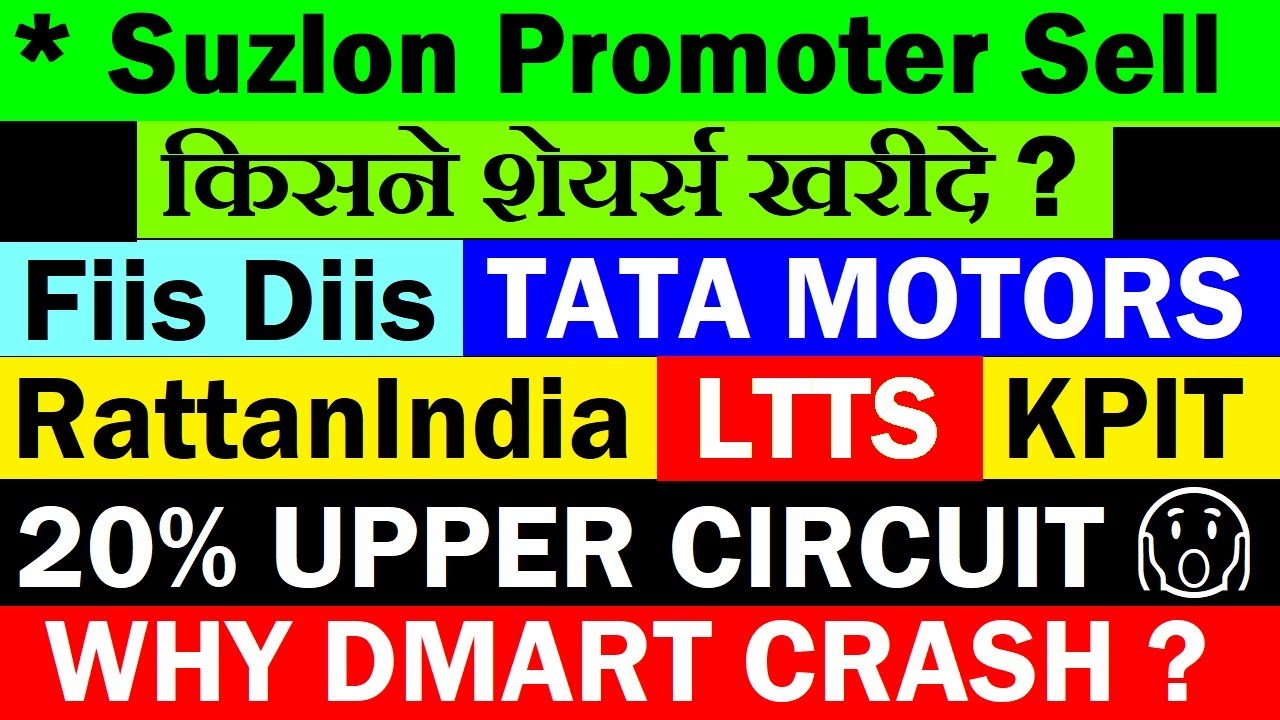
The stock market is a dynamic ecosystem where trends, deals, and global influences shape investment opportunities. From block deals impacting stock prices to strategic moves by industry giants, understanding these movements is crucial for investors aiming to make informed decisions. This article dives into recent market activities, analyzing key players like D-Mart, KPIT Technologies, L&T Technology Services, Tata Motors, RattanIndia Enterprises, and Suzlon Energy. We’ll explore block deals, market reactions, and strategic insights to help you navigate the financial landscape with confidence.
Understanding Block Deals and Their Market Impact
What Are Block Deals?
Block deals are large-scale transactions involving significant volumes of shares, typically executed between major institutional players. These deals often occur at a floor price, which serves as a benchmark for the transaction. The direction of the stock price post-deal often aligns with this floor price, offering critical insights into market sentiment.
Why Block Deals Matter
In most cases—over 95% of the time—block deals occur at a discount to the market price. This discount can trigger immediate price adjustments, as seen in recent market activities. However, the market occasionally reacts positively if the discount is smaller than anticipated. For instance, if a stock trading at $100 is expected to see a deal at $96 but closes at $98, investors may perceive this as a bullish signal, driving the stock price higher.
Case Study: D-Mart’s Block Deal Dynamics
D-Mart, a leading retail chain, recently experienced a significant block deal valued at approximately $76 million, involving 1.6 million shares at an average price of $47.50 per share. This transaction led to a 6% drop in D-Mart’s stock price, reflecting the market’s adjustment to the discounted deal. Such movements are typical, as large-scale sales by major players often signal short-term volatility. Investors should monitor the floor price and market expectations to gauge potential price trajectories.
KPIT Technologies: Navigating Global Challenges
The Auto Sector’s Influence on KPIT
KPIT Technologies, a key player in the IT services sector with a focus on the automotive industry, has faced scrutiny due to global supply chain disruptions, particularly in rare earth minerals and metals. With 84% of its business derived from passenger vehicles and 16% from commercial vehicles, KPIT’s performance is closely tied to the auto sector’s health. Its global client base—22% from the U.S., 35% from Europe, and the rest from other regions—exposes it to international market fluctuations.
Addressing Negative Sentiment
Recent negative reports predicted a sharp decline in KPIT’s stock price, but these forecasts have yet to materialize. The company’s resilience suggests that market fears may be overstated. Investors should exercise caution and avoid blind trust in brokerage reports, as these can sometimes reflect speculative biases rather than concrete fundamentals.
Strategic Considerations for Investors
Given KPIT’s exposure to the auto sector, disruptions in global supply chains, particularly from regions like China, could impact its operations. However, companies with diversified client bases and strong technological capabilities, like KPIT, are better positioned to weather such challenges. Investors should focus on the company’s long-term growth prospects and its ability to adapt to industry shifts.
L&T Technology Services: A Debt-Free Turnaround
The Strength of L&T’s Financial Position
L&T Technology Services (LTTS), part of the esteemed L&T Group, has long been recognized for its debt-free status, a hallmark of financial stability. However, in the previous fiscal year, LTTS took on long-term borrowings of approximately $59 million, marking a departure from its debt-free legacy. Long-term borrowings, defined as loans with a repayment period exceeding one year, contrasted with the company’s historically clean balance sheet.
A Return to Debt-Free Status
In a remarkable turnaround, LTTS has cleared all long-term borrowings, restoring its debt-free status. This achievement underscores the company’s robust financial management and ability to normalize operations swiftly. For investors, a debt-free balance sheet reduces risk and enhances the company’s appeal as a stable investment option.
Why Debt-Free Companies Stand Out
Debt-free companies like LTTS benefit from lower financial risk and greater flexibility to invest in growth opportunities. The L&T Group’s reputation for operational excellence further bolsters investor confidence, reducing the due diligence burden for those considering LTTS as part of their portfolio.
Tata Motors: Ambitious Targets and Market Leadership
Setting the Stage for Growth
Tata Motors, a titan in the automotive industry, has outlined bold targets for the financial years 2027 to 2030. The company plans to invest $4 billion in electric vehicles (EVs) and new vehicle launches, aiming to capture a 40% market share in commercial vehicles and 16% in passenger vehicles. This ambitious strategy includes surpassing Hyundai, the current second-largest player in the passenger vehicle segment.
New Product Launches and Market Sentiment
Tata Motors is set to introduce seven new passenger vehicles and expand its EV portfolio, with new nameplates expected by 2030. These announcements have sparked positive market sentiment, reflected in the stock’s solid performance. Investors view these moves as a commitment to innovation and market leadership, particularly in the rapidly growing EV sector.
Trust and Transparency in Management
A common question among investors is whether companies like Tata Motors overhype their prospects. While it’s true that no company openly criticizes itself, Tata Motors’ track record lends credibility to its promises. The Tata Group’s history of transparency and consistent delivery sets it apart from competitors. If challenges arise, the company is likely to communicate them openly, maintaining investor trust.
Evaluating Management Credibility
Investors should assess a company’s historical performance and management transparency when evaluating ambitious targets. Companies that consistently meet or exceed their promises, like Tata Motors, inspire greater confidence. Conversely, firms with a history of overpromising and underdelivering risk losing market trust, impacting their stock performance.
RattanIndia Enterprises: A Sudden Surge
The Upper Circuit Phenomenon
RattanIndia Enterprises, a relatively small player, recently hit a 20% upper circuit, the maximum daily limit for non-F&O stocks. This surge, driven by significant buying volume, lacked a clear catalyst, prompting the stock exchange to seek clarification from the company. Such sudden spikes often indicate speculative activity or insider buying, warranting caution from investors.
RattanIndia Power’s Parallel Performance
Interestingly, RattanIndia Power, a sister company, also hit a 20% upper circuit on the same day. The absence of concrete news for either stock suggests that market dynamics, such as coordinated buying or short-term speculation, may be at play. Investors should await the company’s response to the exchange’s inquiry before making decisions.
Navigating Small-Cap Volatility
Small-cap stocks like RattanIndia Enterprises are prone to sharp movements due to their low liquidity. Even modest buying can trigger significant price swings, making these stocks high-risk, high-reward opportunities. Investors should conduct thorough research and avoid chasing momentum without clear fundamentals.
Suzlon Energy: Promoter Selling and Institutional Buying
Promoter Stake Sale
Suzlon Energy recently made headlines with a promoter selling 20 million shares through block deals valued at approximately $156 million. This transaction raised concerns among investors, as promoter selling can signal a lack of confidence in the company’s future.
Institutional Confidence
However, major institutions like Goldman Sachs, Morgan Stanley, and various mutual funds stepped in, acquiring a 1.5% stake in Suzlon. This institutional buying suggests confidence in the company’s long-term prospects, offsetting the negative sentiment from the promoter’s sale. The involvement of reputable institutions can stabilize the stock and attract further investor interest.
Balancing Promoter and Institutional Actions
Promoter selling, while often viewed negatively, is not always a red flag. In Suzlon’s case, the entry of strong institutional investors mitigates concerns, highlighting the importance of evaluating the broader context. Investors should monitor subsequent developments, such as the company’s operational performance and further institutional activity, to gauge its trajectory.
FII and DII Activity: Driving Market Momentum
Domestic Institutional Investors (DIIs) Lead the Charge
Domestic institutional investors have been consistently buying, with a recent transaction of $132 million reinforcing their bullish stance. This sustained buying momentum reflects confidence in the Indian market’s long-term potential, particularly in sectors like technology and automotive.
Foreign Institutional Investors (FIIs) Take a Mixed Approach
Foreign institutional investors, on the other hand, have adopted a more balanced strategy, with a recent buying spree of $276 million. FIIs tend to adjust their positions based on market conditions, often selling during significant downturns (e.g., a 200-300 point market drop). On neutral days, as recently observed, their activity aligns with a stable market, contributing to overall equilibrium.
Interpreting Institutional Activity
Institutional buying and selling provide valuable cues for retail investors. Consistent DII buying signals strong domestic confidence, while FII activity reflects global sentiment. Investors should track these trends alongside market performance to identify potential opportunities or risks.
Strategic Investing: Key Takeaways for Success
Focus on Fundamentals
While market movements and block deals can create short-term volatility, long-term success hinges on a company’s fundamentals. Evaluate financial health, management credibility, and industry trends before investing.
Avoid Blind Trust in Reports
Brokerage reports and market rumors can influence sentiment, but they’re not always accurate. Cross-reference information with primary sources, such as company filings and exchange announcements, to make informed decisions.
Monitor Global and Sectoral Trends
Global events, such as supply chain disruptions or geopolitical tensions, can impact companies like KPIT Technologies and Tata Motors. Stay informed about macroeconomic factors to anticipate their effects on your investments.
Leverage Institutional Signals
Institutional activity, whether from DIIs, FIIs, or global players like Goldman Sachs, offers insights into market confidence. Use these signals as part of your due diligence, but avoid chasing momentum without thorough analysis.
Embrace Transparency and Track Records
Companies with transparent management and a history of delivering on promises, like Tata Motors and LTTS, are often safer bets. Scrutinize a company’s track record to assess its reliability and growth potential.
Conclusion: Navigating the Market with Confidence
The stock market is a complex interplay of deals, strategies, and global influences. From D-Mart’s block deal-driven volatility to Tata Motors’ ambitious EV plans, each development offers unique insights for investors. By understanding block deals, tracking institutional activity, and focusing on fundamentals, you can make informed decisions that align with your financial goals. Stay vigilant, prioritize transparency, and leverage market dynamics to build a robust investment portfolio.