
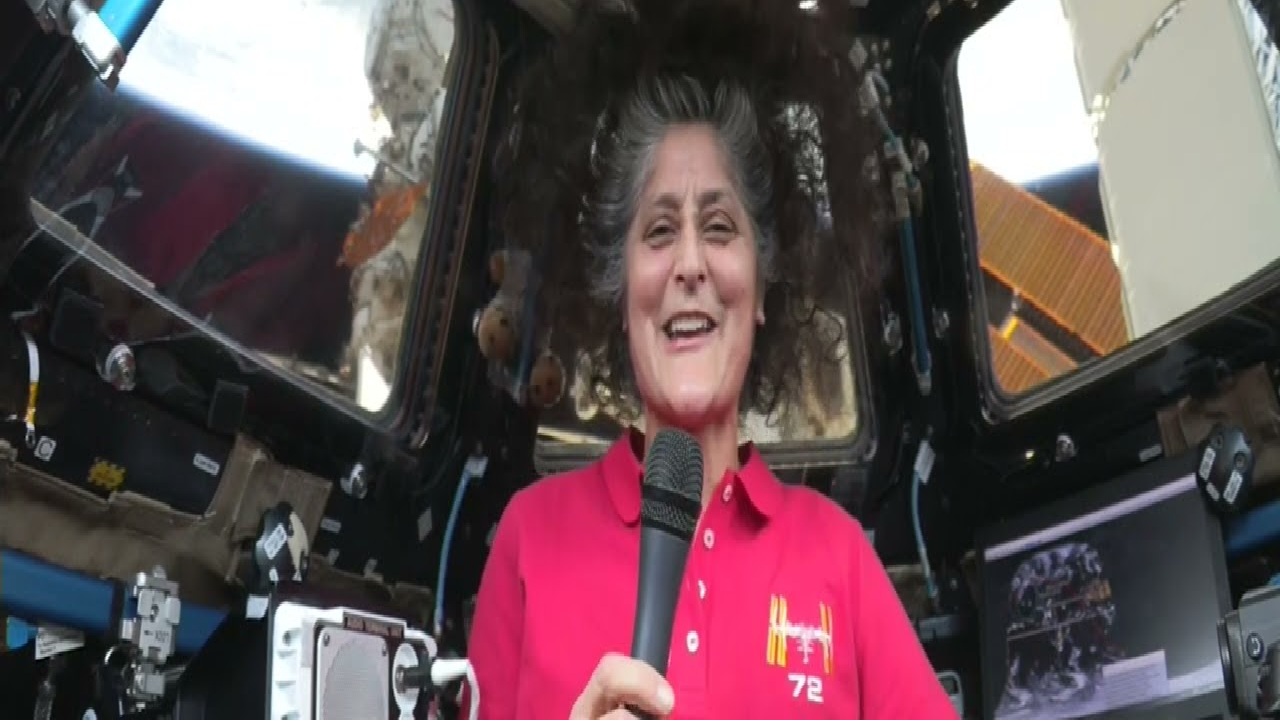
Sunita Williams, a seasoned NASA astronaut, has gained profound insights during her time aboard the International Space Station (ISS). From the vantage point of 250 nautical miles above Earth, she offers a unique perspective on life, the challenges of space travel, and the importance of science.
The Unplanned Eight-Month Mission
Originally scheduled for an eight-day flight, Sunita Williams’ mission aboard the Boeing Starliner turned into an eight-month stay. A mechanical issue with the spacecraft led NASA to make the difficult decision to bring the ship back to Earth without its crew. Watching the ship fly back without her, Williams described the moment as “heart-wrenching.” Nevertheless, she stood by the decision, emphasizing the importance of safety and professionalism.
“We’re professional astronauts,” she said. “We were trained for every contingency to live up here.” Williams, along with her fellow astronaut Butch Wilmore, are now expected to return to Earth in February 2025.
Finding Peace in Space
Life aboard the ISS offers more than just scientific discoveries; it also provides astronauts like Williams a fresh outlook on life. “We take life a little too seriously on Earth,” Williams shared in an interview with Boston Public Radio. From space, where the troubles of Earth seem far away, it’s easy to realize how small our everyday concerns really are.
Her time in space has given her a sense of perspective that is hard to grasp on Earth. “We get aggravated with some of the littlest, stupidest things that really we shouldn’t because this is our one big planet,” Williams explained. Her observations from the ISS suggest that many conflicts and frustrations on Earth could be resolved with a bit more empathy and cooperation.
The Importance of Science and Exploration
A prominent advocate for science, Williams stressed the need to stay connected to the wonders of discovery and exploration, despite growing disinterest in some parts of the world. “All we can do is show people what science can do,” Williams said, adding that she hopes to inspire more people to engage with scientific endeavors.
For Williams, the ISS is not just a laboratory for experiments in zero gravity; it is also a testament to human ingenuity and cooperation. She views the space station as an embodiment of what humanity can achieve when it works together, transcending national boundaries and personal interests.
Daily Life in Space: More Than Just Work
Even with the demanding tasks that come with living aboard the ISS, Williams finds ways to relax and stay connected to life on Earth. She journals frequently, talks to family and friends, and even indulges in her favorite TV shows while exercising. “I love watching All Creatures Great and Small while I ride the bike,” she said.
In addition to physical activities like running on a treadmill (she even ran a marathon in space!), Williams listens to TED Talks and other educational programs. This helps her stay mentally stimulated while floating in zero gravity. The view from space is another constant source of inspiration for her—she spends time looking out the windows of the cupola, a special observation module, marveling at the beauty of Earth below.
The Thrill and Challenge of Spacewalks
Williams has conducted seven spacewalks, totaling approximately 50 hours outside the spacecraft. The experience of leaving the safety of the ISS to venture into the vast expanse of space is both exhilarating and nerve-wracking. “We train a lot for these spacewalks,” Williams said, underscoring the preparation required to handle the technical and emotional demands of working outside the ISS.
Spacewalks are more than just thrilling experiences; they are critical to the operation of the space station. From construction to repairs, astronauts like Williams are tasked with ensuring the ISS remains functional. Every spacewalk brings its own set of challenges, but Williams describes the feeling of coming back inside the station as a mix of exhaustion and satisfaction—similar to the “après-ski” feeling after a full day on the slopes.
Looking Back at Earth from Space
One of the most awe-inspiring moments for astronauts is looking back at Earth. For Williams, seeing the planet from space provides a powerful reminder of our shared existence. She expressed amazement at the beauty of natural phenomena like the Northern Lights, which she recently witnessed from space. The auroras, caused by solar flares and radiation, light up the sky in stunning shades of green and red.
Despite the dangers posed by solar flares, Williams remains in awe of the power and beauty of these cosmic events. She noted that while astronauts face increased radiation exposure in space, the ISS is equipped with protective shielding to minimize the risk.
The Case for Continued Space Exploration
In her final moments of the interview, Williams addressed the importance of NASA’s work and the broader mission of space exploration. Although NASA’s budget is a small percentage of the overall federal budget, Williams believes that the agency’s work is vital to advancing human knowledge and fostering international cooperation.
“Being in space makes you think outside the box,” Williams said. “It expands your horizons and forces you to ask questions you may not have even considered before.” For her, the ISS represents not only a scientific endeavor but also a symbol of what humanity can achieve when it sets its sights beyond the limits of Earth.
Voting from Space: A Civic Duty
Even while orbiting the Earth, Williams takes her responsibilities as a U.S. citizen seriously. She and her fellow astronauts will be voting in the upcoming elections, participating in absentee voting from the ISS. NASA has ensured that astronauts can carry out their civic duties, even from space, by setting up a secure system that allows their votes to be transmitted back to Earth.
Conclusion: A Visionary Voice from Space
Sunita Williams’ experiences aboard the ISS offer more than just technical insights into space travel. Her reflections on life, science, and the importance of human connection provide valuable lessons for those of us on Earth. As she prepares to return home in 2025, Williams will bring back not only scientific data but also a renewed sense of hope for what humanity can achieve when it works together—both in space and on Earth.