
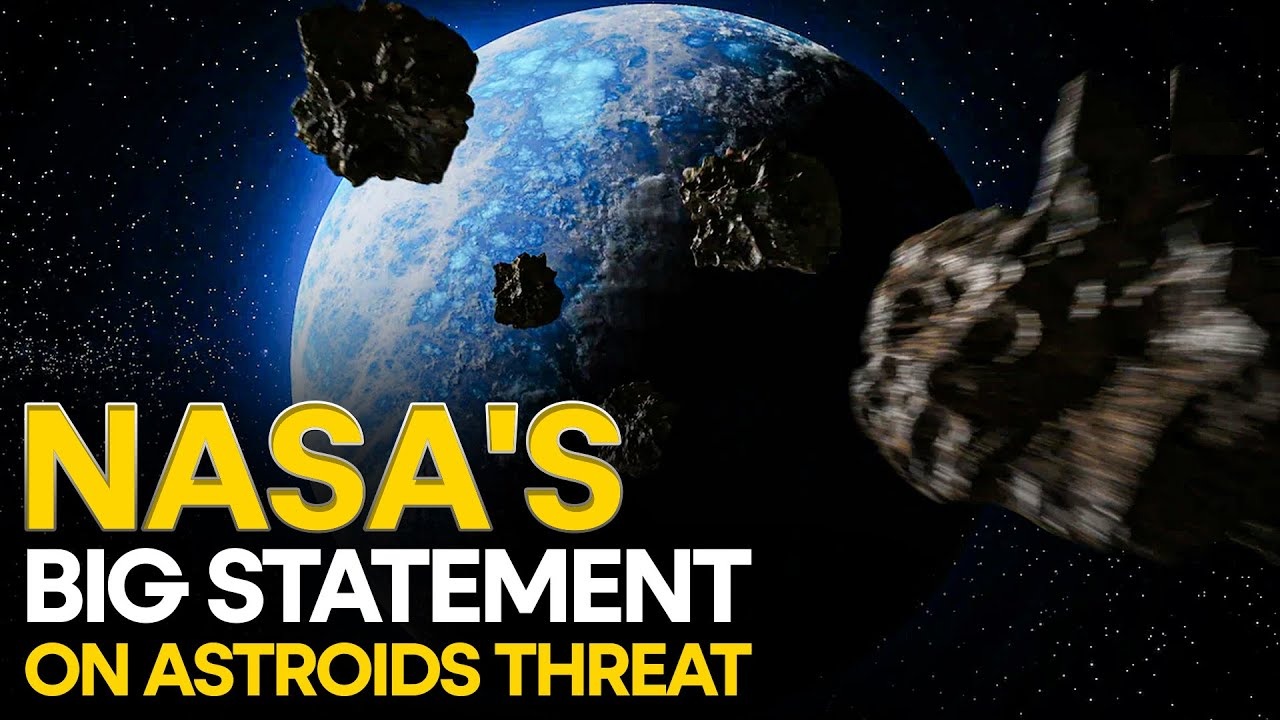
Building-Sized Asteroid 2024 JV33 to Make Close Approach to Earth: NASA’s Ongoing Vigilance
Asteroid 2024 JV33, a member of the Apollo group known for its frequent crossings of Earth’s orbit, is set to make a close approach to our planet on August 19, 2024. Measuring approximately 620 feet in diameter, equivalent to the height of a 60-story building, this space rock is traveling at an extraordinary speed of 30,000 miles per hour. Despite its size and speed, NASA assures that the asteroid will pass at a safe distance of 2.85 million miles from Earth—roughly three times the distance from Earth to the Moon. While this may seem far, it is considered a near-Earth object (NEO) in astronomical terms, underscoring the need for careful monitoring.
Asteroid 2024 JV33: A Significant Near-Earth Object
The Apollo group, to which 2024 JV33 belongs, consists of asteroids that frequently cross Earth’s orbit. These asteroids are of particular interest to scientists and researchers because of their potential to come into close contact with our planet. The asteroid’s size, speed, and proximity make it a notable NEO, a category that includes any object that comes within 4.6 million miles of Earth and is larger than 500 feet in diameter. NASA’s ongoing tracking and observation efforts are crucial for assessing any potential risks posed by these space rocks.
NASA’s Vigilant Monitoring of Near-Earth Objects
NASA, in collaboration with various international space agencies, employs a sophisticated network of telescopes and radar systems to monitor NEOs like 2024 JV33. The Center for Near-Earth Object Studies (CNEOS) plays a pivotal role in this effort, using advanced computing systems to predict the trajectories of these objects with high precision. The close approach of 2024 JV33 has been closely monitored since its discovery, ensuring that any potential threat to Earth is identified well in advance.
The Role of the ATLAS System in Detecting Asteroids
The Asteroid Terrestrial-impact Last Alert System (ATLAS), funded by NASA, was instrumental in detecting 2024 JV33. This system, located at the Sutherland Observing Station in South Africa, is designed to provide early warnings of potential asteroid impacts. Since its initial detection, astronomers have been closely monitoring the asteroid’s trajectory, which was slightly altered by Earth’s gravitational pull as it passed by. This close monitoring not only helps in understanding the behavior of 2024 JV33 but also contributes to refining our knowledge of other NEOs.
NASA’s Goldstone Solar System Radar and Its Role in Studying 2024 JV33
The Goldstone Solar System Radar, a key component of NASA’s Deep Space Network, has been vital in gathering detailed information about 2024 JV33. This radar system, located in California, sends radio waves to the asteroid and receives the reflected signals, allowing scientists to analyze its size, shape, and surface characteristics. Such detailed observations are essential for understanding the composition of NEOs and assessing any potential hazards they may pose.
Public Interest and Planetary Defense Initiatives
The approach of asteroid 2024 JV33 has garnered significant public interest, with many curious about this celestial visitor. NASA’s efforts to monitor and study such asteroids are crucial for planetary defense, as well as for expanding our knowledge of the solar system’s history. The agency’s preparedness strategies include potential methods for deflecting or disrupting an asteroid should one be found on a collision course with Earth. This ongoing vigilance is key to ensuring the safety of our planet.
Conclusion: The Importance of Ongoing Research and Monitoring
As asteroid 2024 JV33 makes its close approach to Earth, scientists will continue to gather data and refine their understanding of this and other NEOs. The study of such asteroids not only helps in protecting our planet from potential cosmic threats but also provides valuable insights into the formation and evolution of our solar system. NASA’s commitment to monitoring near-Earth objects ensures that we remain prepared for any future encounters with these fascinating celestial bodies.