Introduction: Navigating India’s Volatile Stock Market in December 2025
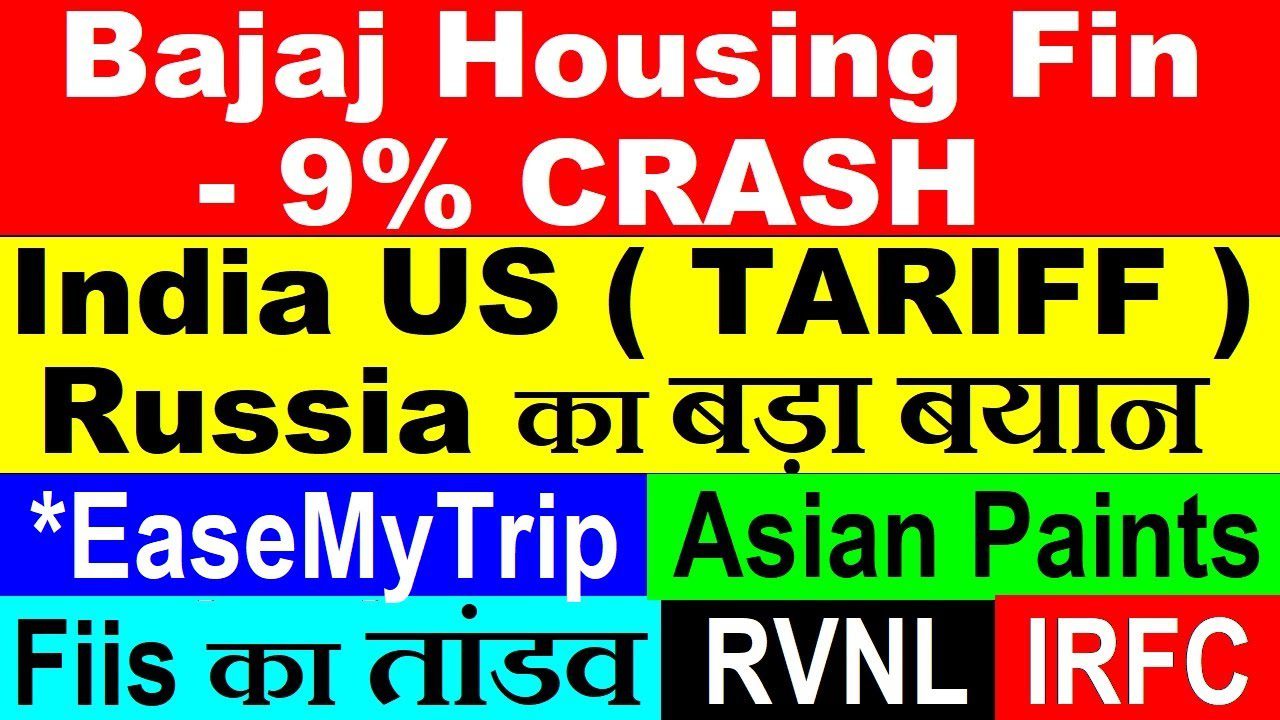
India’s stock market continues to deliver a rollercoaster ride for investors, blending sharp recoveries with sudden plunges. On December 2, 2025, as the Nifty and Sensex grapple with macroeconomic headwinds like a weakening rupee hovering near 89-90 against the dollar, select stocks shine through the gloom. Asian Paints emerges as a standout performer, climbing nearly 3% to reclaim its 52-week high, fueled by bullish brokerage calls. In stark contrast, Bajaj Housing Finance tumbles 9% on block deal jitters, while EaseMyTrip ignites investor enthusiasm with a 19-20% circuit hit following a promotional blitz.
Meanwhile, FIIs offload ₹3,600 crore worth of equities, and geopolitical ripples from Putin’s impending India visit add layers of intrigue to Russia-US tariff tensions. This article dives deep into these developments, unpacking the drivers behind each move and offering insights for savvy investors eyeing opportunities in paints, travel, housing finance, and beyond. Whether you’re tracking railway stocks ahead of the budget or decoding FII flows, these market highlights reveal key trends shaping India’s equity landscape.
Asian Paints Defies Market Pressure: Brokerages Upgrade Amid Easing Competition
In a market besieged by top-level selling pressure, Asian Paints stands tall, painting a brighter picture for optimistic investors. Shares of this paints giant surged over 3% on December 2, 2025, bouncing back to its 52-week high after a two-month rally that already lifted the stock 25% from its lows. What sparked this green glow? Brokerages, ever the market whisperers, continue to shower praise, refusing to dial back their enthusiasm despite broader volatility.
UBS, the Swiss financial powerhouse, leads the charge with a decisive upgrade. Analysts at UBS elevated Asian Paints’ rating from neutral to a more favorable stance, citing a pivotal shift in the competitive arena. Competition, once a fierce thorn in Asian Paints’ side, now appears less daunting. Investors will recall how Grasim Industries—part of the Aditya Birla Group—stormed the scene with aggressive pricing and expansion, chipping away at Asian Paints’ dominant market share. That share, which comfortably hovered between 58% and 60% for years, dipped alarmingly to 52% for the first time, underscoring the damage inflicted.
Yet, the tide turns. Grasim’s market share growth has stalled, signaling struggles in sustaining momentum. UBS highlights this as a game-changer: while Grasim dented Asian Paints’ armor, it now grapples with its own expansion hurdles. This dynamic reassures stakeholders that Asian Paints’ throne remains secure. “You can challenge the leader, but toppling it proves far from easy,” as one analyst quipped, echoing the sentiment driving today’s rally.
This upgrade isn’t isolated. Other brokerages echo similar optimism, projecting further upside as urban demand rebounds and premium product lines gain traction. Asian Paints, with its robust distribution network spanning over 70,000 dealers, leverages this edge to recapture lost ground. For investors, this signals resilience in the consumer discretionary space, where cyclical pressures often test mettle. As India’s real estate sector heats up—fueled by government infrastructure pushes and rising disposable incomes—Asian Paints positions itself for sustained growth.
Looking ahead, watch for quarterly results that could validate these calls. If volume growth accelerates beyond 10-12% year-on-year, expect more brokerage fireworks. In a sector where margins matter, Asian Paints’ focus on innovation—like eco-friendly coatings—bolsters its premium pricing power. This move reminds us: in turbulent markets, quality compounds like paints often weather the storm best, offering a canvas for long-term gains.
EaseMyTrip Ignites Investor Buzz: Winter Carnival Sale Sparks 20% Circuit Surge
Travel stocks rarely hit the brakes, but EaseMyTrip slams the accelerator, rocketing 19-20% to its upper circuit on December 2, 2025. This explosive reaction stems from a timely announcement: the launch of its Winter Carnival Sale, running from December 2 to 9. Picture this—deep discounts on flights, hotels, buses, cabs, and bundled packages—designed to lure budget-conscious wanderers during peak holiday season.
Companies that proactively grow their business earn the market’s applause, and EaseMyTrip delivers just that. This sale isn’t a one-off gimmick; it underscores a strategy to boost bookings amid recovering tourism. Post-pandemic, India’s travel sector thrives on such sparks, with domestic leisure trips surging 25% year-over-year. EaseMyTrip, a digital disruptor in online travel aggregation, capitalizes by offering seamless, affordable options that appeal to millennials and Gen Z.
The enthusiasm builds on solid fundamentals. EaseMyTrip reported a 30% revenue jump in its latest quarter, driven by ancillary services like insurance and hotel tie-ups. This circuit hit reflects investor trust in management’s ability to convert promotions into sustained revenue streams. However, consistency proves the real litmus test. One-off announcements can trigger short bursts of hype, but repeated, back-to-back initiatives forge lasting momentum. Without them, stocks risk profit-booking fades, where gains evaporate as quickly as they appear.
EaseMyTrip’s playbook aligns with broader trends in India’s $200 billion travel market, projected to hit $300 billion by 2027. Partnerships with low-cost carriers and eco-tourism pushes enhance its edge over rivals like MakeMyTrip. For investors, this rally spotlights opportunities in consumer-facing sectors rebounding from economic slowdowns. Yet, risks lurk: fuel price volatility and geopolitical tensions could dampen international flows. Still, with India’s middle class expanding, platforms like EaseMyTrip ride the wave of aspirational travel, promising more carnivals—and circuits—ahead.
As the sale unfolds, track booking metrics. If conversions exceed 15% of traffic, it validates the buzz. In a market craving growth stories, EaseMyTrip reminds us: bold business moves don’t just fill seats—they propel stocks skyward.
Bajaj Housing Finance Plunges 9%: Block Deal Fallout and Promoter Stake Sales Unfold
Not every story ends in green; Bajaj Housing Finance crashes 9% to its 52-week low on December 2, 2025, as block deal shadows loom large. Promoters, led by Bajaj Finance, offload a 2% stake, injecting ₹1,580-1,600 crore into the market. This move, anticipated by sharp-eyed viewers from late-night updates, underscores the perils of high-promoter holdings in freshly listed entities.
The trigger? Compliance with minimum public shareholding norms. Bajaj Housing Finance boasts an 88% promoter stake—a towering figure that demands dilution to 75% within three years. This 2% trim barely scratches the surface; even post-sale, holdings linger at 86%, leaving ample runway for future blocks. No rocket science here—just regulatory math forcing hands. Investors who pored over shareholding patterns saw this coming, yet the market’s knee-jerk reaction highlights sensitivity to supply overhangs.
Bajaj Housing Finance’s IPO debut in September 2024 rode RBI mandates for upper-layer NBFCs to list, mirroring peers like Tata Capital. These rules aim to enhance transparency and liquidity, but they birth short-term pain. Promoters must balance control with public floats, often diluting stakes incrementally. Large groups historically shun listings to avoid such dilutions, where non-promoter holdings—including institutions—dilute influence.
This episode spotlights housing finance’s growth paradox. India’s sector, valued at ₹40 lakh crore, surges on affordable housing schemes and urbanization. Bajaj Housing Finance, with its focus on home loans and MSME financing, taps this vein, boasting 20% asset growth last fiscal. Yet, block deals introduce volatility, especially in a rate-hike environment where EMIs strain borrowers.
For investors, this dip presents a buy-the-fear moment. Fundamentals remain robust: low NPAs under 1% and a 15% ROE signal strength. Future dilutions, while inevitable, pave the way for broader investor bases, potentially stabilizing prices. Watch for RBI’s next policy cues; easing liquidity could lift sentiment. In the end, Bajaj Housing Finance teaches a timeless lesson: regulations shape trajectories, but execution carves fortunes.
FIIs and DIIs in Flux: ₹3,600 Crore Sell-Off Amid Rupee’s Relentless Slide
Foreign Institutional Investors (FIIs) dominate headlines again, dumping ₹3,600 crore in Indian equities on December 2, 2025. This outflow aligns with the rupee’s descent to 89-90 levels, a threshold breached twice that day. From any angle, this spells caution: a depreciating currency amplifies import costs, erodes corporate margins, and fuels inflation fears.
FII flows, the market’s barometer, ebb with global cues. U.S. rate hike expectations and China’s stimulus allure pull capital eastward, leaving India vulnerable. As the rupee weakens, FIIs accelerate exits, creating a vicious cycle. DIIs, domestic heavyweights, counterbalance somewhat, but their buying power strains under valuation pressures.
This dynamic isn’t new. India’s $5 trillion market relies on FIIs for 20% of ownership, making their whims seismic. Recent months saw net outflows of ₹50,000 crore, mirroring 2022’s turmoil. Yet, history favors bulls: FIIs returned post-dips, drawn by 15% earnings growth and demographic dividends.
For investors, decode the data. Track rupee-dollar bands; sustained 90+ breaches could trigger more selling. Diversify into rupee-hedged assets or export-oriented plays like IT services, which thrive on currency tails. DIIs’ resilience—banks and mutual funds stepping up—offers a buffer, but over-reliance risks complacency.
In this flux, opportunities emerge. Sectors like renewables, insulated from forex woes, attract inflows. As FIIs recalibrate, patient investors position for the rebound, remembering: flows follow fundamentals, but timing tests resolve.
Putin’s India Visit Looms: Russia-US Tariff Tensions Signal Oil Deal Caution
Geopolitics injects drama into markets, with Russian President Vladimir Putin’s two-day India visit on the horizon in December 2025. This high-stakes rendezvous carries weight, especially amid U.S. tariff pressures on Russia. Indirect queries to Putin’s team reveal oil’s elephant in the room: India’s discounted Russian crude purchases have indirectly bolstered Moscow during the Ukraine conflict, sustaining discounted flows despite Western sanctions.
Russia’s response? A pragmatic statement: “We understand the pressure over India.” This acknowledges U.S. leverage, where every nation juggles obligations in a multipolar world. Geopolitics demands diversified taps—no single ally suffices. Reading between lines, it hints at restraint: no overt oil announcements likely, preserving U.S. trade deal prospects.
Why the balancing act? India imports 40% of its oil from Russia at $60-70 per barrel, saving $10 billion annually. But U.S. reciprocity stings; deepen Russian ties, and tariffs bite harder, erasing gains. A $150 oil windfall offset by $150 in trade losses nets zero. Thus, India prioritizes equilibrium: pause Russian oil escalations to unlock tariff relief.
Expect defense deals to steal the spotlight—upgrades to S-400 systems or BrahMos expansions—sidestepping energy. This visit, Putin’s 23rd to India, underscores enduring bonds via BRICS and QUAD alternatives. For markets, it stabilizes oil importers like Reliance and ONGC, curbing volatility. Investors eye ripple effects: lower tariffs boost exports, lifting rupee sentiment.
In essence, Putin’s nod to pressures reveals savvy diplomacy. As talks unfold, monitor announcements; subtle shifts could sway energy stocks, reminding us: global chess moves often checkmate local markets.
Railway Stocks Gear Up: Budget Season Sparks Anticipation for RVNL and IRFC
Whispers of railway sector revival grow louder as December 2025 beckons budget buzz. Stocks like Rail Vikas Nigam Ltd (RVNL) and Indian Railway Finance Corporation (IRFC) draw queries from investors puzzled by muted moves. “You predicted big swings, but where’s the action?” they ask. Patience pays; the real drama unfolds in reports, not immediacy.
November fades, leaving December and early January as crucibles. Post-January 15, pre-budget “halwa” ceremonies kick off, printing session secrecy. Thus, the next 45 days prove pivotal for rail stocks. Budgets allocate generously—railways and defense lead announcements. Once separate, rail budgets now merge into February’s fiscal blueprint, but leaks via reports foreshadow allotments.
Last cycle, reports touted a ₹3 lakh crore rail capex, igniting frenzied rallies. Reality? Flat budgets dashed hopes. Expect similar theater: upward leaks spur buys, tempered by actuals. Yet, growth odds favor hikes. India’s rail network, spanning 68,000 km, demands modernization—high-speed corridors, electrification, and Vande Bharat expansions. Government pledges ₹2.5 lakh crore annually, up 20% from prior years.
RVNL thrives as an execution arm, bagging ₹50,000 crore in orders for electrification and signaling. IRFC finances capex via bonds, with assets under management hitting ₹4 lakh crore. Operation Sindoor’s border infra boosts defense-rail overlaps, amplifying allocations. Defense budgets, post-conflict, eye 15% jumps versus rail’s 10%.
For investors, this period demands vigilance. Track CAG reports and ministry whispers; spikes above 5% signal entries. Risks? Execution delays and monsoons. But with PPP models accelerating, RVNL and IRFC embody infra’s promise. As tracks lay foundations for growth, these stocks chug toward station calls.
Defense Stocks in the Spotlight: Budget Boosts and Operation Sindoor’s Lasting Echo
Parallel to rails, defense stocks simmer with potential, queries mirroring rail skepticism. Big movements? They brew in budget shadows. December-January’s window amplifies stakes, with allocations certain amid rising threats.
India’s $75 billion defense spend targets self-reliance via Atmanirbhar Bharat. Operation Sindoor—2024’s surgical strikes—exposed gaps, spurring urgency. Budgets historically rise 8-10%; this year, 12-15% seems plausible, dwarfing rail’s pace. Reports will leak figures, fueling pre-event surges.
Key players like Bharat Electronics and Hindustan Aeronautics eye windfalls. Orders for drones, missiles, and radars—₹1 lakh crore pipeline—await greenlights. Unlike rail’s capex focus, defense blends imports with indigenization, reducing forex drags.
Investors note: leaks drive 10-20% pops, but verify fundamentals. ROEs above 15% and order books over 2x revenue signal strength. Geopolitics, from LAC tensions to Indo-Pacific shifts, sustains demand. As budgets unfold, defense stocks fortify portfolios against volatility.
This synergy—rail and defense—highlights infra’s dual engine. Watch crossovers like border rail projects. In budget’s forge, opportunities hammer into shape.
Rupee’s Perilous Path: Decoding Currency Crashes and Their Market Ripples
The Indian rupee’s tumble to 89-90 USD on December 2, 2025, isn’t mere noise—it’s a siren for broader malaise. Twice touching 90, it underscores import vulnerabilities and FII flight. Why now? U.S. Fed signals, oil spikes, and trade deficits converge.
A weak rupee hikes input costs for 60% import-dependent firms, squeezing FMCG and auto margins by 2-3%. Exporters cheer—IT and pharma gain 5-7% forex boosts—but net importers suffer. Historical precedents: 2013’s 68-68 plunge triggered reforms; 2022’s 80 breach spurred reserves buildup.
RBI intervenes with $30 billion forex war chests, but sustainability hinges on inflows. Gold imports, at 800 tonnes annually, exacerbate drains. Solutions? Diversify trade—boost exports to ASEAN—and green energy to curb oil reliance.
For investors, hedge via dollar funds or commodity plays. A 5% further slide could shave Nifty 500 points. Yet, rebounds follow: 2023’s recovery added 15%. Track interventions; stability at 88-89 revives bulls.
In currency’s current, markets navigate tides—adapt, or drown.
IMF’s Censure and GDP Doubts: Unpacking India’s Economic Report Card
Echoing viewer demands, India’s economic narrative faces scrutiny. IMF slaps a “C” grade on data integrity, fueling claims of fudged GDP and inflation figures. Is the world’s fastest-growing major economy masking cracks?
GDP growth hit 7.2% in FY25, but skeptics point to base effects and informal sector blind spots. Inflation, officially 5%, feels higher amid food volatility. IMF critiques highlight underreported informal jobs—90% of workforce—and survey gaps.
Reality check: UPI’s 50 billion transactions and GST collections at ₹2 lakh crore monthly affirm digital vigor. Yet, reforms lag—labor codes stall, farm distress lingers. IMF urges transparency; India counters with MOSPI upgrades.
Investors weigh: robust macros (8% private capex) versus micro pains (youth unemployment at 23%). Opportunities abound in fintech and renewables, but policy pivots matter. As debates rage, true growth emerges from candor, not concealment.
Strategic Insights for Investors: Balancing Risks and Rewards in Uncertain Times
Wrapping these threads, December 2025’s market mosaic demands strategic finesse. Asian Paints’ resilience spotlights quality; EaseMyTrip’s surge celebrates growth catalysts. Bajaj Housing’s dip? A compliance rite, not ruin. FII outflows and rupee woes test nerves, but DII anchors hold. Geopolitical dances, from Putin to tariffs, underscore diversification. Rail and defense budgets promise fireworks—position early, exit wisely.
Core advice: Anchor in fundamentals—earnings growth above 15%, debt-to-equity under 0.5. Diversify across cyclicals and defensives; allocate 20% to infra themes. Monitor budgets, flows, and currencies weekly. Risks? Global recessions or policy U-turns. Rewards? India’s 7% GDP trajectory lifts all boats.
In this arena, knowledge empowers. Stay informed, act decisively—markets reward the prepared.
Conclusion: Seizing Momentum in India’s Dynamic Equity Arena
As December 2, 2025, fades, these highlights— from Asian Paints’ comeback to Putin’s poised visit—paint a vibrant, volatile canvas. India’s market, resilient amid global gales, beckons bold investors. Track budgets for rail-defense pops, hedge rupee risks, and chase growth like EaseMyTrip’s. With IMF nudges spurring reforms, the stage sets for 2026’s ascent. Engage, diversify, thrive—your portfolio awaits its masterpiece.