
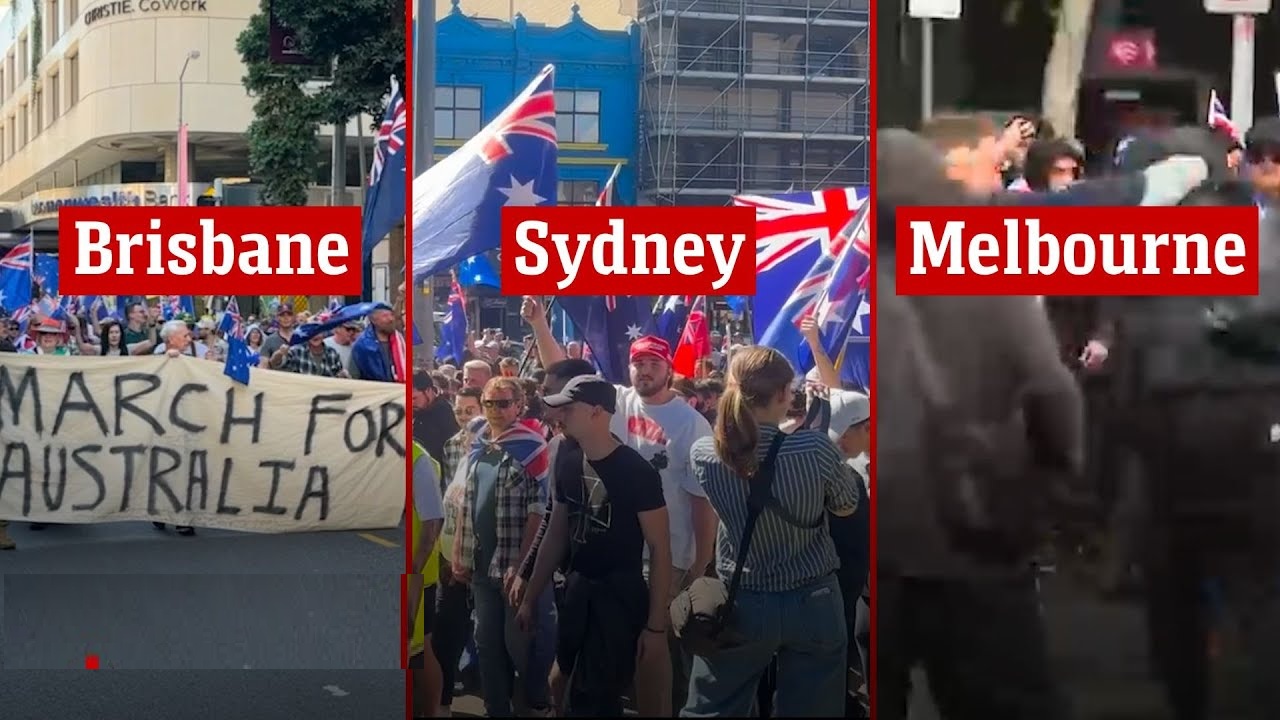
On August 31, 2025, Australia witnessed one of its largest coordinated anti-immigration demonstrations in recent history. The March for Australia protests swept across major cities from Sydney to Perth, drawing thousands of participants while sparking fierce counter-demonstrations and government condemnation. These rallies exposed deep fractures in Australian society, highlighting tensions between economic pressures, cultural anxieties, and extremist exploitation of legitimate concerns. The events marked a pivotal moment in Australia’s ongoing immigration debate, with far-reaching implications for the nation’s multicultural identity and social cohesion.
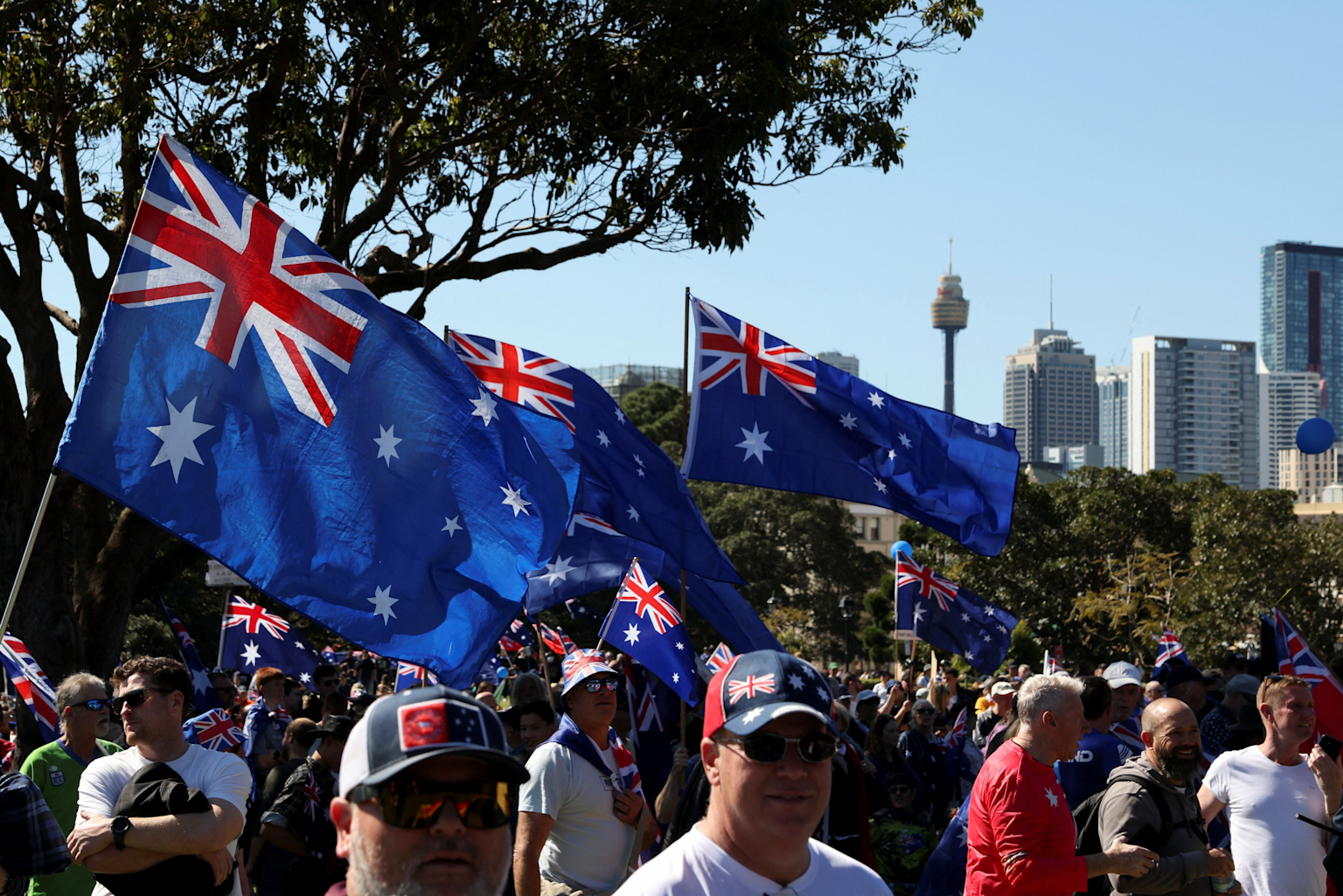
Crowd waving Australian flags during a 2025 Sydney anti-immigration rally with city skyline in background
The Genesis of Mass Mobilization
Economic Drivers Behind Public Anger
The March for Australia movement emerged against a backdrop of mounting economic pressures facing ordinary Australians. Housing affordability reached crisis levels across major cities, with median home prices soaring beyond reach for many families. The cost-of-living crisis intensified throughout 2024 and 2025, with essential services stretched thin and infrastructure struggling to keep pace with population growth.
Protesters repeatedly cited these tangible hardships as motivation for their participation. Glenn Allchin, a Sydney demonstrator, encapsulated widespread sentiment when he told reporters: “Our country is bursting at the seams and our government continues to bring in more people. Our children are struggling to find homes, our hospitals require seven-hour waits, our roads are congested, and there’s a shortage of infrastructure”. This sentiment resonated across demographics, providing fertile ground for anti-immigration messaging to take root.
Cultural Replacement Anxieties
The protests tapped into deeper cultural anxieties about demographic change and national identity. Promotional materials specifically targeted Indian migrants, who comprise over 3% of Australia’s population and represent the fastest-growing immigrant community. Inflammatory flyers proclaimed: “More Indians in 5 years, than Greeks and Italians in 100… This isn’t a slight cultural change – it’s replacement plain and simple”.
These messages exploited genuine concerns about rapid social change while promoting divisive “cultural replacement” theories. The rhetoric particularly resonated in communities experiencing visible demographic shifts, where longtime residents felt uncertain about their place in an evolving Australia.

Timeline of Key Events: March for Australia Protests August 2025
From Grievance to Organization
The transformation of individual frustrations into organized protest required sophisticated coordination and messaging. The March for Australia group positioned itself as a grassroots movement representing “mainstream” Australian concerns that politicians allegedly ignored. Their website claimed: “Mass migration has torn at the bonds that held our communities together,” while demanding an “end to mass immigration”.
Organizers operated under pseudonyms, with primary figure “Bec Freedom” maintaining anonymity while coordinating nationwide demonstrations. This approach allowed the movement to present itself as organic and populist while obscuring potential extremist connections.
The Shadow Network: Extremist Infiltration
Neo-Nazi Connections Exposed
Investigations revealed disturbing links between March for Australia organizers and established extremist groups. The National Socialist Network (NSN), led by convicted neo-Nazi Thomas Sewell, actively promoted the rallies and claimed ownership of the movement. Sewell, who has a documented history of violent attacks and white supremacist activism, addressed the Melbourne rally despite organizers’ public distancing attempts.
The NSN’s involvement was particularly concerning given Sewell’s criminal record and extremist ideology. Court documents reveal his role in founding neo-Nazi organizations, attacking security guards and hikers, and promoting white supremacist violence. His presence at the Melbourne rally, where he declared “if we do not stop immigration, then our death is certain,” demonstrated the extremist infiltration of ostensibly mainstream protests.
Political Legitimization
Several political figures provided legitimacy to the rallies despite their extremist connections. One Nation leader Pauline Hanson and Senator Malcolm Roberts attended the Canberra demonstration, with Hanson telling supporters: “If you don’t love it, I’ll be the first one to take you to the airport and put you on a plane”. Their participation helped normalize the events while providing political cover for extremist messaging.
Bob Katter, federal MP and leader of Katter’s Australian Party, spoke at the Townsville rally after a controversial week that included threatening a journalist who mentioned his Lebanese heritage. His presence, along with other party members, demonstrated how populist politicians embraced anti-immigration sentiment despite its extremist undertones.
Symbolic Messaging and Visual Identity
Protesters adopted specific visual symbols to reinforce nationalist messaging. The mandatory “Australian flags only” rule excluded foreign symbols while promoting the historical Eureka flag, associated with resistance and adopted by some nationalist groups. These visual choices created a sanitized appearance while conveying exclusionary messages to target communities.
The careful curation of protest imagery reflected sophisticated messaging strategies designed to maximize mainstream appeal while signaling to extremist supporters. This dual-messaging approach allowed organizers to maintain plausible deniability while advancing divisive agendas.
A Nation Takes to the Streets
Sydney: The Largest Gathering
Sydney hosted the most significant demonstration, with the Australian Broadcasting Corporation estimating between 5,000 and 8,000 participants gathered in Belmore Park. The massive crowd, draped in Australian flags and chanting anti-immigration slogans, created a powerful visual spectacle that dominated news coverage. The timing coincided with the Sydney Marathon, creating complex logistical challenges as 35,000 runners navigated the city while protesters occupied central areas.
The Sydney rally demonstrated the movement’s capacity for mass mobilization while maintaining relative order. NSW Police deployed up to 1,000 officers throughout the inner city, implementing comprehensive security measures to prevent confrontations. The operation concluded “without significant incidents,” though tensions remained high throughout the day.
Melbourne: Violence and Confrontation
Melbourne experienced the day’s most violent clashes, with riot police deploying pepper spray and baton rounds to separate opposing groups. An estimated 5,000 people participated across competing demonstrations, creating chaotic scenes in the city center. The volatility increased when Thomas Sewell addressed protesters from Parliament House steps, delivering inflammatory rhetoric that further escalated tensions.
Victoria Police made six arrests on charges including assaulting police, riotous behavior, and assault. Two officers sustained injuries during the confrontations, highlighting the dangerous atmosphere that developed throughout the day. The Melbourne events demonstrated how anti-immigration protests could rapidly spiral into violence when extremist elements gained prominence.

Estimated Attendance at March for Australia Rallies by City – August 31, 2025
National Coordination and Scale
The simultaneous rallies across Adelaide, Brisbane, Perth, Canberra, Townsville, and Hobart revealed sophisticated organizational capabilities behind the movement. Each city adapted the core messaging to local concerns while maintaining consistent branding and objectives. Adelaide police estimated 15,000 people attended competing demonstrations, while smaller gatherings occurred in regional centers.
The national coordination required significant resources and planning, suggesting organized backing beyond grassroots enthusiasm. The ability to mobilize thousands simultaneously across multiple cities indicated established networks and funding sources that remained largely hidden from public scrutiny.
Government Response and Official Condemnation
Federal Leadership Opposition
The Australian government mounted a comprehensive condemnation of the rallies, with senior ministers denouncing the events as divisive and extremist. Home Affairs Minister Tony Burke stated unequivocally: “There is no place in our country for people who seek to divide and undermine our social cohesion. Nothing could be less Australian”. His statements reflected the government’s concern about both immediate public safety and longer-term social consequences.
Minister for Multicultural Affairs Anne Aly emphasized Australia’s multicultural values, declaring: “We stand with all Australians, no matter where they were born, against those who seek to divide us and who seek to intimidate migrant communities”. Her response highlighted the government’s commitment to protecting vulnerable communities while rejecting extremist messaging.
Law Enforcement Preparedness
Police agencies across Australia implemented extensive security operations, deploying thousands of officers to monitor competing demonstrations and prevent violence. Victoria Police declared Melbourne’s CBD a designated area, allowing enhanced search powers and face covering removal requirements. This unprecedented response reflected genuine concerns about extremist participation and potential conflict.
The coordinated law enforcement response demonstrated how seriously authorities viewed the threat posed by the rallies. NSW Police Acting Deputy Commissioner Peter McKenna expressed confidence in planning while acknowledging the complex challenges: “I’m very confident in our planning that the protest groups should not come across each other. If by chance they do, we’ll have significant police resources there to ensure public safety”.
Political Opposition Perspectives
Opposition leader Sussan Ley attempted to balance legitimate protest rights with public safety concerns, stating: “In Australia, we protect the right to an opinion and the right to protest. But that must be done peacefully and respectfully. There is no place for violence, racism or intimidation”. Her measured response reflected the political sensitivity surrounding immigration issues while rejecting extremist elements.
The Greens adopted a stronger stance, with anti-racism spokesperson Mehreen Faruqi declaring: “These rallies must be called out for what they are, acts of racist fearmongering and hate”. This response highlighted partisan divisions over how to address anti-immigration sentiment while protecting democratic values.
Counter-Movements and Community Solidarity
Refugee Action Coalition Response
The Refugee Action Coalition organized significant counter-demonstrations in major cities, drawing hundreds of supporters committed to opposing anti-immigration messaging. Their Sydney event occurred simultaneously with the main rally, creating tense standoffs managed by heavy police presence. Coalition spokesperson emphasized the depth of opposition: “Our event shows the depth of disgust and anger about the far-right agenda of March For Australia”.timesofindia.indiatimes+4
Counter-protesters adopted inclusive messaging designed to counter divisive rhetoric, chanting “refugees are welcome here” and displaying multicultural symbols. Their presence provided visible opposition to extremist messaging while affirming Australia’s humanitarian commitments and multicultural values.rnz+1
Community Organization and Safety Networks
Migrant communities, particularly Indian-Australians, implemented extensive safety measures in response to targeted rhetoric. Community leaders urged members to “stay inside” on August 31, while establishing support networks for those feeling threatened. Universities extended flexible attendance policies and enhanced campus security to protect international students.
These community responses revealed the real-world impact of protest rhetoric on vulnerable populations. Even when physical violence didn’t occur, the psychological effect created lasting anxiety and social isolation among targeted groups. The widespread nature of these precautions demonstrated how anti-immigration protests affected daily life far beyond immediate participants.
Solidarity Movements and Public Support
Multiple organizations and public figures expressed solidarity with threatened communities while condemning extremist messaging. Universities issued statements supporting international students, while employers offered flexible work arrangements for affected staff. These responses created networks of practical support that helped counter isolation and fear.
The breadth of solidarity responses indicated significant public opposition to extremist messaging, even as economic concerns about immigration persisted. This dynamic highlighted the complex challenge of addressing legitimate policy concerns while rejecting divisive rhetoric and protecting vulnerable communities.
Targeted Communities: Fear and Resilience
Indian-Australian Community Impact
The specific targeting of Indian migrants created widespread anxiety within one of Australia’s largest and most successful immigrant communities. Promotional materials and social media content explicitly singled out Indian nationals, claiming their presence represented “cultural replacement” rather than normal migration. This messaging transformed abstract immigration debates into personal threats for hundreds of thousands of residents.
University of Melbourne student Varada Nair captured widespread sentiment: “You do feel that when so many reels are being sent to you and people are telling you that you should stay away, you should not go out of the house on that day… It does create a worry in your head. What if something does happen?”. Her experience reflected broader community anxiety that extended beyond immediate safety to questions about belonging and acceptance.
Impact on International Students
International students faced particular vulnerability due to their temporary status and distance from family support networks. Federation of Ethnic Communities’ Councils of Australia chair Peter Doukas explained: “The international student community is already reeling from government policies… they have been scapegoated for, among many things, the property prices and other economic issues, which they’re not responsible for”.wikipedia
Educational institutions responded with enhanced support services, flexible attendance policies, and increased security measures. However, the psychological impact persisted beyond immediate safety concerns, affecting academic performance, social participation, and long-term settlement decisions. Many students reconsidered their commitment to remaining in Australia after graduation.indiatoday+1
Economic and Social Consequences
The targeting of specific migrant communities had measurable economic effects as workers avoided public spaces, canceled shifts, and modified daily routines. Uber drivers and gig workers reported planning to “log off” their apps due to safety concerns, while retail and hospitality workers sought schedule modifications. These individual decisions created cumulative economic impacts that extended far beyond the protest day itself.
The broader social consequences included increased isolation, reduced community participation, and weakened intercultural connections. When targeted communities withdrew from public life, it reduced opportunities for positive interaction and mutual understanding, potentially reinforcing the divisions the protests sought to create.
Historical Context and Precedent
Australia’s Immigration Legacy
The March for Australia protests occurred within the context of Australia’s complex immigration history, including the White Australia policy that officially restricted non-European migration until the 1970s. This historical legacy provided both symbolic power and contemporary relevance for anti-immigration messaging, allowing organizers to invoke past policies while claiming mainstream legitimacy.youtube
Previous anti-immigration movements, including Reclaim Australia rallies and the 2005 Cronulla riots, established templates for organized opposition to multiculturalism. These precedents demonstrated both the recurring nature of such tensions and the potential for violence when extremist elements gained influence over community grievances.news18youtube
Rising Global Anti-Immigration Sentiment
The Australian protests reflected broader global trends toward anti-immigration activism, occurring simultaneously with similar demonstrations in the United Kingdom and other Western nations. International connections and shared messaging strategies suggested coordination beyond national boundaries, with common themes of “cultural replacement” and economic competition appearing across different contexts.youtube
Polling data revealed growing public concern about immigration levels, with 53% of Australians considering migration numbers “too high” according to Lowy Institute research. However, this represented a more moderate position than extremist messaging suggested, with only 34% supporting complete immigration cessation compared to a global average of 43%.
Political and Media Environment
The protests occurred within a polarized media environment where immigration issues received intense coverage and debate. Some commentators and politicians had normalized anti-immigration rhetoric, potentially creating space for more extreme messaging to appear mainstream. This dynamic demonstrated how legitimate policy discussions could be exploited by extremist groups seeking broader acceptance.
The role of social media in organizing and promoting the protests highlighted technological changes that enabled rapid mobilization and message dissemination. Platforms allowed both coordination of extremist activity and counter-organizing by community groups, creating parallel information environments with competing narratives about immigration and national identity.
Policy Implications and Systemic Responses
Immigration Policy Context
The protests occurred amid significant changes to Australia’s immigration settings, with the government implementing caps on international student placements and tightening visa processing requirements. These policy shifts responded to public concerns about housing pressure and service capacity while attempting to maintain Australia’s economic dependence on skilled migration.
The tension between economic necessity and public sentiment created complex political challenges for policymakers. Australia’s aging population and skills shortages required continued migration, while infrastructure deficits and housing costs created legitimate public concerns about current levels. Addressing these underlying issues required long-term planning and investment rather than immigration restrictions alone.
Community Relations and Integration
The targeting of specific migrant communities raised questions about integration policies and community relations support. Successful multicultural societies require active efforts to build connections across diverse populations, yet funding for such programs often remained limited compared to the scale of demographic change.
The protests highlighted the need for proactive community engagement that addressed legitimate concerns while preventing extremist exploitation. This required collaboration between government agencies, community organizations, and civic institutions to build understanding and manage change constructively
Security and Extremism Prevention
The extremist infiltration of the protests demonstrated the ongoing challenge of preventing radicalization while protecting democratic rights. The National Socialist Network’s prominent role revealed how hate groups exploited legitimate grievances to advance divisive agendas. Effective responses required both law enforcement vigilance and community resilience against extremist messaging.
Counter-terrorism agencies faced the complex task of monitoring domestic extremism without suppressing legitimate political expression. The March for Australia events provided a case study in how extremist groups operated within democratic societies, using legal protest mechanisms to advance illegal ideological goals.
Media Coverage and Public Discourse
Mainstream Media Response
Major news outlets provided extensive coverage of the protests while grappling with how to report extremist messaging responsibly. The Australian Broadcasting Corporation, Reuters, CNN, and other international media emphasized government condemnation and extremist connections while documenting the events’ scale and impact. This coverage helped contextualize the protests within broader democratic concerns rather than normalizing extremist messaging.
However, the volume of coverage potentially amplified the protests’ impact beyond their actual size and significance. The visual spectacle of thousands of flag-waving protesters created powerful imagery that resonated with audiences regardless of specific political positions. This dynamic raised questions about how media attention might inadvertently encourage similar future demonstrations.
Social Media Amplification
Social media platforms played crucial roles in both organizing the protests and spreading their messaging to broader audiences. The March for Australia movement used Instagram, X (formerly Twitter), and Telegram to coordinate activities while presenting sanitized public messaging that obscured extremist connections. These platforms enabled rapid mobilization while allowing plausible deniability about violent or illegal content.
Counter-movements also utilized social media to organize opposition and provide safety information to vulnerable communities. Indian-Australian influencers created content in multiple languages to warn community members and provide practical advice, demonstrating how social media could serve protective as well as divisive functions.indiatoday+1
Information Warfare and Disinformation
The protests occurred within a broader information environment characterized by competing narratives about immigration’s impact on Australian society. False claims about daily migrant arrivals spread rapidly through social media and talk radio, requiring corrections from official statistics agencies. These dynamics highlighted how misinformation could fuel public anxiety and extremist recruitment.
The challenge of countering false information while addressing legitimate concerns required sophisticated communication strategies that acknowledged real problems without accepting extremist solutions. Government agencies, community organizations, and media outlets all played roles in providing accurate information while promoting constructive dialogue about immigration policy.
International Implications and Comparisons
Global Anti-Immigration Movement Connections
The March for Australia protests reflected broader international trends toward nationalist anti-immigration activism, sharing messaging and organizational strategies with movements in the United Kingdom, United States, and Europe. Common themes of “cultural replacement,” economic competition, and political grievance appeared across different national contexts, suggesting coordinated international networks or shared ideological sources.
These international connections raised questions about foreign influence in domestic Australian politics, particularly given the sophisticated coordination required for simultaneous nationwide demonstrations. While direct evidence of overseas funding or organization remained limited, the similarity of messaging and tactics suggested knowledge transfer across borders.
Comparative Democratic Responses
Australia’s response to the anti-immigration protests could be compared with similar events in other democratic societies, providing lessons for managing extremist infiltration of legitimate political movements. The government’s clear condemnation while maintaining protest rights reflected established democratic principles, though questions remained about long-term effectiveness
The role of counter-protests in providing alternative narratives and protecting vulnerable communities offered models for civil society responses to extremist mobilization. However, the potential for violence when opposing groups confronted each other highlighted the challenges facing law enforcement in democratic societies.
Regional Security and Stability
The success of extremist groups in exploiting immigration concerns for broader anti-democratic purposes had implications for regional security and stability. Australia’s role as a democratic leader in the Asia-Pacific region meant that internal divisions over immigration and multiculturalism could affect international relationships and regional cooperation.reuters+1
The specific targeting of Indian migrants occurred within the context of Australia’s growing economic and security relationships with India, potentially complicating diplomatic and trade connections. Managing domestic political tensions while maintaining international partnerships required careful balancing of democratic values with strategic interests.
Looking Forward: Challenges and Opportunities
Addressing Root Causes
The underlying economic and social pressures that motivated protest participation required comprehensive policy responses that went beyond immigration restrictions alone. Housing affordability, infrastructure investment, healthcare capacity, and employment opportunities all needed attention to address legitimate public concerns while preventing extremist exploitation.
Successful responses required coordination across multiple government levels and policy areas, moving beyond simplistic immigration debates to address systemic challenges facing Australian society. This included both immediate measures to relieve pressure on services and longer-term planning for sustainable population growth.
Strengthening Community Resilience
Building resilience against extremist messaging required proactive community engagement that brought diverse populations together around shared interests and values. This included supporting multicultural festivals, interfaith dialogue, neighborhood associations, and civic organizations that created positive interaction opportunities.
Educational institutions, employers, and community organizations all played roles in fostering understanding and preventing isolation of vulnerable groups. The extensive solidarity responses to the protests demonstrated existing capacity for positive community mobilization that could be strengthened and expanded.
Democratic Institution Protection
The extremist infiltration of the protests highlighted ongoing challenges to democratic institutions and values in contemporary Australia. Protecting democratic rights while preventing violent extremism required sophisticated responses that distinguished between legitimate political expression and illegal hate speech or incitement to violence.
This included both law enforcement responses to criminal activity and broader civic education efforts that promoted democratic values and critical thinking about extremist messaging. The long-term health of Australian democracy depended on citizens’ ability to engage with complex political issues without falling prey to simplistic extremist solutions.
Conclusion: A Nation at a Crossroads
The March for Australia protests of August 31, 2025, revealed fundamental tensions within contemporary Australian society between economic pressures, cultural change, and democratic values. While the immediate events concluded without major violence, their broader implications continue to shape national conversations about immigration, multiculturalism, and social cohesion. The success of extremist groups in exploiting legitimate concerns for divisive purposes demonstrated both the fragility and resilience of democratic institutions when facing coordinated challenges.
The protests highlighted how economic hardship, inadequate infrastructure, and rapid social change could create conditions for extremist recruitment and community division. However, they also revealed the strength of civil society responses, government leadership, and community solidarity in opposing hate and protecting vulnerable populations. The path forward requires addressing underlying economic and social challenges while strengthening democratic resilience against extremist manipulation.
Australia’s response to these events will significantly influence the nation’s future direction, determining whether diverse communities can work together to address shared challenges or will fragment into competing factions defined by fear and division. The choice between constructive policy solutions and destructive scapegoating remains open, with the outcome depending on the sustained commitment of citizens, leaders, and institutions to democratic values and inclusive prosperity.
The March for Australia protests ultimately served as both a warning about the dangers of extremist infiltration and a demonstration of democratic societies’ capacity for self-correction when citizens and institutions respond with courage, clarity, and commitment to shared values. The ongoing challenge is to transform this moment of crisis into an opportunity for building a more just, prosperous, and cohesive society that serves all Australians regardless of their background or beliefs.