
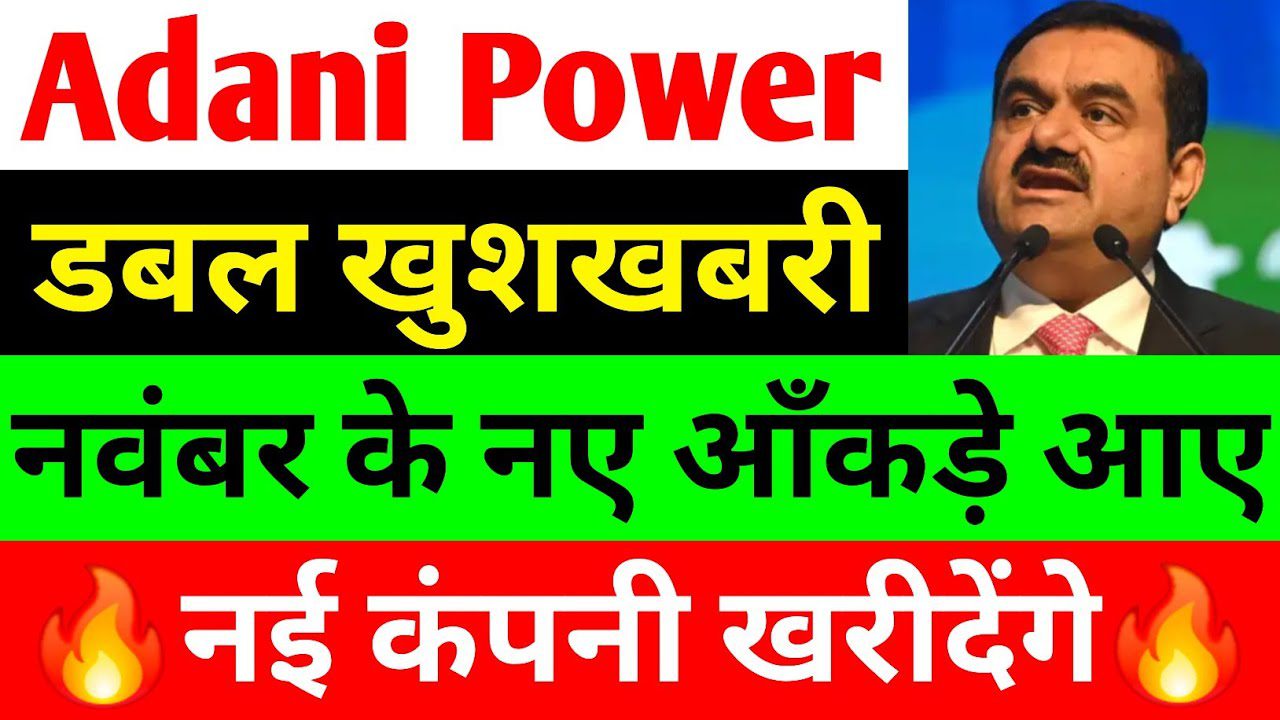
In the dynamic world of Indian stock markets, Adani Power Ltd. emerges as a powerhouse, captivating investors with its relentless expansion and robust financials. As of December 2025, Adani Power share price hovers around ₹143-145, reflecting a resilient performance amid sector volatility.
This Adani Power share price analysis delves into the latest Adani Power news, including strategic acquisitions like GVK Energy and JP Power, mutual fund inflows, and revenue milestones from 2021 to 2025. For savvy investors eyeing Adani Power stock predictions for 2026, this comprehensive guide uncovers why this thermal energy giant could deliver multibagger returns. Discover how Adani Power’s capacity doubling by 2032 positions it as a top energy stock pick.
Adani Power Stock Overview: Navigating Recent Volatility and Key Metrics
Adani Power Ltd., a flagship of the Adani Group, dominates India’s private thermal power sector with an installed capacity exceeding 17,550 MW across coal-fired plants in Gujarat, Maharashtra, Rajasthan, and beyond. Investors tracking Adani Power stock closely note its journey from a modest ₹144 close on a recent Friday to intraday highs of ₹144.20, signaling steady buying interest despite a 1-month dip of 6.82%.
This Adani Power share price today reflects broader market sentiments, where profit booking follows explosive post-split rallies. The stock split in September 2025, at a 5:1 ratio, democratized access, drawing retail frenzy and pushing volumes to 13 million shares on peak days. Yet, Adani Power’s fundamentals shine: a trailing P/E of 23.05, ROE of 26.1%, and debt-to-equity ratio of 0.83 underscore operational efficiency.
Historical performance paints a bullish picture. Over three months, Adani Power stock delivered 17.91% gains, outpacing the Nifty Utilities index by 6.5%. Six-month returns hit 31.27%, while nine-month surges reached 42.2%, fueled by merchant sales and PPA stability. The 52-week range—from a low of ₹89 to a high of ₹182.75—highlights volatility but also resilience, with the stock rebounding 60.96% from lows.
For long-term Adani Power stock predictions, analysts forecast 20-30% upside in 2026, driven by capacity additions and greenfield projects. Beta at 0.36 indicates lower market sensitivity, making it a defensive play in energy portfolios. As India’s power demand surges toward 270 GW peaks in 2025 summers, Adani Power positions itself as an indispensable supplier. Track Adani Power share price live via NSE/BSE for real-time insights, but always consult financial advisors before investing.
Adani Power Latest News: Double Boost from Acquisitions and Assam Mega-Investments
December 2025 brings double good news for Adani Power shareholders: aggressive bids in insolvency auctions and a landmark ₹63,000 crore investment in Assam’s energy infrastructure. Adani Power latest news spotlights its frontrunner status in acquiring GVK Energy’s 330 MW Alaknanda hydro project, outbidding rivals like JSW Energy and Vedanta with offers between ₹3,000-4,000 crore.
This move aligns with Adani Power’s acquisition strategy, enhancing its hydro portfolio amid a PPA valid until 2045. Nine bidders, including Jindal Power and Torrent Power, vied for this Uttarakhand-based asset, but Adani’s financial muscle and operational synergy make it the likely winner. Insolvency proceedings, initiated in May 2025, expose GVK’s ₹11,187 crore debt, yet the plant’s secured revenue stream promises quick integration.
Parallelly, Adani Power secures a Letter of Award from Assam Power Distribution for a 3,200 MW ultra-supercritical thermal plant, investing ₹48,000 crore under the DBFOO model. Commissioning phases start December 2030, generating 20,000-25,000 construction jobs and 3,500 operational roles, bolstering Northeast India’s grid. Adani Green Energy complements this with ₹15,000 crore for 2,700 MW pumped storage projects, signaling a hybrid future.
Challenges persist: A Bangladesh court halted arbitration over Godda plant dues in November 2025, citing PPA irregularities. Adani contests this, affirming Singapore arbitration’s precedence. Despite such hurdles, Adani Power latest news underscores 4.2% FY25 power demand growth to 1,695 BU, with March 2025 spiking 6.6%. These developments propel Adani Power share price toward ₹150-160 short-term targets.
Adani Power Acquisitions 2025: GVK Energy and JP Power Bids Reshape Portfolio
Adani Power’s 2025 acquisitions strategy aggressively targets distressed assets, amplifying its 18,150 MW capacity. The GVK Energy bid headlines this spree: 21 expressions of interest flooded in September 2025, with Adani, JSW Neo Energy, and Jindal Power leading. Formal offers for Alaknanda, a run-of-the-river hydro gem on Uttarakhand’s Alaknanda River, range ₹3,000-4,000 crore, covering 88% unsecured creditor claims led by IDBI Bank.
Adani Power’s edge? Existing 167 MW hydro exposure and a vision to triple renewable mix by 2030. Acquiring GVK adds stable PPA-backed revenue, mitigating merchant price dips to ₹3.71/kWh on IEX. This follows June 2025’s ₹4,000 crore Vidarbha Industries Power takeover, a 600 MW Nagpur coal plant via IBC, boosting Maharashtra footprint.
Enter JP Power: Adani Group’s November 2025 coup secures Jaiprakash Associates (JAL) for ₹14,535 crore, gaining 24% indirect stake in JP Power Ventures. Creditors approved Adani’s plan with 89% votes, trumping Vedanta’s ₹17,000 crore offer via faster payouts. JP Power shares rocketed 29% in two days to ₹22.09, valuing it at ₹15,139 crore.
Adani eyes 25% more from ICICI Bank’s stake sale, pushing control to 49% and promoter status. JP Power’s profit-making hydro and thermal assets—1,320 MW in Rajasthan, 400 MW in Madhya Pradesh—synergize with Adani’s grid, unlocking ₹57,185 crore JAL debt resolution. Analysts hail this as a “lifeline,” forecasting 20-30% JP Power upside in 2026. Adani Power acquisitions 2025 thus fortify its base-load dominance, targeting 2.5x capacity by 2032.
Mutual Fund Investments in Adani Power: November 2025 Inflows Signal Confidence
Institutional bets underscore Adani Power’s appeal. November 2025 mutual fund holdings climbed to 2.69%, up from 1.76% in June, with 72 funds buying versus 10 selling—a net 235,643 shares influx in August alone. Quant Mutual Fund’s ELSS Tax Saver Fund leads with 1.43% (276 million shares), followed by SBI Equity Hybrid at ₹52 crore and Quant Small Cap at ₹985 crore.
Eight funds entered fresh, zero exited, per latest data. GQG Partners, Adani’s US ally, boosted stakes amid Hindenburg echoes, investing when shares dipped post-reports. SBI Focus Fund poured ₹1,736 crore, Quant Large & Mid Cap ₹1,992 crore, signaling thematic energy funds’ pivot.
FII holdings dipped to 11.53% from 12.46%, yet DIIs rose to 2.69%. This shift reflects domestic conviction in Adani Power’s 10.9% 9M FY25 revenue growth. For mutual fund investors, Adani Power offers diversification in power generation stocks, with low 0% dividend yield offset by capital appreciation potential.
Adani Power Revenue and Profit Analysis: From ₹21 Crore in 2021 to ₹56,203 Crore in 2025
Adani Power’s financial trajectory inspires: Revenue catapulted from ₹21 crore in 2021 to ₹56,203 crore in 2025, a 2,677x leap driven by volume surges and PPA escalations. In 2022, it hit ₹27,100 crore; 2023, ₹38,773 crore (43% YoY); 2024, ₹50,351 crore (30% growth).
Q3 FY25 revenues reached ₹14,833 crore, up 11% YoY, with EBITDA at ₹6,185 crore (23% rise). Full FY25 continuing revenues: ₹56,473 crore (10.8% up), EBITDA ₹21,575 crore (14.8%). Profit after tax? ₹12,938 crore in FY25, down from ₹20,829 crore FY24 due to one-time adjustments, yet Q4 FY25 PAT held at ₹2,599 crore.
From 2021’s ₹1,269 crore PAT to 2025’s ₹12,938 crore, CAGR exceeds 78%. Key drivers: Fuel cost optimizations (down 26% on IEX) and 1,695 BU demand. September 2025 standalone sales: ₹11,242 crore (9.53% YoY). Adani Power revenue trends affirm scalability, with TTM at ₹55,475 crore and PAT ₹11,751 crore.
Adani Power Financial Health: Balance Sheet Strength and EBITDA Margins
Adani Power’s balance sheet radiates solidity: Shareholders’ funds swelled to ₹58,000 crore by March 2025, liquidity at peak levels post-FY25 cash flows. Debt stands manageable at 0.83 D/E, with interest expenses at 5.94% of revenues. ROCE hit 22.5%, ROE 26.1%, surpassing peers like NTPC.
EBITDA margins expanded to 37% in FY25, up from 35% FY24, thanks to 21.9% 9M growth to ₹16,478 crore. Cash from operations funds capex, minimizing dilution. Adani Power financial health metrics position it for sustained 15-20% CAGR through 2030.
Adani Power Future Outlook: Capacity Expansion to 2032 and Green Energy Pivot
Adani Power eyes 2.5x capacity by 2032, from 17,550 MW to over 40,000 MW, blending thermal with 10 GW renewables. Assam’s 3,200 MW plant and Godda’s 1,600 MW export tie-up anchor this. Adani Power future plans include ₹48,000 crore capex, targeting 20,000 jobs.
Green pivot: Diamond Power’s ₹747 crore cable order for Khavda park aids 500 GW renewable goals. Despite Bangladesh dues (₹2,000 crore), arbitration favors Adani. Adani Power stock target 2026: ₹180-200, per four analysts (two strong buys).
Investment Tips for Adani Power Shares: Risks, Targets, and Portfolio Strategies
Enter Adani Power shares on dips below ₹140, targeting ₹160 by Q1 2026. Allocate 10-15% in diversified portfolios, pairing with NTPC for stability. Risks: Regulatory scrutiny, fuel volatility. Yet, 34.1% YTD gains affirm multibagger potential. Conduct due diligence; past performance isn’t indicative.
Why Adani Power Stands Tall Among Power Generation Stocks in India
Adani Power eclipses peers in scale and agility. Versus Tata Power’s 14,000 MW, Adani’s 17,550 MW and 18% market share lead private thermal. JSW Energy trails in hydro bids; NTPC lags in private agility. As India’s 300 million passenger air traffic doubles by 2030, powering data centers and EVs, Adani Power’s integrated model wins.
In sum, Adani Power’s blend of acquisitions, inflows, and expansions heralds a golden era. Investors, seize this Adani Power share price opportunity— the energy revolution awaits.