
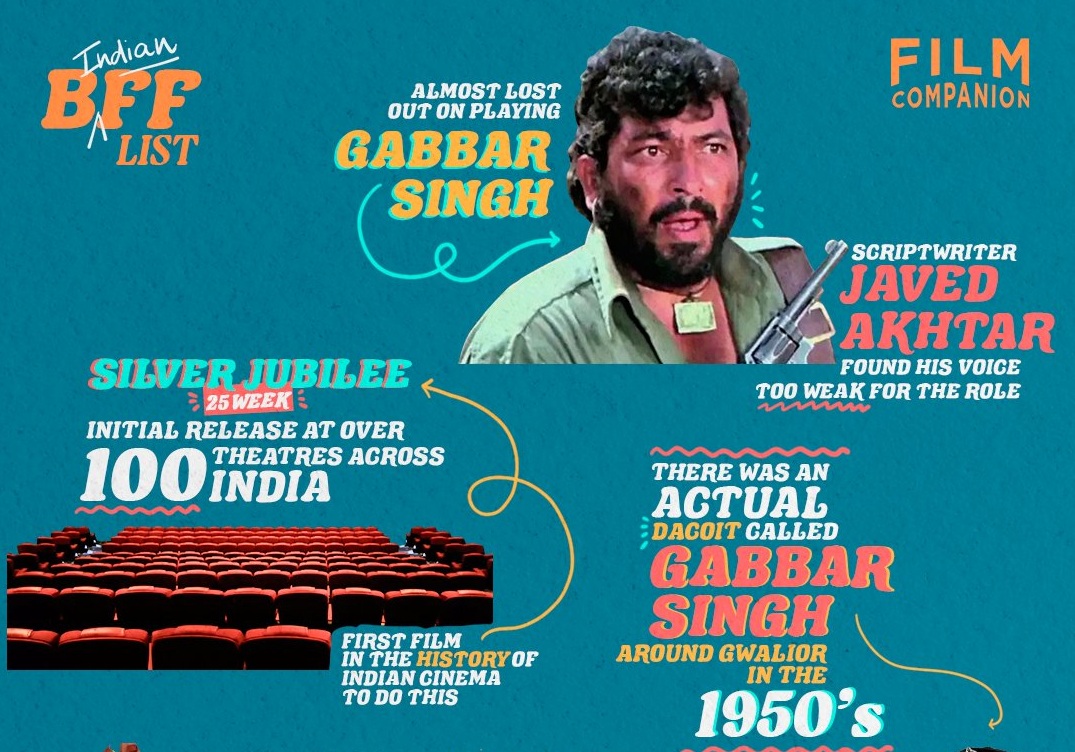
Sholay, released in 1975, remains a timeless classic in Indian cinema. Known for its powerful storytelling, iconic characters, and gripping action, the film is often associated with its legendary director, Ramesh Sippy. However, recent revelations by actor-director Sachin Pilgaonkar have brought to light some untold truths about the film’s production. These insights challenge the common belief that Sippy single-handedly directed every scene, especially those featuring the notorious villain Gabbar Singh, played by Amjad Khan.
Behind the Iconic Action Sequences: A Team Effort
In a recent interview, Sachin Pilgaonkar, who served as an assistant director on the film, shared surprising details about how the action scenes in Sholay were actually handled. Contrary to popular belief, Ramesh Sippy did not direct every part of the film. According to Pilgaonkar, Sippy only focused on scenes involving the main stars—Dharmendra, Amitabh Bachchan, and Sanjeev Kumar—while delegating the action sequences to a second unit.
This second unit, headed by stunt filmmaker Mohammed Ali and action director Azim, had a critical role in bringing the high-octane action to life. Additionally, Hollywood professionals Jim and Jerry were brought in to lend their expertise in crafting the elaborate stunts, ensuring that the film’s action sequences had an international flair.
Sachin Pilgaonkar and Amjad Khan: Unlikely Directors
Sachin Pilgaonkar recalls that he and Amjad Khan were given the unique opportunity to oversee some of these scenes. In a humorous recounting, Pilgaonkar joked, “At that time, there were only two bekaar (useless) people in the unit: one was Amjad Khan, and the other one was me.” Both Pilgaonkar and Khan had expressed interest in directing, a passion that Ramesh Sippy recognized. As a result, they were entrusted with representing Sippy in the second unit, handling key portions of the film’s action sequences.
Their involvement was not just a casual engagement but an essential contribution to the film. In particular, they played a vital role in filming action-packed scenes, ensuring that the energy and intensity of Sholay were maintained even when the main cast was not on set.
The Train Robbery Scene: Directed Without Sippy
One of the most iconic scenes in Sholay is the thrilling train robbery sequence, a visual spectacle that still captures the imagination of audiences today. According to Pilgaonkar, Ramesh Sippy was absent during the filming of this legendary scene, which took place along the Bombay–Poona railway near Panvel.
Sachin shared, “Rameshji was supposed to come only when Dharmendra, Amitabh Bachchan, and Sanjeev Kumar had work. He shot those portions, and we handled the remaining scenes.” With Sippy away, it was up to the second unit, along with Pilgaonkar and Khan, to bring this critical scene to life, further underscoring their importance in the film’s production.
Ramesh Sippy’s Strategic Direction
While these behind-the-scenes revelations might suggest that Ramesh Sippy took a backseat in some aspects of the film, his overall vision was never compromised. Sippy knew how to leverage the talents of his team, allowing skilled professionals to handle specific segments while he focused on the character-driven scenes that defined Sholay’s narrative. This collaborative approach not only ensured the film’s success but also helped foster the talents of emerging filmmakers like Sachin Pilgaonkar and Amjad Khan.
Sholay’s Enduring Legacy
Nearly five decades after its release, Sholay remains a cultural milestone. The film’s influence can still be felt in modern Indian cinema, where directors and writers continue to draw inspiration from its powerful themes and memorable characters. Whether it’s the fearless Veeru and Jai, the stoic Thakur, or the terrifying Gabbar Singh, the characters of Sholay are etched in the minds of audiences young and old.
The behind-the-scenes stories shared by Pilgaonkar offer fresh insights into the collaborative environment that made Sholay a cinematic masterpiece. The film’s success was not solely due to Ramesh Sippy’s direction but also to the collective efforts of the entire crew, from the stars to the second unit. Pilgaonkar’s revelations shine a light on the importance of teamwork and the often-overlooked contributions of individuals who work behind the scenes.
Sholay: A Cinematic Benchmark
The legacy of Sholay is far from fading. As new stories about its production emerge, the film continues to captivate audiences, offering lessons in both storytelling and filmmaking. For aspiring directors, the film stands as a benchmark—a perfect blend of action, drama, and adventure. It showcases how different elements, from on-screen performances to behind-the-scenes collaborations, contribute to the making of an iconic film.
As Pilgaonkar’s story reminds us, cinema is a collaborative art form. Every film, no matter how legendary, is the result of the combined efforts of many talented individuals. Sholay may be remembered for its unforgettable characters and thrilling scenes, but it also serves as a testament to the power of teamwork, creative vision, and shared passion for storytelling.
Conclusion: The Untold Stories Add Depth to Sholay’s Mythology
While Sholay will always be remembered as a Ramesh Sippy film, the stories shared by Sachin Pilgaonkar reveal a richer, more complex narrative of its creation. These behind-the-scenes details add depth to the film’s already legendary status, showing that the magic of Sholay was a result of not just one man’s vision, but the collective efforts of many. Whether it’s Sachin and Amjad Khan stepping into directorial roles or the Hollywood stunt experts adding flair to the action sequences, every contribution played a part in shaping this cinematic classic.
As we continue to celebrate Sholay, these untold stories remind us that great films are not just about the stars on the screen, but also about the unsung heroes behind the camera.


