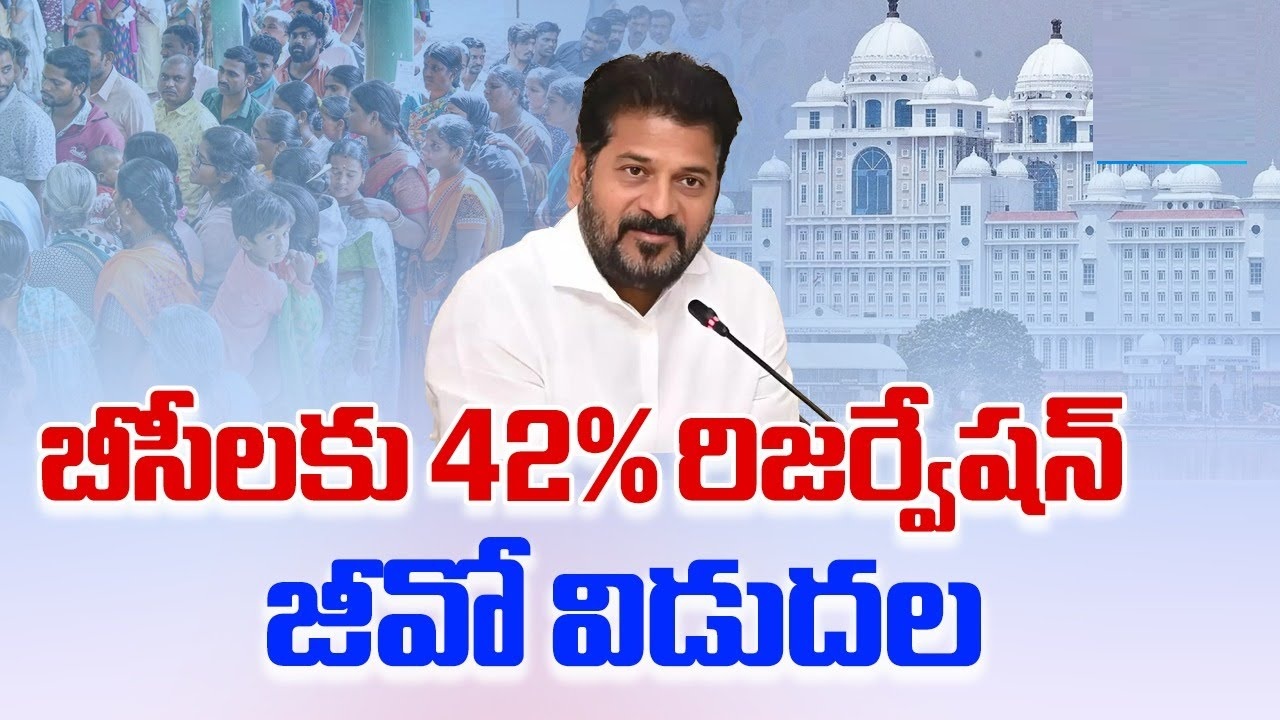
The Telangana government has achieved a groundbreaking milestone in social justice by issuing Government Order (G.O.Ms.No.09) on September 26, 2025, granting 42% reservation for Backward Classes (BCs) in rural and urban local bodies. This unprecedented policy decision represents the most significant expansion of BC political representation in Indian local governance, fundamentally transforming democratic participation for marginalized communities constituting over half of Telangana’s population.
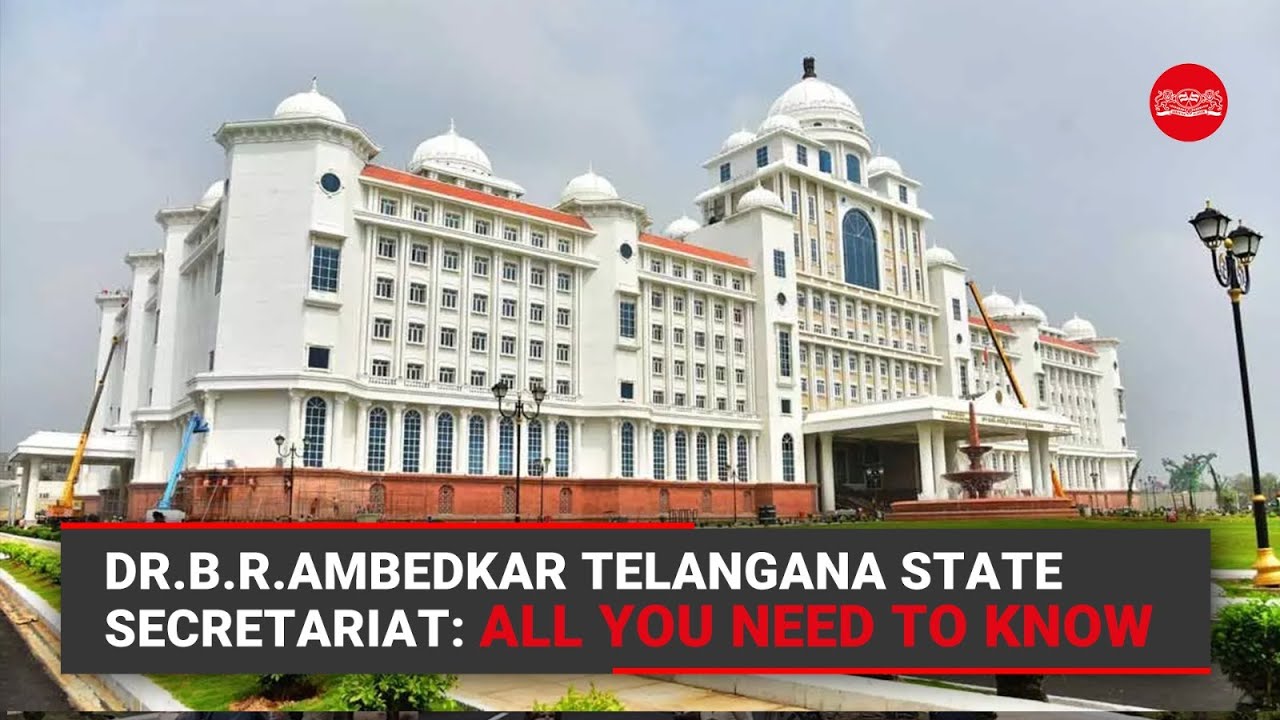
Dr. B.R. Ambedkar Telangana State Secretariat building showcasing its grand architecture and importance as the state’s administrative center youtube
Constitutional Foundation and Legal Framework
Supreme Court Mandate and Empirical Data Requirement
The 42% BC reservation policy stands on solid constitutional ground, adhering to landmark Supreme Court judgments including M. Nagaraj & others vs Union of India & others (2006) and Ashoka Kumar Thakur vs Union of India & others (2008). These rulings established that states seeking to exceed the traditional 50% reservation cap must base their decisions on quantifiable empirical data.
The Telangana government meticulously satisfied this requirement through the comprehensive Socio-Economic, Educational, Employment, Political, and Caste (SEEECPC) Survey of 2024. This unprecedented survey, covering 96.9% of households and 35,477,554 individuals, revealed that Backward Classes comprise 56.33% of Telangana’s population. The survey’s findings provided irrefutable empirical justification for enhancing BC representation beyond conventional limits.
Dedicated Commission Recommendations
Following constitutional protocols, the government established a One-Man Dedicated Commission under the chairmanship of retired IAS officer Sri Busani Venkateshwara Rao in November 2024. This commission conducted rigorous empirical enquiry into the nature and implications of BC backwardness in local bodies.
The commission’s report, submitted in March 2025, observed that BCs remained relatively lagging compared to their population of 56.33% in the state and recommended at least 42% reservation in political representations, particularly in local bodies. This recommendation formed the cornerstone of the government’s policy decision.

Demographic breakdown of Telangana’s population showing Backward Classes comprise the largest group at 56.33%, justifying the 42% reservation policy
Legislative Process and Political Consensus
Assembly Approval and Cross-Party Support
The path to 42% BC reservation witnessed remarkable political consensus. The Telangana Backward Classes (Reservations of Seats in Rural and Urban Local Bodies) Bill, 2025 (L.A.Bill No.04 of 2025) was passed unanimously by all political parties in both Houses of the State Legislature. This unprecedented unity demonstrated the broad-based recognition of BC empowerment as a fundamental democratic imperative.
Earlier in August 2025, the Assembly passed two critical amendments: the Telangana Municipalities (Third Amendment) Bill, 2025 and the Telangana Panchayat Raj (Third Amendment) Bill, 2025. These legislations removed the existing 50% ceiling on reservations in local bodies, clearing the constitutional pathway for enhanced BC representation.
Central Government Delays and State Response
Despite Assembly approval in March 2025, the bills remained pending with the President for over five months, prompting criticism of central government inaction. Chief Minister A. Revanth Reddy led multiple representations to the Centre, including a major protest at Jantar Mantar in Delhi, demanding Presidential assent. The persistent delays forced the state government to pursue alternative constitutional mechanisms.
The government’s decision to issue the G.O. while bills remained pending with the President represents a calculated political strategy to ensure BC empowerment proceeded without further bureaucratic delays. This approach received widespread support from BC welfare organizations and political leaders across party lines.
Implementation Framework and Electoral Impact
Comprehensive Coverage Across Local Bodies
The 42% BC reservation applies comprehensively across Telangana’s entire local body structure, encompassing 12,760 Gram Panchayats, 5,763 Mandal Parishad Territorial Constituencies (MPTCs), 565 Zilla Parishad Territorial Constituencies (ZPTCs), and numerous urban municipalities and corporations.
telangana_bc_reservation_breakdown.csv
Generated File
This massive implementation affects over 1,12,534 ward-level positions and leadership roles in 565 Mandal Parishads and 31 Zilla Parishads. The scale represents the largest single expansion of BC political representation in Indian democratic history.
Immediate Electoral Timeline
Following the Telangana High Court’s directive to complete local body elections by September 30, 2025, the State Election Commission accelerated preparations for immediate poll implementation. The elections are structured in phases, with MPTC and ZPTC elections scheduled first, followed by Gram Panchayat polls in early October 2025.
The final publication of ward-wise photo electoral rolls occurred on September 2, 2025, with notifications expected immediately following the G.O. issuance. This timeline ensures compliance with judicial directives while maximizing BC participation in the democratic process.Generated File
| Local Body Category | Total Seats/Posts | BC Reservation (42%) | Implementation Timeline | Previous BC Quota |
|---|---|---|---|---|
| Gram Panchayats | 12760 | 5,359 | October 2025 | 23-34% |
| Mandal Parishads | 5763 | 2,421 | October 2025 | 23-34% |
| Zilla Parishads | 565 | 237 | October 2025 | 23-34% |
| Urban Municipalities | Variable | Variable | October 2025 | 23-34% |
| Corporations | Variable | Variable | October 2025 | 23-34% |
Socio-Economic Justification and Community Impact
Population Demographics and Representation Gap
The SEEECPC survey revealed stark disparities between BC population and political representation. While BCs constitute 56.33% of Telangana’s population (including 10.08% BC Muslims), their representation in local bodies remained significantly lower under previous reservation frameworks.
The survey’s detailed demographic breakdown shows:
- Non-Muslim BCs: 46.25% (1,64,09,179 people)
- BC Muslims: 10.08% (35,76,588 people)
- Scheduled Castes: 17.43% (61,84,319 people)
- Scheduled Tribes: 10.45% (37,05,929 people)
- Other Castes: 15.79% (44,21,115 people)
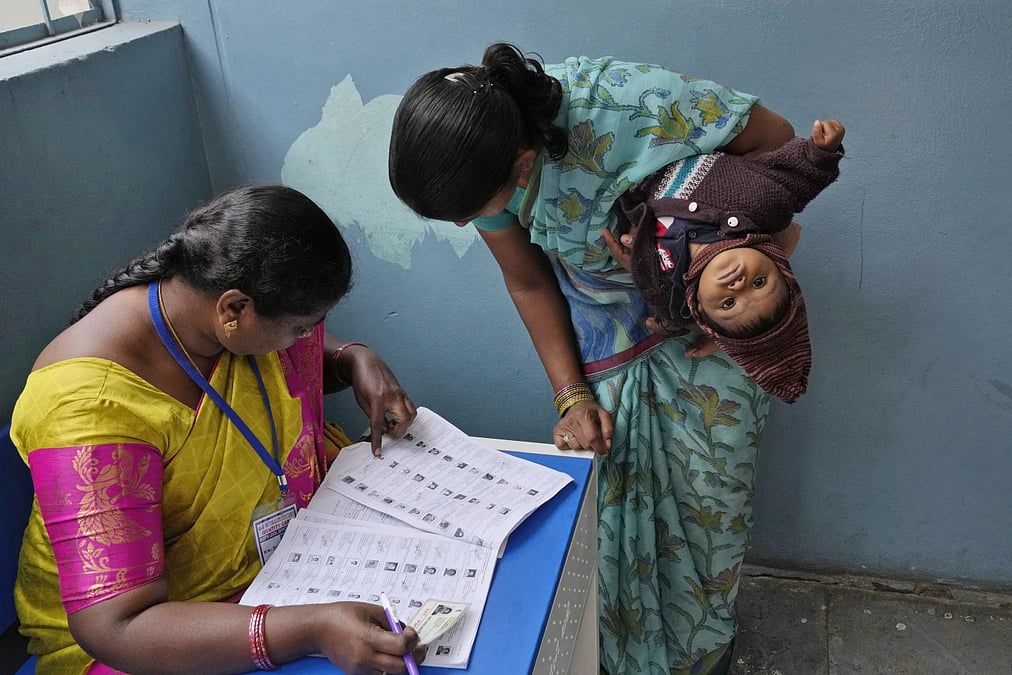
A voter with her child verifies her name in the electoral roll during the Telangana rural local body elections newindianexpress
Historical Context and Policy Evolution
The current policy represents a dramatic expansion from previous BC reservation levels of 23-34% in local bodies. This enhancement addresses decades of underrepresentation despite BCs forming the state’s largest demographic group.
The policy evolution reflects broader national trends toward caste-based social justice, with Telangana joining Bihar and Karnataka as states conducting comprehensive caste surveys to inform reservation policies. The state’s approach has been praised as setting national precedents for evidence-based reservation enhancement.
Political Dynamics and Opposition Response
Congress Government Strategy
The Congress government’s approach to BC reservation reflects its “Kamareddy Declaration” promise of aligning reservations with population demographics. Chief Minister Revanth Reddy’s administration positioned the policy as fulfilling Rahul Gandhi’s commitment to “jitni abadi, utna haq” (rights proportionate to population).
The timing of the G.O. issuance demonstrates sophisticated political calculation, enabling the Congress to project itself as the sole party willing to act decisively on social justice while forcing opposition parties into reactive positions. This strategic move has been characterized by analysts as a “masterstroke” in caste-based electoral politics.
BRS and BJP Responses
The Bharat Rashtra Samithi (BRS), Telangana’s main opposition party, has maintained relative silence on the policy, reflecting its own complex relationship with BC empowerment during its previous tenure. The party’s subdued response stems partly from its own reduction of BC quotas during the 2018 legislative amendments that imposed the 50% ceiling.
The Bharatiya Janata Party (BJP) initially welcomed the ordinance route but subsequently raised concerns about legal sustainability, while simultaneously pointing to Congress’s historical failure to conduct caste censuses during its central government tenures. This positions has created internal contradictions given BJP’s broader national stance on reservation policies.
AIMIM and Other Parties
The All India Majlis-e-Ittehadul Muslimeen (AIMIM), representing significant Muslim interests in Telangana, has supported the policy given the substantial BC Muslim population (10.08%) who directly benefit from the enhanced reservations. Other regional parties have similarly endorsed the policy, recognizing its broad-based popular appeal.
Constitutional Challenges and Legal Safeguards
Exceeding the 50% Reservation Cap
The 42% BC reservation, combined with existing SC (17.43%) and ST (10.45%) quotas, potentially exceeds the Supreme Court’s traditional 50% ceiling. However, the Telangana government has prepared comprehensive legal defenses based on empirical data and constitutional provisions for special circumstances.
The government plans to file caveats in the Telangana High Court and Supreme Court to protect the ordinance from potential legal challenges. BC welfare organizations have warned of massive agitations if any legal challenges undermine the policy, creating additional political pressure for its preservation.
Constitutional Amendment Pathway
Long-term policy sustainability may require constitutional amendments placing BC reservations in the IX Schedule to prevent judicial review. The state government has consistently advocated for central government support in this constitutional reform process.
The policy’s legal architecture draws inspiration from Karnataka and other states that have successfully implemented enhanced reservation frameworks based on comprehensive demographic surveys. This comparative precedent strengthens Telangana’s legal position.
Economic and Administrative Implications
Budgetary Considerations and Resource Allocation
The enhanced BC reservation significantly impacts state budgetary allocations and administrative resource distribution. With BCs securing 42% representation across local bodies, proportional increases in development fund allocations to BC-majority constituencies become inevitable.
The BC Welfare Department, currently managing annual budgets exceeding several thousand crores for various BC welfare schemes, must now coordinate with enhanced BC political leadership at grassroots levels. This integration promises improved scheme implementation and community-specific development initiatives.
Administrative Capacity and Training Requirements
The massive expansion of BC representation requires comprehensive administrative capacity building. The state government must provide orientation and training programs for thousands of newly elected BC representatives across 12,760 Gram Panchayats and hundreds of higher-tier local bodies.
The Centre for Good Governance and various BC Study Circles operating across nine districts will play crucial roles in this capacity-building initiative. Enhanced BC political participation necessitates corresponding improvements in administrative support systems and resource accessibility.
National Implications and Policy Precedents
Model for Other States
Telangana’s comprehensive approach to BC empowerment, combining rigorous caste surveys with constitutional compliance and cross-party consensus, establishes a replicable model for other Indian states. The state’s methodology addresses key Supreme Court requirements for empirical justification of enhanced reservations.
Several states with significant BC populations are closely monitoring Telangana’s implementation experience. Success in Telangana could catalyze similar initiatives across India, fundamentally reshaping the national reservation landscape.
Federal Relations and Centre-State Dynamics
The policy has created tension in Centre-state relations, with the Telangana government repeatedly criticizing central delays in providing Presidential assent to BC reservation bills. This dynamic reflects broader federal debates about reservation policies and constitutional amendment processes.
The Congress party’s positioning on BC reservations at the state level contrasts with criticism of its historical federal record, creating complex political narratives around social justice implementation. These contradictions may influence national political discourse leading up to future elections.
Future Challenges and Sustainability
Legal Sustainability and Judicial Review
The policy’s long-term success depends significantly on its ability to withstand potential judicial scrutiny. While the empirical foundation provides strong legal grounding, the ultimate test will come through comprehensive judicial review of the reservation enhancement’s constitutional validity.
The government’s preparation of extensive legal documentation and precedent research demonstrates awareness of these challenges. Success will require continued political will and legal sophistication to navigate complex constitutional terrain.
Implementation Monitoring and Effectiveness
Ensuring effective implementation across thousands of local bodies presents massive administrative challenges. The state government must establish robust monitoring mechanisms to track BC representation quality and community development outcomes.
Regular assessment of policy effectiveness, including impact on BC socio-economic indicators and local governance quality, will determine long-term success. This requires sustained political commitment beyond immediate electoral considerations.
Conclusion: Transformative Impact on Democratic Governance
The Telangana government’s issuance of the 42% BC reservation order represents a watershed moment in Indian democratic evolution. By grounding policy in comprehensive empirical data and maintaining constitutional compliance while ensuring broad political consensus, the state has established new benchmarks for inclusive governance.
This historic policy transforms over half a century of BC underrepresentation into meaningful political empowerment. The comprehensive coverage across 12,760 Gram Panchayats and thousands of other local body positions ensures grassroots democracy finally reflects Telangana’s demographic realities.
The policy’s success will be measured not merely by electoral outcomes but by its capacity to generate sustainable improvements in BC community development, local governance quality, and social justice implementation. As elections proceed in October 2025, Telangana embarks on a transformative democratic experiment with national implications for inclusive governance and constitutional evolution.
The 42% BC reservation policy stands as testament to evidence-based policymaking, constitutional compliance, and political courage in addressing historical inequities. Its implementation will determine whether democratic institutions can effectively serve India’s most marginalized communities while maintaining social harmony and governance effectiveness.