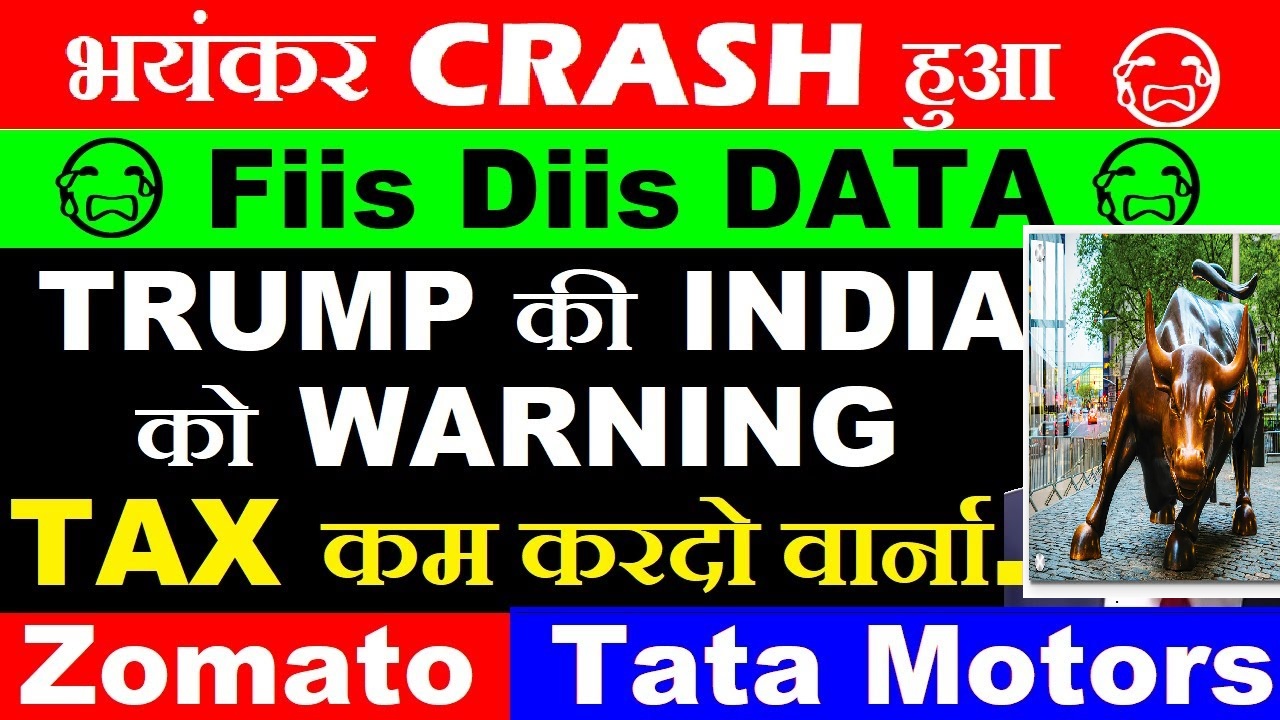
The financial market has been abuzz with significant developments recently. From Zomato making waves in the quick commerce sector to Donald Trump issuing trade warnings to India and Brazil, there’s plenty to discuss. In addition, the activities of Foreign Institutional Investors (FIIs) and Domestic Institutional Investors (DIIs) have played a pivotal role in shaping market sentiment. Let’s dive into the highlights.
Zomato’s Meteoric Rise: Surpassing Tata Motors in Market Cap
Zomato, a leader in quick commerce, has achieved a notable milestone by surpassing Tata Motors in terms of market capitalization. Market cap, a key indicator of a company’s size and value, reflects the total worth of a company’s outstanding shares. Unlike share prices, which can fluctuate due to market dynamics, market cap provides a more comprehensive picture of a company’s standing.
Over the past six months, Zomato’s consistent growth has turned heads in the investment community. Despite broader market fluctuations, its focus on innovation and efficient delivery mechanisms has bolstered its market presence. Investors are keenly watching Zomato’s next steps, as it continues to strengthen its foothold in the competitive quick commerce space.
Sanghi Industries Faces Market Turmoil Post-Merger with Adani Group
Sanghi Industries, a prominent player in the cement industry, recently experienced a significant stock drop, falling by 12% in a single day. This comes in the wake of its merger with Ambuja Cement, a company under the Adani Group.
The market reacted unfavorably to the swap ratio announced as part of the merger. Shareholders of Sanghi Industries will receive 12 shares of Ambuja Cement for every 100 shares they hold. While such mergers aim to streamline operations and create synergies, the unfavorable ratio and perceived inequities have led to heavy sell-offs by investors.
The sentiment highlights the importance of transparent communication during mergers, especially in scenarios where shareholder value might be impacted. Analysts suggest that the market will closely monitor further developments in the cement sector, particularly within the Adani Group’s portfolio.
Donald Trump’s Trade Warnings: India and Brazil Under Spotlight
Former U.S. President Donald Trump has once again made headlines with his strong stance on trade policies. Trump has issued warnings to India and Brazil regarding tariffs, emphasizing the principle of “reciprocal taxes.” If other countries impose high taxes on U.S. goods, the U.S. will respond with equivalent or higher tariffs.
Trump’s earlier warnings, particularly concerning the BRICS currency initiative, highlighted his concerns about potential competition to the U.S. dollar. While India clarified its position on BRICS-related currency plans, Trump’s consistent focus on trade balances has created ripples in global markets.
These warnings, combined with Trump’s assertive rhetoric, could have both direct and indirect implications for India’s trade relations with the U.S. As global trade dynamics evolve, India and Brazil must navigate these challenges carefully to maintain their economic growth trajectories.
FIIs and DIIs: A Tug of War in Market Movements
The impact of FIIs and DIIs on the Indian stock market has been pronounced in recent days. Foreign investors have been net sellers, offloading over ₹1,300 crores worth of shares in a single day. The previous day saw even more aggressive selling, with FIIs selling assets worth over ₹6,000 crores.
This bearish activity is largely attributed to global economic uncertainties and concerns about U.S. interest rate decisions. While rate cuts remain a possibility, market participants are closely watching the accompanying commentary and forecasts to gauge future monetary policies.
On the domestic front, DIIs have played a stabilizing role by absorbing some of the selling pressure. However, their efforts haven’t been enough to prevent the markets from dipping into the red. The upcoming announcements on rate cuts and other policy measures will be crucial in determining market direction.
Key Takeaways for Investors
- Zomato’s Performance: Zomato’s rise underscores the growing importance of quick commerce and innovation in the Indian market. Investors should consider the long-term potential of companies focusing on efficiency and customer-centric services.
- Sectoral Challenges: The turmoil faced by Sanghi Industries highlights the need for cautious evaluation of merger deals. Investors must analyze the implications of swap ratios and market reactions before making decisions.
- Global Trade Policies: Trump’s trade warnings serve as a reminder of the interconnectedness of global markets. Indian investors should monitor international developments that could influence domestic industries.
- FII-DII Dynamics: The contrasting actions of FIIs and DIIs underline the importance of balancing global and domestic factors in portfolio strategies. Staying updated on institutional activities can provide valuable insights into market trends.
Conclusion
The financial markets are navigating a period of heightened volatility, driven by both domestic developments and international factors. Companies like Zomato are shining examples of resilience and growth, while challenges such as mergers and global trade warnings demand careful attention. As FIIs and DIIs continue to influence market movements, staying informed and adopting a strategic approach will be essential for investors in the months ahead.