
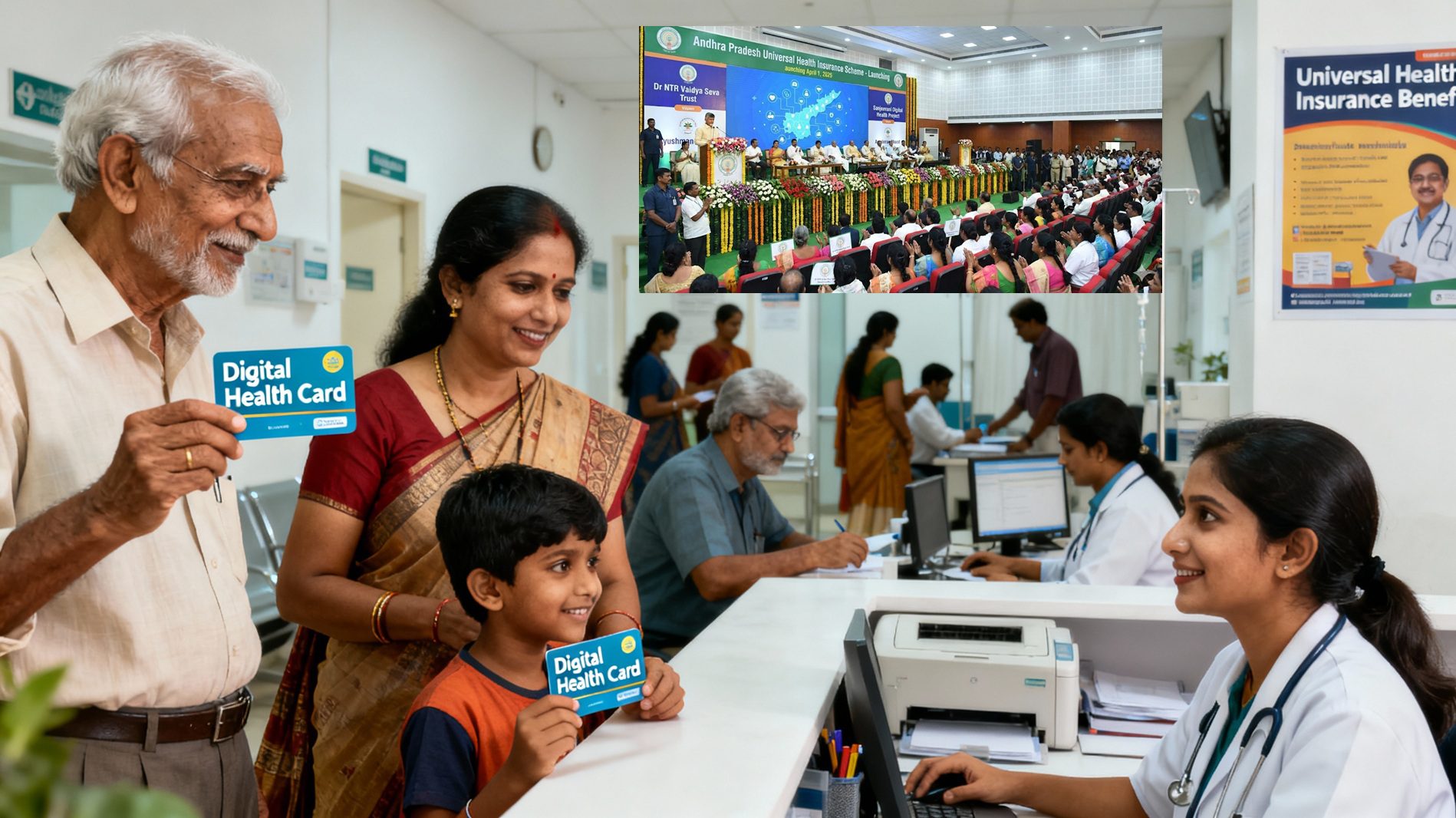
Andhra Pradesh stands at the forefront of healthcare transformation with Chief Minister Chandrababu Naidu’s groundbreaking announcement to implement the Universal Health Insurance Policy beginning April 1, 2026. This comprehensive initiative marks a watershed moment in the state’s public health strategy, establishing a framework that guarantees equitable medical services to all citizens regardless of their economic status.
The scheme represents the government’s commitment to eliminate healthcare disparities and ensure that quality medical services extend beyond urban centers into rural communities, addressing a critical gap that has persisted in India’s healthcare infrastructure for decades.
Understanding Andhra Pradesh’s Universal Health Insurance Policy: A Game-Changer for Public Healthcare
The Universal Health Insurance Policy developed by Andhra Pradesh fundamentally restructures how the state delivers healthcare services to its population of approximately five crore citizens. Naidu explicitly emphasized during his review meeting that the government pursues this transformative approach to create truly equitable access to modern medical facilities across all socioeconomic segments.
The policy integrates the Dr NTR Vaidya Seva Trust scheme with Ayushman Bharat programs in a hybrid model, creating a comprehensive safety net that protects vulnerable populations from catastrophic healthcare expenses.
Under this innovative policy framework, families below the poverty line receive coverage extending from Rs 2.5 lakh through insurance companies to Rs 25 lakh through the government’s Dr NTR Vaidya Seva Trust. This tiered approach ensures that poor and middle-class families obtain essential medical treatment without devastating their household finances.
The policy encompasses 3,257 health services, including specialized treatments and diagnostic procedures previously unavailable to poorer sections of society. For above-poverty-line families, the scheme provides insurance coverage reaching Rs 5 lakh, demonstrating the government’s commitment to universal health protection across all income brackets.
The implementation details showcase the government’s meticulous planning for seamless healthcare delivery. Officials have developed a streamlined approval process ensuring patient treatment authorization within six hours of hospital admission, with all related financial transactions completed within fifteen days.
This rapid processing system eliminates bureaucratic delays that typically obstruct healthcare access in rural areas. The state has deployed quality assurance mechanisms requiring hospitals to maintain government standards and comply with NITI Aayog guidelines, ensuring consistent service quality regardless of facility location.
Building Healthcare Infrastructure Through Public-Private Partnership Model
Chandrababu Naidu has championed the PPP model for developing medical colleges as a pragmatic solution to Andhra Pradesh’s healthcare infrastructure deficit. The state faces a critical challenge where previous government allocations of Rs 8,480 crore resulted in only Rs 1,550 crore expenditure over four years, leaving eleven medical colleges non-operational. The PPP approach accelerates infrastructure development while maintaining government oversight and ensuring public interest protection through regulatory supervision and quality benchmarking.
The government is establishing four medical colleges in the first phase at Adoni, Markapuram, Madanapalle, and Pulivendula under the PPP model, with additional institutions planned for subsequent phases. These institutions feature sophisticated infrastructure spanning fifty acres each, with twenty-five acres dedicated to medical college and hospital development and the remaining twenty-five acres allocated for paramedical training, nursing education, dental care facilities, Ayurveda institutes, wellness centers, and yoga facilities. This comprehensive approach creates multipurpose healthcare ecosystems that serve diverse medical needs while promoting integrated wellness practices.
The medical colleges operate under mandatory government jurisdiction and administrative control despite PPP construction and operations. Hospital beds maintain a seventy-thirty ratio, with seventy percent reserved for poor patients receiving free medical services and only thirty percent available for fee-paying patients.
This deliberate allocation prioritizes vulnerable populations while generating revenue streams necessary for institutional sustainability. The government ensures these institutions adhere to strict regulatory standards, eliminating concerns about compromised service quality or patient exploitation commonly associated with private healthcare ventures.
Officials have expedited the tender process for medical college development, completing four procedural stages and targeting completion by December 2025. This accelerated timeline demonstrates the state’s determination to deliver modern medical facilities to rural populations previously excluded from specialized healthcare access.
Students and general populations benefit substantially from these teaching institutions, gaining opportunities for quality medical education while establishing referral networks connecting rural communities to advanced diagnostic and therapeutic capabilities.
The Sanjeevani Digital Health Project: Revolutionizing Healthcare Through Technology Integration
Chief Minister Naidu has identified the Sanjeevani project as a transformative force capable of positioning Andhra Pradesh as India’s digital health leader. Developed through partnership with Tata Group and the Gates Foundation, Sanjeevani establishes digital nerve centers that consolidate health records across hospitals, primary health centers, and community clinics on unified digital platforms.
The pilot implementation in Kuppam demonstrates the system’s functionality, linking thirteen primary health centers with one area hospital and ninety-two village health centers to provide integrated, continuous healthcare monitoring.
The digital infrastructure collects and analyzes comprehensive health data on blood conditions, anemia, cardiac disorders, kidney diseases, liver problems, and diabetes, enabling early disease detection and timely intervention. The system already captures health information on 338,000 Kuppam residents and 49,000 additional patients, creating longitudinal health records essential for personalized medicine and population health management.
This data-driven approach transforms reactive disease management into proactive preventive healthcare, substantially reducing long-term treatment costs while improving health outcomes.
Sanjeevani’s implementation strategy involves three distinct phases beginning with Kuppam expansion to encompass entire Chittoor district from January 1, 2026, followed by statewide rollout. Citizens receive digital health cards enabling electronic access to complete medical histories, diagnostic results, and specialist consultations through secure digital channels. Virtual consultation capabilities permit specialist doctors to provide remote guidance to patients in remote villages, eliminating transportation barriers that historically prevented rural populations from accessing quality medical expertise.
The technology infrastructure supports real-time monitoring of population health trends, enabling authorities to identify disease clusters, predict healthcare demand, and allocate resources efficiently. Mobile medical units conduct quarterly blood tests while health workers monitor pregnant women continuously, identifying high-risk pregnancies requiring immediate intervention.
This preventive framework reduces emergency hospitalizations and complications through early diagnosis and appropriate management, fundamentally altering healthcare delivery from crisis response to systematic health optimization.
Integrating Preventive and Curative Healthcare: Cost Reduction Through Evidence-Based Practice
Chandrababu Naidu has emphasized that the state must pursue integrated healthcare strategies combining preventive and curative approaches to control escalating healthcare expenses. Current monthly expenditure of Rs 330 crore on 1.2 million NTR Health Services Trust claims demonstrates the fiscal pressure created by disease management-focused systems. Preventive healthcare dramatically reduces this burden through lifestyle modification programs, early disease screening, and health promotion initiatives that intercept disease development before expensive interventions become necessary.
India currently spends approximately Rs 19,000 crore annually on healthcare with diabetes management alone consuming Rs 1.5 lakh crore, representing unsustainable outlays that divert resources from other development priorities. Preventive strategies addressing lifestyle diseases including diabetes, hypertension, cardiac disease, and cancer prove substantially more cost-effective than treating established conditions.
Studies demonstrate that each rupee invested in preventive healthcare generates five to ten rupees in treatment cost savings through prevented complications, avoided hospitalizations, and maintained workforce productivity.
The government has mandated development of comprehensive action plans analyzing regional and disease-wise healthcare expenditure to identify opportunities for cost reduction through prevention. This analytical approach enables targeted interventions addressing high-prevalence conditions within specific districts.
Naturopathy hospitals and dedicated yoga programs support preventive health maintenance, aligning modern healthcare science with traditional wellness practices proven effective across millennia.
Andhra Pradesh has recognized that reducing out-of-pocket healthcare expenses from current levels exceeding sixty percent to targeted thirty-five percent requires shifting emphasis from curative medicine toward preventive strategies. Digital health records facilitate this transition by enabling continuous health monitoring, personalized risk assessment, and preventive interventions delivered through accessible channels.
The integration of preventive and curative services within unified digital platforms transforms healthcare delivery from episodic interventions to systematic health maintenance, reducing disease incidence and severity across populations.
Addressing Rural Healthcare Disparities: Medical Colleges as Development Catalysts
Rural India confronts devastating healthcare inequities with physician density reaching only three per ten thousand population compared to thirteen per ten thousand in urban areas. Only 27.5 percent of rural districts in India possess medical colleges despite containing majority populations dependent entirely on private practitioners and insufficiently equipped government facilities.
Andhra Pradesh’s initiative directly addresses this structural inequality through deliberate medical college placement in underserved districts including Adoni, Markapuram, Madanapalle, and Pulivendula.
These teaching institutions establish referral networks connecting remote villages to advanced diagnostic facilities and specialist consultations previously inaccessible to rural populations. Medical students obtain compulsory rural clinical exposure during their training, building competencies essential for serving underserved communities and establishing professional networks encouraging rural medical practice.
Research demonstrates that ninety-seven point seven percent of medical graduates from rural training institutions continue rural medical practice, fundamentally reversing the migration of healthcare professionals toward urban centers that depletes rural medical capabilities.
The government has mandated that medical colleges study diverse hospital operational models nationwide to implement optimal service delivery practices addressing specific rural healthcare needs. Quality assurance mechanisms ensure rural hospitals function as effective teaching institutions providing sophisticated surgical procedures, emergency obstetric care, and specialized medical management previously unavailable outside metropolitan areas. This infrastructure development establishes sustainable mechanisms for retaining qualified healthcare professionals in rural regions through institutional opportunities, professional advancement possibilities, and satisfying professional environments.
Transforming Healthcare Data Into Public Health Intelligence
The Sanjeevani project’s digital health records infrastructure creates unprecedented opportunities for evidence-based public health planning and resource allocation. Health authorities gain capability to monitor disease prevalence, identify emerging health threats, and evaluate intervention effectiveness through comprehensive population-level datasets. This analytical capacity enables rapid identification of disease clusters requiring immediate public health responses and detection of rare conditions affecting small populations previously invisible in traditional surveillance systems.
Health workers access complete patient medical histories through secure digital channels, eliminating duplication of diagnostic tests, preventing drug interactions, and enabling continuous care coordination across multiple providers. This integrated information system particularly benefits patients with multiple chronic conditions requiring coordinated management across different specialists and healthcare levels. Pregnant women receive continuous monitoring through portable devices transmitting vital signs to digital nerve centers, enabling identification of complications permitting timely preventive intervention before life-threatening emergencies develop.
The digital infrastructure supports quality improvement initiatives through performance analytics identifying high-performing providers and treatment protocols associated with superior health outcomes. Hospital administrators access real-time data on service utilization, treatment efficacy, resource consumption, and patient satisfaction, enabling evidence-based operational decisions. This transparency creates competitive incentives encouraging quality improvement while identifying underperforming facilities requiring additional support, training, or resources to meet established standards.
Implementing Universal Health Coverage: Sustainability Through Hybrid Financing Models
Andhra Pradesh’s hybrid approach combines private insurance mechanisms covering Rs 2.5 lakh with government-supported coverage extending to Rs 25 lakh, creating financially sustainable systems distributing risk across multiple stakeholders. Insurance companies participating in the scheme serve 1.63 crore beneficiary families while collecting premiums financing operational expenses and ensuring commercial viability. The Dr NTR Vaidya Seva Trust absorbs costs exceeding insurance coverage limits through government funding, establishing fiscal responsibility while protecting disadvantaged patients from catastrophic expenses.
This tiered approach generates incentives for efficient care delivery through performance-based reimbursement mechanisms rewarding high-quality, cost-effective treatment. Insurance companies implement utilization review processes preventing unnecessary procedures while ensuring medically appropriate care authorization. The partnership model creates accountability through independent claims processing, outcomes tracking, and beneficiary satisfaction monitoring, establishing quality assurance mechanisms functioning outside government bureaucracy.
The scheme’s implementation incorporates digital payment systems enabling direct financial transfers to hospitals within fifteen days of claim submission, improving hospital cash flow and operational sustainability. QR code-based beneficiary authentication prevents fraudulent claims while maintaining beneficiary privacy and security. This technological infrastructure creates verifiable audit trails documenting service delivery, enabling detection of fraudulent billing practices and ensuring funds reach genuine beneficiaries.
Expanding Healthcare Services: From 169 to 3,257 Covered Treatments
The government has dramatically expanded the scope of covered healthcare services from 169 procedures under previous policies to comprehensive coverage of 3,257 medical treatments. This expansion integrates government hospital services, insurance company-covered treatments, and previously unavailable specialty procedures into unified schemes accessible to all citizens. The rationalization of redundant procedures previously listed multiple times under different classifications eliminated artificial inflation while genuinely expanding service availability.
The 197 medical services previously offered under Dr NTR Vaidya Seva but rarely utilized due to access barriers or awareness limitations now operate as free-of-cost services under the universal policy. This approach ensures that beneficiaries receive maximum value from existing healthcare infrastructure while eliminating service provision duplication. Specialized treatments including cardiac interventions, cancer management, orthopedic procedures, and advanced diagnostic capabilities now reach populations previously dependent on costly private healthcare or untreated disease management.
Diagnostic coverage encompasses laboratory tests, imaging studies, and specialist consultations essential for accurate disease identification and appropriate treatment planning. The comprehensive service portfolio addresses both acute conditions requiring emergency intervention and chronic diseases demanding long-term management. This breadth ensures citizens access sophisticated medical capabilities regardless of socioeconomic status or geographic location, fulfilling the constitutional commitment to equitable public health.
Monitoring Healthcare Expenditure: Regional and Disease-Wise Analysis
Andhra Pradesh has tasked health authorities with conducting sophisticated analysis of regional and disease-specific healthcare expenditure patterns to identify opportunities for cost control and quality improvement. This analytical approach involves mapping healthcare spending across districts, identifying high-cost conditions, and evaluating treatment effectiveness across providers. Disease-wise expenditure tracking reveals which conditions consume disproportionate resources, enabling targeted preventive interventions and specialized program development.
Comparative hospital performance analysis identifies institutions delivering superior outcomes at lower costs, enabling knowledge transfer and standardization of best practices across the healthcare system. This benchmarking approach creates competitive incentives encouraging efficiency without compromising quality. Regional variation analysis identifies geographic factors influencing health outcomes and healthcare costs, enabling targeted interventions addressing location-specific challenges.
The expenditure monitoring framework tracks outcomes relative to resource utilization, evaluating whether increased spending produces proportional health improvements or identifies wasteful spending patterns. This accountability mechanism ensures that government healthcare investments generate measurable population health benefits rather than benefiting institutional inefficiency or provider enrichment. The transparency inherent in this analytical approach builds public trust while providing objective evidence for policy adjustments and resource reallocation.
Conclusion: Establishing Andhra Pradesh as India’s Healthcare Innovation Leader
Andhra Pradesh’s comprehensive healthcare transformation initiative positioned for April 2026 implementation establishes the state as India’s healthcare innovation leader through integration of universal insurance coverage, digital health infrastructure, medical college expansion, and evidence-based resource allocation. The Sanjeevani digital health project creates unprecedented opportunities for preventive healthcare implementation, disease surveillance, and data-driven decision-making. Medical colleges established through PPP mechanisms extend sophisticated medical education and specialty healthcare capabilities to historically underserved rural districts.
The government’s commitment to maintaining seventy percent hospital bed free access for poor patients while ensuring government administrative control demonstrates genuine public health focus despite private sector partnership. Universal health coverage removing financial barriers to treatment access represents fulfillment of constitutional obligations ensuring healthcare as a fundamental right rather than market commodity. Digital health infrastructure creates systematic monitoring capabilities enabling continuous quality improvement and optimal resource utilization.
The implementation of this comprehensive healthcare strategy requires sustained political commitment, administrative competence, and adequate resource allocation. Success depends on timely completion of medical college infrastructure, Sanjeevani digital nerve center expansion, and insurance scheme operationalization. Healthcare professionals require training in new digital systems and updated treatment protocols ensuring effective policy implementation. Public awareness campaigns must educate citizens about available services and utilization procedures enabling equal access across populations.
Andhra Pradesh’s healthcare transformation demonstrates that even resource-constrained states can deliver universal health coverage through innovative financing, technology integration, and deliberate infrastructure development prioritizing disadvantaged populations. The success of this initiative will establish replicable models for other states seeking to improve healthcare access and outcomes. As the April 2026 implementation date approaches, Andhra Pradesh positions itself to demonstrate that equitable, efficient, and effective healthcare delivery represents an achievable objective achievable through government commitment and intelligent policy design.