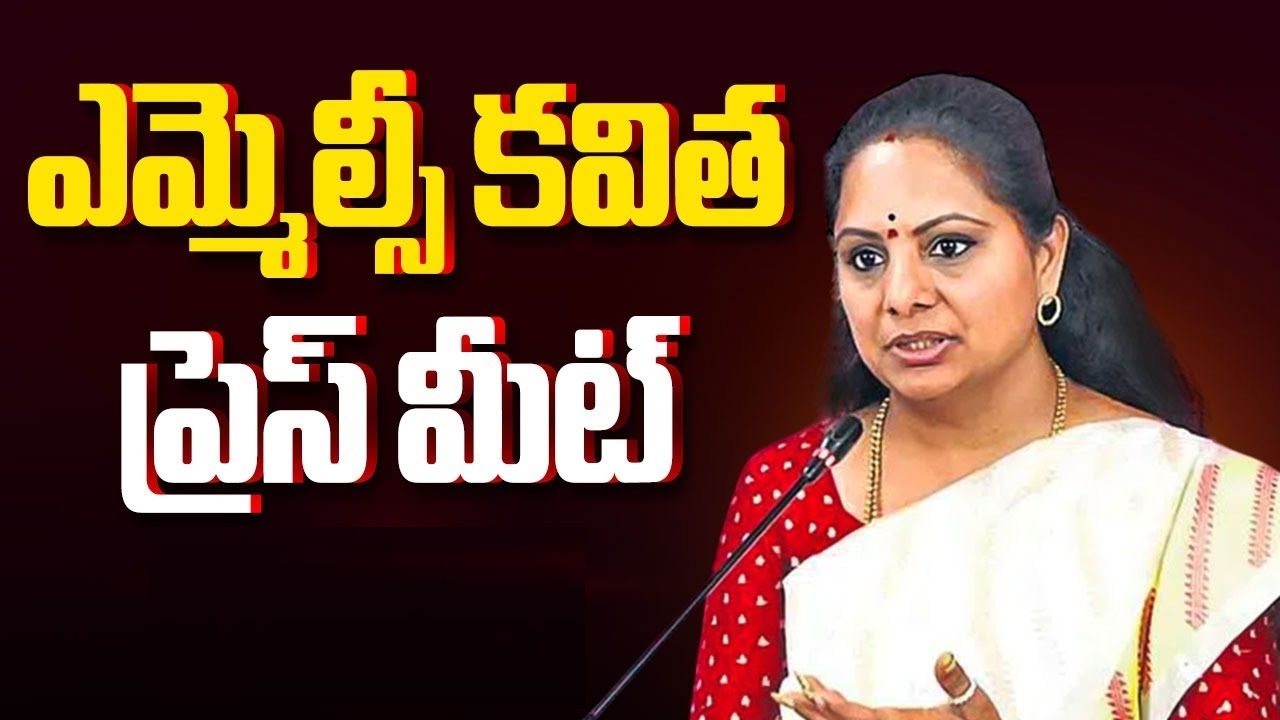
In a dramatic turn of political events that has captured the attention of Telangana’s political landscape, former BRS MLC K. Kavitha has made explosive allegations against party leaders and raised critical concerns about the state’s water security. Speaking at a recent media interaction, Kavitha accused BRS social media teams, along with media outlets linked to Harish Rao and Santosh Kumar, of orchestrating systematic attacks against her while highlighting the growing crisis surrounding Krishna River water sharing disputes with neighboring states.
Media War: Kavitha Takes On BRS Internal Networks
Social Media Campaign Against Party Daughter
K. Kavitha’s allegations against internal BRS media operations have exposed deep fractures within the party that once ruled Telangana with an iron grip. The former MLC specifically targeted what she described as coordinated attacks through “BRS social media, Harish’s media & Santosh’s C-Tech media,” claiming that these platforms have been systematically undermining her political standing. This revelation comes at a time when the BRS party is struggling to maintain unity following significant electoral defeats and internal power struggles.
The accusations point to sophisticated media manipulation tactics employed within the party structure, suggesting that senior leaders have been using digital platforms to settle personal scores and eliminate political rivals. Kavitha’s claim that “Telangana people are noticing it” indicates public awareness of these internal conflicts, potentially damaging the party’s credibility among voters who expect unified leadership during challenging times.
The Harish Rao And Santosh Kumar Controversy
The naming of T. Harish Rao, former Irrigation Minister and KCR’s nephew, along with Joginapally Santosh Kumar in corruption allegations has created unprecedented turmoil within the BRS leadership. Kavitha directly accused these senior leaders of benefiting from irregularities in the Kaleshwaram Lift Irrigation Scheme, stating that “golden Telangana isn’t when gold is in their houses”. This direct confrontation with family members and senior party officials ultimately led to her suspension from the BRS on September 1, 2025.
The allegations have broader implications for the party’s future, as both Harish Rao and Santosh Kumar have been considered potential successors to K. Chandrashekar Rao’s political legacy. Their involvement in alleged corruption scandals, as claimed by Kavitha, threatens to undermine the party’s anti-corruption stance and could provide ammunition to political opponents seeking to capitalize on internal divisions.
Bathukamma Sarees Controversy: Cultural Politics And Identity Battles
Quality Concerns And Political Exploitation
The Bathukamma saree distribution scheme has become a recurring flashpoint in Telangana politics, with quality issues sparking public outrage and political controversies since 2017. Kavitha’s latest comments about not giving “Bathukamma sarees in name of Indiramma but instead any Telangana personality” reflect deeper concerns about cultural appropriation and political branding in welfare schemes. The Congress government’s decision to rebrand the scheme as “Indiramma sarees” has been criticized by BRS leaders as an attempt to erase Telangana’s cultural identity.
The historical context reveals persistent problems with saree quality that have plagued multiple administrations. In 2017, women across Telangana burned poor-quality sarees distributed by the then-TRS government, leading to widespread protests and political embarrassment. The incident became a classic example of how welfare schemes can backfire when implementation fails to meet public expectations, with women questioning whether political leaders like Kavitha would wear such low-quality garments themselves.
Congress Government’s Indiramma Scheme Response
The current Congress administration under Chief Minister A. Revanth Reddy has attempted to address historical quality issues by launching the “Indiramma sarees” scheme with improved specifications. The government has placed bulk orders worth ₹318 crore with handloom weavers in Sircilla, engaging nearly 6,000 artisans and ensuring higher-quality fabric production. Each saree is now estimated to cost around ₹800, compared to previous low-quality alternatives that cost approximately ₹50.
However, Kavitha’s objection to using the “Indiramma” brand name reflects broader concerns about political identity and cultural ownership in Telangana. The BRS argues that renaming traditional schemes erases the historical significance of Telangana’s statehood movement and undermines local cultural symbols that were central to the state’s formation
Krishna River Water Crisis: Karnataka’s Almatti Dam Height Increase
Immediate Threat To Telangana’s Water Security
The Karnataka government’s decision on September 17, 2025, to raise the Almatti Dam height from 519.6 meters to 524.25 meters poses an existential threat to Telangana’s agricultural economy. Kavitha’s dramatic statement that “if Almatti height is increased, we can only play cricket in Krishna River” underscores the severity of water shortage concerns facing the state. The height increase will boost Karnataka’s storage capacity from 123.08 TMC to nearly 200 TMC, potentially reducing downstream flow to Telangana by 100-130 TMC.
This water diversion threatens irrigation across 27.4 lakh acres in Telangana’s southern districts, including Mahabubnagar, Ranga Reddy, and Nalgonda. The affected projects include Nettempadu, Palamuru-Rangareddy, Kalwakurthy, Srisailam, Dindi, and Rajolibanda lift irrigation schemes that serve as lifelines for thousands of farmers. The timing of Karnataka’s decision during the monsoon season adds urgency to Telangana’s concerns about long-term water availability.
Legal And Political Dimensions Of The Water Dispute
Kavitha’s call for immediate Supreme Court intervention reflects the complex legal landscape surrounding inter-state water disputes. The Karnataka government claims its decision aligns with the 2013 Krishna Water Disputes Tribunal-II (KWDT-II) award, but Telangana argues it violates a 2013 Supreme Court stay order initiated by undivided Andhra Pradesh. The matter remains sub-judice, complicating Karnataka’s plans to acquire 1.33 lakh acres at a cost of ₹70,000 crore.
The political implications extend beyond water sharing, as Kavitha’s suggestion that “CM should make Sonia Gandhi call Siddaramaiah & stop Karnataka” highlights the role of national party leadership in resolving state-level disputes. This approach recognizes that both Karnataka and Telangana are governed by Congress parties, creating opportunities for high-command intervention that might not exist in multi-party scenarios.
Godavari Water Sharing: Andhra Pradesh’s Ambitious Projects
Chandrababu Naidu’s Water Diplomacy Strategy
Andhra Pradesh Chief Minister N. Chandrababu Naidu’s assertion that “Chandrababu is taking Godavari water” reflects his administration’s aggressive approach to securing water resources for drought-prone Rayalaseema region. Naidu’s proposal to utilize “200 TMC of water for Andhra Pradesh and 100-200 TMC for Telangana” from excess Godavari floodwaters presents a seemingly cooperative framework for inter-state water management.
The Banakacherla project, part of the ambitious Polavaram-Banakacherla Link Project, aims to divert surplus Godavari floodwaters to water-scarce regions through an extensive network of canals and lift stations. Despite Telangana’s persistent opposition, Naidu claims the Centre has accepted his proposal, creating potential for prolonged legal battles and political tensions.
Telangana’s Defensive Position On River Water
Telangana’s resistance to Andhra Pradesh’s Godavari water projects stems from concerns about long-term water security and environmental impact. The state’s chief secretary wrote to the Centre expressing unwillingness to discuss water diversion for the Banakacherla project, highlighting deep-seated apprehensions about sharing river resources. However, recent meetings between Chief Ministers Revanth Reddy and Chandrababu Naidu have yielded some cooperative agreements, including telemetry system installation and project repair work.
The establishment of river management boards—with the Godavari River Management Board in Hyderabad and the Krishna River Management Board in Andhra Pradesh—represents institutional progress toward managing inter-state water disputes. These developments suggest potential for diplomatic resolution despite ongoing political rhetoric and legal challenges.
BC Reservation Bill: Jagruthi’s Continued Political Activism
Kavitha’s Ongoing Social Justice Campaign
Despite her suspension from BRS, Kavitha continues to champion backward class reservation issues through her Telangana Jagruthi organization. Her threat that “Jagruthi to gherao CM and Ministers residence over BC bill” demonstrates her commitment to maintaining political pressure on the Congress government to implement 42% BC reservations. This approach reflects her strategy of using social movements to maintain political relevance outside formal party structures.
The Jagruthi organization’s planned dharna and siege tactics represent traditional forms of political protest that have historical significance in Telangana’s political culture. Kavitha’s positioning as a defender of social justice causes allows her to maintain public visibility while criticizing both Congress and BJP for allegedly colluding to deny BC communities their rightful share of political representation.
Strategic Political Positioning Beyond Party Politics
Kavitha’s 72-hour hunger strike in August 2025 for BC reservations demonstrated her ability to generate media attention and public sympathy for social justice causes. Her demand that Chief Minister Revanth Reddy approach the Supreme Court for early clearance of BC bills mirrors Tamil Nadu’s successful legal strategy against gubernatorial delays. This comparative analysis suggests sophisticated understanding of constitutional mechanisms and interstate political dynamics.
The continuation of social activism after party suspension indicates Kavitha’s intention to build an independent political platform based on social justice issues rather than traditional party loyalties. This approach could position her as a potential alternative leader for communities feeling neglected by mainstream political parties.
Resignation Drama: Council Chairman’s Intervention
The Resignation Format Controversy
Kavitha’s claim that “I gave resignation in format, but Council Chairman didn’t accept it. If they want I will send resignation again” reveals the administrative complexities surrounding her departure from formal politics. Legislative Council Chairman Gutta Sukender Reddy’s decision to retain her resignation letter reflects his belief that the decision was made in an “emotional state” and his advice for reconsideration.
The Chairman’s intervention demonstrates institutional efforts to prevent hasty political decisions that could have long-term consequences for democratic representation. His counsel to Kavitha over phone conversations suggests personal relationships and informal diplomatic efforts to resolve political conflicts through dialogue rather than formal procedures.siasat
Political Implications Of Incomplete Resignation
The unresolved resignation status creates ambiguity about Kavitha’s formal political standing and her ability to continue legislative activities. While she announced resignation from both BRS membership and MLC position, the Chairman’s retention of the resignation documents technically maintains her official status pending final decision. This liminal political position allows for potential reconciliation while maintaining options for complete separation from formal politics.
The situation reflects broader patterns in Indian politics where personal relationships and informal negotiations often influence formal political processes. The Chairman’s paternalistic approach suggests institutional efforts to maintain stability and prevent complete breakdown of political relationships within Telangana’s legislative framework.
Regional Political Realignment And Future Implications
BRS Party’s Internal Crisis Management
The Kavitha controversy exposes fundamental weaknesses in BRS’s organizational structure and succession planning. The party’s decision to suspend KCR’s daughter while maintaining loyalty to other accused leaders suggests internal power dynamics that prioritize certain loyalties over family relationships. This development could accelerate broader organizational changes within BRS as it struggles to maintain relevance in opposition.
The emergence of internal factions and media warfare indicates deeper structural problems that extend beyond individual personalities. The party’s inability to maintain unity among senior leaders raises questions about its capacity to provide effective opposition leadership and develop alternative governance models for Telangana’s future political landscape.
Implications For Telangana’s Political Future
Kavitha’s independent political trajectory could influence broader political realignments in Telangana, particularly around social justice and cultural identity issues. Her ability to mobilize support through Jagruthi organization demonstrates potential for alternative political formations that transcend traditional party boundaries. This development could encourage other leaders to explore independent political platforms based on specific issue-based constituencies.
The water crisis and inter-state disputes highlighted by Kavitha require sustained political attention regardless of party affiliations. The technical complexity of river water management and the long-term implications for agricultural sustainability demand collaborative approaches that transcend immediate political considerations. Kavitha’s focus on these issues positions her as a potential leader for water security advocacy that could gain cross-party support.
The convergence of internal party conflicts, cultural identity politics, and critical infrastructure challenges creates opportunities for new political narratives in Telangana. Leaders who can effectively address these complex, interconnected issues while maintaining public credibility may emerge as significant forces in the state’s evolving political landscape. Kavitha’s current positioning suggests her intention to occupy this space, regardless of formal party structures or traditional political hierarchies.
The ongoing drama surrounding K. Kavitha’s political journey reflects broader transformations in Telangana’s political culture, where individual leaders increasingly challenge established party systems while addressing critical governance issues. Whether this approach succeeds in creating sustainable political alternatives remains to be seen, but the current developments certainly indicate significant changes in the state’s political dynamics and leadership patterns.