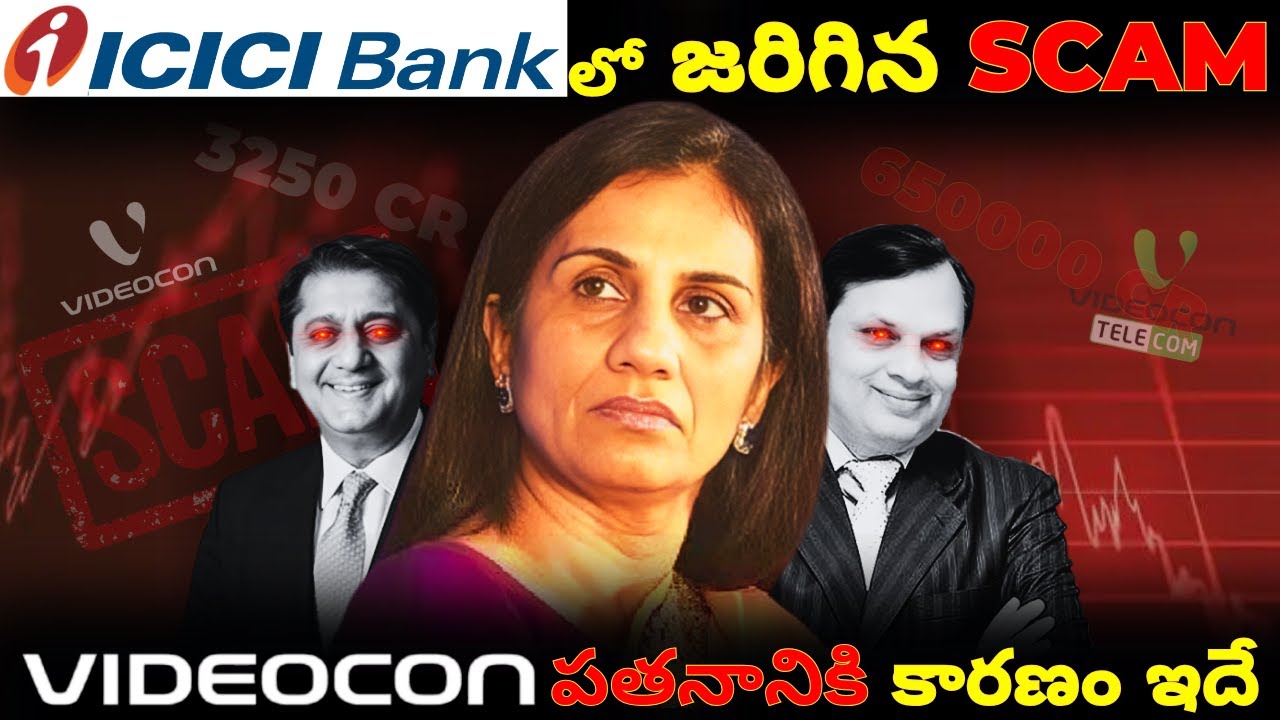
The ICICI-Videocon scam stands as one of India’s most notorious corporate frauds, shaking the nation’s financial landscape and exposing the dark underbelly of corporate greed. This scandal, involving a ₹3,250 crore loan fraud, entangled Videocon, a once-prominent Indian consumer electronics giant, and ICICI Bank, one of India’s largest private-sector banks. At the heart of the controversy lies a complex web of financial misconduct, shell companies, and illicit transactions orchestrated by key figures, including Videocon’s founder, Venugopal Dhoot, and ICICI Bank’s former CEO, Chanda Kochhar. This article delves into the rise and fall of Videocon, the mechanics of the scam, and its far-reaching consequences, offering a comprehensive analysis of a case that continues to resonate in India’s corporate and financial sectors.
The Rise of Videocon: From Humble Beginnings to Market Dominance
Founding and Early Success
Videocon’s journey began in the 1980s in Aurangabad, Maharashtra, under the visionary leadership of Nandlal Dhoot. Initially rooted in the textile business, the Dhoot family capitalized on a pivotal moment in Indian history: the nation’s first Cricket World Cup victory in 1983. This triumph sparked a surge in television demand as cricket fever gripped the country. Recognizing this opportunity, Nandlal’s son, Venugopal Dhoot, founded Videocon International in 1985, venturing into the burgeoning consumer electronics market.
Videocon forged a strategic partnership with Japan’s Toshiba, importing color television parts and assembling them in India. This move positioned Videocon as a pioneer, launching India’s first indigenously manufactured color televisions. The company’s high-quality products resonated with Indian consumers, driving significant market share and establishing Videocon as a household name by the late 1980s.
Expansion into Diverse Sectors
By the early 2000s, Videocon had solidified its reputation as a leading consumer electronics brand, producing televisions, refrigerators, air conditioners, and washing machines. The company’s success stemmed from minimal competition in India’s nascent electronics market, allowing it to dominate the industry. Venugopal Dhoot’s ambition propelled Videocon to expand beyond electronics, diversifying into telecommunications, direct-to-home (DTH) broadcasting, and oil and gas exploration.
In 2005, Videocon entered the telecom sector with Videocon Mobile Services, capitalizing on India’s telecom boom. By 2009, the company launched Videocon D2H, a DTH broadcasting service, aiming to capture the growing television market. Additionally, Videocon ventured into the capital-intensive oil and gas sector, acquiring a 25% stake in the Ravva oil field in Andhra Pradesh’s Krishna-Godavari basin. This diversification, however, required substantial funding, leading Videocon to borrow heavily from banks—a decision that would later prove catastrophic.
Venugopal Dhoot: The Visionary Turned Tycoon
Venugopal Dhoot’s strategic foresight transformed Videocon into one of India’s largest consumer electronics brands. By 2006, Forbes ranked him 26th on its list of India’s richest individuals, a testament to Videocon’s profitability and his business acumen. However, Dhoot’s ambition to rival conglomerates like Reliance Industries by expanding into high-risk sectors like oil and gas set the stage for Videocon’s eventual downfall.
The Fall of Videocon: A Cascade of Financial Missteps
Overambitious Expansion and Mounting Debt
Videocon’s aggressive diversification strategy, while initially promising, stretched the company’s financial resources thin. The oil and gas venture, in particular, demanded significant capital investment, far exceeding the profits generated from its core electronics business. To fund these expansions, Videocon secured loans worth thousands of crores from multiple banks, accumulating a debt burden that would grow to ₹65,000 crore by 2018.
The company’s telecom and DTH ventures also faced challenges. The 2008 2G spectrum scam severely impacted Videocon Mobile Services, leading to the loss of its spectrum licenses and the eventual sale of its telecom business to Airtel in 2016. Similarly, the DTH business struggled to compete with established players, resulting in its merger with Dish TV in 2018. Meanwhile, Videocon’s core electronics business faced fierce competition from foreign giants like LG and Panasonic, as well as domestic players like Godrej and Voltas, eroding its market share and profitability.
The ₹40,000 Crore Loan Consortium
In 2012, Videocon, grappling with mounting losses, sought additional financing to stabilize its operations. A consortium of 20 banks, including ICICI Bank, extended ₹40,000 crore in loans to the company. This massive infusion of credit, intended to rescue Videocon, instead became the epicenter of one of India’s largest corporate scams. The company’s inability to generate sufficient revenue to service its debts led to a rapid escalation of its financial obligations, with the ₹40,000 crore loan ballooning to ₹65,000 crore by 2018 due to accrued interest and mismanagement.
The ICICI-Videocon Scam: A Web of Deception
Chanda Kochhar’s Role and the ₹3,250 Crore Loan
At the heart of the scandal lies ICICI Bank’s ₹3,250 crore loan to Videocon, sanctioned in 2012 under the leadership of Chanda Kochhar, the bank’s celebrated CEO. Kochhar, a Padma Bhushan awardee and a prominent figure in India’s corporate landscape, was lauded for her contributions to banking. However, her involvement in the Videocon loan approval raised serious ethical and legal questions.
The loan, part of the larger ₹40,000 crore consortium, was intended to support Videocon’s struggling operations. However, investigations later revealed that Kochhar approved the loan in exchange for a ₹64 crore bribe, funneled through a complex network of shell companies to her husband, Deepak Kochhar. This illicit transaction violated ICICI Bank’s ethical guidelines and exposed a blatant conflict of interest.
The Shell Company Scheme
To facilitate the bribe, Venugopal Dhoot and Deepak Kochhar established NuPower Renewables in 2008. Shortly after its inception, Dhoot transferred his 50% stake in NuPower to Deepak Kochhar for a nominal ₹2.5 lakh. Subsequently, Supreme Energy, a company linked to Dhoot, invested ₹64 crore in NuPower, acquiring a 95% stake. This investment was later transferred to Mahesh Chandra Punglia, an associate of Dhoot, and then sold to Pinnacle Energy, a company owned by Deepak Kochhar, for just ₹9 lakh. This intricate series of transactions effectively channeled the ₹64 crore bribe from Videocon to Deepak Kochhar, bypassing direct financial links to Chanda Kochhar.
Shell companies, as used in this scam, are entities created solely for financial transactions, lacking operational offices, employees, or legitimate business activities. They serve as conduits for money laundering and illicit fund transfers, obscuring the true beneficiaries. In this case, the shell companies enabled Videocon to indirectly compensate Chanda Kochhar for approving the ₹3,250 crore loan, a clear violation of banking regulations.
The Fallout: Non-Performing Assets and Financial Losses
Of the ₹3,250 crore loan extended by ICICI Bank, ₹2,810 crore was declared a Non-Performing Asset (NPA) by 2018. An NPA is a loan where the borrower fails to repay the principal or interest for 90 days or more, signaling a high risk of default. This significant NPA not only resulted in a ₹3,000 crore loss for ICICI Bank but also contributed to the broader financial strain on the 20-bank consortium, which collectively lost 95% of their ₹65,000 crore investment in Videocon.
Uncovering the Scam: Whistleblowers and Investigations
Arvind Gupta’s Exposé
The ICICI-Videocon scam came to light in 2016 when Arvind Gupta, an investor in both ICICI Bank and Videocon, raised concerns about suspicious financial dealings. Gupta’s letter to the Prime Minister’s Office detailed potential irregularities, prompting investigations by the Central Bureau of Investigation (CBI) and the Enforcement Directorate (ED). As an investor, Gupta’s stake in both entities gave him insight into their financial transactions, fueling his suspicions of foul play.
Arrests and Legal Consequences
The CBI and ED investigations confirmed the allegations, leading to the arrests of Chanda Kochhar, Deepak Kochhar, and Venugopal Dhoot. The authorities uncovered evidence of the ₹64 crore bribe and the misuse of shell companies, solidifying the case against the trio. The scandal tarnished Kochhar’s illustrious career and highlighted systemic vulnerabilities in India’s banking sector.
In 2021, the National Company Law Tribunal (NCLT) approved the acquisition of Videocon by Twinstar Technologies, a subsidiary of the Vedanta Group, for ₹2,962 crore—a fraction of the company’s ₹65,000 crore debt. This resolution allowed the banks to recover only 5% of their loans, underscoring the scale of the financial disaster.
The Aftermath: Lessons and Implications
Impact on ICICI Bank and the Banking Sector
The ICICI-Videocon scam exposed significant governance lapses within ICICI Bank, raising questions about the integrity of loan approval processes in private-sector banks. The ₹3,000 crore loss underscored the risks of extending large loans to financially distressed companies without adequate due diligence. The scandal also highlighted the broader issue of NPAs in India’s banking system, which can cripple financial institutions and erode public trust.
Corporate Governance and Ethical Standards
The involvement of a high-profile figure like Chanda Kochhar in such a scandal sparked a national debate on corporate governance and ethical standards. Her actions, driven by personal gain, violated the trust placed in her as a banking leader. The case prompted calls for stricter regulations, enhanced transparency, and robust mechanisms to prevent conflicts of interest in financial institutions.
Videocon’s Legacy and Vedanta’s Acquisition
Once a symbol of Indian entrepreneurial success, Videocon’s legacy was marred by reckless expansion and financial mismanagement. The company’s acquisition by Vedanta marked the end of its independent existence, with its operations now integrated into the larger conglomerate. Venugopal Dhoot, recently released on bail, serves as a cautionary tale of how unchecked ambition can lead to corporate ruin.
Preventing Future Scams: Strengthening Financial Oversight
Enhanced Regulatory Frameworks
The ICICI-Videocon scam underscored the need for stronger regulatory oversight in India’s banking and corporate sectors. Measures such as stricter loan approval protocols, regular audits, and enhanced scrutiny of large transactions can mitigate the risk of fraud. The Reserve Bank of India (RBI) has since introduced guidelines to address NPAs and improve transparency in loan disbursements.
Role of Whistleblowers
Arvind Gupta’s role in exposing the scam highlights the importance of whistleblowers in uncovering corporate malfeasance. Protecting and incentivizing whistleblowers can encourage early detection of fraud, preventing significant financial losses. Companies and regulators must foster an environment where individuals can report suspicious activities without fear of retaliation.
Corporate Responsibility and Ethical Leadership
The scandal serves as a reminder that ethical leadership is critical to maintaining trust in corporate institutions. Leaders must prioritize integrity, transparency, and accountability to prevent the misuse of power for personal gain. Training programs and ethical guidelines can help instill these values across organizations.
Conclusion: A Cautionary Tale of Greed and Accountability
The ICICI-Videocon ₹3,250 crore scam is a stark reminder of the consequences of unchecked corporate greed and inadequate oversight. Videocon’s meteoric rise and catastrophic fall, coupled with Chanda Kochhar’s fall from grace, highlight the fragility of trust in the corporate and financial sectors. As India continues to strengthen its regulatory frameworks and corporate governance practices, this scandal serves as a pivotal case study in the importance of ethical leadership, transparency, and accountability.
By learning from the mistakes of the past, India’s banking and corporate sectors can build a more resilient and trustworthy financial ecosystem. The ICICI-Videocon scam, while a dark chapter, offers valuable lessons for preventing future frauds and ensuring the integrity of the nation’s economic institutions.