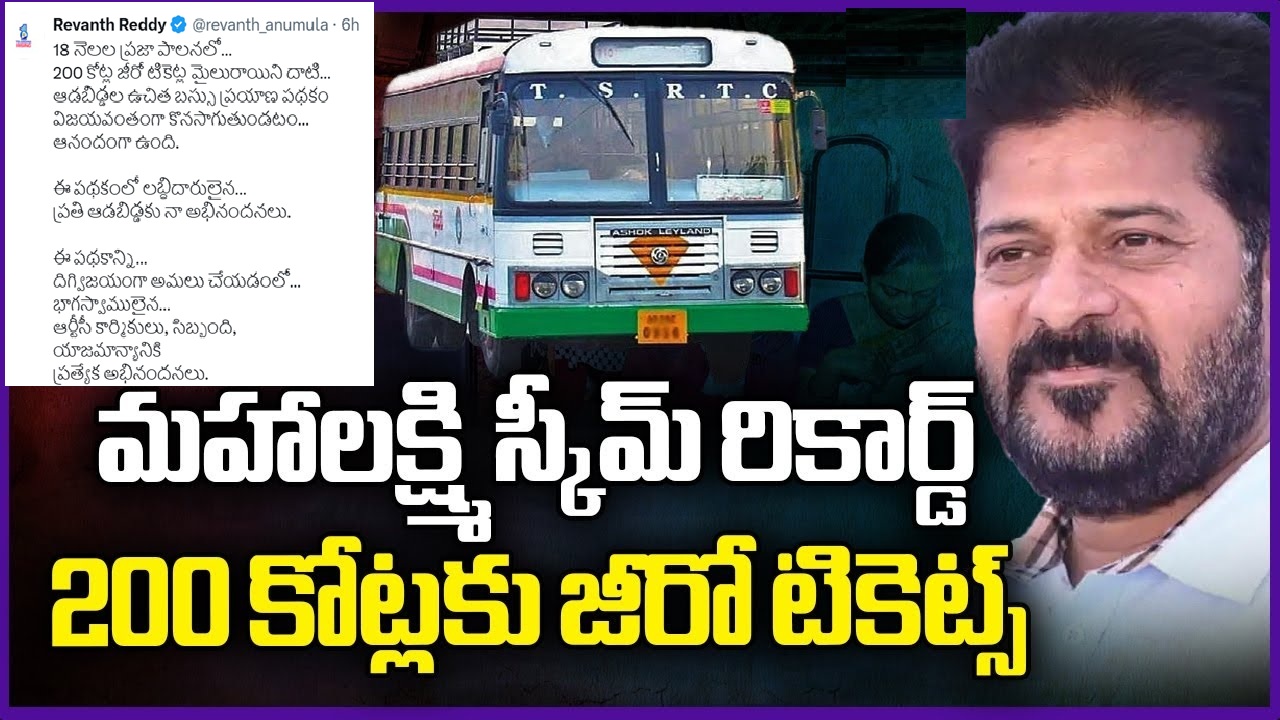
The Mahalakshmi Free Bus Scheme, launched by the Telangana government, has transformed the landscape of public transportation for women and transgender individuals across the state. Introduced on December 9, 2023, by the Congress government under Chief Minister A. Revanth Reddy, this pioneering initiative has issued over 200 crore zero-fare tickets, enabling women to save an estimated ₹6,700 crore in travel expenses over the past 18 months. This article delves into the profound impact of the Mahalakshmi scheme, exploring its benefits, operational success, challenges, and the broader implications for women’s empowerment and economic growth in Telangana.
The Genesis of the Mahalakshmi Free Bus Scheme
The Mahalakshmi scheme emerged as a cornerstone of the Congress party’s six guarantees promised during the 2023 election campaign. Designed to empower women and transgender individuals, the scheme provides free travel on non-AC buses operated by the Telangana State Road Transport Corporation (TGSRTC), including City Ordinary, Metro Express, Palle Velugu, and rural Express buses. By removing financial barriers to mobility, the initiative aims to enhance access to education, employment, healthcare, and leisure opportunities for women across Telangana.
A Commitment to Women’s Empowerment
The scheme’s launch on December 9, 2023, marked a significant step toward inclusive transport. Chief Minister A. Revanth Reddy, alongside Transport Minister Ponnam Prabhakar, flagged off the initiative from the State Assembly premises, signaling the government’s commitment to uplifting women. The program requires beneficiaries to present valid identification, such as an Aadhaar card or voter ID, proving domicile in Telangana, ensuring seamless access to free travel.
Rapid Adoption and Overwhelming Response
From its inception, the Mahalakshmi scheme garnered an overwhelming response. Within the first 11 days, TGSRTC reported that 62% of its passengers were women, with 30 lakh women traveling daily compared to 14 lakh at the scheme’s start. By July 21, 2025, the corporation had issued 199.60 crore zero-fare tickets, reaching the monumental milestone of 200 crore shortly thereafter. This surge in ridership reflects the scheme’s accessibility and appeal, particularly for women from rural and urban areas alike.
Economic Impact: Savings and Financial Relief
The Mahalakshmi scheme has delivered substantial economic benefits to women and transgender individuals, enabling them to redirect savings toward essential needs like education, healthcare, and household expenses.
Massive Savings for Women Travelers
Over the past 18 months, women passengers have saved approximately ₹6,700 crore in travel costs, with individual savings estimated at ₹4,000 to ₹5,000 per month. For low-income families, this financial relief has been transformative, allowing women to allocate funds to critical areas such as children’s education, medical care, and entrepreneurial ventures. The scheme’s impact extends beyond individual households, contributing to the state’s economic vitality by increasing women’s participation in the workforce and local markets.
Government Reimbursement to TGSRTC
To ensure the scheme’s sustainability, the Telangana government reimburses TGSRTC for the cost of zero-fare tickets, estimated at ₹250 crore per month. As of July 2025, the government had released ₹6,700 crore to the corporation, with approximately ₹700 crore still pending. Timely reimbursements are critical to maintaining TGSRTC’s financial stability, enabling the corporation to cover operational costs and invest in fleet modernization.
Operational Success: Boosting TGSRTC’s Performance
The Mahalakshmi scheme has revitalized TGSRTC, which had previously struggled with stagnant ridership and mounting losses. The initiative has significantly increased bus occupancy rates, improved revenue, and enhanced the corporation’s operational efficiency.
Surge in Ridership and Occupancy Rates
Before the scheme’s launch, TGSRTC’s occupancy rate hovered at 69%. Within a month of implementation, it soared to 88%, reaching an impressive 94% by November 2024. On certain routes, occupancy even hit 100%, reflecting the scheme’s popularity. Women now constitute 65.56% of TGSRTC’s passengers, with an average of 11 lakh zero-fare tickets issued daily. In Hyderabad alone, 8 lakh women commute daily on city buses, underscoring the scheme’s urban impact.
Financial Turnaround for TGSRTC
The increased ridership has boosted TGSRTC’s daily revenue, rising from ₹13 crore to ₹18–19 crore, with ₹10 crore from paying passengers. During the 2024 Sankranti festival, the corporation recorded ₹100 crore in excess revenue compared to the previous year, highlighting the scheme’s financial benefits. The government’s commitment to timely reimbursements has further alleviated TGSRTC’s financial burdens, enabling investments in new buses and digital ticketing systems.
Celebrating the Milestone: Statewide Festivities
To mark the achievement of 200 crore zero-fare tickets, the Telangana government organized celebrations across 97 depots and 341 bus stations on July 23, 2025. These events highlighted the scheme’s success and honored the contributions of TGSRTC staff and beneficiaries.
Honoring Beneficiaries and Staff
The celebrations featured inspirational speeches by women from diverse backgrounds, including vegetable vendors, employees, teachers, students, businesswomen, patients, and pilgrims. These women shared how free travel has empowered them to pursue education, employment, and healthcare opportunities. At depots and major bus stations, women beneficiaries received shawls and gifts as tokens of appreciation.
TGSRTC also recognized its workforce, felicitating the five best drivers, conductors, traffic guides, and security personnel at each depot for their exceptional service. These recognitions underscored the corporation’s commitment to employee welfare and public service.
Engaging the Community
The celebrations included essay writing, rangoli, and painting competitions for school and college students, focusing on themes like women’s empowerment and the Mahalakshmi scheme. Winners received prizes such as books, water bottles, and pen sets, fostering community engagement and raising awareness about the scheme’s impact.
Challenges and Teething Problems
Despite its success, the Mahalakshmi scheme has faced operational and social challenges, particularly in its early stages. Addressing these issues is crucial to ensuring the program’s long-term sustainability.
Overcrowding and Safety Concerns
The overwhelming response to the scheme led to overcrowded buses, with some vehicles carrying double their capacity (49–54 passengers). Drivers reported difficulties in maneuvering overloaded buses, raising safety concerns. Conductors also faced increased workloads due to the need to verify IDs and issue zero-fare tickets, leading to occasional tensions with passengers.
Social Dynamics and Gender Perceptions
Some male passengers have expressed resentment, taunting women for traveling free, which has inadvertently widened the gender gap. Homemakers and students have reported instances of irritation from bus crew and male commuters, highlighting the need for awareness campaigns to foster inclusivity and understanding.
Fleet and Infrastructure Constraints
The surge in ridership exposed the limitations of TGSRTC’s aging fleet. Transport experts and passengers have called for the replacement and augmentation of buses to meet growing demand. The corporation plans to introduce 1,050 new diesel buses and 1,050 electric buses by March 2024, but delays in fleet expansion remain a concern.
Broader Implications: Empowering Women and Boosting the Economy
The Mahalakshmi scheme has far-reaching implications beyond free travel, empowering women and contributing to Telangana’s economic and social development.
Enhancing Access to Opportunities
By eliminating travel costs, the scheme has enabled women to access education, healthcare, and employment opportunities. The Transport Minister noted a significant increase in women traveling to hospitals in Hyderabad from rural districts, improving healthcare access. Additionally, an 82% rise in ridership on temple routes indicates increased leisure travel, fostering social and cultural engagement.
Economic Empowerment and Workforce Participation
The financial savings from free travel have empowered women to invest in education, start businesses, and contribute to household incomes. The scheme has also increased women’s workforce participation, particularly in urban areas, boosting local economies and promoting gender equality.
A Model for Other States
The Mahalakshmi scheme draws inspiration from similar initiatives in Tamil Nadu and Karnataka, but its scale and impact have set a new benchmark. While Tamil Nadu released a report on the benefits of its zero-fare scheme, Telangana is yet to publish a comprehensive study. Such a report could provide valuable insights into the scheme’s socioeconomic impact and guide future policy decisions.
Future Directions: Sustaining and Scaling the Scheme
To ensure the Mahalakshmi scheme’s long-term success, the Telangana government and TGSRTC are focusing on modernization, infrastructure upgrades, and addressing operational challenges.
Fleet Modernization and Expansion
Chief Minister A. Revanth Reddy has directed TGSRTC to plan the acquisition of new buses, including diesel and electric models, to meet growing demand. The corporation aims to transition to a greener transport network, with 550 electric buses for intercity routes and 500 for intracity routes by March 2024. These investments will enhance service reliability and passenger comfort.
Digital Transformation
TGSRTC is implementing the Automatic Fare Collection System (AFCS) and Intelligent Transport Management System (ITMS) to streamline operations. QR code ticketing is already available, with WhatsApp ticketing and digital bus passes planned for the future. These innovations will improve ticketing efficiency and reduce the workload on conductors.
Addressing Financial Sustainability
With TGSRTC’s debts totaling ₹6,332 crore, the government is exploring ways to reduce interest rates and restructure loans. Ensuring timely reimbursements and optimizing operational costs will be critical to maintaining the corporation’s financial health.
Voices of Beneficiaries: Real Stories, Real Impact
The Mahalakshmi scheme has touched the lives of millions of women, enabling them to pursue their aspirations without financial constraints. Here are a few stories shared during the statewide celebrations:
- Shoba Kulkarni, a hospital staffer from Erragadda, saves ₹2,000 monthly, allowing her to support her children’s education. “This scheme is a blessing for those who earn less,” she says.
- Kulsum, a homemaker from Mehdipatnam, appreciates the comfort of getting a seat on her return journey, a stark contrast to her earlier crowded, paid trips. “The government should next focus on housing and pensions for poor women,” she suggests.
- Padma, a homemaker traveling to Janagam, emphasizes the necessity of her trips. “We travel only when there’s work. This scheme makes it possible without worrying about costs.”
These stories highlight the scheme’s role in empowering women from diverse backgrounds, from urban professionals to rural homemakers.
Conclusion: A Transformative Step Toward Inclusive Mobility
The Mahalakshmi Free Bus Scheme has redefined public transportation in Telangana, empowering women and transgender individuals with unprecedented access to mobility. By issuing 200 crore zero-fare tickets and saving passengers ₹6,700 crore, the scheme has delivered tangible economic benefits while revitalizing TGSRTC’s operations. Despite challenges like overcrowding and social tensions, the government’s commitment to fleet expansion, digital innovation, and timely reimbursements ensures the program’s sustainability.
As Telangana celebrates this milestone, the Mahalakshmi scheme stands as a testament to the power of inclusive policies in driving social and economic progress. By enabling women to pursue education, employment, and healthcare, the initiative paves the way for a more equitable and prosperous future. As the state continues to refine and expand the scheme, it serves as a model for other regions, demonstrating how free public transport can transform lives and empower communities.