The Indian stock market is a dynamic arena, pulsating with opportunities and challenges for investors. Staying updated with the latest developments in key companies is crucial for making informed decisions. In this comprehensive article, we dive into the recent updates surrounding three prominent players: Indian Renewable Energy Development Agency (IREDA), Hindustan Aeronautics Limited (HAL), and Dixon Technologies. From financial performance to strategic moves like stock splits and fundraises, we explore the factors shaping their trajectories. This in-depth analysis, crafted with a keen eye on SEO, aims to equip investors with valuable insights while steering clear of investment advice, focusing solely on educational content.
Indian Renewable Energy Development Agency (IREDA): Navigating Growth and Challenges
Q1 Results: A Mixed Performance
IREDA, a key player in India’s renewable energy financing sector, recently released its first-quarter results, sparking significant market interest. The company has consistently delivered robust revenue growth, achieving double-digit increases year-on-year for the past several quarters. Historically, IREDA’s top-line growth has exceeded 30% annually, a testament to its strong positioning in the renewable energy space. However, the latest Q1 results revealed a slight dip, with revenue growth settling at approximately 29%. While still commendable, this figure fell short of market expectations, which had anticipated another stellar performance.
The company’s net profit also faced headwinds, reporting ₹247 crore, a decline compared to the previous year. A key factor contributing to this was an increase in provisions, primarily due to defaults by Insol Engineering. These provisions weighed heavily on IREDA’s profitability, dampening investor sentiment. Despite the shortfall, the company’s long-term growth trajectory remains intact, supported by India’s ambitious renewable energy targets.
Fundraising Plans: Fueling Future Expansion
IREDA is actively pursuing capital-raising initiatives to bolster its financial muscle. The company aims to raise up to ₹3,000 crore in the 2026 financial year through share sales. This follows a recent qualified institutional placement (QIP) that raised ₹25 crore, with the government—IREDA’s promoter—divesting a 3.24% stake. Plans are underway for another significant stake sale, potentially up to 3.76%, which could further dilute the government’s holding.
This aggressive fundraising strategy aligns with IREDA’s ambitious goal to grow its loan book four to five times by 2030. The renewable energy sector offers high-growth opportunities, and IREDA is positioning itself to capitalize on this potential. By securing substantial funds, the company aims to finance more renewable energy projects, strengthening its role in India’s green energy transition.
Why the Focus on Fundraising?
The renewable energy financing sector demands substantial capital to support large-scale projects. IREDA’s business model revolves around providing loans to renewable energy companies, necessitating a robust balance sheet. The company’s frequent fundraising efforts reflect its strategy to maintain liquidity and seize growth opportunities in a sector poised for exponential expansion. Investors should note, however, that increased provisions and promoter stake dilution could influence market perceptions in the short term.
Hindustan Aeronautics Limited (HAL): Soaring Toward New Horizons
A Potential Game-Changing Deal
Hindustan Aeronautics Limited (HAL), a cornerstone of India’s defense and aerospace sectors, is making headlines with a potential ₹67,000 crore deal. Reports suggest that the government may approve the acquisition of 97 new fighter aircraft for the Indian Air Force, a move that could significantly boost HAL’s order book. While not yet officially confirmed, such large-scale deals often materialize, sometimes within days or even years, making this development worth monitoring.
If approved, this deal would enhance HAL’s already substantial order backlog, reinforcing its position as a key player in India’s defense manufacturing ecosystem. The company’s expertise in producing fighter aircraft and helicopters positions it to benefit directly from this initiative, aligning with the government’s “Aatmanirbhar Bharat” (Self-Reliant India) campaign to promote domestic manufacturing.
Execution: The Key to Unlocking Potential
While a robust order book is a positive indicator, HAL’s success hinges on its ability to convert these orders into timely revenue and profits. The company relies on external suppliers for critical components, such as aircraft engines, which introduces dependencies. To align with India’s self-reliance goals, HAL is working to enhance its in-house manufacturing capabilities. Improved execution could accelerate revenue growth, which has historically lagged at a compound annual growth rate (CAGR) of 8% over the past five years.
For the 2026 financial year, HAL has set a revenue growth target of 8–10%. Achieving the upper end of this range would mark a significant improvement, as the company has not consistently delivered double-digit growth in recent years. Investors should keep an eye on HAL’s execution strategy and its ability to capitalize on large-scale government contracts.
Strategic Implications for Investors
HAL’s potential involvement in a ₹67,000 crore deal underscores its strategic importance in India’s defense sector. However, investors should approach this news with caution, as the deal’s finalization remains uncertain. Monitoring HAL’s progress in improving execution and reducing reliance on external suppliers will be critical to assessing its long-term growth potential.
Dixon Technologies: A Stock Split and Q1 Expectations
Stock Split Approval: Enhancing Accessibility
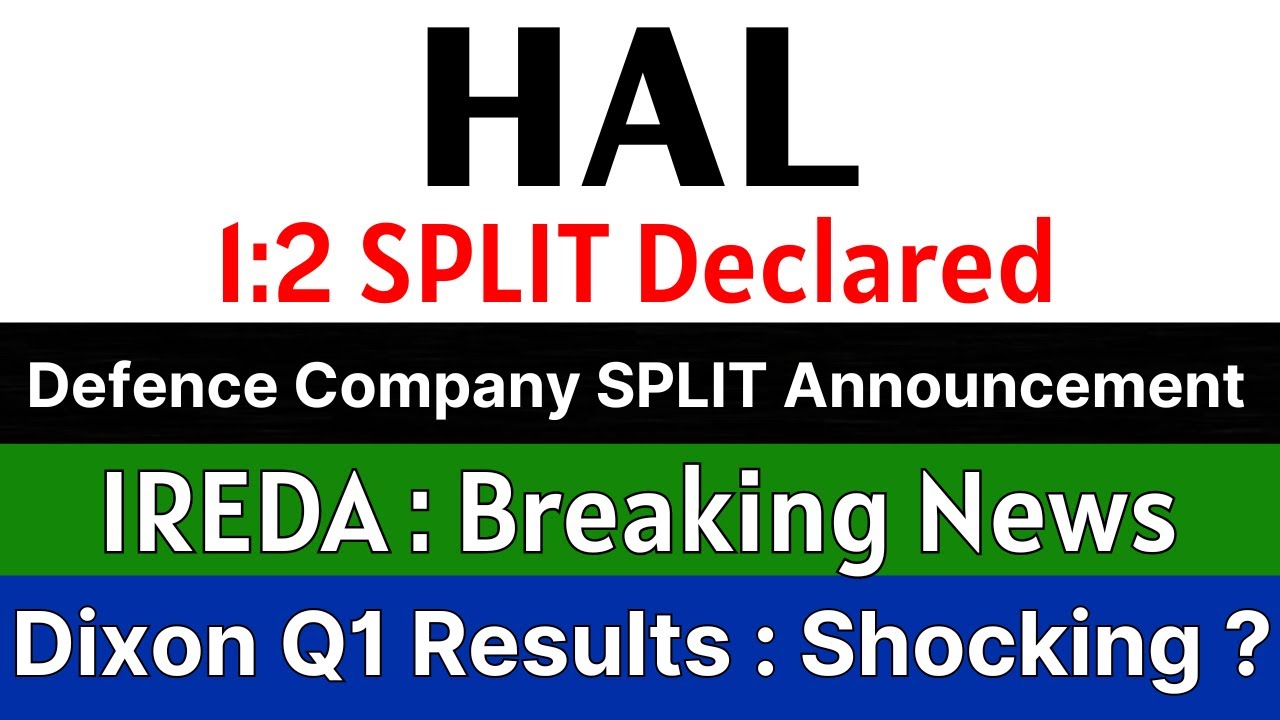
Dixon Technologies, a leading electronics manufacturing services (EMS) provider, recently approved a 1:2 stock split in a board meeting. This move will convert each existing share into two, effectively halving the share price. Stock splits often aim to make shares more accessible to retail investors, potentially increasing liquidity and market participation. For existing shareholders, this is a noteworthy development, while non-shareholders may view it as a signal of confidence in the company’s future growth.
Dixon operates in both the railway and defense sectors but is more prominently recognized for its contributions to electronics manufacturing, including consumer electronics and home appliances. The stock split could attract more investor attention, particularly as the company continues to expand its market presence.
Q1 Results: Tempered Expectations
Dixon Technologies is set to announce its Q1 results, and market expectations are tempered compared to its historical performance. Over the past five quarters, Dixon has consistently delivered exceptional revenue growth, often exceeding 100% year-on-year. However, analysts anticipate a slowdown in the current quarter, with revenue growth projected to fall below the 100% mark. Estimates suggest a top-line figure of ₹1,555 crore, with an EBITDA of ₹389 crore and a net profit of ₹121 crore.
While these figures reflect a sharp improvement on a quarter-on-quarter basis, the year-on-year profit growth is expected to be modest, potentially dropping by over 50% compared to the previous quarter’s ₹465 crore. Margin pressures and a high base effect from prior quarters contribute to these projections. For a company like Dixon, known for its high-growth trajectory, even an 80–90% growth rate may disappoint investors accustomed to triple-digit figures.
Balancing Growth and Valuations
Dixon’s high-growth profile has historically commanded premium valuations. However, the anticipated slowdown in Q1 growth could test investor confidence, particularly if the company fails to meet market expectations. Unlike large-cap peers like Infosys or TCS, which operate in different sectors, Dixon’s smaller size and focus on electronics manufacturing mean that sustained high growth is critical to maintaining its valuation. Investors should closely monitor the Q1 results to gauge whether Dixon can navigate these challenges and sustain its growth momentum.
Strategic Insights for Investors: Key Takeaways
Understanding Market Dynamics
The updates surrounding IREDA, HAL, and Dixon Technologies highlight the diverse dynamics shaping India’s stock market. IREDA’s focus on renewable energy financing positions it as a key player in a high-growth sector, but its recent financial performance underscores the importance of managing provisions and meeting market expectations. HAL’s potential mega-deal with the Indian Air Force could be a game-changer, provided the company enhances its execution capabilities. Meanwhile, Dixon Technologies’ stock split and upcoming Q1 results signal a pivotal moment for the company as it navigates a high-growth but competitive landscape.
The Importance of Due Diligence
While these updates provide valuable insights, investors must conduct their own research and analysis. Market expectations, financial performance, and strategic moves like fundraising or stock splits can significantly influence stock prices. By staying informed and critically evaluating company developments, investors can make well-rounded decisions aligned with their financial goals.
Leveraging Educational Resources
For those seeking additional insights, platforms like SEBI-registered Telegram channels can offer valuable research and updates. One such channel, Trader Paaji, provides free research on company charts and trading calls, backed by over eight years of experience in options and swing trading. Investors can join such platforms to stay updated, but they should always verify information independently.
Conclusion: Staying Ahead in a Dynamic Market
The Indian stock market is a vibrant ecosystem, with companies like IREDA, HAL, and Dixon Technologies driving innovation and growth in their respective sectors. IREDA’s fundraising efforts signal its ambition to dominate renewable energy financing, while HAL’s potential defense deal underscores its strategic importance. Dixon Technologies, with its stock split and upcoming results, remains a high-growth contender in the electronics manufacturing space. By understanding these developments and conducting thorough research, investors can navigate the complexities of the market with confidence.
This article, crafted for educational purposes, aims to empower investors with actionable insights. Share your thoughts on these companies in the comments below, and stay tuned for more updates to make informed investment decisions.