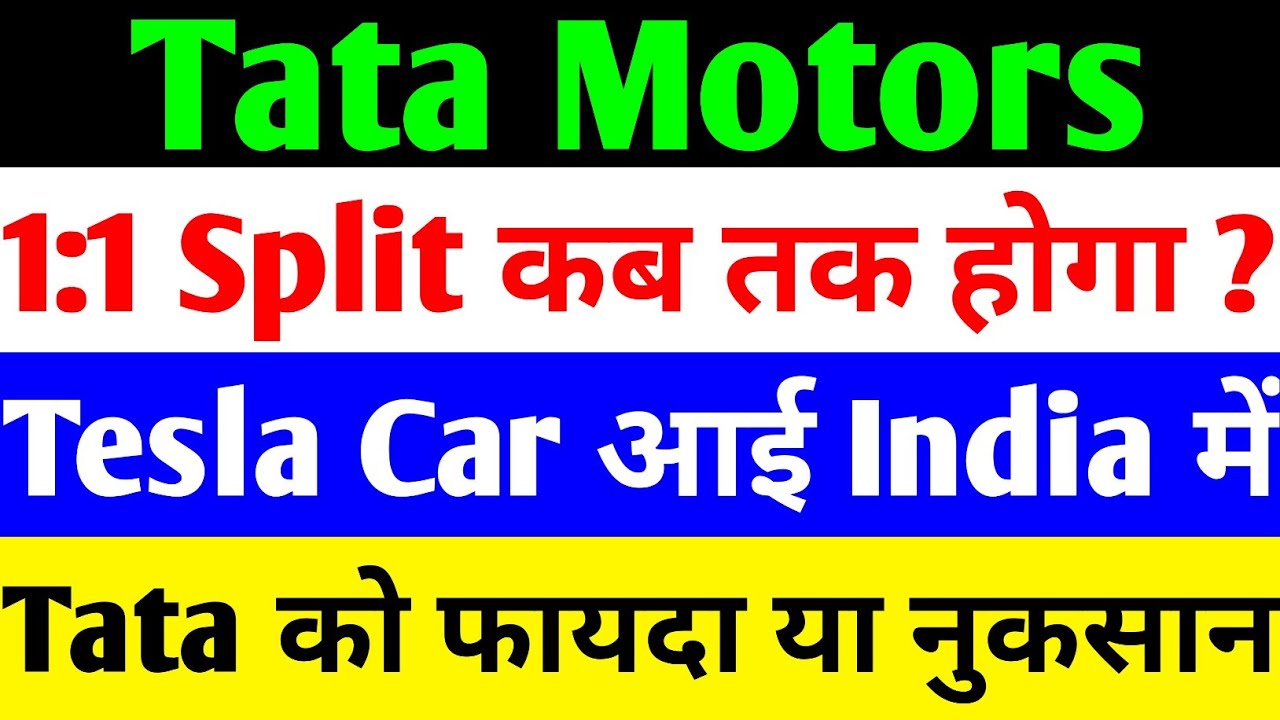
The Indian automotive industry is undergoing a seismic shift, with electric vehicles (EVs) taking center stage. Tata Motors, a dominant player in India’s EV market, has recently seen its share price climb, closing at ₹683 with a 1.26% gain. Meanwhile, Tesla’s long-awaited entry into India has sparked widespread discussion. With a new showroom in Mumbai and plans for further expansion, Tesla’s arrival raises questions about its impact on Tata Motors’ market share and future growth. Additionally, Tata Motors’ strategic decision to split its business into two distinct entities—passenger vehicles and commercial vehicles—signals a bold move to strengthen its market position. This article dives deep into these developments, analyzing Tata Motors’ performance, Tesla’s potential influence, and the company’s roadmap for 2025 and beyond.
Tata Motors’ Stellar Performance in 2025
Tata Motors has long been a cornerstone of India’s automotive sector, renowned for its diverse portfolio spanning passenger vehicles, commercial vehicles, and EVs. In 2025, the company continues to demonstrate resilience, with its stock price reflecting investor confidence. Closing at ₹683, the stock showcased a 1.26% uptick, a notable improvement from its previous level of ₹674. This upward trajectory highlights Tata Motors’ ability to navigate competitive pressures and capitalize on India’s growing demand for sustainable mobility.
The company’s success stems from its leadership in the EV segment, where it holds a commanding 38% market share. Despite a decline from its 2024 peak of 70%, Tata Motors remains the undisputed leader in India’s EV market. Its affordable EV models, such as the Nexon EV and Tiago EV, cater to a broad customer base, offering a compelling alternative to pricier competitors. This strategic pricing, combined with innovative offerings like lifetime battery warranties, positions Tata Motors to maintain its edge in the rapidly evolving EV landscape.
Tesla’s Grand Entry into India: A Game-Changer?
Tesla, the global EV giant, has officially entered the Indian market, opening its first showroom in Mumbai’s Bandra Kurla Complex (BKC). Launched with much fanfare by Maharashtra Chief Minister Devendra Fadnavis, the showroom marks Tesla’s initial foray into India’s premium EV segment. Tesla’s Model Y, priced at approximately ₹60 lakh, targets affluent buyers, positioning the brand as a luxury offering rather than a direct competitor to Tata Motors’ mass-market EVs.
Tesla’s Strategy: Import and Sell
For now, Tesla’s India strategy focuses on importing vehicles rather than local manufacturing. According to Union Heavy Industries Minister HD Kumaraswamy, Tesla has no immediate plans to produce cars in India. This decision stems from high import duties, which Elon Musk, Tesla’s CEO, has cited as a significant barrier. However, India’s recent EV policy, which offers reduced import duties and incentives for global manufacturers, could pave the way for Tesla to establish local production in the future.
Tesla’s high pricing strategy limits its appeal to India’s price-sensitive middle class, ensuring that Tata Motors’ affordable EVs remain the preferred choice for most consumers. While Tesla’s brand cachet and technological prowess are undeniable, its current market positioning suggests minimal immediate impact on Tata Motors’ dominance in the budget and mid-range EV segments.
Tesla’s Global Challenges and India’s Opportunity
Globally, Tesla faces stiff competition, particularly from Chinese giant BYD, which has eroded its market share in key markets like China and the United States. India represents a new frontier for Tesla to offset these losses. However, the Indian EV market is still nascent, with limited demand for high-end models priced above ₹50 lakh. Tata Motors, with its focus on affordability and localized production, is better positioned to capture the growing demand for EVs among middle-class consumers.
Tata Motors’ Strategic Business Split: A Vision for Growth
In a bold move to streamline operations and boost efficiency, Tata Motors announced plans to split its business into two separate entities: passenger vehicles (including EVs) and commercial vehicles. This demerger, set to take effect in 2025, aims to allow each division to focus on its core strengths, enabling faster decision-making and targeted growth strategies.
Why the Split Matters
Tata Motors’ diverse portfolio, encompassing everything from compact cars to heavy-duty trucks, has historically posed management challenges. By separating its passenger and commercial vehicle businesses, the company can allocate resources more effectively, tailoring strategies to the unique demands of each segment. The passenger vehicle division, which includes Tata’s EV lineup, will focus on innovation and market expansion, while the commercial vehicle arm will strengthen its dominance in logistics and transportation.
Financial Benefits for Shareholders
The demerger is expected to create significant value for shareholders. For every Tata Motors share held, investors will receive one share in each of the new entities. This structure ensures that shareholders benefit from the growth potential of both businesses. With Tata Motors reporting a revenue of ₹4.39 lakh crore in 2025 and achieving debt-free status, the company is well-positioned to invest in new technologies and expand its market presence.
Leveraging AI and Innovation
Under the leadership of Chairman N Chandrasekaran, Tata Motors is doubling down on innovation. The company plans to integrate artificial intelligence (AI) into its EV models, enhancing features like autonomous driving and predictive maintenance. Additionally, new EV models, such as the Harrier EV and Sierra EV, are in the pipeline, targeting the premium segment to recapture market share lost to competitors like Mahindra & Mahindra and MG Motors.
Competitive Landscape: Tata Motors vs. Mahindra & MG Motors
While Tesla’s entry has garnered headlines, Tata Motors faces more immediate competition from domestic players like Mahindra & Mahindra and MG Motors. These companies have made significant inroads into the EV market, contributing to Tata Motors’ market share decline from 70% in 2024 to 38% in 2025.
Mahindra & Mahindra’s Rising Presence
Mahindra & Mahindra has gained traction with models like the XUV 9 and Be6, which have resonated with Indian consumers. The company’s focus on rugged, feature-rich EVs has helped it carve out a niche in the mid-range segment, directly challenging Tata Motors’ dominance.
MG Motors’ Growing Popularity
MG Motors, with its popular ZS EV and Windsor EV models, has also emerged as a formidable competitor. The company’s aggressive pricing and sleek designs have attracted urban buyers, further eroding Tata Motors’ market share. However, Tata Motors is countering this challenge with new model launches and enhanced warranties, such as lifetime battery coverage, to rebuild consumer confidence.
Addressing the Battery Challenge
One of the biggest hurdles for EV adoption in India is battery cost and replacement concerns. Tata Motors has addressed this by offering lifetime battery warranties on select models, a move that could drive higher adoption rates. As battery technology evolves and costs decline, Tata Motors is well-positioned to capitalize on the growing demand for EVs.
Tata Motors’ Roadmap for 2025 and Beyond
Tata Motors is not resting on its laurels. The company has outlined an ambitious plan to regain its market share and solidify its leadership in the EV segment. Key strategies include:
- New Model Launches: Tata Motors is set to introduce premium EV models like the Harrier EV and Sierra EV, targeting buyers in the ₹20-30 lakh range. These models aim to compete with Mahindra and MG Motors while maintaining affordability compared to Tesla’s offerings.
- Investment in R&D: The company is increasing its investment in research and development, focusing on AI, battery technology, and connected vehicles. These advancements will enhance the appeal of Tata’s EVs and strengthen its competitive edge.
- Expanding Market Share: Tata Motors aims to increase its EV market share from 38% to 50% by launching new models and leveraging its debt-free status to fund growth initiatives.
- Sustainability Focus: As India moves toward greener mobility, Tata Motors is aligning its strategy with government policies, such as the new EV incentives, to drive adoption and reduce carbon emissions.
Should You Invest in Tata Motors in 2025?
Tata Motors’ recent performance, strategic demerger, and focus on innovation make it an attractive investment option. The company’s debt-free status and strong revenue growth signal financial stability, while its leadership in the EV market positions it for long-term success. However, investors should consider the following factors:
- Tesla’s Long-Term Impact: While Tesla’s current pricing limits its immediate threat, future local manufacturing could intensify competition.
- Domestic Rivals: Mahindra & Mahindra and MG Motors are gaining ground, and Tata Motors must continue innovating to maintain its lead.
- Market Volatility: The automotive sector is subject to economic fluctuations, regulatory changes, and supply chain challenges.
Before investing, consult a financial advisor and conduct thorough research. Tata Motors’ strong fundamentals and proactive strategies make it a compelling choice, but due diligence is essential.
Conclusion: Tata Motors’ Bright Future in India’s EV Revolution
Tata Motors is at a pivotal moment in its journey. Despite Tesla’s high-profile entry and growing competition from Mahindra and MG Motors, the company remains a leader in India’s EV market. Its strategic business split, focus on innovation, and commitment to affordability position it to thrive in the evolving automotive landscape. With a debt-free balance sheet, robust revenue growth, and a pipeline of new models, Tata Motors is poised to reclaim its market share and drive India’s transition to sustainable mobility.
For investors, Tata Motors offers a unique opportunity to capitalize on the EV revolution. While challenges remain, the company’s proactive approach and strong fundamentals make it a standout player in 2025. Stay informed, conduct thorough research, and consider Tata Motors as a key player in India’s automotive future.
Disclaimer: This article is for educational purposes only. Always consult a financial advisor before making investment decisions.