The stock market in 2025 continues to be a dynamic arena, shaped by global economic policies, corporate developments, and geopolitical strategies. From Indian giants like Adani Green and Suzlon Energy to international trade dynamics involving the U.S., China, and Canada, investors face both challenges and opportunities. This comprehensive guide explores recent market movements, standout performers like Raymond, Kaynes Technology, and Jio Financial, and the broader implications of global trade pressures. Whether you’re a seasoned investor or new to the market, this article provides actionable insights to help you stay ahead.
Understanding Recent Market Volatility
A Normal Market Correction
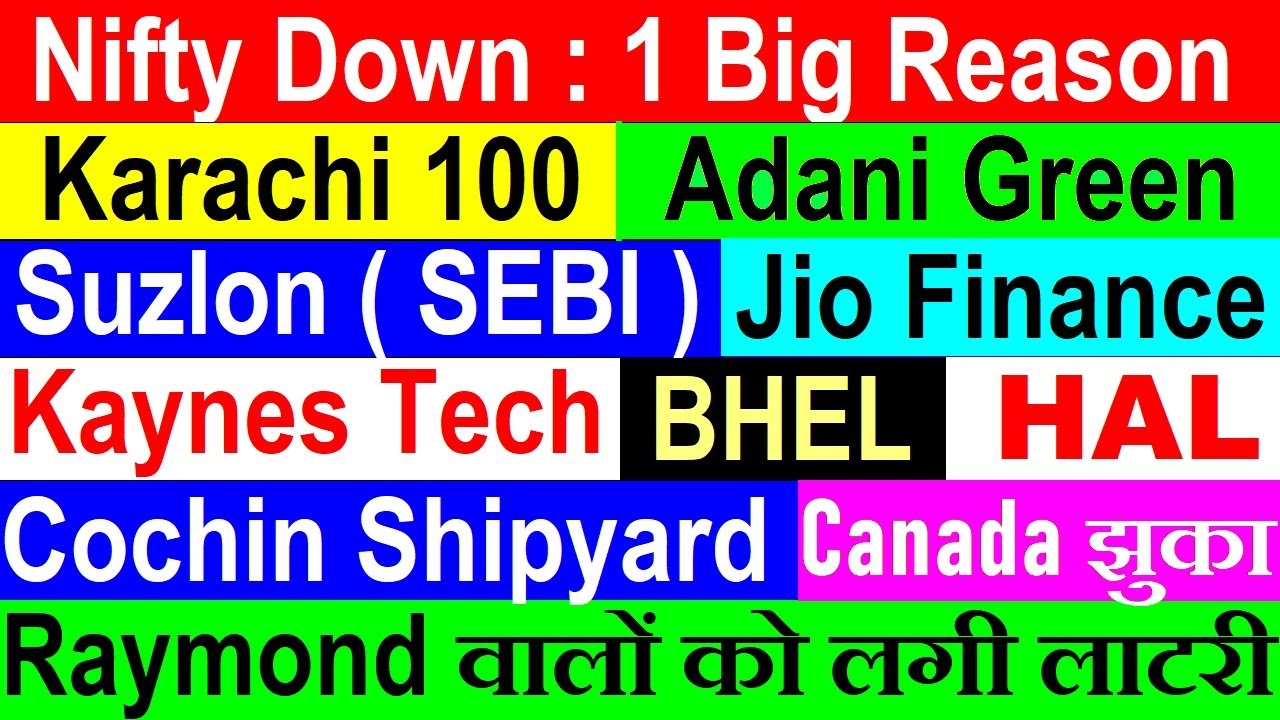
The Indian stock market recently experienced a modest decline of approximately 0.5%, with the Nifty index briefly dipping below 25,500 to a low of 25,473.30. This correction is a standard occurrence in the cyclical nature of markets, where daily fluctuations are as routine as breathing. Despite the dip, bullish momentum helped the market recover, closing above 25,500. Such volatility is not a cause for alarm but rather an expected part of market dynamics, as seen in prior sessions and likely to continue.
Global Influences on Indian Markets
A significant factor contributing to this pressure is the evolving trade rhetoric from the U.S., particularly under the influence of Donald Trump’s policies. His recent statements on trade deals have created ripples across global markets. While the U.S. market surged by 1% due to a surprise trade framework with China, Indian markets faced headwinds from Trump’s comments about opening the U.S. market to Indian goods on favorable terms. This strategic pressure, often referred to as Trump’s “pressure tactic,” has been effective in negotiations, as evidenced by Canada’s recent decision to drop its Digital Services Tax (DST) to resume trade talks with the U.S.
India, maintaining a trade surplus with the U.S., exports more goods than it imports, a dynamic that American policymakers are keenly aware of. This surplus gives the U.S. leverage, which it uses to influence trade terms. Investors must remain vigilant as these negotiations unfold, as they could impact sectors reliant on exports to the U.S.
Spotlight on Top Performers
Raymond: A Rocket in the Making
Raymond, a household name in textiles and apparel, has recently captured the market’s attention with a staggering 16% surge in its stock price. The catalyst? The upcoming listing of its third entity, Raymond Realty, on stock exchanges. This real estate arm is expected to debut with strong performance, as brokerage firms predict a robust listing. The anticipation has already driven significant gains in both Raymond and its subsidiary, Raymond Lifestyle.
The market’s enthusiasm stems from Raymond Realty’s potential to add substantial value to the parent company’s portfolio. With shares of Raymond Realty largely held by the parent entity, any success in the real estate venture is likely to enhance Raymond’s overall business valuation. Investors are watching closely, as the listing’s outcome will determine whether this momentum sustains or fades.
Adani Green: Powering Renewable Energy
Adani Green Energy has solidified its position as India’s fastest-growing renewable energy firm, surpassing a milestone of 15,500 megawatts (15.5 gigawatts) in capacity. This achievement underscores its dominance in the renewable sector, making it a darling of environmentally conscious investors. However, the company has faced challenges, including allegations of bribery in the U.S., which have introduced volatility to its stock price. Despite these controversies, Adani Green’s long-term growth prospects remain strong, driven by India’s push for sustainable energy.
Suzlon Energy: Clearing Regulatory Hurdles
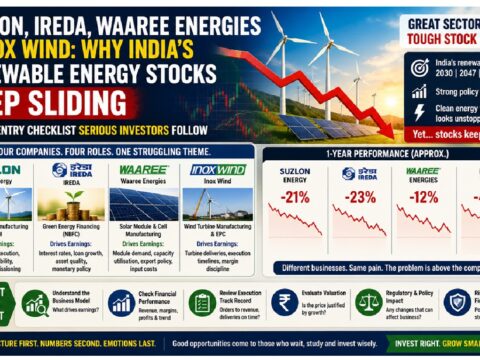
Suzlon Energy, a leader in wind energy, saw a positive uptick in its stock price after the Securities and Exchange Board of India (SEBI) dismissed adjudication proceedings against the company. This resolution removed a significant overhang, boosting investor confidence. Suzlon’s focus on renewable energy aligns with global trends, and its ability to navigate regulatory challenges positions it as a stock to watch in the green energy space.
Kaynes Technology: Venturing into Space
Kaynes Technology has emerged as a standout performer, with its stock soaring over 3.5% following its entry into the space and satellite manufacturing sector. The company established a dedicated subsidiary to capitalize on this high-growth industry, a move the market has warmly welcomed. Space technology is a niche yet rapidly expanding field, and Kaynes’ strategic pivot signals its ambition to capture a share of this futuristic market. Investors interested in innovation-driven companies should keep Kaynes on their radar.
Jio Financial Services: Consistent Growth
Jio Financial Services (JFS) has been a consistent performer, gaining for five consecutive trading sessions with a cumulative rise of 10-13% in a week. This momentum is fueled by multiple positive developments, including a ₹190 crore infusion into its payment bank and the acquisition of a broking license from SEBI. Additionally, news related to a new fund offer (NFO) has further bolstered investor sentiment. JFS’s diversified business model and strong backing from the Reliance Group make it a compelling investment option.
Cochin Shipyard: Securing Lucrative Contracts
Cochin Shipyard’s stock rallied after securing a ₹250 crore order to construct two tugs. This contract highlights the company’s ability to win significant projects, which directly contribute to revenue and profitability. The market’s positive reaction reflects the importance of order size in driving stock performance. Larger contracts, such as those worth ₹2,500 crore or more, could amplify this momentum, making Cochin Shipyard a stock to monitor in the defense and maritime sectors.
BHEL: Capitalizing on New Orders
Bharat Heavy Electricals Limited (BHEL) saw a 3% jump in its stock price following an order from Adani Power. This development underscores BHEL’s critical role in India’s power infrastructure. As the country continues to expand its energy capacity, BHEL’s expertise in manufacturing heavy electrical equipment positions it as a key player in the sector.
HAL: Dividend Announcements
Hindustan Aeronautics Limited (HAL) announced a final dividend of ₹15 per share, pending shareholder approval at its Annual General Meeting (AGM). This move reinforces HAL’s commitment to delivering value to investors. The company’s strong fundamentals and its pivotal role in India’s defense sector make it a stable investment choice, particularly for those seeking dividend income.
Global Trade Dynamics: A Closer Look
Trump’s Pressure Tactics
Donald Trump’s trade policies have had a profound impact on global markets. His recent announcement to terminate trade talks with Canada over its 3% Digital Services Tax on U.S. tech giants like Apple, Google, and Meta forced Canada to backtrack. By threatening tariffs, Trump successfully pressured Canada to drop the tax and resume trade negotiations. This strategy highlights the U.S.’s economic influence, as no country wants to lose access to its lucrative market.
India, with its trade surplus, faces similar pressures. Trump’s comments about opening the U.S. market to Indian goods suggest a potential renegotiation of trade terms. While this could benefit Indian exporters, it also introduces uncertainty, as the U.S. may push for concessions that could affect specific sectors.
China’s Role in Supporting Pakistan
Across the border, Pakistan’s Karachi 100 index saw a 1% rise, driven by positive developments in its financial landscape. China’s consistent support, particularly through loan renewals and extensions, has been a lifeline for Pakistan’s economy. This assistance has bolstered investor confidence, as reflected in the Karachi market’s performance. However, China’s strategic interest in Pakistan goes beyond economics, as it uses the country to counterbalance India’s regional influence. Investors in Indian markets should remain aware of these geopolitical dynamics, as they could indirectly impact economic stability.
Strategic Investment Tips for 2025
Diversify Across Sectors
The recent performance of stocks like Raymond, Adani Green, and Kaynes Technology highlights the importance of diversification. By investing across sectors such as real estate, renewable energy, and technology, investors can mitigate risks associated with market volatility and geopolitical uncertainties.
Monitor Global Trade Developments
Trade policies, particularly those involving the U.S. and China, will continue to shape market trends. Stay informed about negotiations and their potential impact on Indian companies, especially those with significant export exposure.
Focus on High-Growth Industries
Sectors like renewable energy, space technology, and financial services are poised for growth in 2025. Companies like Suzlon, Kaynes, and Jio Financial are well-positioned to capitalize on these trends, offering attractive opportunities for long-term investors.
Evaluate Order Books and Corporate Actions
For companies like Cochin Shipyard and BHEL, the size and frequency of orders are critical drivers of stock performance. Similarly, corporate actions such as dividends (HAL) and new listings (Raymond Realty) can create short-term opportunities for gains.
Stay Resilient Amid Volatility
Market corrections, like the recent 0.5% dip, are normal. Focus on fundamentally strong companies with robust growth prospects to weather short-term fluctuations. Long-term investors should view these dips as opportunities to accumulate quality stocks.
Conclusion: Seizing Opportunities in a Dynamic Market
The stock market in 2025 is a complex yet rewarding landscape. From Raymond’s explosive growth to Adani Green’s renewable energy milestones, Indian companies are making significant strides. However, global trade pressures and geopolitical strategies add layers of complexity. By staying informed, diversifying investments, and focusing on high-growth sectors, investors can navigate these challenges and capitalize on emerging opportunities. Keep a close eye on corporate developments and global trends to make informed decisions in this ever-evolving market.