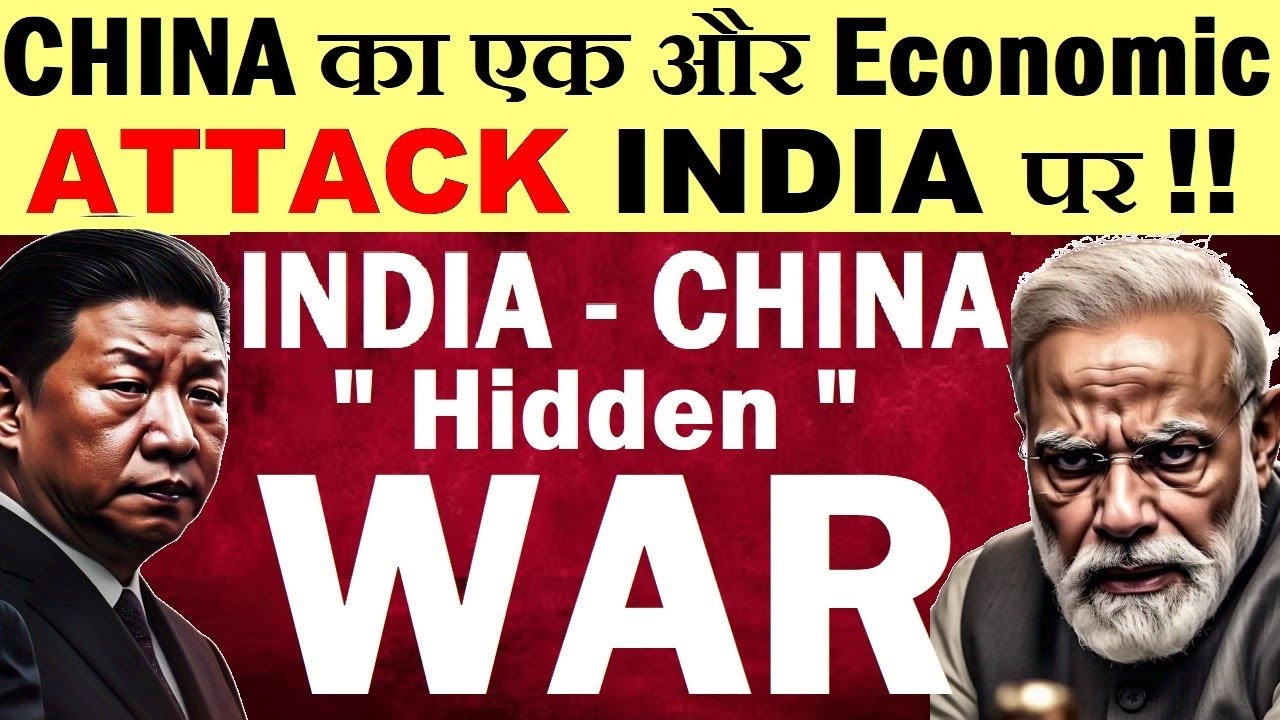
India and China, two economic giants in Asia, share a complex relationship marked by competition and strategic maneuvers. While India pushes for self-reliance through initiatives like Make in India, China’s economic tactics, particularly dumping, pose significant challenges to India’s domestic industries. This article delves into the intricacies of China’s economic strategies, focusing on the recent imposition of anti-dumping duties by India on Chinese plastic processing machines and other products. By exploring these trade dynamics, we uncover how India safeguards its local markets and fosters economic resilience against such tactics.
Understanding Economic Warfare: Beyond Physical Conflict
Economic warfare transcends traditional battlefields, employing trade and commerce as tools to weaken competitors. Unlike conventional wars fought with weapons, economic wars leverage strategies like dumping, where countries export goods at artificially low prices to capture markets and destabilize local industries. China, a global manufacturing powerhouse, has been accused of deploying such tactics against India, prompting the Indian government to respond with protective measures like anti-dumping duties.
This silent yet potent form of competition aims to undermine a nation’s economic stability over time. For India, a burgeoning economy with ambitions of self-reliance, countering these strategies is critical to protecting domestic businesses and fostering sustainable growth.
What Is Dumping, and Why Does It Matter?
Dumping occurs when a country exports goods at prices significantly lower than their domestic market value or production cost. This predatory pricing strategy allows exporters to flood foreign markets, outcompeting local producers and potentially driving them out of business. For India, this practice threatens the viability of its manufacturing sector, which is central to initiatives like Make in India.
The Directorate General of Trade Remedies (DGTR) in India investigates dumping allegations to determine their impact on domestic industries. When evidence of dumping is found, the government imposes anti-dumping duties—additional tariffs on imported goods—to level the playing field. These duties increase the cost of dumped products, making them less competitive against locally produced goods.
India’s Response: Anti-Dumping Duties on Chinese Plastic Processing Machines
In a bold move to protect its manufacturing sector, India recently imposed anti-dumping duties ranging from 27% to 63% on plastic processing machines imported from China and Taiwan. These machines, critical for industries like packaging and automotive, were being dumped in India at prices significantly below their production costs, harming local manufacturers.
The DGTR’s investigation revealed that Chinese exporters were deliberately selling these machines at low prices to capture market share and disrupt India’s domestic industry. By imposing anti-dumping duties, India ensures that imported machines are priced comparably to locally produced ones, safeguarding the competitiveness of its manufacturers. This decision underscores India’s commitment to protecting its economic interests and fostering a robust manufacturing ecosystem.
Why Plastic Processing Machines?
Plastic processing machines are vital for producing a wide range of goods, from consumer products to industrial components. China’s dominance in manufacturing these machines allows it to flood markets like India with low-cost imports. By undercutting local producers, Chinese exporters aim to dominate the market, creating dependency and stifling India’s manufacturing growth. The anti-dumping duties counteract this strategy, enabling Indian manufacturers to compete fairly and invest in innovation.
The Broader Context: China’s Pattern of Economic Aggression
The imposition of anti-dumping duties on plastic processing machines is not an isolated incident but part of a broader pattern of economic strategies employed by China to challenge India’s growth. Over the past six months, India has identified multiple sectors where Chinese dumping practices have threatened local industries. Below, we explore five key areas where these tactics have been evident:
1. Steel Industry: Safeguarding Domestic Producers
The steel industry, a cornerstone of India’s infrastructure development, faced significant challenges due to Chinese dumping. Following increased tariffs on Chinese steel in the United States, China redirected its excess steel to markets like India at below-market prices. This influx threatened India’s domestic steel producers, prompting the government to impose a 12% safeguard duty on Chinese steel imports. The DGTR has indicated that this duty could double to 24% if the U.S. further escalates tariffs, reflecting India’s proactive stance in protecting its steel sector.
2. Rare Earth Minerals: Addressing Supply Chain Vulnerabilities
Rare earth minerals, critical for industries like automotive and electronics, have been another battleground. China, which controls a significant portion of global rare earth supplies, has restricted exports, causing disruptions in India’s manufacturing sectors. To counter this, India is investing in alternative sources and promoting self-reliance through incentives for domestic production. Recent government announcements include subsidies for companies involved in rare earth magnet production, signaling a strategic shift toward reducing dependency on Chinese supplies.
3. Specialty Chemicals: Protecting Key Industries
The specialty chemicals sector, vital for agriculture, pharmaceuticals, and food production, has also faced Chinese dumping. Four specific chemicals were identified as being sold at unfairly low prices in India, threatening local producers. In response, India imposed anti-dumping duties for five years to protect these industries. This move ensures that domestic manufacturers can compete without the pressure of artificially cheap imports, fostering growth in critical sectors.
4. Specialty Fertilizers: Safeguarding Agriculture
Agriculture, a backbone of India’s economy, has been targeted through the dumping of specialty fertilizers. China’s restrictions on fertilizer exports, coupled with India’s 80% dependency on Chinese supplies, have caused significant disruptions in the agricultural sector. The resulting shortages led to a 7% crash in fertilizer stocks, highlighting the vulnerability of India’s farming industry. Anti-dumping duties and efforts to develop alternative supply chains are critical steps toward stabilizing this sector.
5. Plastic Processing Machines: The Latest Front
As discussed earlier, the dumping of plastic processing machines is the latest in a series of economic challenges posed by China. By imposing anti-dumping duties, India not only protects its manufacturing sector but also sends a clear message about its commitment to fair trade practices. This action aligns with the broader goal of reducing import dependency and boosting local production.
The Role of Anti-Dumping Duties in Protecting Local Industries
Anti-dumping duties serve as a critical tool for governments to protect domestic industries from unfair trade practices. By increasing the cost of dumped goods, these duties create a level playing field, allowing local producers to compete based on quality and innovation rather than price alone. For India, this is particularly important as it seeks to strengthen its manufacturing base and reduce reliance on imports.
The logic behind anti-dumping duties is straightforward: if a Chinese product is sold in India for $70-$80, while the same product costs $100 to produce locally, the lower price undermines Indian manufacturers. By imposing a 20-30% duty, the imported product’s price aligns with local costs, neutralizing the advantage of dumping. This protection enables Indian businesses to thrive, invest in research and development, and contribute to economic growth.
Make in India: A Strategic Counter to Economic Challenges
India’s Make in India initiative is a cornerstone of its economic strategy, aiming to transform the country into a global manufacturing hub. By promoting local production, the initiative seeks to reduce import bills, boost GDP growth, and create jobs. However, achieving these goals requires safeguarding domestic industries from external threats like dumping.
The imposition of anti-dumping duties aligns seamlessly with Make in India’s objectives. By protecting local manufacturers, India encourages investment in domestic production, fosters innovation, and reduces dependency on foreign goods. Over time, this approach strengthens the economy, making it more resilient to external pressures.
Reducing Import Dependency
India’s high import bill, particularly for goods like electronics, chemicals, and machinery, has been a concern for policymakers. By countering dumping and promoting local manufacturing, India aims to reduce its import dependency. This not only conserves foreign exchange reserves but also enhances economic sovereignty, allowing India to chart its growth trajectory independently.
Fostering Innovation and Competitiveness
Protecting local industries from dumping creates an environment where businesses can invest in innovation and improve their competitiveness. For instance, Indian manufacturers of plastic processing machines can now focus on developing advanced technologies without the threat of being undercut by cheap imports. This fosters a culture of innovation, driving long-term economic growth.
Geopolitical Implications: India as Asia’s Alternative to China
As the second-largest economy in Asia, India is increasingly seen as a viable alternative to China in global supply chains. This perception has intensified as countries seek to diversify their manufacturing bases in response to geopolitical tensions and supply chain disruptions. However, China’s economic strategies, including dumping, aim to maintain its dominance and hinder India’s rise.
By imposing anti-dumping duties and promoting self-reliance, India positions itself as a reliable manufacturing hub. This not only attracts foreign investment but also strengthens India’s geopolitical standing. However, China’s indirect support for countries like Pakistan, as seen during incidents like Operation Sindhu, adds a layer of complexity to this rivalry, underscoring the need for India to remain vigilant.
The Path to Self-Reliance: Challenges and Opportunities
Achieving self-reliance, or Atmanirbhar Bharat, is a long-term goal that requires overcoming significant challenges. India’s dependency on Chinese imports, particularly in sectors like rare earth minerals and fertilizers, highlights the need for alternative supply chains. While anti-dumping duties address immediate threats, long-term strategies like investing in domestic production and fostering innovation are equally critical.
Building Alternative Supply Chains
To reduce dependency on Chinese imports, India must develop alternative supply chains. This involves identifying new sources for critical materials, investing in domestic production, and forming strategic partnerships with other countries. Recent government initiatives, such as subsidies for rare earth magnet production, are steps in the right direction.
Investing in Research and Development
Innovation is key to self-reliance. By investing in research and development, India can create high-quality, cost-competitive products that rival Chinese imports. This requires collaboration between the government, private sector, and academic institutions to drive technological advancements and build a robust manufacturing ecosystem.
The Economic Impact of Anti-Dumping Duties
The imposition of anti-dumping duties has far-reaching economic implications. By protecting local industries, these duties preserve jobs, stabilize markets, and encourage investment. For instance, safeguarding the steel industry ensures that millions of jobs in construction and infrastructure remain secure. Similarly, protecting the agricultural sector from fertilizer shortages supports farmers and ensures food security.
However, anti-dumping duties can also lead to short-term price increases for consumers, as imported goods become more expensive. To mitigate this, India must balance protective measures with efforts to enhance domestic production efficiency, ensuring that consumers have access to affordable, high-quality goods.
Conclusion: India’s Resilient Response to Economic Challenges
India’s imposition of anti-dumping duties on Chinese plastic processing machines and other products reflects its commitment to protecting domestic industries and fostering self-reliance. By countering China’s economic strategies, India safeguards its manufacturing sector, reduces import dependency, and strengthens its position as a global economic player. The Make in India initiative, coupled with strategic trade policies, positions India to navigate the complexities of economic warfare and emerge as a resilient, self-sufficient economy.
As India continues to counter dumping and invest in local production, it sends a clear message: the nation is ready to protect its economic interests and compete on the global stage. By fostering innovation, building alternative supply chains, and promoting fair trade practices, India is paving the way for sustainable growth and economic sovereignty. The journey to self-reliance is challenging, but with strategic measures like anti-dumping duties, India is well-equipped to thrive in the face of economic adversity.